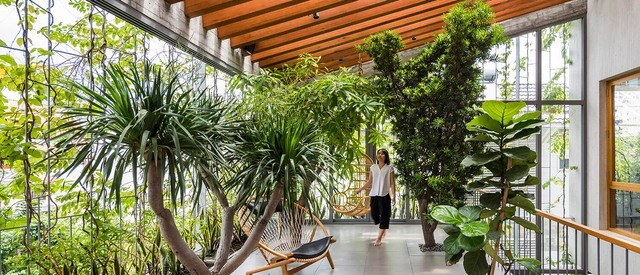
A simple walk in the park will relax even the most tightly wound individual. But what about the places where people spend far more of their time, such as schools, office buildings, and hospitals? What role can design play in incorporating nature into those environments? And at what additional cost? Bill Browning has published a book—The Economics of Biophilia: Why Designing With Nature in Mind Makes Financial Sense, 2nd Edition (written with Catie Ryan and Dakota Walker)—arguing that the cost of bringing nature into building projects isn't prohibitive but additive. An environmental strategist with a long history in green building, Browning is one of the founding partners (with architects Bob Fox and Rick Cook) of the sustainable design consultancy Terrapin Bright Green. Recently I talked with Browning about biophilic design—and, because he was a founding member of the U.S. Green Building Council's board of directors, about the strengths and shortcomings of the LEED rating system.
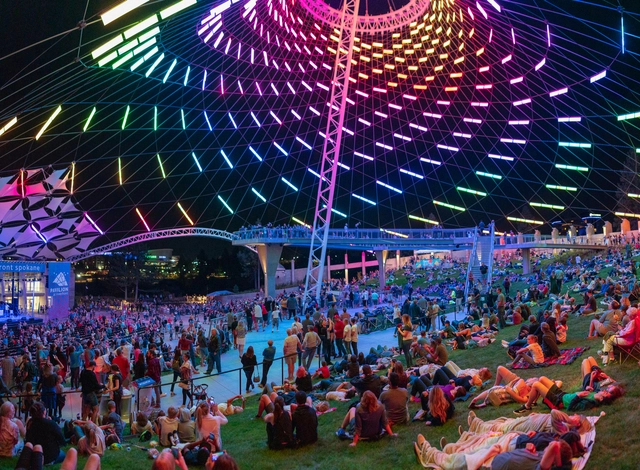
Each year, the Trust for Public Land (TPL) issues its ParkScore, which ranks the park systems of the 100 most populated cities in the U.S. This year, the organization also explored the positive health outcomes of top-scoring cities, looking at more than 800 innovative programs and practices that integrate park and healthcare systems.
https://www.archdaily.com/1007296/urban-parks-should-be-a-greater-part-of-the-healthcare-systemJared Green
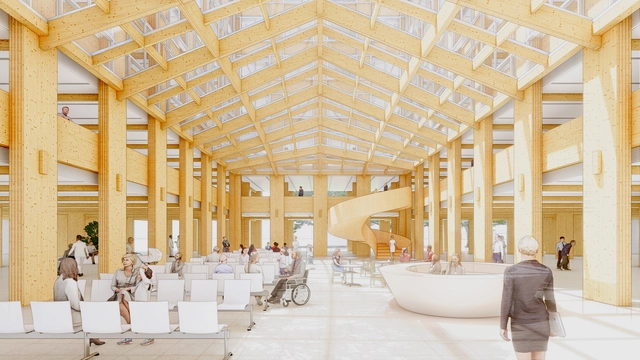
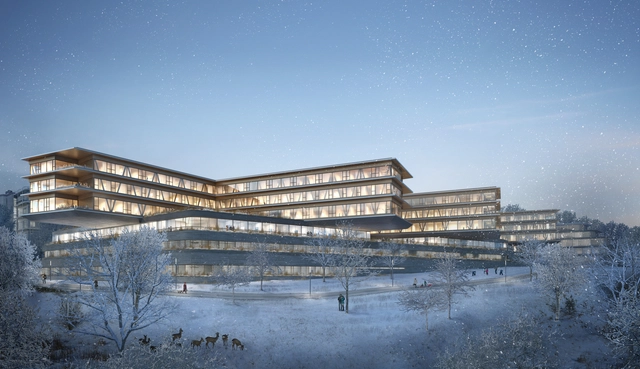
Lviv Hospital Proposal. Image Courtesy of Shigeru Ban
Shigeru Ban has announced the intention to collaborate with the municipality of Lviv to design an expansion of the Lviv hospital. As the largest hospital in Ukraine, this unit has witnessed an increase in the number of patients since the beginning of the war, leading to the need to increase the capacity of the institution. Shigeru Ban’s proposal uses cross-laminated wood and joints inspired by traditional wooden construction techniques to create a safe and welcoming environment for healing and recuperating.
With many high streets hollowing out and the National Health Services Association pushed to its limits, Heatherwick Studio is calling for a new kind of health space in metropolitan cities. The Health Street initiative is placed right at the heart of urban communities, reimagining the way we look at well-being and the holistic health of complete localities. Moreover, this radical approach to health creation is based on integrating community-led facilities into the local high streets.
After two weeks of voting in our 14th edition of the Building of the Year Awards, our readers have narrowed down over 4,500 projects to just 75 finalists across 15 categories, casting over 100,000 votes. This year's awards celebrate the very best in design, innovation, and sustainability from around the globe, with the shortlist featuring an exceptional range of projects, from a house in a favela to cutting-edge cultural centers and innovative public spaces that are sure to impress. As a crowdsourced award, we are proud to say that your selections are a true reflection of the state of architecture, and this year's finalists are no exception.
Imagine walking into a hospital and being greeted by greenery, views, natural light streaming in through large windows and open spaces that promote calmness and serenity. These favorable conditions play a crucial role in shaping patients’ experience, making their days a little bit easier while promoting healing. In fact, good healthcare design has been shown to reduce patient stays, infection rates, medication and medical errors, as well as improve staff attraction and performance. A well-designed facility can ultimately transport patients from a sterile, clinical environment to one that is warm, inviting and even uplifting. Such is the case of the Crystal Clinic Orthopaedic Center by HGA Architects, which has been selected among the five winners of the 2022 Shaw Contract Design Awards “Best of Globe” for its innovative approach to healthcare.
The year 2022 saw a rise in conversation around health and well-being. Two years after the start of the COVID-19 pandemic, the architecture industry is more informed about healthy building practices and equipped to drive forward impactful solutions. World Architecture Day 2022 was themed around “Architecture for well-being”, paralleling the designation of 2022 as the UIA Year of Design for Health in buildings and cities. As we wind up the year, ArchDaily explores “healthy spaces” as a trend along with insights that will last well into the future.
Combining high style with low maintenance, Corian® Design’s Solid Surface aids designers and architects to create healthy spaces for complete peace of mind. designboom and ArchDaily continued its three-part webinar series with the material producer, this time to explore the future of healthcare facilities. Including Studio Fluid, Operamed and NOAS Sweden, leading architectural and design experts joined the conversation – watch above.
White Arkitekter and HPP Architekten have been selected to design the new medical clinic, NMK, in Tübingen, Germany. Both firms, with vast experience in healthcare design and wood architecture, aim to realize a project in which, the elements of an integral, sustainable overall concept also play an essential role, in addition to the aspects of healing architecture and optimized functional organization. The new Medical Clinic of the University Hospital of Tübingen will be one of the 34 university hospitals in Germany that contributes to the successful combination of high-performance medicine, research, and teaching.
Public health and the built environment have a long-intertwined history—one that was catapulted into the limelight amid the COVID-19 pandemic. The global crisis made us all acutely aware of how design, whether for dedicated medical buildings or other building types, can affect our ability to respond to health emergencies as well as our daily well-being. Those most attuned to this connection are a niche group of architecture and design practitioners who also have medical experience.
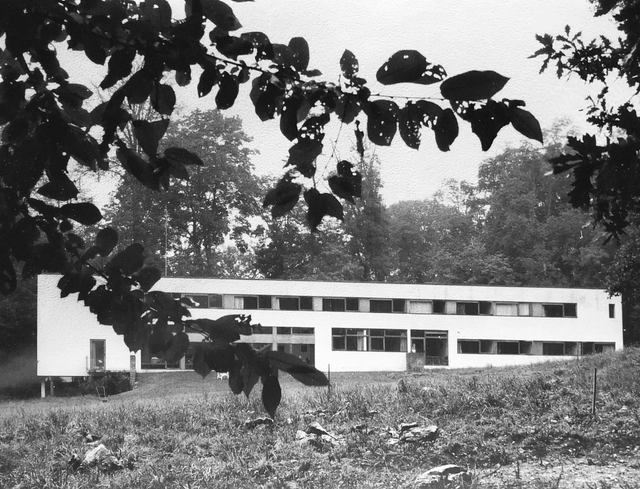
Exterior view of l’Eau Vive hospital, Soisy-sur-Seine, France, 1960s. Image Courtesy of Archives of Nicole Sonolet, collection of Christine de Bremond d’Ars
What would it mean to design buildings that exceed the economic accountings of liberal biopolitics, that instead offer an entirely different rationale for supporting health? In the years that Michel Foucault conceptualized the term biopolitics, he was part of a constellation of researchers and architects who developed care praxes that defined the value of life and its maintenance through a desire-based calculus. The welfare state institutions of architect Nicole Sonolet in particular—mental hospitals, public housing complexes, and new village typologies built mainly in postwar France and postcolonialAlgeria from the 1950s to the 1980s—were designed not only to support but to center the needs of people often excluded from design processes. Sonolet’s mental health centers for residents of Paris’s 13th arrondissement, in particular, were key projects for discovering a design practice tied to the provision of care for its own sake.
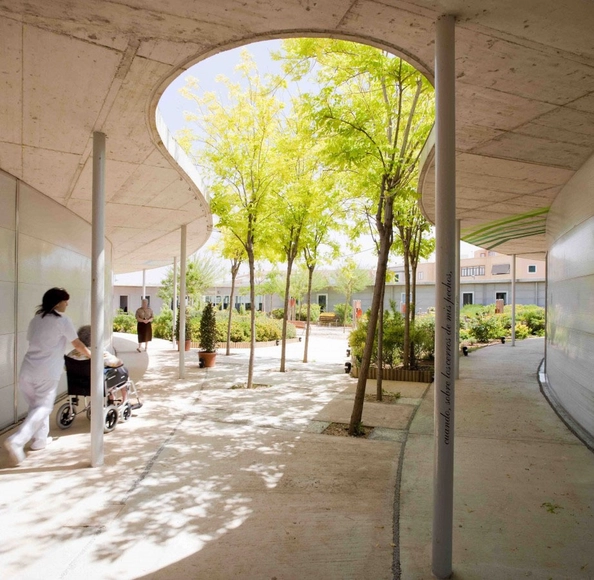
Santa Rita Geriatric Center / Manuel Ocaña. Image Courtesy of Manuel Ocaña
At a hospital, patients are always one conversation away from good or bad news. When not being rushed into treatment rooms, the sick are often left to feel stressed about their health. Healthcare workers have one of the most stressful jobs, with sudden changes in patient conditions. The general atmosphere in traditional hospitals seems tense and worrisome, and this has an adverse effect on patients’ well-being.
Just like hospitals and medical offices, dental clinics are places that tend to bring anxiety and anguish to patients, reactions that can be intensified in an unfriendly and unwelcoming environment. White and neutral environments can bring the notion of asepsis and hygiene, essential requirements for hospital architecture. However, the lack of welcoming elements, such as the use of warmer colors and materials, may also be responsible for causing a certain distance between professionals and patients, in addition to reinforcing the stereotypes attributed to dental clinics.
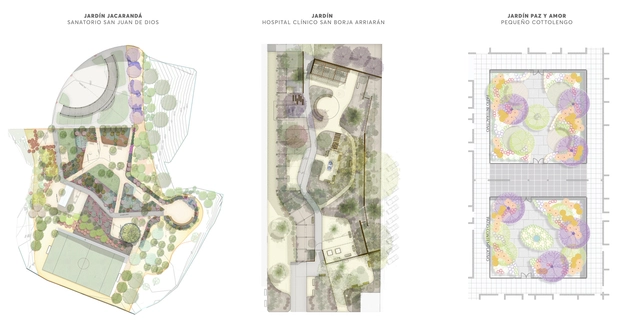
For the Cosmos Foundation, environmental conscience, ecological conservation, and community focus form the foundations of land planning and landscape design within public infrastructure projects. We sat down with the foundation's project director, Felipe Correa, as well as foundation architects Valentina Schmidt and Consuelo Roldán, as they went in depth on the benefits, objectives, and motivations behind the Healing Gardens initiative.
The Serena del Mar Hospital Center (CHSM) is the first hospital designed by Safdie Architects. Focusing on the human being, the concept revolves around the idea that "access to nature and natural light are vital in creating improved therapeutic experiences for patients, families and staff alike". Seeking to provide a sense of well-being that leads to better clinical outcomes, the hospital has started opening in phases to the public, earlier this year. The firm's first project in Latin America is not the only one, in fact, Safdie Architects are working on Qorner, a residential project under construction in Quito, Ecuador, and the Albert Einstein Education and Research Center in Brazil, to be inaugurated in early 2022.
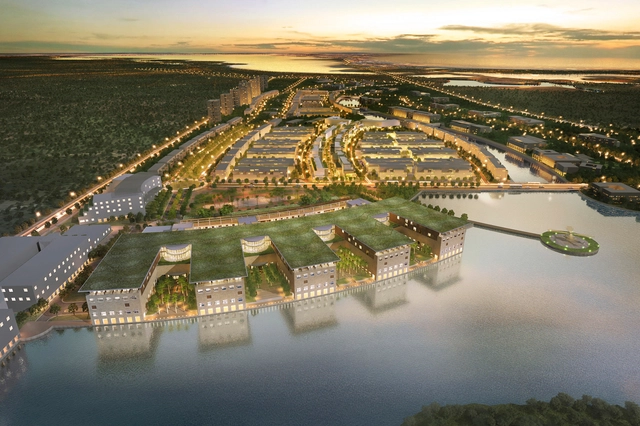
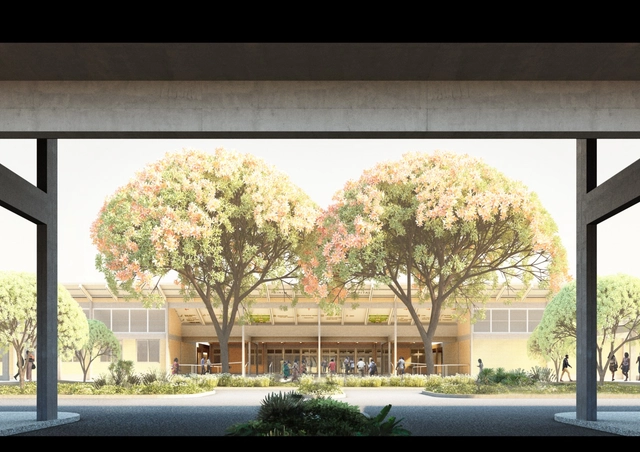
Adjaye Associates has been commissioned the design of district hospitals, part of the Agenda 111 initiative by the Ghana Government. The major vision for Ghana’s healthcare sector will consist of 111 Hospitals including 101 District Hospitals, 2 Psychiatric Hospitals, 7 Regional Hospitals, and the Redevelopment of the Accra Psychiatric Hospital.
In this week's reprint from Metropolis Magazine, authors Madeline Burke-Vigeland, FAIA, LEED AP, a principal at Gensler, and Benjamin A. Miko, MD, assistant professor of Medicine at Columbia University Medical Center explore how uniform standards applied across the built environment can protect our communities from COVID-19 and future pandemics.
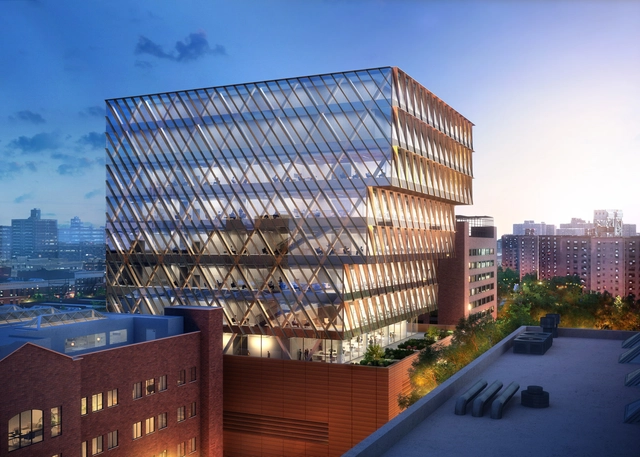
Skidmore, Owings & Merrill (SOM) unveiled its design for the New York City Public Health Laboratory, a ten storey building meant to strengthen the metropole's capability to respond to a variety of public health issues and future challenges. The laboratory is organized within a cubic glass volume stepping outward, which rises from a masonry-clad podium containing community-related functions. In order to give the new facility an active role within the Harlem neighbourhood, the design incorporates a training lab and an auditorium available to the community.