1. ArchDaily
  2. Healthcare Architecture

Healthcare Architecture: The Latest Architecture and News

Spaces for Communication: Improving Connections and Care in the Built Environment

Subscriber Access | 

For several years, Rosi Pachilova has been looking into and building upon the tools we use to analyse and configure layouts for our built environment. Together with Dr Kerstin Sailer, a reader in Social and Spatial Networks at the Space Syntax Laboratory, UCL, she has developed a tool that can assess spatial proposals for their impact on the quality of care of healthcare providers. In 2019, their work was awarded the RIBA President’s Award for Research in the Building in Quality category.

3 Major Architecture Firms Propose School Buses and Shipping Containers for Accessible Testing Labs

Despite all the news of re-openings, lifted restrictions, al fresco options dining, and a return to something more closely resembling “normal,” COVID-19 is still very much with us. And despite the defeatist/downplayed/nothing to see here stance embraced by the current presidential administration, the United States is still in the midst of an unprecedented public health crisis. In some states, both new reported cases and hospitalizations have now reached record highs.

This being said, the need for accessible, easy to fabricate, and quick-to-deploy testing facility solutions are still in great need, particularly in dense urban areas, at large institutions and workplaces, and in underserved communities where coronavirus testing might come as a luxury, not a basic necessity. In terms of testing availability, all bases need to and must be covered.

Alternative Healthcare Facilities: Architects Mobilize their Creativity in Fight against COVID-19

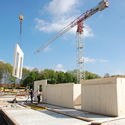
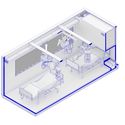
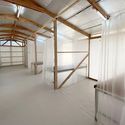
As the healthcare infrastructure is becoming overwhelmed and hospitals around the world are reaching their capacities, new alternative possibilities are emerging. In response to bed shortage and facility saturation, architects around the world are taking action, in the on-going fight against the coronavirus. Focusing their knowhow to find fast and efficient design solutions that can be implemented anywhere, they are proposing flexible, fast assembled, mobile, and simple structures. With a very tight timetable, some projects are already implemented and in service, while others remain on a conceptual level, waiting to be adopted.

Alternative Healthcare Facilities: Architects Mobilize their Creativity in Fight against COVID-19 - Image 1 of 4Alternative Healthcare Facilities: Architects Mobilize their Creativity in Fight against COVID-19 - Image 2 of 4Alternative Healthcare Facilities: Architects Mobilize their Creativity in Fight against COVID-19 - Image 3 of 4Alternative Healthcare Facilities: Architects Mobilize their Creativity in Fight against COVID-19 - Image 4 of 4Alternative Healthcare Facilities: Architects Mobilize their Creativity in Fight against COVID-19 - More Images+ 56

How to Design Partitions for Healthcare Architecture: 9 Details of High-Performance Walls

Subscriber Access | 

Concerns about the hygiene, durability, and healthiness of interior spaces have increased considerably in recent years, drawing extreme attention to hospital and health-related projects. Consequently, the choice of materials becomes essential from the conception of each project, guaranteeing that each space performs effectively on all fronts, from resistance and safety to environmental comfort and aesthetics.

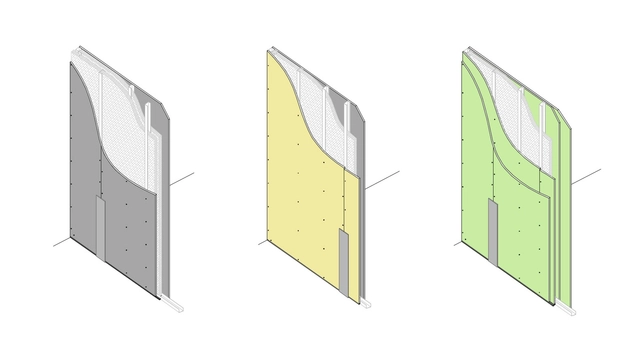
In particular, the enclosures in hospitals and health centers must conform to a series of predetermined guidelines and dimensions, which respond to the standardized sizes of different types of equipment and to the needs of each medical procedure. Within the robust framework of the structural walls, the partitions – which are essential for subdividing the space – must be especially resistant to impact, fire, and humidity, in addition to effectively mediating the acoustics between rooms and inside each one of them.

How to Design Partitions for Healthcare Architecture: 9 Details of High-Performance Walls - Image 1 of 4How to Design Partitions for Healthcare Architecture: 9 Details of High-Performance Walls - Image 2 of 4How to Design Partitions for Healthcare Architecture: 9 Details of High-Performance Walls - Image 3 of 4How to Design Partitions for Healthcare Architecture: 9 Details of High-Performance Walls - Image 4 of 4How to Design Partitions for Healthcare Architecture: 9 Details of High-Performance Walls - More Images+ 20

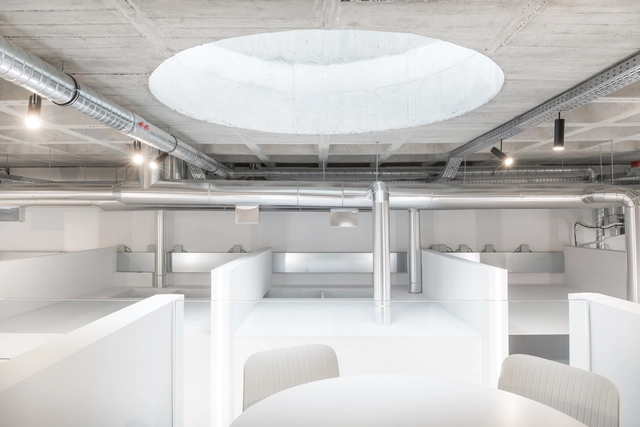
JCC Lab / Espaço Oficina

JCC Lab / Espaço Oficina - Interior Photography, Healthcare Interiors, Door, Table, ChairJCC Lab / Espaço Oficina - Interior Photography, Healthcare Interiors, Kitchen, FacadeJCC Lab / Espaço Oficina - Interior Photography, Healthcare InteriorsJCC Lab / Espaço Oficina - Interior Photography, Healthcare InteriorsJCC Lab / Espaço Oficina - More Images+ 16

  • Architects: Espaço Oficina
  • Area Area of this architecture project Area:  200
  • Year Completion year of this architecture project Year:  2018
  • Manufacturers Brands with products used in this architecture project
    Manufacturers:  Grohe, Davide Groppi, Nordlux, Ségis, ZWCAD

Emergency Public Hospital in São Bernardo do Campo / SPBR Arquitetos

Emergency Public Hospital in São Bernardo do Campo / SPBR Arquitetos - Exterior Photography, Hospital , FacadeEmergency Public Hospital in São Bernardo do Campo / SPBR Arquitetos - Interior Photography, Hospital , FacadeEmergency Public Hospital in São Bernardo do Campo / SPBR Arquitetos - Interior Photography, Hospital Emergency Public Hospital in São Bernardo do Campo / SPBR Arquitetos - Exterior Photography, Hospital Emergency Public Hospital in São Bernardo do Campo / SPBR Arquitetos - More Images+ 37

São Bernardo do Campo, Brazil

The Importance of Antibacterial Surfaces in Healthcare Architecture

 | Sponsored Content
The Importance of Antibacterial Surfaces in Healthcare Architecture - Image 4 of 4
HU – Strasbourg / S&AA. Image Cortesía de Porcelanosa Grupo

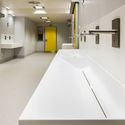
Although any architectural project must ensure the safety and well-being of its occupants, this goal is especially pertinent for healthcare spaces, whose primary occupants are those prone to getting sick or worsening their initial condition. For this reason, its design must not only support medical procedures in their optimal conditions, but also ensure that the environment is kept sterile and clean at all times.

How do materials that fight the growth of pathogenic bacteria work? Is it possible to improve the hygiene and healthiness of an environment without neglecting the aesthetics of the space? We address this question by reviewing the case of Krion® solid surfaces, widely used in the healthcare sector but also in residential, commercial and office projects.

The Importance of Antibacterial Surfaces in Healthcare Architecture - Featured ImageThe Importance of Antibacterial Surfaces in Healthcare Architecture - Image 1 of 4The Importance of Antibacterial Surfaces in Healthcare Architecture - Image 2 of 4The Importance of Antibacterial Surfaces in Healthcare Architecture - Image 3 of 4The Importance of Antibacterial Surfaces in Healthcare Architecture - More Images+ 10

Hassell Leads Design for Healthcare Precinct and First Medi-Hotel in Western Australia

Hassell has approached health and wellness differently in the newest healthcare facility in Western Australia. With innovation at the core of the architectural concept, the Murdoch Knowledge Health Precinct puts people first, creating a state-of-the-art intervention, a hub for activities and interconnected public spaces.

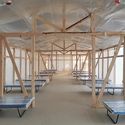
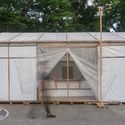
WTA Design 60 Emergency Quarantine Facilities to Fight COVID-19

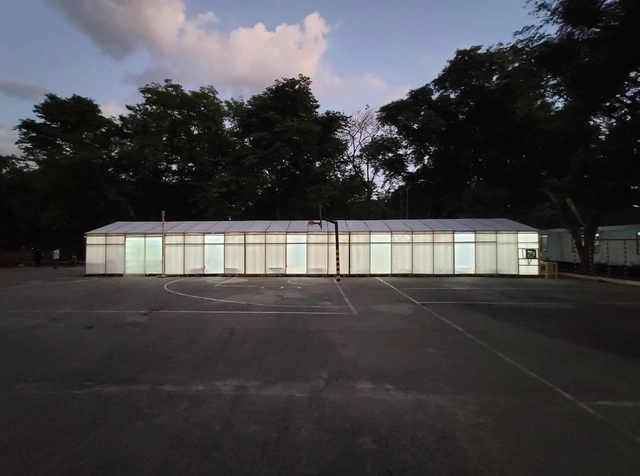
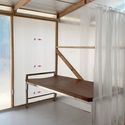
As hospitals around the world are reaching their capacity, the architecture and design community is developing new alternatives to fight COVID-19. In order to build 60 Emergency Quarantine Facilities (EQF), WTA was inspired by their pavilion developed last year, part of the Anthology Festival. A viable quarantine structure, the Boysen Pavilion “embodied speed, scalability and simplicity in its structure”.

WTA Design 60 Emergency Quarantine Facilities to Fight COVID-19 - Image 1 of 4WTA Design 60 Emergency Quarantine Facilities to Fight COVID-19 - Image 2 of 4WTA Design 60 Emergency Quarantine Facilities to Fight COVID-19 - Image 3 of 4WTA Design 60 Emergency Quarantine Facilities to Fight COVID-19 - Image 4 of 4WTA Design 60 Emergency Quarantine Facilities to Fight COVID-19 - More Images+ 25

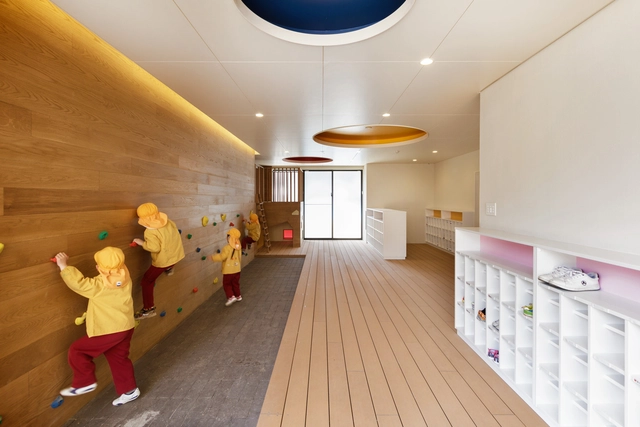
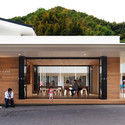
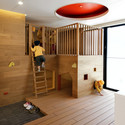
C.O Kindergarten and Nursery / HIBINOSEKKEI + Youji no Shiro

C.O Kindergarten and Nursery / HIBINOSEKKEI + Youji no Shiro - Kindergarten, FacadeC.O Kindergarten and Nursery / HIBINOSEKKEI + Youji no Shiro - Kindergarten, FacadeC.O Kindergarten and Nursery / HIBINOSEKKEI + Youji no Shiro - Kindergarten, Door, FacadeC.O Kindergarten and Nursery / HIBINOSEKKEI + Youji no Shiro - Kindergarten, Chair, TableC.O Kindergarten and Nursery / HIBINOSEKKEI + Youji no Shiro - More Images+ 24

Infectious Disease Mitigation: 9 Healthcare Facilities Designed by MASS

Addressing contextual severe healthcare problems, like the outbreak of infectious diseases or maternal mortality, MASS has helped in setting design strategies to mitigate and reduce critical medical concerns. With some projects operational, and others in the pipeline, the facilities imagined, tackle a wide range of complications.

Infectious Disease Mitigation: 9 Healthcare Facilities Designed by MASS - Image 1 of 4Infectious Disease Mitigation: 9 Healthcare Facilities Designed by MASS - Image 2 of 4Infectious Disease Mitigation: 9 Healthcare Facilities Designed by MASS - Image 3 of 4Infectious Disease Mitigation: 9 Healthcare Facilities Designed by MASS - Image 4 of 4Infectious Disease Mitigation: 9 Healthcare Facilities Designed by MASS - More Images+ 15

Opposite Office Imagines the New Berlin Airport as a COVID-19 Hospital

Opposite Office has proposed to transform the new Berlin airport, under construction since 2006, into a “Superhospital” for coronavirus patients. In an attempt to prepare the healthcare system and increase its capabilities, Opposite Office presented an adaptive reuse alternative, drawing contextual solutions to fight the pandemic.

Waiting Rooms, Reception Areas, & Courtyards: 43 Notable Examples of Hospital Architecture

Subscriber Access | 

Waiting Rooms, Reception Areas, & Courtyards: 43 Notable Examples of Hospital Architecture - Image 1 of 4Waiting Rooms, Reception Areas, & Courtyards: 43 Notable Examples of Hospital Architecture - Image 2 of 4Waiting Rooms, Reception Areas, & Courtyards: 43 Notable Examples of Hospital Architecture - Image 3 of 4Waiting Rooms, Reception Areas, & Courtyards: 43 Notable Examples of Hospital Architecture - Image 4 of 4Waiting Rooms, Reception Areas, & Courtyards: 43 Notable Examples of Hospital Architecture - More Images+ 39

Hospitals and projects related to healthcare must follow specific guidelines based on the rules and regulations of their country. These standards help us to design complex spaces, such as those located in areas of surgery, hospitalization, diagnostics, laboratories, and including areas and circulations that are clean, dirty, restricted or public, which create a properly functioning building.

There are a few spaces that we, as architects, can develop with great ease and freedom of design: waiting rooms, reception areas, and outdoor spaces. These are spaces where architects can express the character of the hospital. To jump-start you into this process, we have selected 43 projects that show us how creativity and quality of a space go hand-in-hand with functionality. 

Hotel MINHO Renewal and Expansion / ,i

Hotel MINHO Renewal and Expansion / ,i  - Wellness InteriorsHotel MINHO Renewal and Expansion / ,i  - Exterior Photography, Wellness Interiors, FacadeHotel MINHO Renewal and Expansion / ,i  - Exterior Photography, Wellness Interiors, FacadeHotel MINHO Renewal and Expansion / ,i  - Wellness InteriorsHotel MINHO Renewal and Expansion / ,i  - More Images+ 53

Vila Nova de Cerveira, Portugal
  • Architects: Virgula i
  • Year Completion year of this architecture project Year:  2014
  • Manufacturers Brands with products used in this architecture project
    Manufacturers:  panoramah!®, Tons de Pedra
  • Professionals: JP Pereira

Centre For Cancer And Health / NORD Architects

Centre For Cancer And Health / NORD Architects - Rehabilitation Center
© Adam Mørk

Centre For Cancer And Health / NORD Architects - Interior Photography, Rehabilitation CenterCentre For Cancer And Health / NORD Architects - Exterior Photography, Rehabilitation Center, Beam, FacadeCentre For Cancer And Health / NORD Architects - Exterior Photography, Rehabilitation Center, FacadeCentre For Cancer And Health / NORD Architects - Exterior Photography, Rehabilitation Center, FacadeCentre For Cancer And Health / NORD Architects - More Images+ 28

The Problem with the “Designification” of Health Care

A wave of service providers and clinics is using catchy branding and interior design to attract patients frustrated with old-guard medical facilities. But is further commodification of health care the answer?

A few years ago I signed up for Oscar health insurance. Cofounded in 2012 by Joshua Kushner and headquartered in New York City, it was the health-care plan most of my similarly freelance friends used. Plus, if you lived in Brooklyn, as I did at the time, you could easily visit its Oscar Center, a primary-care space in a warehouse loft that also boasted the offices of literary magazines. I went in for a checkup, feeling slightly nervous as with any doctor appointment, but was surprised when I opened the door onto a spacious, minimalist, wood-floored, primary-colored office installed with glass walls and snake plants. There was even a yoga room adorned with the decal “Let the Healing Begin.”