The Best Of Design Awards is a unique project-based awards program that showcases great buildings and building elements. Entrants are invited to submit completed works in 26 categories.
The BoD jury will judge entries based on several criteria—strength of the presentation, evidence of innovation, creative use of new technology, sustainability, and, most importantly, good design. The Best Of Design Awards is open to U.S. and international architects, but projects submitted must be located within the United States.
Winners and Honorable Mentions will be published in a new booklet and will also be featured on our website, where they will reach national and
Have you ever seen a building that breathes through thousands of pores? That may now be a possibility thanks to Tobias Becker’s Breathing Skins Project. Based on the concept of biomimicry, the technology is inspired by organic skins that adjust their permeability to control the necessary flow of light, matter and temperature between the inside and the outside. In addition to these performative benefits, the constantly changing appearance of these façades provides a rich interplay between the exterior natural environment and interior living spaces.
The Facade Tectonics Institute announces its 2016 Annual Conference and inaugural World Congress. The summit will include speaking and poster presentations, panel discussions, exhibitors and workshops addressing themes related to Design Processes, Historical Evolution, Facade Futures, and much more.
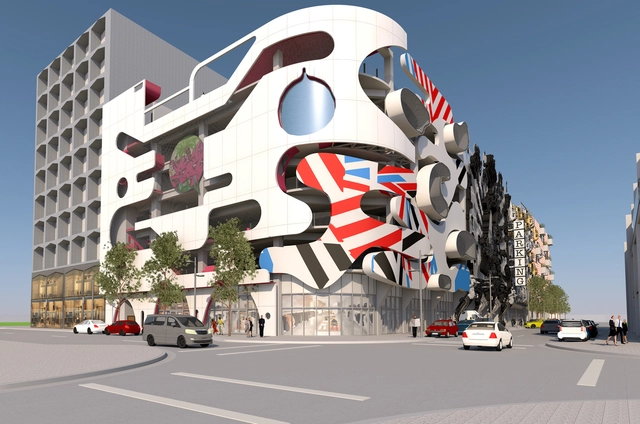
The Miami Design District, a neighborhood dedicated to innovative art and architecture, has commissioned The Museum Garage to be built as a part of Phase III of development. Curated by Terence Riley of K/R Architects, the garage will feature six different facades each designed by a different firm: Work Architecture Company (WORKac); J. Mayer H.; Clavel Arquitectos; Nicolas Buffe; K/R Architects; and Sagmeister & Walsh.
The facades will include a wall of recycled cars, a wall of traffic barriers repurposed as screens, a mural of cartoon characters mixed in with baroque details, a corner design of interlocking puzzle pieces, façade cutouts that serve as an “ant farm” which expose the activity inside, and a painting of a candle being burned at both ends.
Scheduled for completion this year, the garage will serve as a seven story mixed-use building with ground-floor retail and a garage for 800 vehicles.
Learn more about each of the facade designs after the break.
Join the CTBUH New York City Chapter for a discussionon on Facades Design and Contsruction in New York. With an increased reliance on technology and specialization, and the need for speed and innovation, the Facade Talks Series aims at a new type of open and focused conversation to bring together different sides of the spectrum of the facade industry. The Talks are focused on building enclosure systems and the challenges in designing and building facades, where Industry leaders in architecture, facade design, engineering and construction will present and discuss new ideas, innovative technologies, and challenges in both design and construction based on a specific theme.
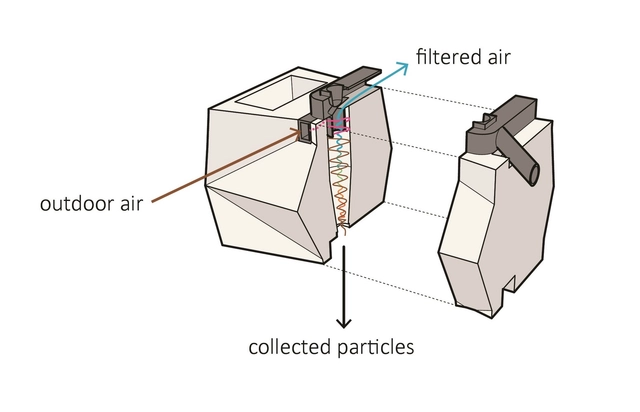
These days air pollution in some cities is a big problem, and as a result, buildings that help alleviate that problem are all the rage. In recent years though, designers have started to move beyond simply reducing a building's emissions and started to work with techniques that actually remove pollutants from the air, through systems such as Nemesi's "photocatalytic" facade for the Italy Pavilion at the 2015 Milan Expo which captures and reacts with pollution in the presence of light.
However, in most cases these new technologies have been chemical, only affecting the air that physically comes into contact with them. What if buildings could take a more active role in pulling in pollutants from the sky? What if they could work a little more like a vacuum cleaner? This was exactly the inspiration behind the Breathe Brick developed by Carmen Trudell, an assistant professor at Cal Poly San Luis Obispo's school of architecture and founder of Both Landscape and Architecture.
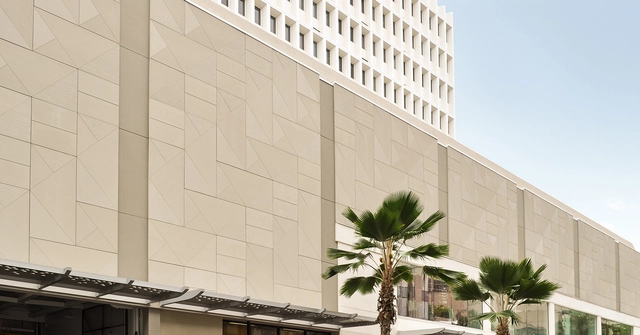
Waikiki Business Plaza / MGA Architecture. Image Courtesy of TAKTL
Since the beginning of the Modernist era a century ago, concrete has been appreciated by architects for its strength, versatility and sculptural potential. For many countries, concrete played a key role in their recovery from the Second World War, and in their continued modernization during the second half of the 20th century. But in recent years - while it is still as widely-used as ever - concrete has fallen on something of an image problem, with criticisms of its environmental impact and its aesthetic appearance becoming commonplace.
That hasn't stopped some companies continuing to innovate with concrete. Among these companies is TAKTL, a facade panel designer and manufacturer that works exclusively with Ultra High Performance Concrete (UHPC). To find out what UHPC can offer to architecture, ArchDaily spoke to TAKTL about the potential of this material, and the future of concrete construction.
Window in Osaka, Japan. Image Courtesy of VELUX Group
Before computer daylight simulations were used to optimize the atmosphere and energy in buildings, generations of builders developed simple principles to create the best windows for their site. Two lighting experts have studied these traditional openings in buildings to find inspiration for more sustainable designs today. Francesco Anselmo, a lighting designer at Arup, and John Mardaljevic, Professor of Building Daylight Modelling at the School of Civil & Building Engineering of Loughborough University, have analysed the sun and skylight variations from northern regions like Stockholm down to the equator in cities like Haiti or Abu Dhabi.
Read on to learn more about the variety of traditional windows.
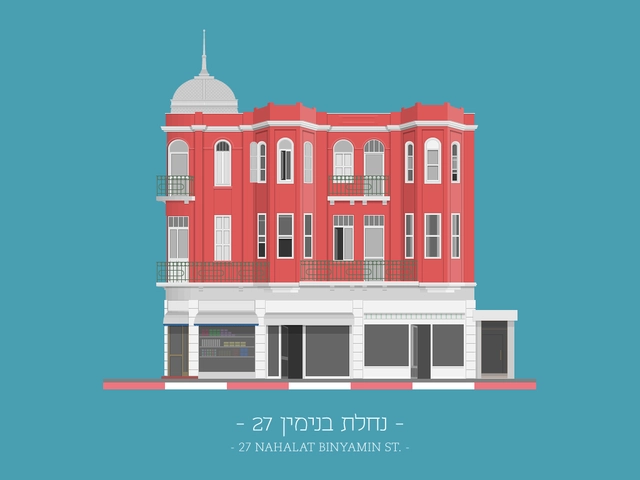
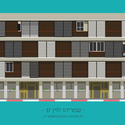
Take a virtual walk down the streets of Tel Aviv with these illustrations of the city's facades by graphic designer Avner Gicelter. “My aim is to capture the unique essence of the building's features in my illustrations, using a minimal set of graphic elements,” he explained. “After the building's illustration is done I choose a background color out of a palette and a typeface that will reflect what I refer to as a Tel Avivian atmosphere."
Gicelter first had the idea to capture the unique architecture in Tel Aviv’s city center when apartment hunting in 2013. “I got more interested in the building's facade than in the apartments we were looking at,” he said. Since then he has illustrated over 70 different buildings.
Check out some of Gicelter’s illustrations after the break and visit his website to learn more. His illustrations are also available for purchase on Etsy.
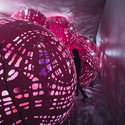
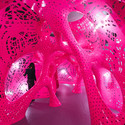
Marc Fornes & THEVERYMANY has constructed a light-weight, ultra-thin self-supported shell structure augmented by artist Jana Winderen’s engineered sounds at the Storefront for Art and Architecture in New York City. Now on view through November 21, the “Situation Room” presents itself, as Storefront describes, "a vibrating sound experiment that that aims to transform architecture into animated sensible form."
“The overall form is an aggregate of twenty spheres of incremental diameters, combined to create an envelope of experiential tension, a sort of sublime dialogue between the comfort of the known and an uneasy interaction with the unknown,” described Fornes. “The resultant morphology resonates with a series of distributed transducers and lighting sources playing out through streams of porosity derived from structural stress flows across the elements.”
More images and information about the “Situation Room,” after the break.
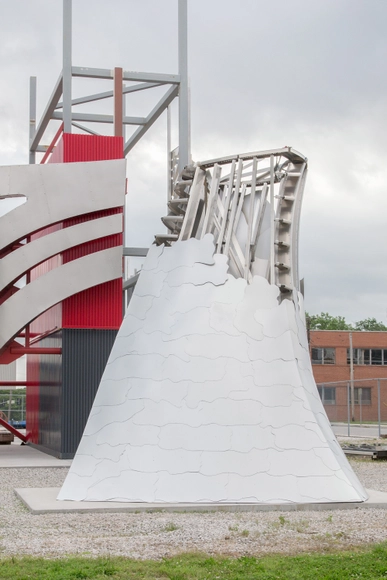
The Brazilian coastal city of Fortaleza, one of the host cities for the 2014 Brazil World Cup, will soon be home to one of the world's largest aquariums. Designed by Leonardo Fontanelle (Imagic Brasil), Acquire Ceará is projected to be the third largest building of its type and is intended to provide a lasting beacon for tourism in the area. Zahner, a US company known for their ability to design and create complex façades (including the Petersen Automotive Museum by Kohn Pedersen Fox) have been tasked with constructing twenty three curving "legs" which support the structure of "the Manta and Sea Urchin-shaped roof surface". Zahner's President, William Zahner, believes that "this is perhaps the most intricate building ever constructed in the Americas."
See Zahner's prototype and images of the aquarium after the break.
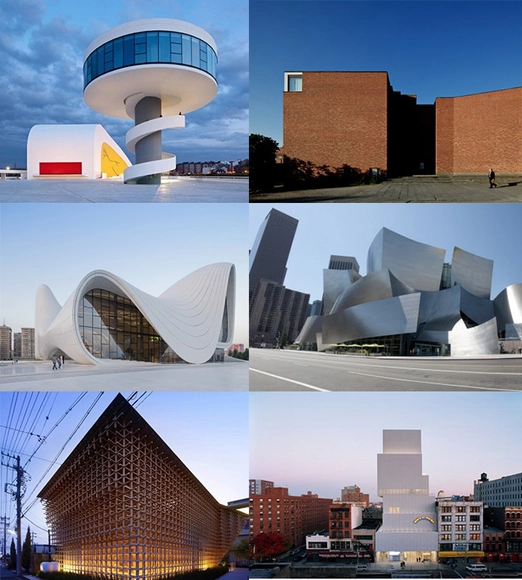
In case you missed it, we’re re-publishing this popular post for your material pleasure. Enjoy! To celebrate the recent launch of our US product catalog, ArchDaily Materials, we've coupled six iconic architects with what we deem to be their favourite or most frequently used material. From Oscar Neimeyer's sinuous use of concrete to Kengo Kuma's innovative use of wood, which materials define some of the world's best known architects?
In case you missed it, we're re-publishing this popular post for your material pleasure. Enjoy!
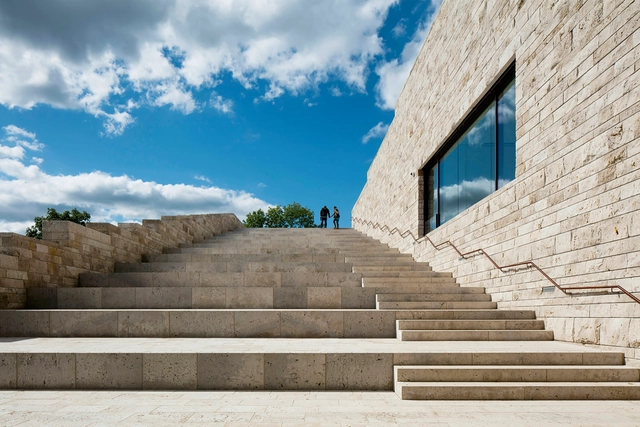
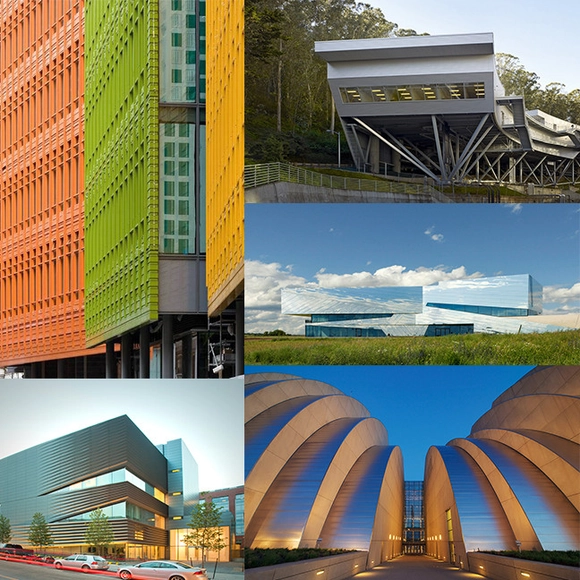
To celebrate the recent launch of ArchDaily Materials we've brought together five projects with fantastic façades, from Viñoly's Dolby Regeneration Medicine Building in San Francisco to Holzer Kobler's PALÄON in Schöningen, Germany. A building's envelope is often people's first impression and, in recent years, have been one of the focuses of innovation in the design and construction industry. The projects we've collated show a glimpse at what's possible with façades and wall finishings.
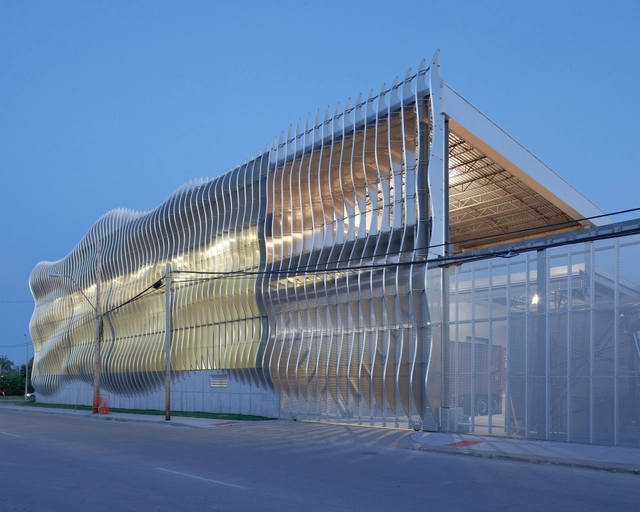
Original design by Crawford Architects on the Zahner Headquarters in North America / Mike Sinclair. Image Courtesy of Zahner
Zahner, one of the world's foremost fabricators of façades, have launched new software to assist in design, fabrication, costing and delivery. CloudWall, part of Zahner's ShopFloor platform, is a web based programme which provides an interface for users to design and fabricate curving facades in metal. It is a tool that uses Zahner's "factory floor like a massive rapid prototype machine".