On June 1st, the ceremony for the VI European AHI Prize was held at the Sant Pau Hospital building in Barcelona. This recognition promoted by Architectural Heritage Intervention, in collaboration with the College of Architects of Catalonia and supported by the Department of Culture of the Generalitat de Cataluña, the City Council of Barcelona, and the Metropolitan Area of Barcelona, arises from the conviction that today, architectural heritage is not only an essential element of knowledge, but also a vital socio-economic resource for the sustainable development of territories.
The Pritzker Architecture Prize presents The Role of Practice, the 2023 Laureate Lecture and Panel Discussion, today, Tuesday, May 23rd at 3:40 PM EEST, in partnership with the National Technical University of Athens, and with the participation of the Aristotle University of Thessaloniki, University of Patras and the Technical University of Crete.
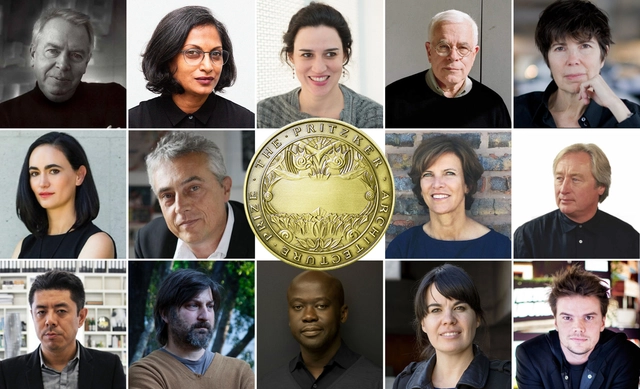
The Pritzker Architecture Prize 2023 Laureate David Chipperfield will deliver the lecture, reflecting on architectural practice's role, responsibilities, and opportunities. Moreover, the 2023 winner will explore "how market forces have dominated architecture and become increasingly detached from its place, just as the challenges of the climate crisis, loss of biodiversity, and social inequality have heightened the urgency for a more proactive position". Alejandro Aravena, Jury Chair, and 2016 Laureate will introduce the lecture, which will be followed by a conversation between David Chipperfield, Francis Kéré, 2022 Laureate, and Anne Lacaton and Jean-Philippe Vassal, 2021 Laureates, as they each "reveal the successes and failures of their respective journeys which effected their architectural philosophies and works, and led them to the shared stage of the present".
While the city of Berlin has a long history, dating back to the 13th century, its architecture and urban fabric has undergone the most significant changes during the last century, reflecting the impact of major historical events that took place in the German capital. During the early 20th century, Berlin transformed into a modern metropolis, marked through the construction of grand buildings and imposing structures to demonstrate the city’s growing economic and political power. The 1920s and 1930s saw the emergence of the Modernist movement, which, together with the Bauhaus school of architecture founded in 1919, influenced the image and urban fabric of Berlin.
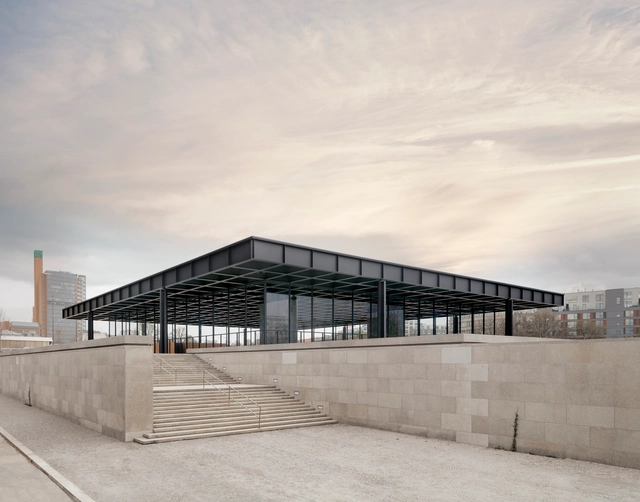
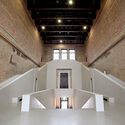
During the Second World War the city was heavily bombed, resulting in the destruction of many historical buildings. During the post-war period, reconstruction efforts focused on rebuilding infrastructure and housing, while the city remained divided until 1989, with the fall of the Berlin wall. After this period, Berlin witnessed a renewed interest in architecture and urban design. Interventions such as David Chipperfield’s Neues Museum aimed to rebuild historical monuments without erasing the markings of their difficult past. Other projects such as the renovation of the Reichstag had a different purpose. Norman Foster’s intervention intended to keep the image of this building but change its symbolism from a structure representative for the Nazi regime to one embracing the ideals of democracy and equality.
David Chipperfield, laureate of the 2023 Pritzker Prize, has designed over a dozen museums throughout his career, with some still under construction. As a typology that has significant urban and social impact, Chipperfield and his team have skillfully leveraged each commission to transform neighborhoods and cities while still honoring the essence of the place and what was there before. His museums make powerful statements without being obtrusive, and this is reflected in the choice of materials and the construction solutions used.
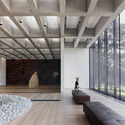
Like an oversized minimalism, Chipperfield gives the materials space to unfold and be understood. In his galleries and museums, the materials appear exposed, clean, and highlighted through contrast. They give character to the space while giving prominence to the art on display, generating suitable atmospheres for its proper appreciation. Regularity, continuity, and repetition help shape this background, while the filtered light finishes building the right scene.
Sir David Chipperfield has been awarded with the 2023 Pritzker Prize, the highest distinction in the architectural profession. Known for his well-crafted, precise, and sensible response to complex environments, the architect became initially recognized for the skillful restoration and renovation of existing buildings, often cultural institutions, before expanding the range of projects to include new structures. While his built body of works demonstrates many of the core principles of good architecture, the ongoing projects reveal an equally relevant narrative: that of his direction moving forward and the way in which his approach to these principles evolves.
Many of the ongoing projects continue Chipperfield’s interest in museological and cultural institutions, yet he continues to work across a wide array of building types. The latest major project announced tackles one of the most prominent institutions in Greece, the National Archeological Museum. This represents yet another opportunity for the architect to present museums as institutions that offer a transformation of the urban life of the cities where they are located, while also bringing forward the historical layers that define its architecture. Other projects, such as the Santa Giulia Arena in Milano or the Elbtower in Hamburg, expand the range of programs and typologies addressed by Chipperfield.
Few architects in history have had the honor and privilege of intervening in the famous St. Mark's Square in Venice — a tourist landmark of incomparable historical value to humanity. Sir David Chipperfield is one of them. As if that was not enough, he also left his mark on another project of inestimable value: the Neue Nationalgalerie, designed originally by Mies van der Rohe in Berlin. The four centuries that separate the design from its restoration seem to pose no difficulties for the 2023 Pritzker Prize winner, who rejects an international style of architecture in search of a trait that highlights local qualities.
The 2023 Pritzker Prize has been awarded to Sir David Chipperfield, London-born, architect, urban planner, and activist. David Chipperfield, founded his architectural practice in 1985 in London under the name of David Chipperfield Architects, after shaping his career working with renowned architects such as Norman Foster, Richard Rogers, and Douglas Stephen. He studied art and architecture at the Kingston School of Art, graduating in 1976, and continued his studies at the Architectural Association School of Architecture in London, concluding in 1980. Today, David Chipperfield Architects has expanded to include offices in Berlin, Shanghai, Milan, and the latest office opened in Santiago de Compostela.
As part of our yearly tradition, we have asked our readers who should win the 2023 Pritzker Prize, the most important award in the field of architecture.
For those who don't know, the Pritzker Prize is funded by Jay Pritzker through the Hyatt Foundation in the United States and has been awarded to living architects, regardless of their nationality, whose built work "has produced consistent and significant contributions to humanity through the art of architecture."
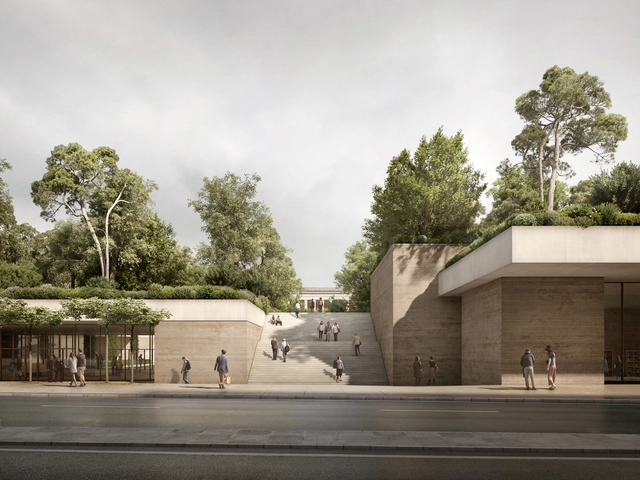
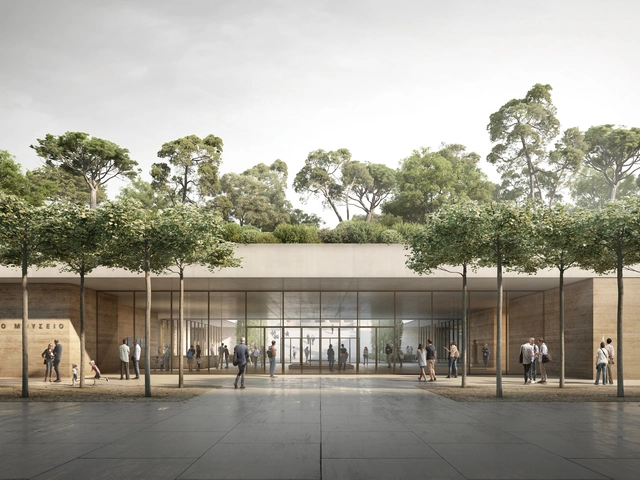
Selected from a shortlist of 10 proposals, David Chipperfield’s design won the competition for the National Archaeological Museum in Athens, Greece. Housing one of the world’s most important collections of prehistoric and ancient art, the National Archaeological Museum, will undergo refurbishment and extension works, including a subterranean addition with a roof garden. The proposal was developed together with Wirtz International, Tombazis & Associate Architects, wh-p ingenieure, Werner Sobek, and Atelier Brückner.
Berlin is a city defined by an eclectic mix of style and a rich history. It's built environment has been dramatically shaped by a series of municipal construction programs, and in turn, a past of extensive demolition, planned residential areas, and diverse new cultural projects. Combined with influences across Europe, Berlin's contemporary architecture showcases new ideas on building concepts, forms and facades.
David Chipperfield Architects and Toronto-based Zeidler Architecture, have won an international competition to transform the Block 2 parliamentary precinct, a 51,000 sqm redevelopment zone in downtown Ottawa, Canada. As a site with significant national importance, the project aims to not only provide facilities for democratic government and urban infrastructure, but also to represent the values of a nation and a vision for its sustainable and inclusive future. The project proposes a new public square alongside the main building and on axis with the Peace Tower, as well as an open space to promote dialogue between Parliamentarians, the community, and the wider public.
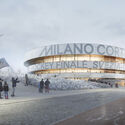
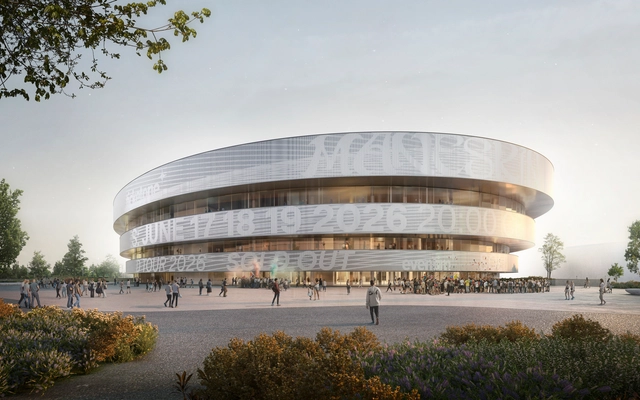
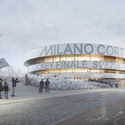
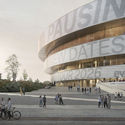
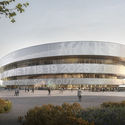
David Chipperfield Architects Berlin and Arup have unveiled the design of the 2026 Winter Olympic Games arena. The structure will sit in the core of Milano Santa Giulia, a new urban district currently under redevelopment in the south-east of Milan. The new arena will house sports and cultural events with up to 16,000 visitors, and offer individuals of all demographics a vast outdoor area that promotes social gatherings and recreational activities.
Kiev, Ukraine / Statue of Berehynia on the top of Independence Monument on the Maidan Nezalezhnosti. Image via Shutterstock
On the 24th of February 2022, Russia launched a large-scale invasion of Ukraine. Set to become Europe’s largest refugee crisis and armed conflict in this century, so far, this war has mobilized people across the world in order to exert pressure on authorities and put a stop to the armed hostilities. Individuals, as well as institutions in the architectural field, have taken part in these acts of solidarity, issuing statements, condemning actions, and even halting their work in Russia. From the UIA to MVRDV to Russian Institutions such as Strelka, the architecture world is denouncing the acts of violence and supporting an immediate cease of fire.
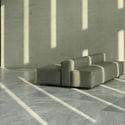
Architectural filmographers 9sekunden have collaborated with David Chipperfield architects to create a short film about the extension the Kunsthaus Museum extension in Zurich, Switzerland. The feature shows visitors' journey through the new building, coming across the interactive installation "The Sense of Things" by renowned choreographer William Forsythe. Walking through the architecture, paired with the curiosity of the people entering the space, the film highlights the interplay of culture, urbanity, and the built environment of the city of Zurich.
The Royal Institute of British Architects (RIBA) has announced its shortlist for the 2021 International Prize, a prestigious biennial award that celebrates the world’s best new projects that “champion buildings that change the world and positively impact the community around them". The jury has selected three projects from a list of 16 projects in 11 countries, and will announce the winner on Thursday 2nd December.
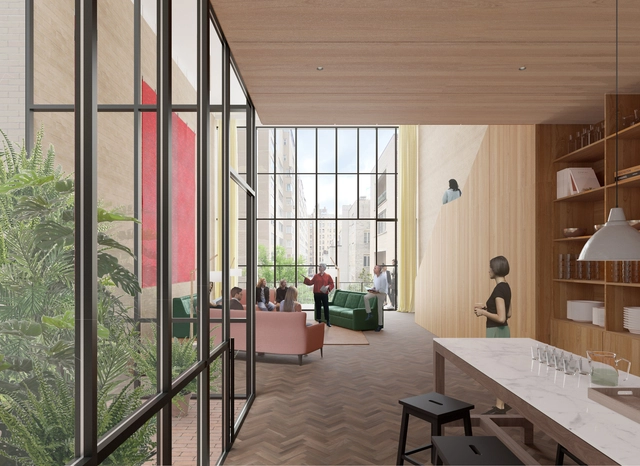
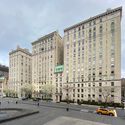
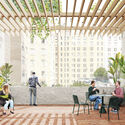
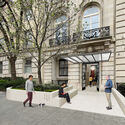
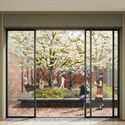
David Chipperfield Architects won the competition to redesign 1014 Fifth Avenue, a historic 1907 townhouse owned by the German government and used for cultural programming, into a space for meeting and dialogue. The project, titled "An Open House" and developed together with New York-based practices KARO Architects and Patarus Group, reorganizes the interior and creates the framework for cultural exchange while honouring the history of the building. Inspired by the interplay of public and private space within an ambassador's house, the project draws inspiration from the building's history as the home of the German Ambassador, with a design that balances public and private functions in establishing a new cultural institution.
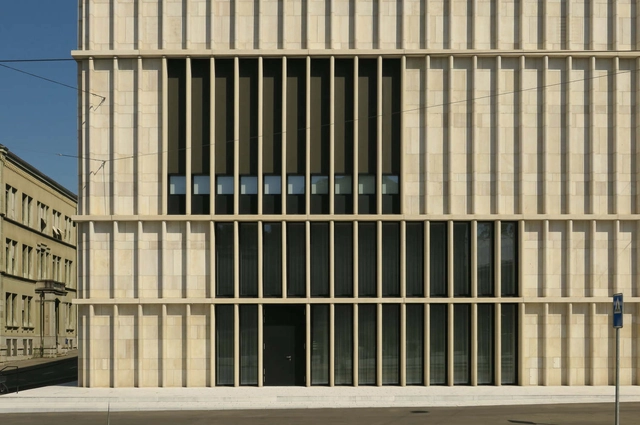
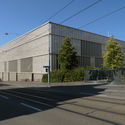
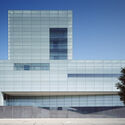
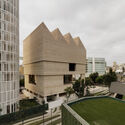
Architectural photographer Paul Clemence has released a new photoseries of the newly-opened Kunsthaus Zürich Museum Extension designed by David Chipperfield Architects. The extension is a freestanding addition to the existing Kunsthaus museum, and houses a collection of classic modernist artwork, the Bührle collection, and temporary exhibitions. The architectural identity takes inspiration from traditional stone façades found on the existing Kunsthaus as well as other significant public buildings in the Swiss city, and combines tradition and innovation through slender vertical fins crafted from local Jurassic limestone.


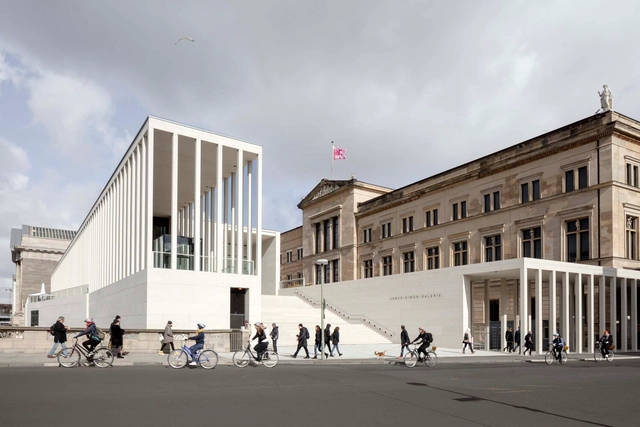







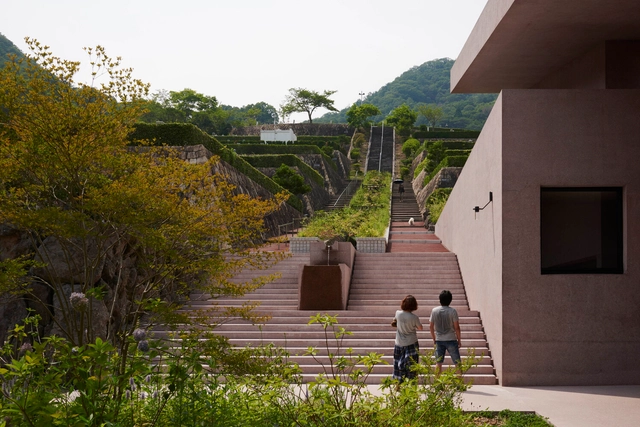
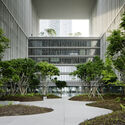
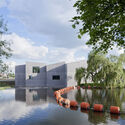
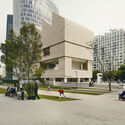
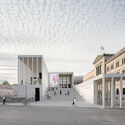

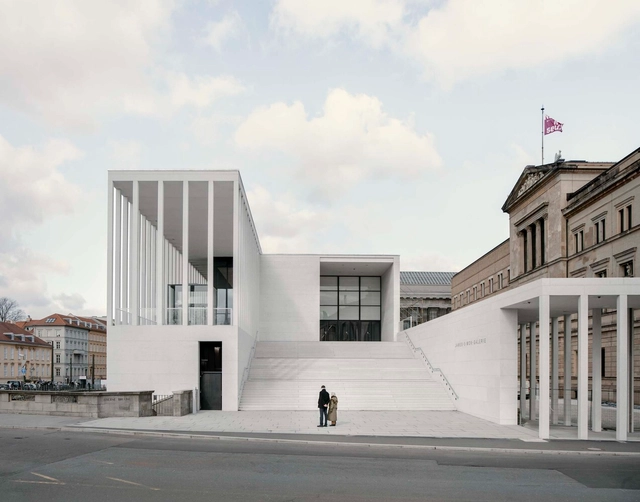
















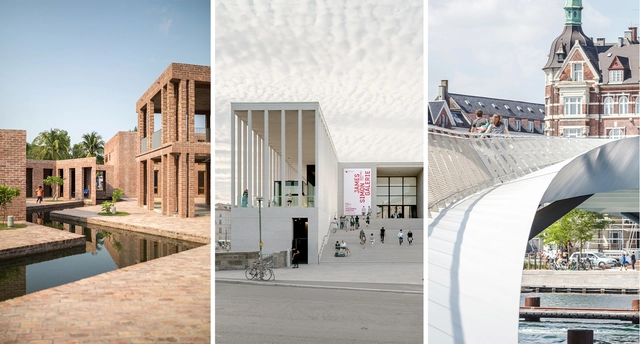
.jpg?1637053142 "James-Simon-Galerie / David Chipperfield Architects (Berlin, Germany). Image © Simon Menges")
.jpg?1637053340 "Lille Langebro / WilkinsonEyre + Urban Agency (Copenhagen, Denmark). Image © Rasmus Hjortshøj")
.jpg?1637053381 "Friendship Hospital, Satkhira / Kashef Chowdhury-URBANA (Shyamnagar, Bangladesh). Image Courtesy of URBANA")