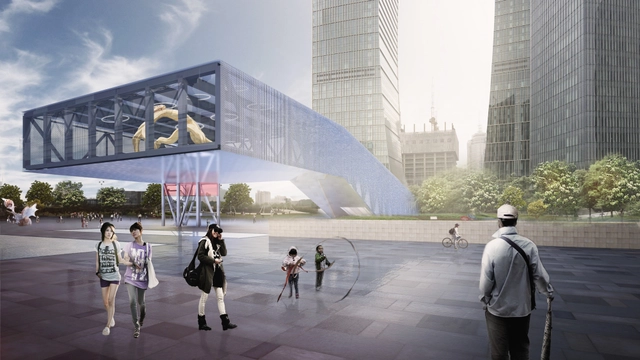
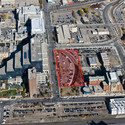
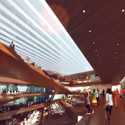
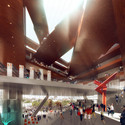
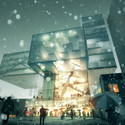
OMA has won a competition to design the Lujiazui Exhibition Centre, a 1,500 square meter space in Shanghai Pudong on the site of the former "Shanghai Shipyard." The design aims to create a concentrated culture and event space within the surrounding financial district, on the edge of the Huangpu River, one of the most photographed waterfronts in the world.
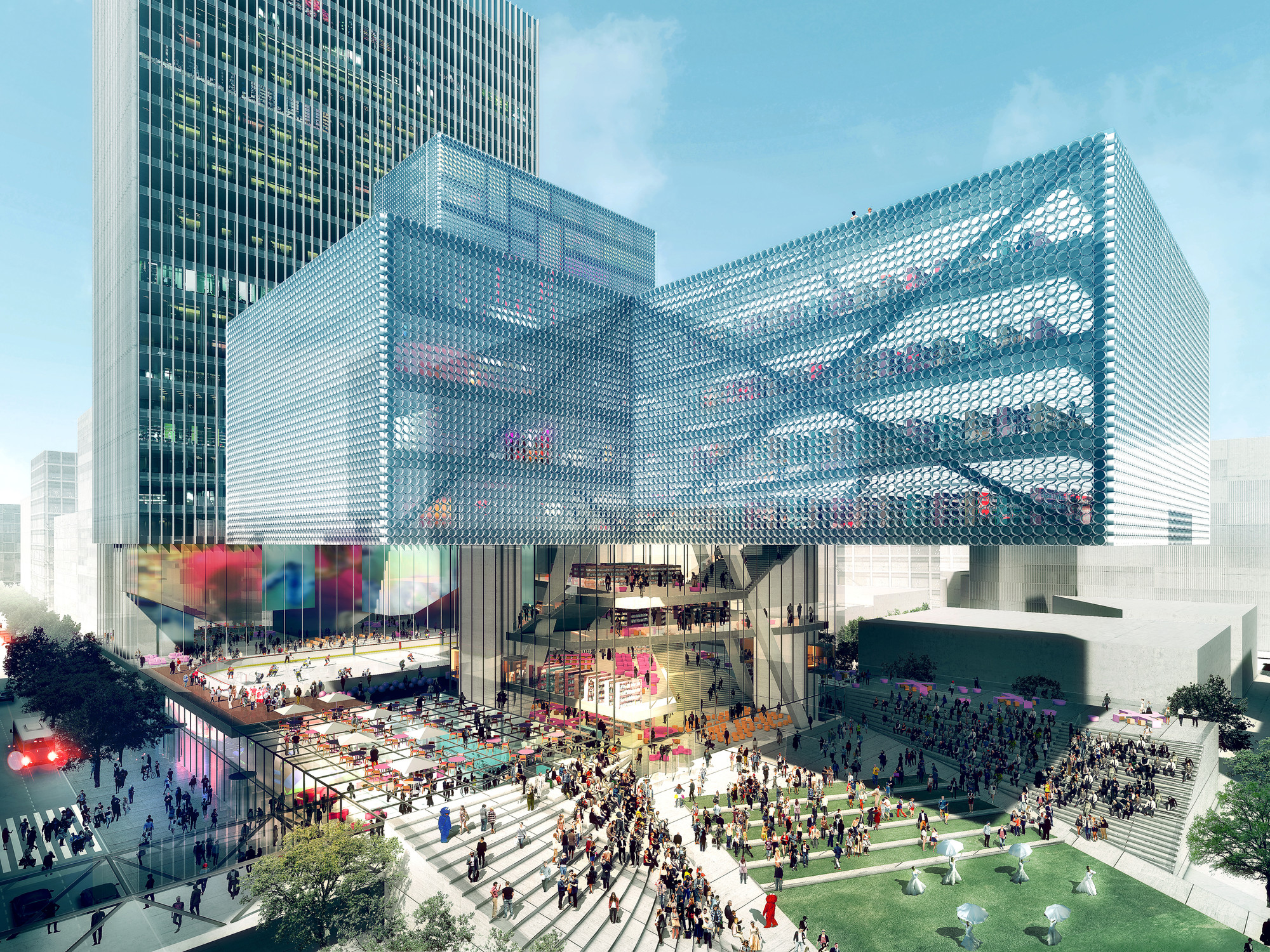
REX has shared with us their competition proposal for Calgary’s New Central Library (NCL). Though Snøhetta and DIALOG ultimately won the competition, REX was shortlisted as a finalist with an unconventional scheme that was based on adaptability, serendipity and treating the librarians as curators. By literally stacking the library’s program according to the client’s desired sequence, REX formulated six typological clusters hoisted on top an illuminated plinth.
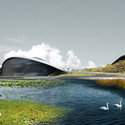
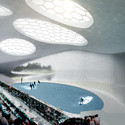
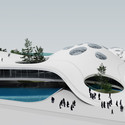
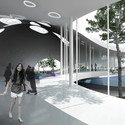
SYAA has just been named first prize winners for their design of a new Natural Science Museum Complex in Constanta, Romania. Proposed at an unprecedented scale for the region, the design seeks to become a significant destination in the Black Sea tourist industry. Incorporating features of an amusement and leisure park into the program of a science museum, SYAA proposes a building equipped to adapt to a diverse variety of public activities and events. Some of the primary functions will include an aquarium, dolphinarium, exotarium and tropical greenhouses, planetarium, and observatory.
Conceived as a natural extension of the existing pathways at Montreal’s Botanical Garden, Saucier + Perrotte architectes’ proposal for the “Espace Pour la Vie Glass Pavilion” competition was envisioned as an immersive glass shelter “eroded” within a lush landscape. The architects, who were also responsible for designing the garden’s 2001 First Nation Garden Pavilion, were among the competition finalists. You can learn more about their proposal, after the break.
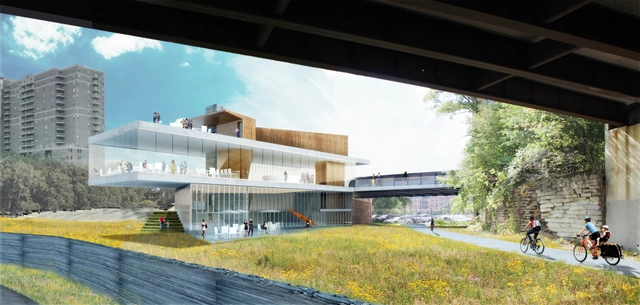
SCAPE / Landscape Architecture and Rogers Partners have envisioned a new public gateway for the Mississippi River’s “one true waterfall” - St. Anthony Falls in downtown Minneapolis. Named after being the city’s original site for its 19th-century water supply and fire-fighting pumping stations, “Water Works” is designed to “weave” together heritage ruins, local ecology, and recreational systems into a “coherent civic space” on four-acres of Central Riverfront.





























.jpg?1417139558&format=webp&width=640&height=580)
_1.jpg?1417140014 "© Vincent Fillon")
.jpg?1417139677 "© Vincent Fillon")
.jpg?1417139756 "© Vincent Fillon")
_1.jpg?1417139762 "© Vincent Fillon")
.jpg?1417139558)