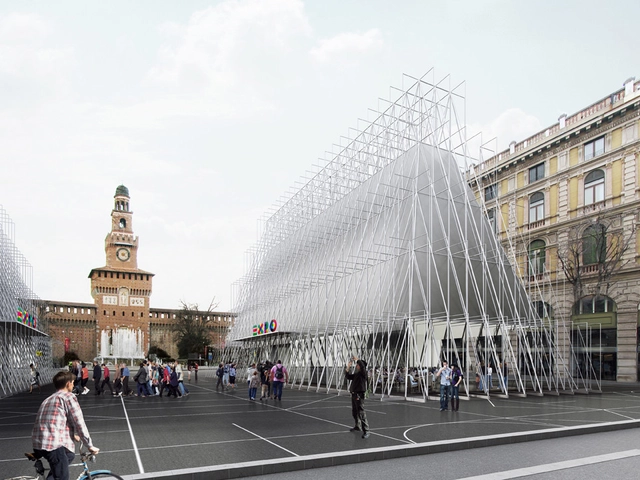
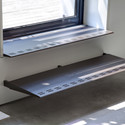
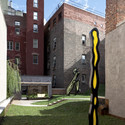
The winning proposal in the Info Point competition at Milano EXPO 2015 by Scandurrastudio aims to be an impressive void; a square and two pavilions. Featuring a great open space, a central square between two booth-like pavilions, the gate to EXPO 2015 will offer an ideal opportunity to talk about growth and evolution, while marking the time before the opening event. More images and architects’ description after the break.
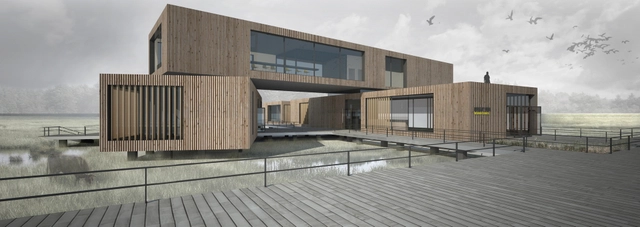
Designed by Alexandros Avlonitis + Aggeliki Anagnostopoulou, their proposal for the Great Fen Visiting Center is derived by the observation of the natural environment of the site and its manipulation by he human factor. The concept is based on an attempt to mimic a very common phenomenon of agricultural terrains: the stacking of blocks of hay, and their impulsive installation in the middle of endless fields. Therefore, the new Great Fen Visitor Center becomes not a building, but a stack of volumes placed in the landscape. More images and architects' description after the break.
As an update to last year's post featuring Memory Cloud as the winning commission awarded to RE:site and METALAB by Texas A&M University for the new Memorial Student Center 12th Man Hall, they have shared with us their most recent images upon the completion of their installation this February. Located in a place of deep traditions that are played out on the football field at every game and in the everyday lives of students, will create the imagery that will be played within the layers of the LED matrix at different speeds and durations. The gallery of images, and a video of the project can be viewed after the break.
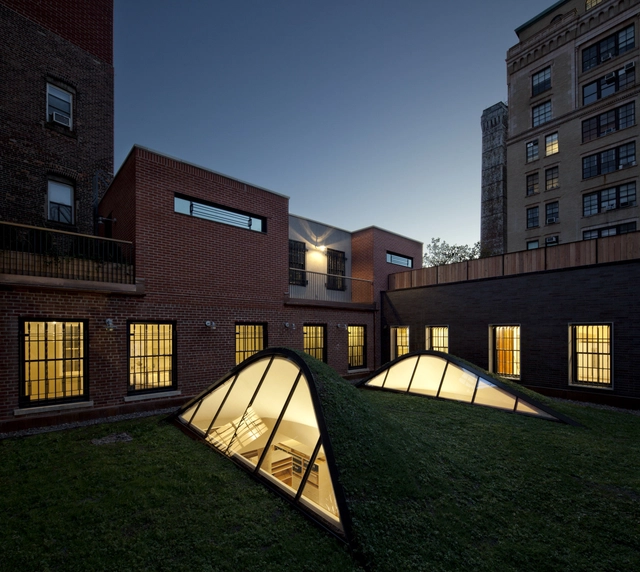
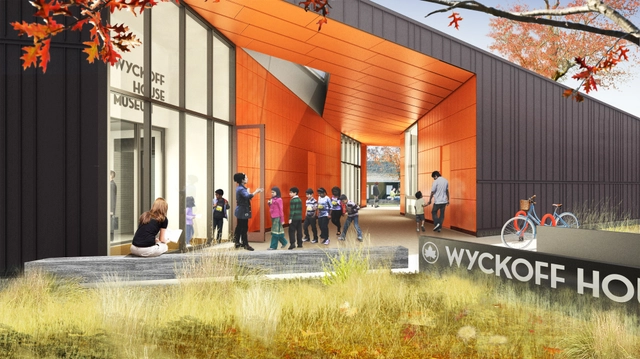
nARCHITECTSis designing a cultural education complex for the Wyckoff House Museum in Brooklyn on the site of New York's oldest house. The Wyckoff House has an immense history as it was the first landmark designated by the Landmarks Preservation Commission in 1968. nARCHITECTS’s educational complex will act as a portal between its present day environment and historical site. Due to its exceptional spatial and temporal intervention, the design was recently awarded an AIA New York Design Merit Award.
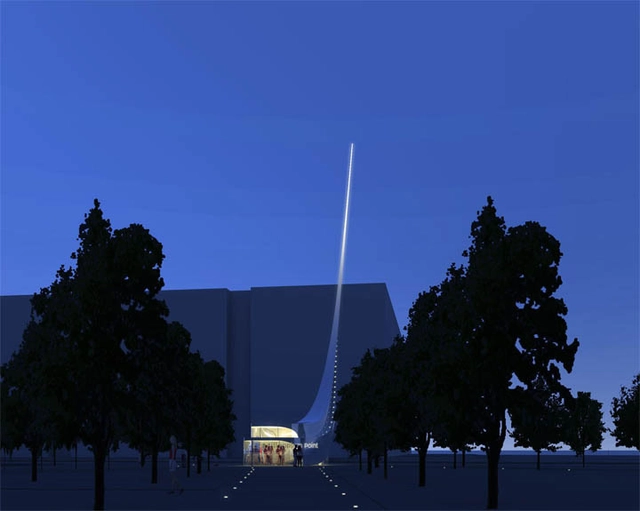
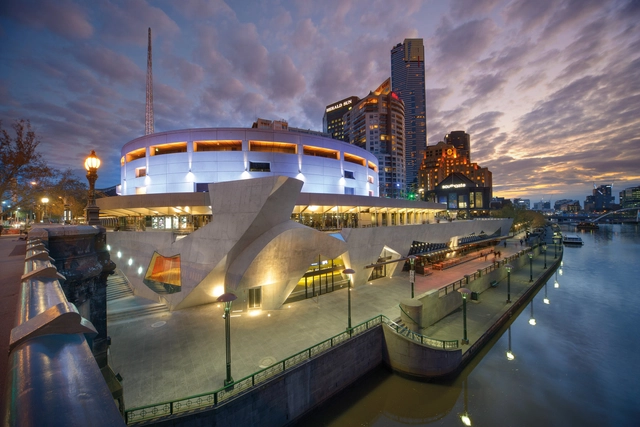
Daniel Madeiros and Jonathan Schwinge were recently announced as the winners of the ideas competition organized by Millennium Point and the RIBA to enhance the visibility and image of Millennium Point in Birmingham from the Jennens Road approach. The jury panel was struck by the beauty and grace of their winning idea which was underpinned by craft and technology, convincing the jury that the dramatic form could be constructed. Also demonstrating complexity and sensitivity to the site, Millennium Point will benefit greatly from this competition and the opportunities it now has for its next phase of architectural evolution. More images and architects' description after the break.
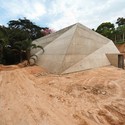
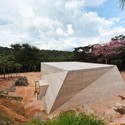
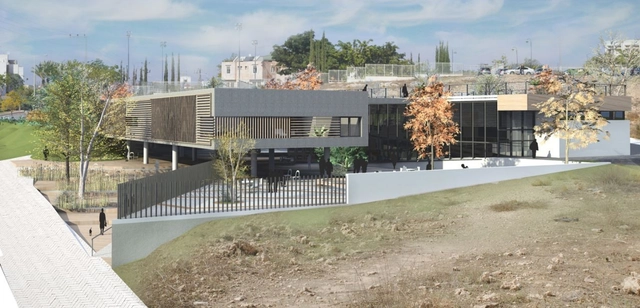
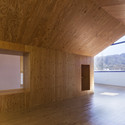
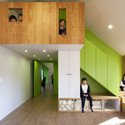
With the city of Be’er Sheba standing out in the areas of education, architecture and environment, this proposal for the day care center, which won an honorable mention, is an opportunity for innovative thinking in social services and integration with the community. Designed by Uri Cohen Architects their plan suggests selective exposure to city life for the users, while keeping their privacy and giving the city areas for activities. More images and architects’ description after the break.
The Odate Jukai Dome in the Akita Prefecture of Japan was completed by Toyo Ito in June 1997. The project is another example of the architect's impressive canon, making use of cutting edge technology and bringing architecture closer to people. Seemingly floating a few meters above the ground, the dome leaves space for the people to flow in comfortably, while the use of wood is itself a way of bringing nature into architecture while adopting the latest technological advancements.
The city of Yatsushiro is known in Japan as a home for exemplary architecture - the legacy at least in part of Artpolis, a plan by the government of the Kumamoto Prefecture to seek out a range of talented architects to design cultural buildings in the cities of the region. Though the Artpolis scheme has been running for the past 22 years, perhaps its most successful building was completed back in 1991, with the construction of Toyo Ito's Yatsushiro Municipal Museum.
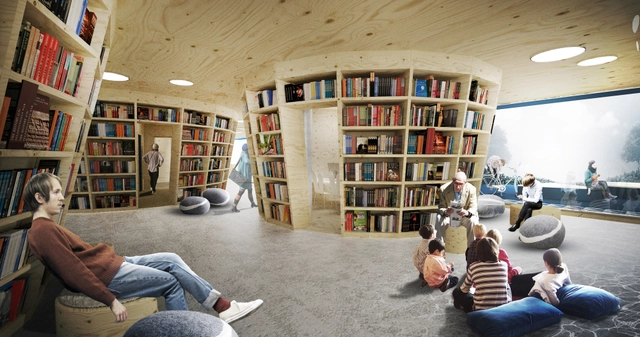
Designed by UGO Architecture, their 'Culture Island' project is a model of a public library meant for small towns up to 15,000 inhabitants. The starting point for creating their concept was the research carried out in 2010 by the Office for Readership Research of the National Library and the Public Opinion Research Centre TNS OBOP. The research shows that 56% of Poles did not read a single book during the year. Thus, they started to think about how to make the citizens and the authorities of the municipality (the latter will finance the project) interested in the idea of model public libraries in spite of the poor readership. More images and architects' description after the break.
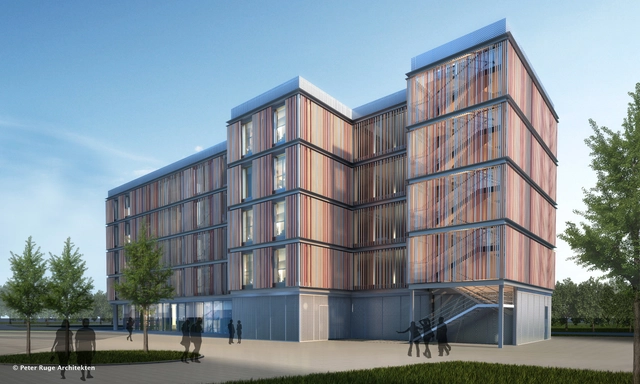
Setting new standards of sustainability through the design of the Passive House "Bruck", Peter Ruge Architekten’s project is a model apartment complex, consisting of 36 one room staff flats, 6 two room executive suites and 4 three-bedroom model apartments currently being built in southern China. With a 95% energy savings over that of a conventional Chinese residential building, the project is the first housing of its kind to be realized in the countries damp, warm, southern climate. Construction just began last month and is expected to be completed within the upcoming months. More images and architects’ description after the break.
gmp Architekten just won the first prize in the competition to design the 1.2 million square-meter Tianjin Exhibition Center. Now the third city where an exhibition center of international importance will be built after Shanghai and Guangzhou, their design concept proposes two almost identical construction phases. They both consist of a central entrance hall roofed over by filigree canopies, 8 exhibition halls on both sides and a main central thoroughfare that connects the entrance halls with the exhibition halls. More images and architects' description after the break.
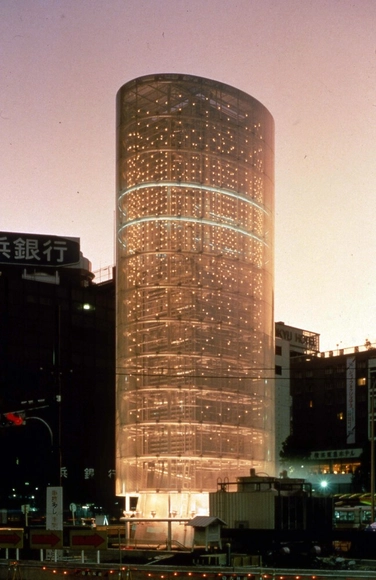
The Tower of Winds is a project largely indicative of Toyo Ito's approach to architecture, particularly his belief in the importance of technology and its vital role in the future of architecture. The project not only embraces technology and involves it in a dialogue with the city, but also establishes a direct symbolic relationship between nature and the installation.
Toyo Ito, recipient of the Pritzker Prize 2013, along with Cecil Balmond and Arup were in charge of the design of the Serpentine Gallery Pavilion back in 2002. What appeared to be an extremely complex random pattern was in fact derived from an algorithm of a cube that expanded as it rotated. The intersecting lines formed different triangles and trapezoids, whose transparency and translucency gave a sense of infinitely repeated motion.