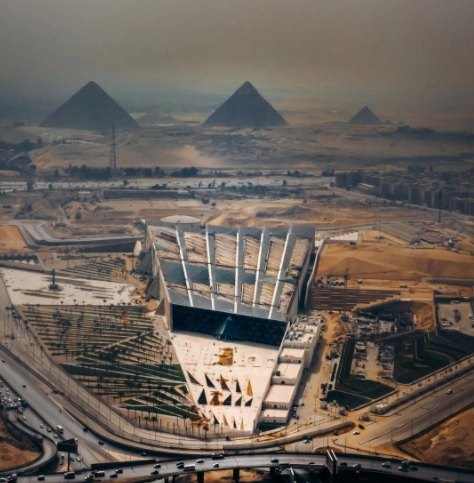
Designed by Irish architecture firm Heneghan Peng, the long-awaited Grand Egyptian Museum devoted entirely to Egyptology is set to open this summer, sitting on the edge of the Giza Plateau, 2 km away from the Pyramids. Considered as the largest museum in the world dedicated to one civilization, the cultural complex will accommodate about 100,000 ancient artifacts, and will include 24,000m² of permanent exhibition space, a children’s museum, conference facilities, educational areas, a conservation center, and extensive gardens inside and around the museum's plan.
This week’s curated selection of Best Unbuilt Architecture highlights cultural structures submitted by the ArchDaily Community. From pavilions to installations, this article explores the topic of cultural urban interventions and presents approaches submitted to us from all over the world.
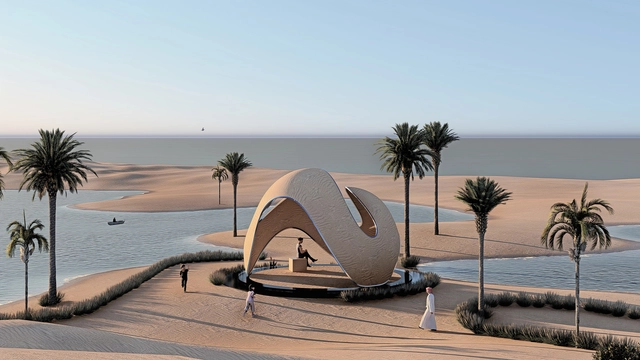
Featuring a pavilion nestled in the sand dunes of the Persian desert, an afrofuturistic, interactive art installation proposed for the upcoming Burning Man event, and a new take on summer cinemas in Russia, this roundup explores how architects reimagined traditional gathering places and created urban interventions in all scales. The round up also includes a collection of structures in the United Arab Emirates, United Sates of America, France, and the United Kingdom, each responding to different contexts and topographies.
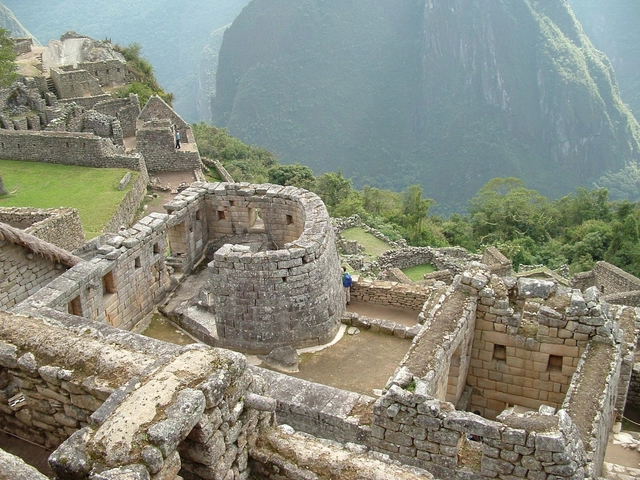
Going beyond human scale is not a novelty. For centuries, builders, engineers, and architects have been creating monumental edifices to mark spirituality or political power. Larger than life palaces, governmental buildings, or temples have always attracted people’s admiration and reverence, nourishing the still not fully comprehensible obsession with large scale builds.
Nowadays, some of the largest and most impressive structures relate less to religious or governmental functions and seem to be turning towards more cultural programs. Most importantly though, today’s grandiose works are generally and openly imitative of Nature.
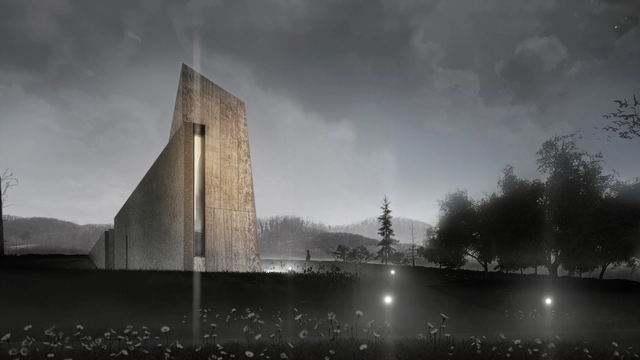
Zovik Chapel and Cemetery. Image Courtesy of Nenad Fabijanić
10 projects, 10 functions. Featuring a multitude of different programs, this week’s curated selection of Best Unbuilt Architecture highlights diverse and innovative conceptual approaches. Submitted by our readers, this variety of proposals includes sports, religious, cultural, educational, and social purposes.
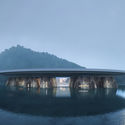
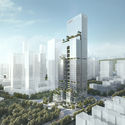
Compiling projects from all over the world, this article puts together a Buddhist temple in Bangkok, Thailand, a ring-shaped experience center and eco-tourism catalyst for Latvia, a cemetery in Bosnia and Herzegovina, and the biggest extreme sports park in Russia. Moreover, unconventional office spaces are underlined with an innovation start-up center in Vietnam, headquarters in Shenzhen, and Tirana’s new municipality building.
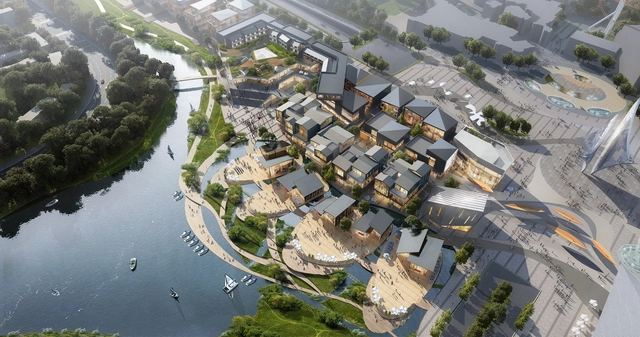
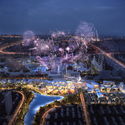
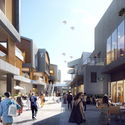
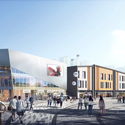
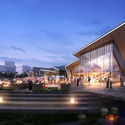
Aedas has released images of the new Xiangyang Overseas Chinese Town Cultural & TourismDevelopment Area Joy Town. Expected to be completed in 2022, the project, located in the Ecological and Cultural Tourism Department in western Hubei, “will provide citizens and visitors with a unique and culturally immersive Xiangyang experience”.
The recently-formed town of Sadra, Iran, is gradually evolving into a mega-city as a result of its geographical location and architectural potential. To improve the cultural standards of the town, several cultural centers were constructed, transforming the area into a major hub for people of all ages.
Keeping in mind that a newly-built town requires an adaptable space for potential expansions, NextOffice - Alireza Taghaboni architecture studio created the “Sadra Civic Center”, a town within a town built from its surrounding urban elements.
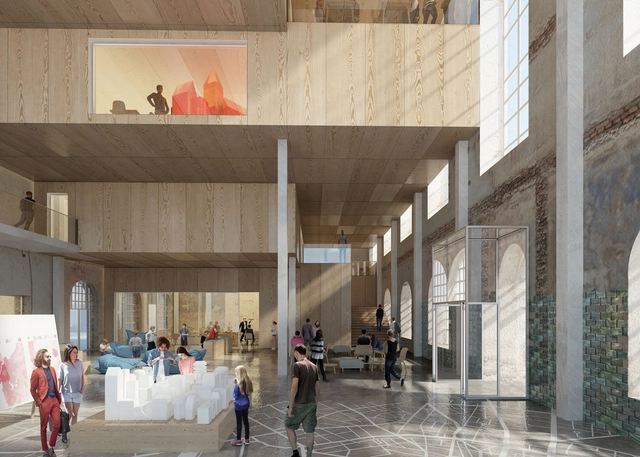
ADEPT's interior proposal for the Stadtmuseum. Image Courtesy of ADEPT
Danish architecture firm ADEPT has been announced the winner of a competition to redevelop Berlin's Marinehaus as part of the city's Stadtmuseum group. This iteration of the competition was launched in 2018 (following a similar competition ten years ago) and will rehabilitate the Marinehaus for public use after nearly 20 years of closure.
https://www.archdaily.com/906319/adept-wins-competition-to-design-new-city-museum-for-berlinAD Editorial Team
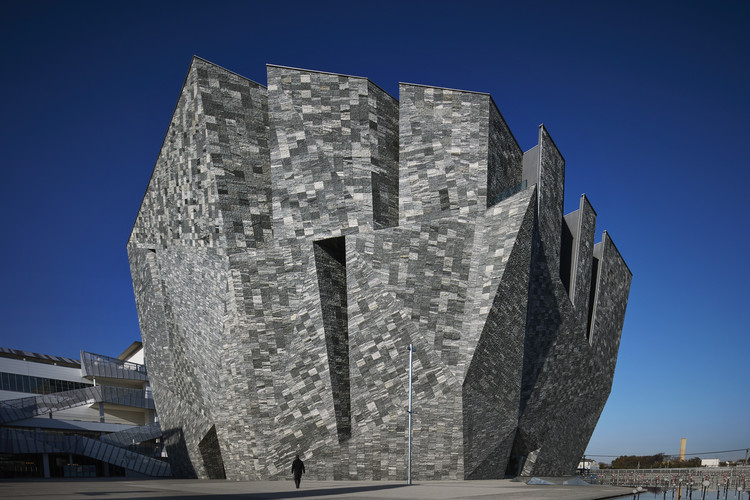
A collection of stones piled one on top of the other, dry stone is an iconic building method found just nearly everywhere in the world. Relying solely on an age-old craft to create sturdy, reliable structures and characterised by its rustic, interlocking shapes, the technique has deep roots that stretch back even before the invention of the wheel. Its principles are simple: stack the stones to create a unified, load-bearing wall. But the efficient, long-lasting results, coupled with the technique’s cultural significance, have lead to continued use and updated interpretations all the way to contemporary architecture today.
There has been a lot of focus recently on community engagement in architecture. Some building by some architect is designed to be the next 'community hub,' but what does it take to deliver on the design intent?
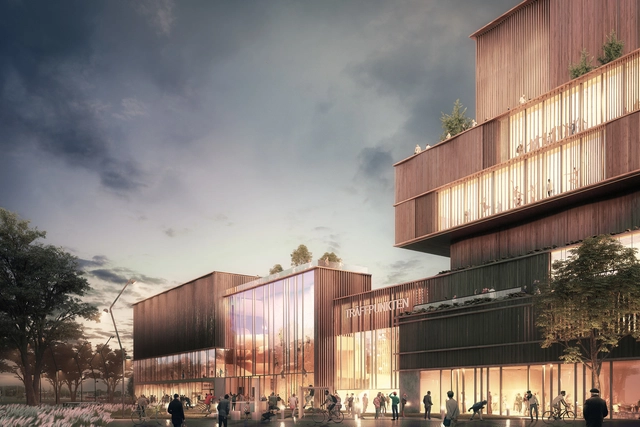
In order to promote a community atmosphere, a design must engage a large and variable audience, while also offering something unique. This new design from AIX Arkitekter intends to create a new multicultural center called "The "Meeting Point" in Täby, Sweden. The center combines unique sports and cultural activities, at the heart of an existing ecological infrastructure, to promote community opportunities and engagement.
"The Meeting Point" center utilizes both indoor and outdoor activities. This dynamic also translates throughout the design language of the building through transparency and landscape elements. The intersecting masses cause various activity spaces to overlap, promoting happenstance interactions between both people and program.
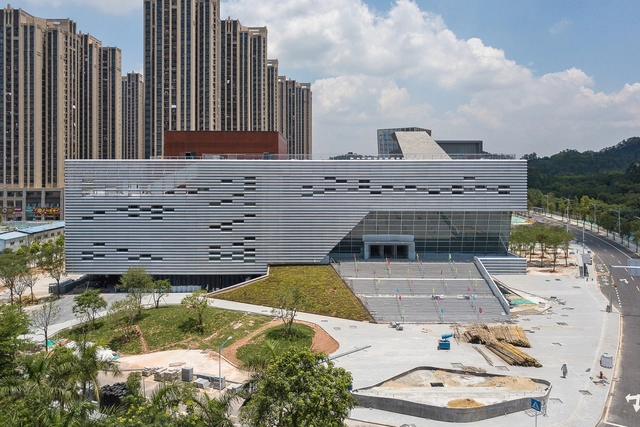
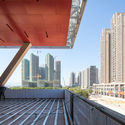
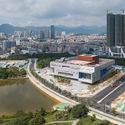
OPEN Architecture has released a new set of photos that documents the construction milestones of Pingshan Performing Arts Center in Shenzhen, China. The project was initially announced in 2015 as the first theatre planned for the newly-developed Pingshan area. With its building envelope now fully formed and cladded in precision-engineered aluminium panels, the Performing Arts Center is set to open by the end of this year as one of the city’s most anticipated cultural venues.
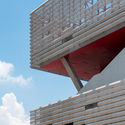
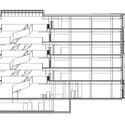
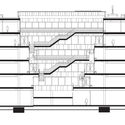
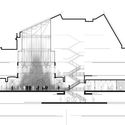
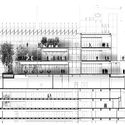
Offices and cultural buildings both offer the perfect opportunity to design the atrium of your dreams. These central spaces, designed to allow serendipitous meetings of users or to help with orientation in the building, are spacious and offer a lot of design freedom. Imposing scales, sculptural stairs, eccentric materials, and indoor vegetation are just some of the resources used to give life to these spaces. To help you with your design ideas, below we have gathered a selection of 15 notable atriums and their section drawings.
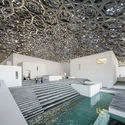
In this video, architecture vloggers #donotsettle take us inside Ateliers Jean Nouvel's "museum city" in the sea: the Louvre Abu Dhabi. Filmed one month after the museum’s opening in November, Kris Provoost winds his way through the galleries to the much-talked-about mega-dome—with a diagrammatic key plan in the bottom corner of the video helping us to follow his path.
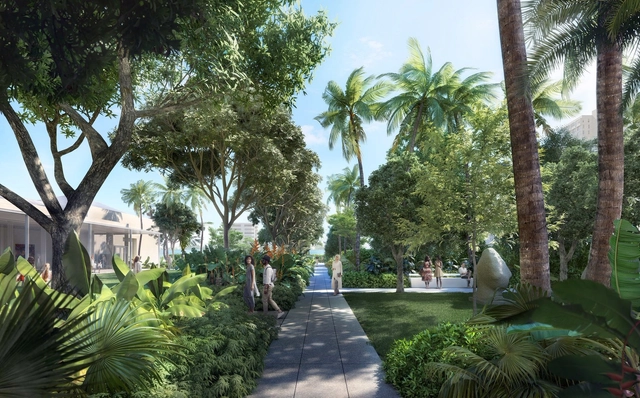
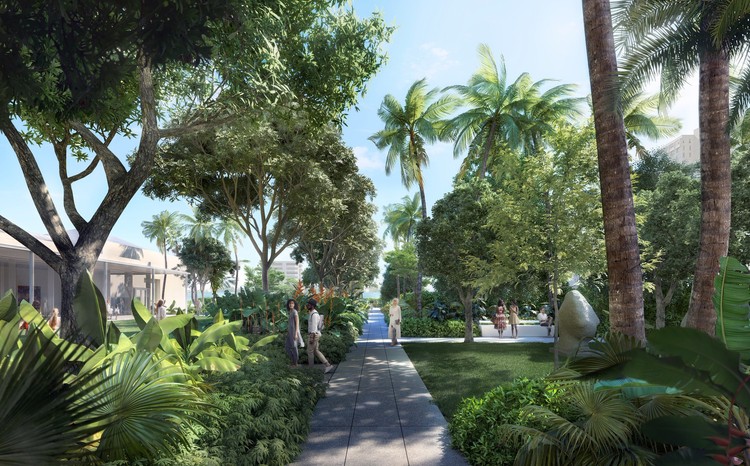
The Norton Museum of Art in West Palm Beach, Florida has announced plans for the first-ever public garden designed by Foster + Partners as part of their $100 million expansion project. To feature a variety of native sub-tropical plantings and gathering spaces, the garden is envisioned as “a new social space for the community.”
“From the beginning, we have conceived of the Norton expansion as an opportunity to create a New Norton—one that embraces its original design, while also creating a more welcoming and inviting campus,” said Lord Norman Foster.
“In our masterplan, it was important for us to define the Norton’s sense of place—in this case Florida’s lush subtropics. To do so, we conceptualized a museum within a garden. We are creating verdant spaces for art and programming that extends the museum beyond its walls.”























.jpg?1520626310 "© Roland Halbe")