Danish architect Jan Gehl is a world renowned expert in all things related to urban design and public spaces. He obtained this expertise by publishing numerous books, and later, from his consulting firm Gehl Architects that he founded in Copenhagen, his hometown, to make cities for people. The firm celebrated its 50th anniversary in 2016.
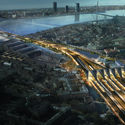
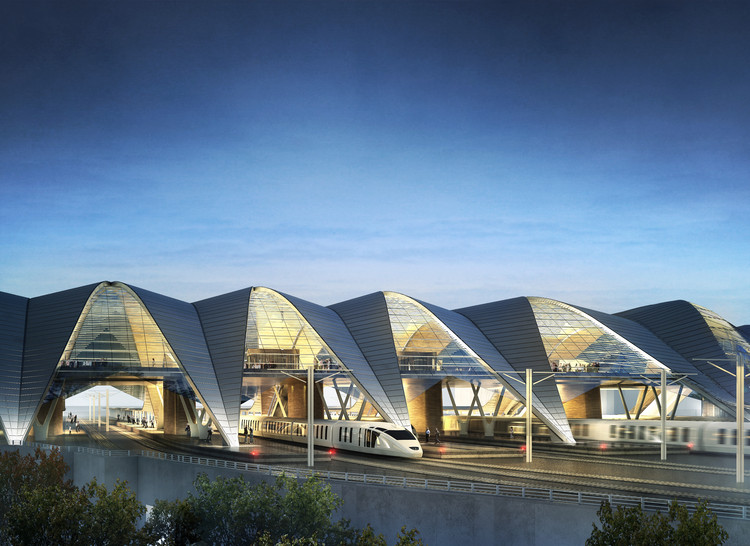
PLH Arkitekter has been announced as one of two winners in the international design competition for Rail Baltica, organized by The European Railroad Lines, Ltd. As a part of the European transport network, Rail Baltica will be a multi-modal public transport hub in the Latvian capital of Riga, with a railway bridge crossing the Daugava River.
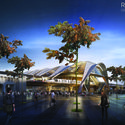
The focal point of the project will be a train station building “that creates a strong visual identity in the cityscape, strengthening the sense of Riga as a metropolis.” Inspired by the archetypal form of the arch and the Art Nouveau period, the building will feature canopies that resemble arched fern leaves. On the north side of the building, the canopy shape allows for a unique view over the historic city, ideal for travelers entering or leaving the city to create a strong sense of place.
Update: following the screening period The Infinite Happiness is no longer available to watch on ArchDaily. The full collection of Bêka and Lemoine's films can be viewed on demand, here.
For two days only—between Friday, December 2 and Sunday, December 4—you can watch The InfiniteHappiness, part of Ila Bêka and Louise Lemoine'sLiving Architectures series, exclusively on ArchDaily. The film, shot entirely in Copenhagen's "8 House" designed by BIG, follows a group of residents (and passers-by) as they experience life in a contemporary housing block widely considered to embody new models of living.
https://www.archdaily.com/800425/watch-beka-and-lemoines-the-infinite-happiness-nil-a-documentary-film-on-bigs-8-houseAD Editorial Team
Marking the forthcoming release of two DVD box-sets of their entire œuvre (which was acquired by New York's Museum of Modern Art (MoMA) in 2016) Bêka and Lemoine have, over the course of the Living Architectures project, developed films about and in collaboration with the likes of the Barbican in London, the Fondazione Prada, La Biennale di Venezia, Frank Gehry, Bjarke Ingels, the City of Bordeaux, the Arc en Rêve centre d’architecture, and more. Their goal in this has always been to "democratize the highbrow language of architectural criticism. [...] Free speech on the topic of architecture," Bêka has said, "is not the exclusive property of experts." Their first film, Koolhaas Houselife(2008), has come to embody this unique approach.
Watch The Infinite Happiness on ArchDailyhere from December 2 1800GMT.
https://www.archdaily.com/800143/beka-lemoines-documentary-film-big-8-house-copenhagen-the-infinite-happiness-exclusive-screeningAD Editorial Team
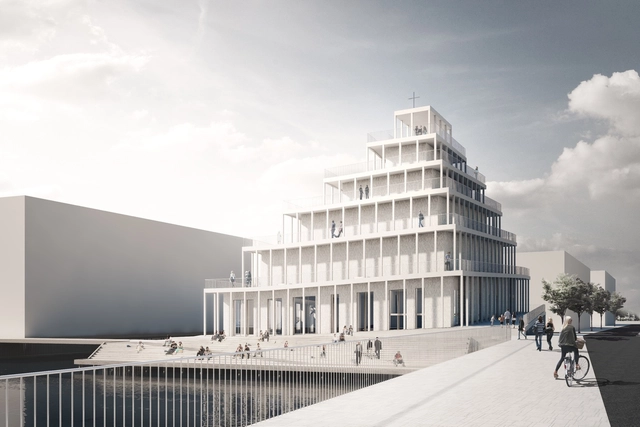
JAJA Architects has been announced as the winners of an open international competition to design a new parish church in the Sydhavnen (South Harbor) district of Copenhagen. When completed, it will be the first new church built in Copenhagen since 1989.
The competition, organized by The Danish Association of Architects, sought proposals for a 3,200 square meter church to be located on a waterfront site in the revitalized district of Sydhavnen that could be used for a range of religious, social, cultural and musical events. Construction of the church is expected to be completed in 2019.
Continue reading to see the winning proposal as well as several additional entries.
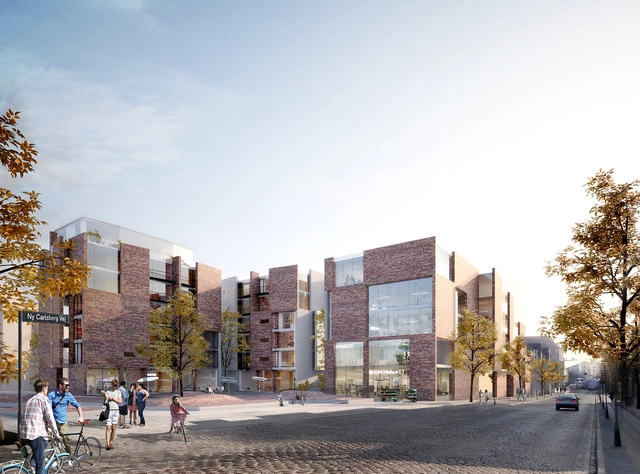
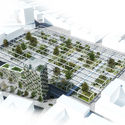
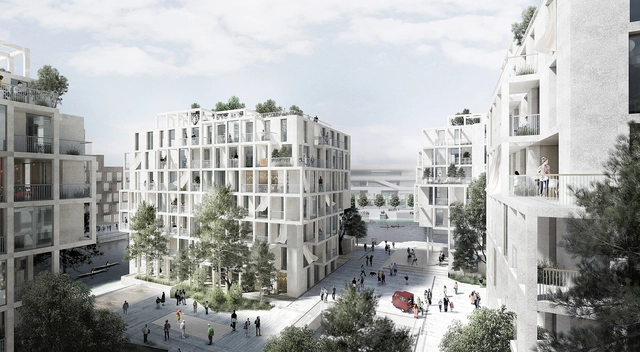
From the architect. The new plan for Copenhagen’s Carlsberg Byen development embraces the closeness of the old city, and aims to establish a vibrant new neighborhood on the site of a former brewery. White Arkitekter has developed a residential and commercial proposal which responds to the historical urban morphology of Copenhagen while making a literal connection to the old industrial context by utilizing bricks recycled from the demolition of some of it.
Courtesy of COBE, Vilhelm Lauritzen Architects and Sted
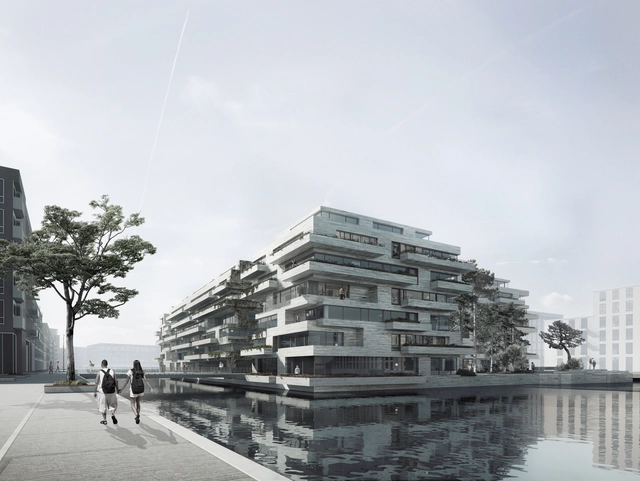
Danish firm Vilhelm Lauritzen Architects has lead a team comprised of COBE, Sted, and Rambøll in the design of a brand new island in Copenhagen's harbor. Situated in the Kronløb water basin in Nordhavn, the monolithic presence of the Kronløb Island references the geological processes by which the topography of Denmark was formed. The floating new district will include parking facilities, housing, and public spaces.
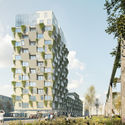
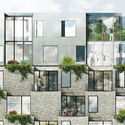
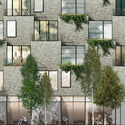
Denmark-based Studio LOKAL has won the competition for the design of a residential tower in Copenhagen, with The Hanging Gardens, its proposal for a merger of the historic brick buildings of Carlsberg with the concept of a personal garden for each resident.
Located on the site of a former vegetable market, the proposal aims to return to these homegrown roots by encouraging residents to grow their own produce in one of the tower’s gardens. Furthermore, the ground floor of the building will house a farmers market where residents can trade their own produce.
Metropolis Magazine has released their 2016 rankings of the world's most "livable" cities. Acknowledging that what makes a city "livable" can often be subjective, the team at Metropolis emphasizes that in creating the list they "focused on the concerns at Metropolis’ core—housing, transportation, sustainability, and culture." The result of this research was last year's top prize-winner Toronto dropping to the number 9 spot and Copenhagen, which last year took the number 4 spot, jumping to the top. Rounding out the top three are Berlin and Helsinki.
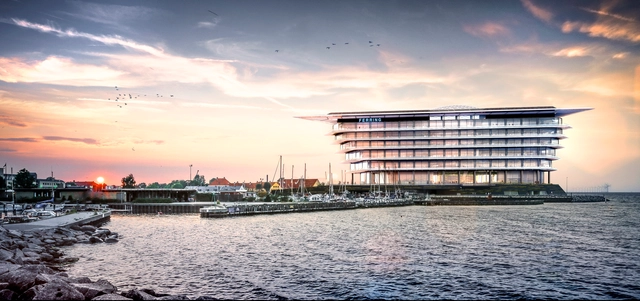
Foster + Partners has broken ground on the new headquarters for Ferring Pharmaceuticals A/S in Copenhagen, Denmark. Located on the urban fringe of Copenhagen in Kastrup, the 39,000-square-meter project occupies a waterfront site along the Øresund crossing between Copenhagen and Malmö near the Copenhagen International Airport.
With this location and neighborhood of predominantly low-rise development, the new company offices will feature expansive views towards Malmö and the Swedish coast, where the company was founded.
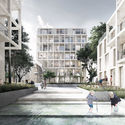
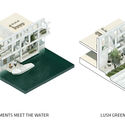
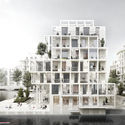
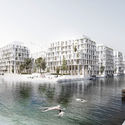
TREDJE NATUR, AART Architects, and Arup have teamed up for a competition proposal to redesign Kronløbsøen, an island development marking the transition between port and city in Nordhavn, Copenhagen. Composed of 30,000 square meters of housing, six water-rooms, a houseboat colony, harbor bath, and multi-story underwater parking, the project aims to create an island celebrating all aspects of harbor life.
Taking into account the local port’s spirit, scale, material palette, and history, Kronløbsøen is “composed of eight porous monoliths shaped by physical connections, visibility, and microclimate, creating the optimal conditions for housing and urban life.”
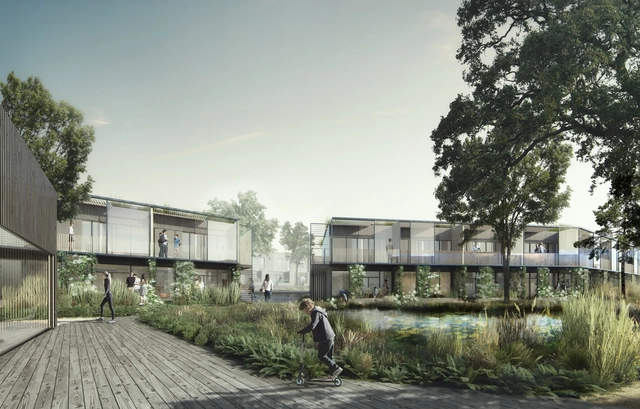
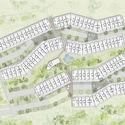
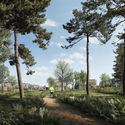
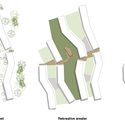
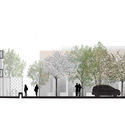
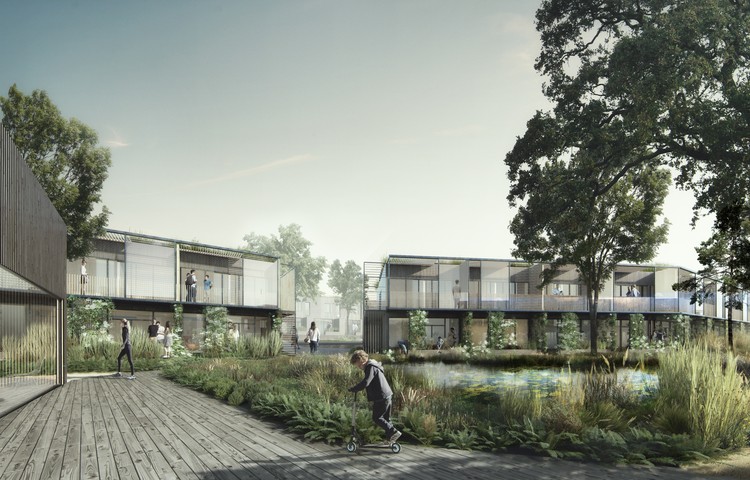
White Arkitekter’s Copenhagen studio has been selected as winners of a competition to design 115 individual homes as part of a social housing project in Denmark’s Allerød Municipality. Located north of the capital city of Copenhagen, the new neighborhood will be bordered by forest and a lake, inviting the nature in to complement and screen individual buildings. The project, titled “By the Woods,” will attempt to subvert typical preconceptions about social housing through the blurring of public and private space.
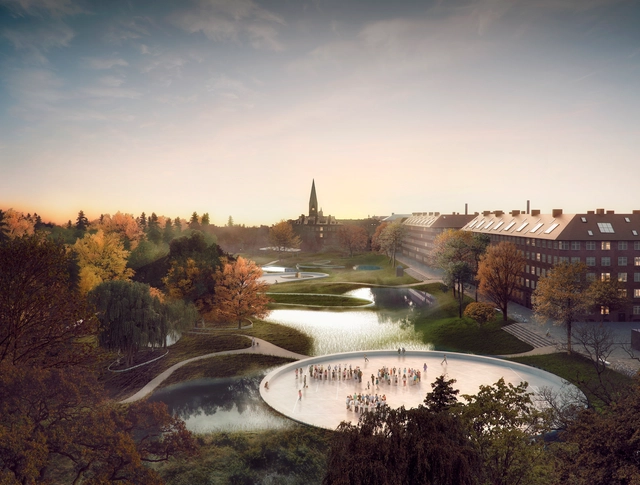
Planning and landscape firm SLA Architects and engineering office Ramboll have won an international competition to redesign Hans Tavsens Park and its surrounding area in the central Copenhagen borough of Nørrebro. The competition tasked architects with envisioning a park and streetscape that would benefit the hydrological, biological and social ecosystems of the neighborhood. The winning proposal, titled The Soul of Nørrebro, tackles the challenge by creating a system of drainage areas and an adaptable park designed to redirect runoff and contain and purify water during flood conditions.
Dorte Mandrup Arkitekter won the competition to design an extension for the headquarters of the Danish Society of Engineers (IDA). ‘‘The Opal’’ will form part of the scenic Copenhagen Harbour, accommodating a conference hall and restaurant. Of all shortlisted designs, the IDA stated that The Opal best-reflected "[their] vision of engineering."
The eye-catching design alludes to the gemstone it is named after, which reflects light to take on multiple colours. This reference is seen both in the structure and form of the new addition to the Copenhagen Harbour.























.jpg?1466122331&format=webp&width=640&height=580)