Videos
via Graven Hill Village Development Company
“Self-build”: no mention of an architect, or anyone else for that matter. Maybe it’s a prehistoric urge that makes this idea so enticing; our earliest ancestors constructed their primitive huts to suit their unique needs and reflect their status or style. “Self-build” promises to physically re-connect people to the homes they live in.
However, the romantic notion of "self-build" housing is rarely compatible with the modern reality we live in. Building has become increasingly clouded by the difficulty of procuring land, excessive governmental red-tape, and an increase in building complexity. While self-build remains the purest form of this dream, there are now a series of nuanced processes that can help us achieve similar results. As a new generation of communities that encourage this dream emerges, we must look at the role the architect plays within them.
Anticipation builds as preparations are underway for the 2018 Greenbuild International Conference & Expo, happening Nov. 14-16 at McCormick Place in Chicago, Illinois.
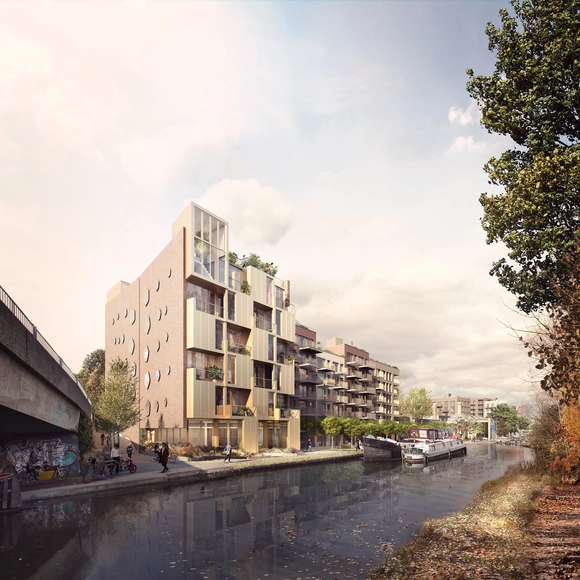
Wickside is a £120m “permeable, mixed-use neighborhood” that will provide 475 homes and 300 jobs for the surrounding community. Designed by BUJ Architects and Ash Sakula Architects, the neighborhood has recently received the all-clear from the LLDC planning committee. Almost nine years in the making, the scheme uses “urban blocks set around ordinary London streets” to create a complex, diverse townscape with a variety of uses. The neighborhood is housed within a 28,800 square meter former waste transfer site in Hackney Wick, London. Integrating the context’s existing buildings and cultural heritage, Wickside aims to develop the existing creative community through “retention and regeneration,” and is one of the largest development sites in the area.
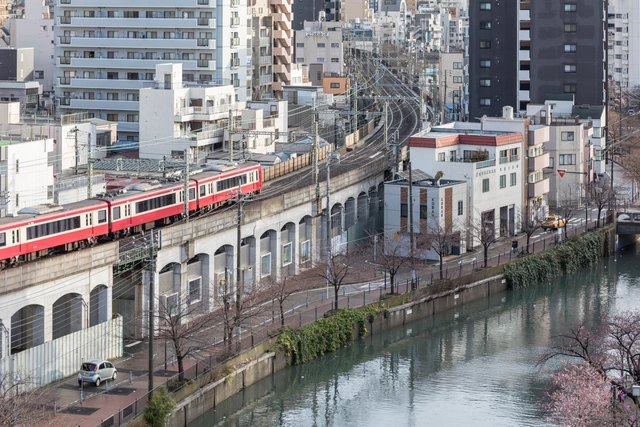
A +100 meter stretch of land beneath a train overpass in Koganecho, a district of Yokohama, Japan, underwent a progressive refurbishment in which seven different types of community space, each designed by a different architect, were built within a pre-set spatial grid. Historically there were many social issues in the area, largely in relation to its profitable but dangerous black market and red-light district. Once the illegal activity was eradicated in 2005, the underpass presented a great opportunity for social re-development, and the resultant project - the Koganecho Centre - emphasized an age-old Japanese cultural commitment, where what was once broken is used to make something new.
This project emerged during the summer of 2015, when CHOPEkE Collective, together with Paúl Pérez, a seminarian and active member of the group, visited the community of Santa Luisa de Marillac, located in the central periphery of Ciudad Juárez. At the time, members of the community had an "unworthy" space -as they called it- for their meetings and spiritual activities.
THE CHALLENGE Our world is witnessing a time of record migration and displacement. According to the United Nations High Commission for Refugees, there are now more than 60 million forcibly displaced people worldwide, the result of persecution, conflict, violence or human rights violations. Cities are on the front lines of this global crisis. Sixty to seventy percent of displaced people now live in cities. As the number of urban displaced persons grows, so does the moral imperative to welcome and embrace them. While immigrants and refugees face many challenges in their new urban lives — language, access to services, work and housing, cultural barriers — they also bring new energy to our cities and economies. Their success is our success.
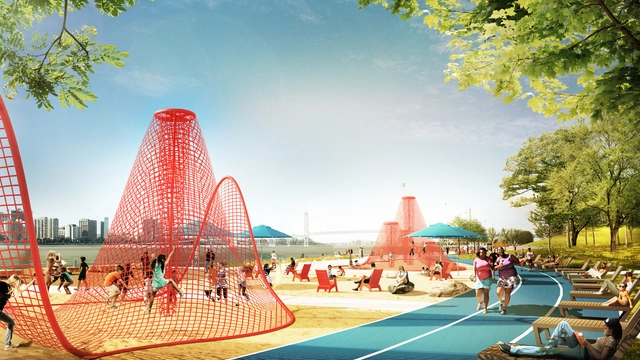
As the river offers a place of beauty and solitude to the people of Detroit, four international design teams have presented their creative schemes for the West Riverfront to extend this vibrant area in the city as part of an international design competition led by the Detroit Riverfront Conservancy (DRFC). The development of the 22-acre West Riverfront Park is expected to cost around $50 million to complete the DRFC’s ultimate vision for 5.5 miles of revitalized riverfront.
Thousands of people in Tel Aviv put together over 500,000 plastic building blocks to create the tallest LEGO structure in the world. The project was created in memory of 8-year-old Omer Sayag, who loved the toy blocks before he was taken by cancer in 2014.
“How do you bring architectural stories to life?”—this is the question the AIA asks annually in their I Look Up Film Challenge. This year’s theme, Blueprint for the Better, challenges architects and filmmakers to collaborate and tell the stories of architects making a positive impact on the community.
Bee Breeders announced the winners of the Adelaide Creative Community Hubcompetition, challenging designers to propose an innovative, vibrant public space for the city of Adelaide, Australia. Participants were required to design either a temporarypavilion or fixed landmark within the frequented public park. Competition submissions seemed to focus on one of three things: a flexible open program, half building/half landscape, or a temporary pavilion. Judges looked for a clear concept. Winning projects have the potential to do more than merely bring people together; they go a step further sparking innovation in creative communities.
ODA New York’s design for Bushwick II, a high-end residential complex on the former site of Brooklyn’s Rheingold Brewery, is coming to life in the fast-growing neighborhood of Bushwick, New York. Developed by All Year Management, 123 Melrose is already being clad. Meanwhile, Rabksy Group’s development, 10 Montieth, recently topped out.
Together, the projects will cover three full city blocks, totaling 1.35 million gross square feet. Bushwick II will be the largest housing increase this neighborhood of Brooklyn has ever seen.
Architects play a crucial role in addressing both the causes and effects of climate change through the design of the built environment. Innovative design thinking is key to producing architecture that meets human needs for both function and delight, adapts to climate change projections, continues to support the health and well being of inhabitants despite natural and human-caused disasters, and minimizes contributions to further climate change through greenhouse gas emissions.
The Australasian Student Architecture Congress (ASAC)—titled Agency 2017—will be held in Sydney from the 28th of November to the 2nd of December. It will be the first congress held in Sydney since 1999 and student-led by ASAC Inc., a non-profit student body based in NSW, Australia.
Generating new models for participatory development for Ulleung island in South Korea.
The SHINBISUM workshop aims to open an alternative way of thinking about rural development in Ulleung-do and beyond. In a world where participatory practices are becoming the norm, how can the local and international community contribute to shape the future of JangHeung? The residents of Ulleung island, the Korea rural community corporation, Yangji Co., and urbz invite you to imagine with them the future of one of Korea’s most iconic locality. The workshop will produce strategic ideas and design interventions for JangHeung village. If you like to create, ideate, design and build - join us for a 5-day participatory immersion in a place which embodies the struggle of many localities around the world. Like so many other places, Ulleungdo is torn in between urban development and the preservation of their natural environment.
A design by C-re-a.i.d. for a Maasai village in northern Tanzania, is a morphological response to the imposed need to settle, using sustainable, local and accessible materials to redefine its construction culture.
The project is built by a series of earthbags and glass bottles that in addition to generating private and comfortable spaces, allow a quick and easy construction.
The City of Detroit is launching a design competition in the Morningside neighborhood that aims to design and build a new central park for that community, replacing a decommissioned park that will be sold to adjoining residents.
Give a Park, Get a Park will accept qualifications from interested designers between June 19 and July 31. The city is particularly interested in receiving Qualifications from Detroit- and Michigan-based emerging design professionals and design students. Applicants can register and learn more at gapgapdetroit.org.
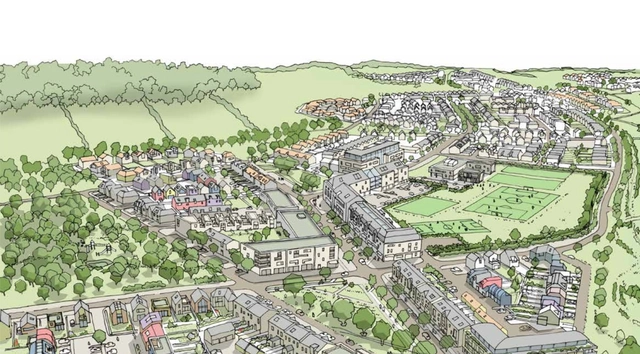
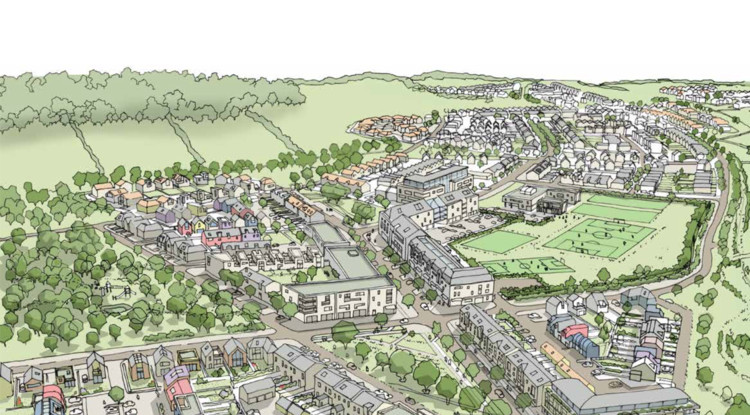
Imagine that London becomes the world’s first National Park City. This large-scale and long-term vision has the potential to transform how Londoners live and how the city works. But what would London look like?
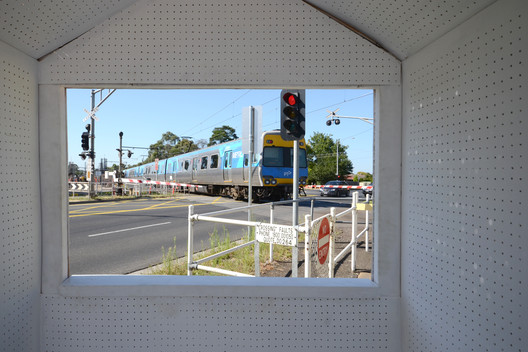
With Melbourne’s contentious elevated rail project starting construction, an independent group has taken the opportunity to critique the way that this key piece of infrastructure is engaging with the public. The project, leftunder, is a platform for alternate, community driven proposals for the public space being made available adjacent to this new infrastructure, that which might normally be overlooked and undermaintained. Run by not-for-profit OFFICE, the project has recently culminated in an exhibition at The National Gallery of Victoria's Design Week.










.jpg?1507695443&format=webp&width=640&height=580)
_Bloomimages_7.jpg?1505315925 "Courtesy of ODA New York")
_Bloomimages_8.jpg?1505315959 "Courtesy of ODA New York")
_Bloomimages_1.jpg?1505315031 "Courtesy of ODA New York")


.jpg?1503515565&format=webp&width=640&height=580)