Viewed from the far end of the Great Basin, the Administration Building looms over the court of honor and the surrounding great buildings of the fair. ImageCourtesy of Wikimedia user RillkeBot (Public Domain)
The United States had made an admirable showing for itself at the very first World’s Fair, the Crystal Palace Exhibition, held in the United Kingdom in 1851. British newspapers were unreserved in their praise, declaring America’s displayed inventions to be more ingenious and useful than any others at the Fair; the Liverpool Times asserted “no longer to be ridiculed, much less despised.” Unlike various European governments, which spent lavishly on their national displays in the exhibitions that followed, the US Congress was hesitant to contribute funds, forcing exhibitors to rely on individuals for support. Interest in international exhibitions fell during the nation’s bloody Civil War; things recovered quickly enough in the wake of the conflict, however, that the country could host the Philadelphia Centennial Exhibition in 1876. Celebrating both American patriotism and technological progress, the Centennial Exhibition was a resounding success which set the stage for another great American fair: the World’s Columbian Exposition of 1893.[1]
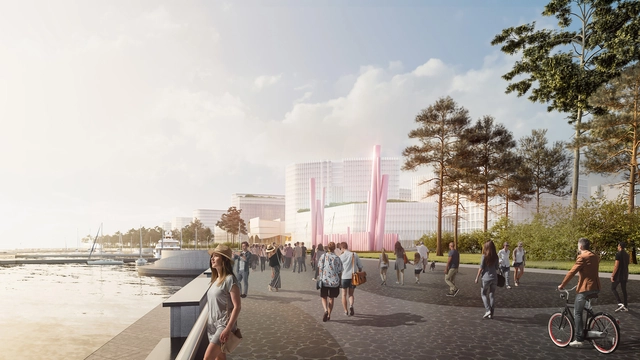
A consortium comprising Progress, Miralles Tagliabue EMBT and Cushman & Wakefield recently reached the final stage of a design competition to create a tourist center in Russia in part of the embankment named after Admiral Serebryakov in the city of Novorossiysk. The proposal provides the required hospitality spaces but also features unique facilities, such as a wine museum, a fish market and an "artificial island", all serving as new centers of attraction for residents and visitors of the city. The foundation of the design concept is based on three components: "the idea of a natural city, the unification of the three forces of nature and the characteristic appearance of Novorossiysk as a port city."
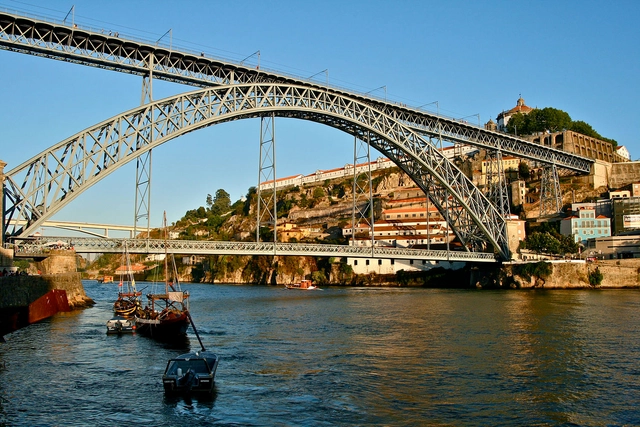
via Wikimedia. ImageDom Luis Bridge / Porto, Portugal
An unfortunate fact of the AEC (architecture, engineering, and construction) industry is that, between every stage of the process—from planning and design to construction and operations—critical data is lost.
The reality is, when you move data between phases of, say, the usable lifecycle of a bridge, you end up shuttling that data back and forth between software systems that recognize only their own data sets. The minute you translate that data, you reduce its richness and value. When a project stakeholder needs data from an earlier phase of the process, planners, designers, and engineers often have to manually re-create that information, resulting in unnecessary rework.
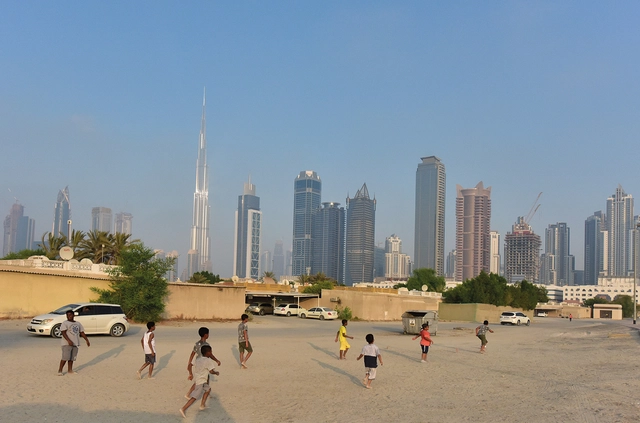
Children playing soccer on sandy street outside the boundaries of bigness. Image Courtesy of National Pavilion UAE - la Biennale di Venezia
As part of our 2018 Venice Architecture Biennale coverage we present the proposal for the UAE Pavilion. Below, the participants describe their contribution in their own words.
The National PavilionUAE will present “Lifescapes Beyond Bigness,” an exhibition exploring human-scale architectural landscapes, at the 2018 Venice Biennale. The exhibition aims to highlight the role of architecture and urban design in forming the choreography of people’s daily routines. It particularly investigates the role of ‘quotidian’ (every day) landscapes in accommodating, enhancing, and facilitating social activities across different places in the UAE.
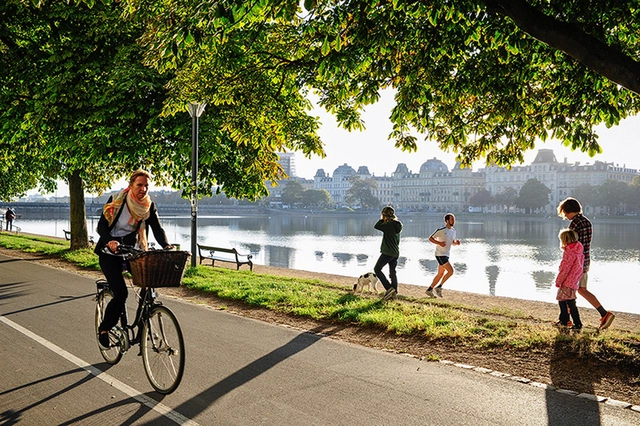
Jane Jacobs was arguably the most important “citizen” planner in the 20th century. If we were setting up a related category for credentialed planners, then the great Danish urbanist Jan Gehl might just top that list; inspired by the ideas of Jacobs, the architect and urban designer has spent nearly a half-century studying and writing about public space. He helped his home city of Copenhagen become a kind of model for walkable urbanism and has consulted for cities all over the world.
Two and a half years ago his firm, Gehl, launched a nonprofit arm, Gehl Institute, dedicated to public engagement, and the use and creation of public urban space as a tool of both economic development and political equity. Recently the institute published what it describes as “tools for measuring public space and public life, in the form of free, downloadable worksheets.” The toolkit is beautifully executed. Last week I talked to Shin-pei Tsay, executive director of the Gehl Institute, about the tools and what her group hopes to accomplish with them.
European Urban Green Infrastructure Conference 2017
EUGIC 2017 Budapest—interactive, dynamic, exciting—urban green infrastructure leaders share nature-based solutions for cities. Global practitioners, local experts, projects from Europe and around the world.
UC Berkeley's College of Environmental Design is now accepting applications from prospective participants in the 2016 Summer [IN]STITUTE in Environmental Design. This six week intensive summer program gives students the opportunity to test their enthusiasm for the material and culture of environmental design.
The Summer [IN]STITUTE consists of [IN]ARCH, [IN]LAND and [IN]CITY, three introductory programs in architecture, landscape architecture and sustainable city planning for post-baccalaureate students and senior-level undergraduates, as well as [IN]ARCH ADV, an advanced studio for post-baccalaureate students who have a degree in architecture or who are senior-level architecture majors.
Day View of the Vessel. Image Courtesy of Bart//Bratke
California is suffering through its 5th year of severe water shortage. Aquifers and rivers continue to dry out as the water provided by melting snowpacks is reduced, and even the heavy rain brought by El Niño this year could not relieve the drought. Authorities are wary of the long-term consequences for California and neighboring areas of the Colorado River, and Santa Monica is now seeing a growing number of initiatives to control the use of potable water and find sustainable solutions.
Most recently, a competition asked architects, artists and scientists to conceive sustainable infrastructure projects to improve Santa Monica’s water supply. Bart//Bratke and studioDE developed a raft structure named “Foram” that illustrates the future of floating platforms in sustainable development.
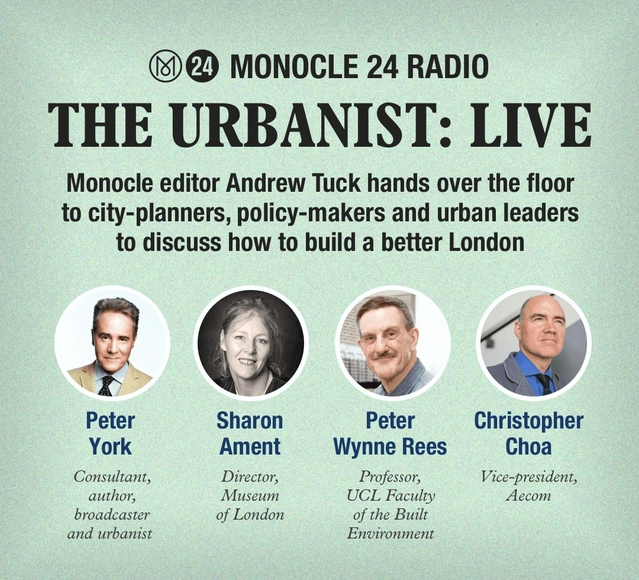
Join us for this special live episode of The Urbanist at our Marylebone HQ, where Monocle editor Andrew Tuck hands over the floor to city-planners, policy-makers and urban leaders to discuss how to build a better London. How would you fix the capital? We’ll look at transport, culture, housing, business, the night-time economy and much more. Be part of the debate following the election of the city’s new mayor.
The following article was first published by Volume Magazine in their 47th issue, The System*. You can read the Editorial of this issue, How Much Does Your System Weigh?, here.
Neoliberal post-fordism poses a dramatic challenge to urbanism as we have come to know it since the early 20th century. The public planning process has become more and more an embarrassment and obstacle to urban and economic flourishing. It’s a relic of a bygone era. The high point of urban planning was the post-war era of socialist planning and re-construction of the built environment. With respect to this period we can speak about physical or perhaps ‘positive planning’, in the sense of governments formulating concrete plans and designs about what to build. This era has long gone as society evolved beyond the simple fordist society of mechanical mass production to our current post-fordist networked society. When a few basic standards were functionally separate, optimized and endlessly repeated, central planning could still cope with the pace of societal progress. The world we live in today is far too multi-faceted, complex and dynamic to be entrusted to a central planning agency. The old model broke apart as it could not handle the level of complexity we live with and our cities should accommodate. The decentralized information processing mechanism of the market was indeed capable of managing such levels of complexity and, for this reason, has effectively taken over all positive decision-making processes.
https://www.archdaily.com/785774/coup-de-grace-patrik-schumacherPatrik Schumacher
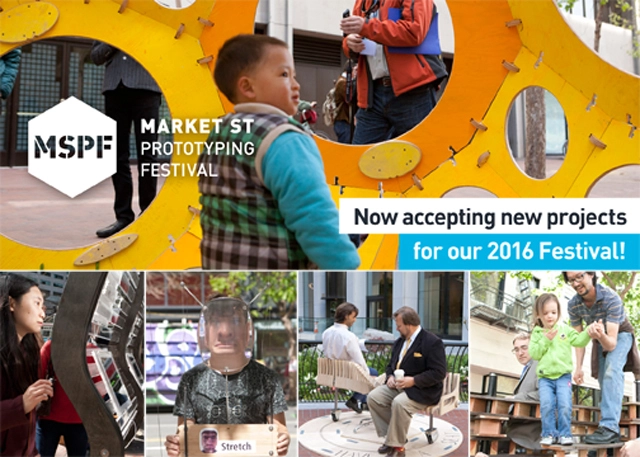
The Yerba Buena Center for the Arts (YBCA) in partnership with the City of San Francisco Planning Department is requesting creative proposals for submission in the 2016 Market Street Prototyping Festival. This is the second year we are inviting Bay Area citizens from all walks of culture, practice, and discipline to submit prototype ideas to make Market Street a more vibrant public space while also reflecting the uniqueness of San Francisco. This opportunity is not limited to artists and designers, so don’t be shy.
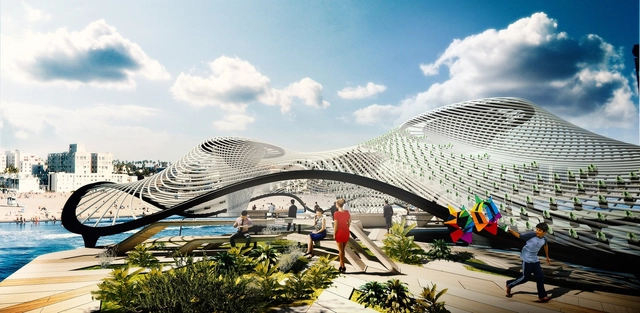
The Land Art Generator Initiative is delighted to announce that LAGI 2016 will be held in Southern California, with the City of Santa Monica as site partner. This free and open call ideas competition invites individuals or interdisciplinary teams to design a large-scale site-specific work of public art that also serves as clean energy and/or drinking water infrastructure for the City of Santa Monica.
UC Berkeley's College of Environmental Design is now accepting applications from prospective participants in the 2016 Summer [IN]STITUTE in Environmental Design. This six week intensive summer program gives students the opportunity to test their enthusiasm for the material and culture of environmental design.
The Summer [IN]STITUTE consists of [IN]ARCH, [IN]LAND and [IN]CITY, three introductory programs in architecture, landscape architecture and sustainable city planning for post-baccalaureate students and senior-level undergraduates, as well as [IN]ARCH ADV, an advanced studio for post-baccalaureate students who have a degree in architecture or who are senior-level architecture majors.
The Knight Foundation has announced the launch of the nonprofit Gehl Institute, led by Gehl Architects' Jeff Risom. With the Foundation's financial support, the Institute strives to boost urban livability by increasing public engagement and economic opportunity through the reformation of public space. A series of studies will investigate the behavioral effects of streets, parks, and plazas on their occupants. The results, coupled with community involvement in the planning process, will be applied toward developing “people-first” public spaces that respond to their unique contexts. Through this approach, the Gehl Institute hopes to foster a new design field that addresses the widening social and economic concerns that accompany urbanization. For more information, visit gehlinstitute.org.
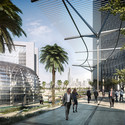
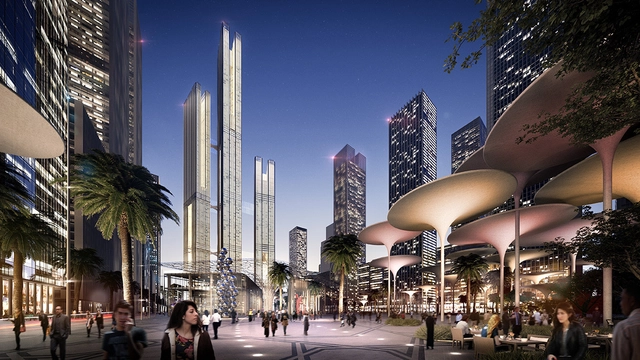
Skidmore, Owings and Merrill (SOM) has released a conceptual masterplan for Egypt's new capital city following its unveiling at the Egyptian Economic Development Conference. The 700-square-kilometer "Capital Cairo" hopes stimulate Egypt's ailing economy and alleviate Cairo's rising population density, while adhering to the cultural and climatic conditions of its site.
In an effort to combat the economic conditions that have plunged one-fourth of its population into poverty, Egypt's ambitious development plan for a massive new capital city is soon to be underway. Roughly the size of New Cairo, the privately-funded city hopes to become the new administrative center, as well as a bustling metropolis of shopping, housing, and tourist destinations to generate economic activity. Plans were solidified at a foreign investment conference where the official project details were unveiled on March 13 in Sharm el-Sheikh.
Read on after the break for more on the $45 billion plan.
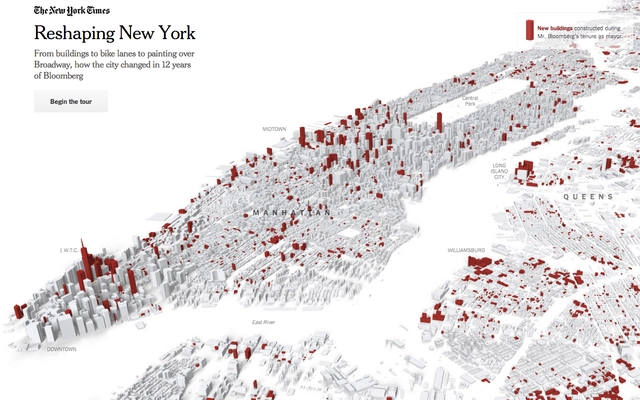
Since Mayor Bloomberg took office in 2001, the fabric of New York City has been in constant flux. In just 12 years, Bloomberg has lead an effort to rezone 37 percent of the city to create opportunities for high-density growth, as well as aided the construction 40,000 new buildings and 450 miles of bike lanes. Putting these efforts in perspective, the New York Times has released the interactive feature “Reshaping New York” that compares statistics with drastic ‘before and after’ comparisons. Check it out and read our report on Bloomberg’s lasting affect on the Empire State here.
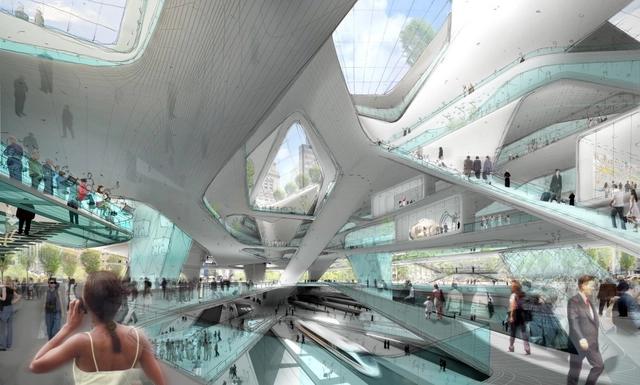
Diller Scofidio + Renfro's Competition Proposal for a New Penn Station
A landslide vote (47-1) by the New York City Council has limited the permit for Madison Square Garden to just 10 years. The decision comes after the property owner’s - MSG Company - 50 year permit expired earlier this year, sparking a heated debate on whether or not the city should deny the owners request to renew the permit in perpetuity and envision plans for a new Penn Station.


_-_Administration_and_Cour_d'Honneur.jpg?1497053167&format=webp&width=640&height=580)
_-_Midway_2.jpg?1497053349 "Courtesy of Wikimedia user RillkeBot (Public Domain)")
_-_USG_Building_and_Ho_O_den.jpg?1497053430 "Although the building itself was handsome, the exhibits of the United States Government Building failed to entice many of the fair’s visitors. In the foreground stands the Ho-O-Den, a replica medieval Japanese palace. ImageCourtesy of Wikimedia user RillkeBot (Public Domain)")
_-_Birds_Eye.jpg?1497053224 "Courtesy of Wikimedia user scewing (Public Domain")
_-_Map.jpg?1497053293 "A map of the 1893 Exposition shows how much of the fair’s buildings were laid out on axis with the court of honor. ImageCourtesy of Wikimedia user scewing (Public Domain)")
_-_Administration_and_Cour_d'Honneur.jpg?1497053167)




![Call for Applications: Summer [IN]STITUTE in Environmental Design - Featured Image](https://snoopy.archdaily.com/images/archdaily/media/images/58fa/065c/e58e/ceac/3100/0b9f/slideshow/open-uri20170421-7176-wv5zng.jpg?1492780631&format=webp&width=640&height=580)





![Call for Applications: Summer [IN]STITUTE in Environmental Design - Featured Image](https://snoopy.archdaily.com/images/archdaily/media/images/56b9/3371/e58e/ceb6/6800/0063/slideshow/open-uri20160209-24257-hr7uny.jpg?1454977894&format=webp&width=640&height=580)
.jpg?1427129017 "Train Station. Image © SOM")