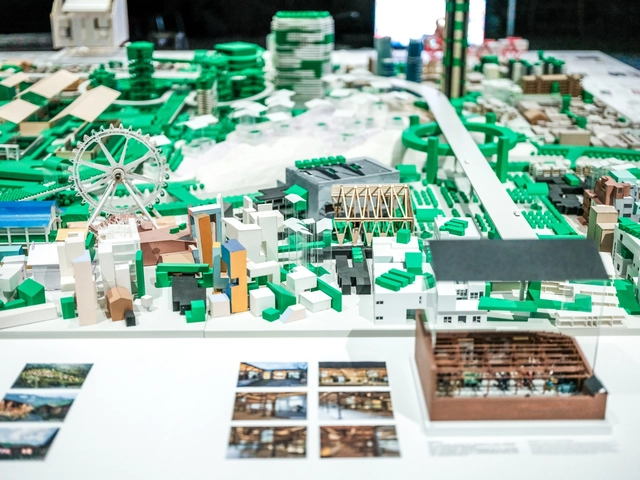
At the 19th Venice Architecture Biennale, the Chinese Pavilion presents Coexist, an exhibition curated by Ma Yansong, founder of MAD Architects. The pavilion assembles ten interdisciplinary teams, spanning architects, scholars, students, scientists, and even social media participants, to collectively investigate the potential of architecture to reconcile contradictions between tradition and futurity, artificial and nature, technology and emotion. Rather than presenting a singular vision, Coexist aims to open space for responses to the diverse realities shaping contemporary architecture. While on site in Venice, ArchDaily's editors had the opportunity to discuss the ideas that shaped the Chinese Pavilion with the curator.

Chinese Pavilion: The Latest Architecture and News
“It’s All About Human, Nature, and Emotion”: In Conversation With Ma Yansong, Curator of the Chinese Pavilion
First Look at Expo 2025 Osaka: Previewing Sou Fujimoto's Masterplan and the Initial National Pavilion Designs
The city of Osaka, Japan, has won the bid to organize the 2025 World Expo, an international event expected to draw in millions of visitors. Set to commence on April 13, 2025, and conclude on October 13, 2025, this marks Japan's second occasion as host, the prior instance being in 1970. Throughout their history, World Expos have been the place where new technologies and products are showcased and popularized, leading to technological advancements and innovative designs. For this event, Osaka has chosen the overarching theme of "Designing Future Society for Our Lives," with three subthemes further developing the concept: Saving Lives, Empowering Lives, and Connecting Lives. Architect Sou Fujimoto was selected as the Expo Site Design Producer, taking on the responsibility of creating the master plan and providing guidance to designers from participating countries.
China Pavilion's Plan for Expo Osaka 2025: A Showcase of Traditional Chinese Inscribed Slips

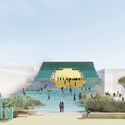
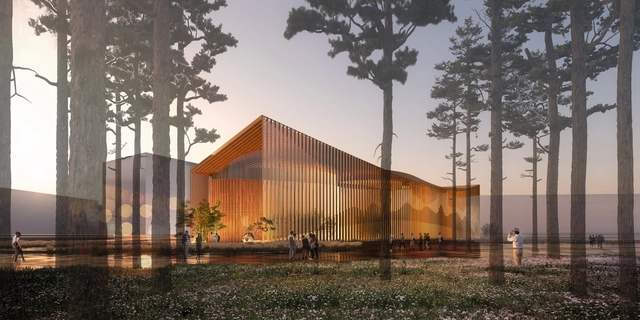
The China Pavilion's plan for Expo Osaka 2025 was revealed at a press conference held on April 26th, 2023, by the China Council for the Promotion of International Trade (CCPIT). Created by the China Architecture Design Group (CADG), the design revolves around "Inscribed Slips of China," resembling traditional Chinese inscribed slips and incorporating elements of bamboo, Chinese characters, and ancient books. This design showcases China's spirit and cultural essence, emphasizing the harmony between humanity and nature and China's commitment to sustainable development in the modern era.
Perceiving Chinese Architecture From the Eyes of Structural Engineers

When we are discussing the definition of “structure”, the term varies within different disciplines. In the context of the built environment, "structure" refers to anything that is constructed or built from different interrelated parts with a fixed location on the ground.
Chinese Pavilion Opens With Robot-Printed 'Cloud Village' at 2018 Venice Biennale

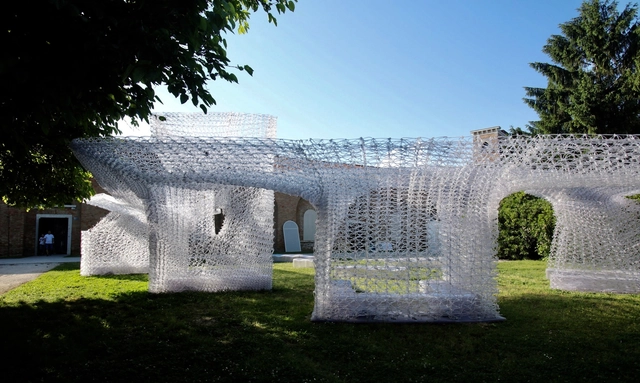
The Chinese Pavilion at the 2018 Venice Architecture Biennale, themed "Building a Future Countryside", is endeavored to explore new technology and ideas to make better of China's rural areas. A digitally-fabricated outdoor pavilion "Cloud Village" has been set up in addition to the national exhibition at the Venetian Arsenale. The Cloud Village has a twisting form which creates a sequence of open and semi-enclosed spaces under its roof. It seeks to convey an abstraction of the everyday life in Chinese countryside where boundaries of private and public realms are not always defined.
The Cloud Village is structurally made possible by the robotic printing technology developed by Philip F. Yuan and his team. Read below for a detailed account of the project from the architects.