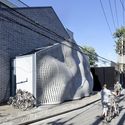
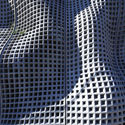
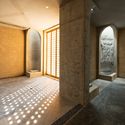
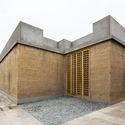
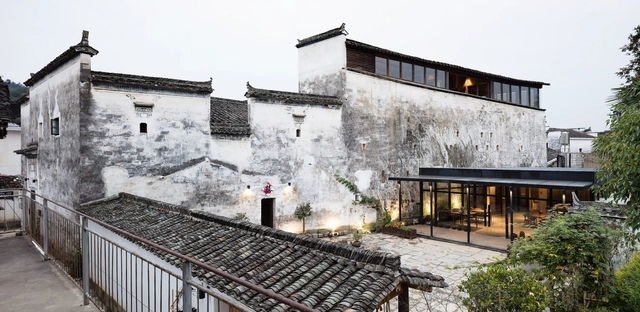
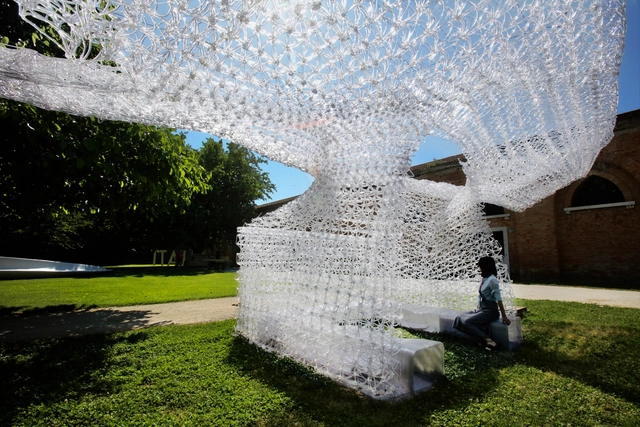
Robot-Printed 'Cloud Village' / Philip Feng Yuan's Team. Image Courtesy of Philip Feng Yuan
3D printing (as known as three-dimensional printing) is a type of rapid prototyping technology. It is a technology that uses powdered metal or plastic and other bondable materials to construct objects by printing layer by layer based on digital model files.
Ever since the period of the Renaissance in Europe, the indivisible relationship between art and architecture has long been heatedly discussed and vividly reflected in numerous classical books and buildings. With the deep connection that unites art and architecture together, designers, artists, and architects have been actively collaborating and came up with solutions on how we can house and exhibit art in the form of changing spaces.
When we are discussing the definition of “structure”, the term varies within different disciplines. In the context of the built environment, "structure" refers to anything that is constructed or built from different interrelated parts with a fixed location on the ground.
The American architect, designer, and futurist Buckminster Fuller once defined the Dymaxion principle as “constructing ever more with ever less weight, time, and ergs per each given level of functional performance.”
Fred Kent, the founder of the nonprofit organization Project for Public Spaces, once stated that “If you plan cities for cars and traffic, you get cars and traffic. If you plan for people and places, you get people and places." It may sound obvious, nevertheless, our cities today are indeed undergoing a rapid transformation from a car-oriented society to a pedestrian-friendly community.
What elements and qualities does space need for a well-balanced physical and spiritual recovery? How to design spaces that are healthy for both our minds and our bodies? What makes an environment livable and sustainable in the long term?
These are the questions we need to address in the era of the rapidly developing real estate market. Why do we tend to inhabit more and more high-density residential towers? Are we necessarily more mentally secure? If not, what are the spatial solutions or cures for the current urbanites’ anxiety? In this article, we will explore ways of unwinding and finding cures in space.
As we successfully launched our 12th Building of the Year Awards earlier this year, we want to thank you for being part of our community for over 10 years. Together we have been growing and contributing to the architectural scene, aiming for a better world.
By nominating and voting, you form part of an interdependent, impartial, distributed network of jurors and peers that has consistently helped us celebrate architecture of every scale, purpose, and condition, and architects of all profiles. Over the coming weeks, your votes will result in 700 Chinese projects filtered down to just 10 best projects in China.
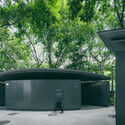
In recent years, with the accelerated urban development of public spaces in China, public washrooms have been assigned numerous new roles. Designers have come up with a variety of proposals which suggest turning public washrooms into a place where social gathering can be redefined, and temporary stay can be more engaging. Although the scale of public washrooms is significantly smaller than that of any other type of architecture, Chinese architects have been working innovatively on fitting the public washrooms into the changing social contexts. Below are a few examples that demonstrate some current architectural experiments with public washroom design in China.
As our cities continue to grow and expand rapidly, there has been an increasing demand for architects and craftsmen to build houses more cost-efficiently under tight deadlines. Modular architecture has been introduced as a concept which involves assembling multiple pre-fabricated modules on site to create a working unit. By joining similar elements together in various ways, modular architecture allows for more flexibilities in design and standardized repair.
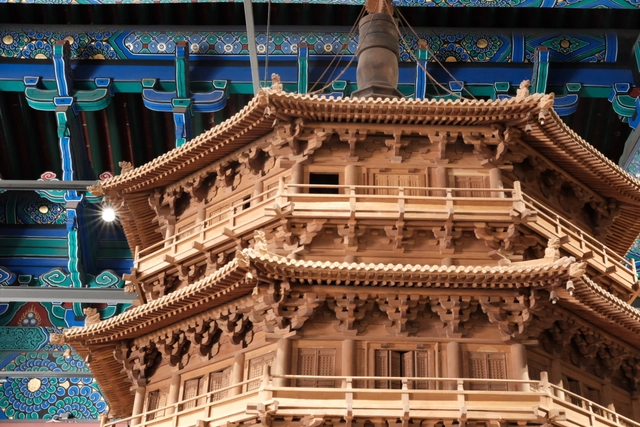
How many U.S. architecture professors know that there is a Chinese treatise equivalent to Vitruvius’ Ten Books of Architecture? Very few, I suspect. I taught architectural history for more than 20 years before I discovered the marvelous Yingsao Fashi, a Song Dynasty book by a prominent court official who, as far as we know, was not an architect or builder. In fact, prior to the Ming Dynasty no prominent temple, palace, or shrine in China was designed by an architect because the concept of a single mastermind in charge of a building project was foreign to the East Asian way of designing environments of any kind.
https://www.archdaily.com/948425/why-dont-we-teach-chinese-architecture-in-the-united-statesMark Alan Hewitt
According to the United Nation’s “The World’s Cities in 2018”, it is estimated that, “by 2030, urban areas are projected to house 60 percent of people globally and one in every three people will live in cities with at least half a million inhabitants.” Also, between 2018 and 2030, it is estimated that the number of cities with 500,000 inhabitants or more is expected to grow by 23 percent in Asia. China, as the largest economy in Asia, with a GDP (PPP) of $25.27 trillion, is expanding rapidly, both economically and demographically.
With more and more migrant workers coming into the bigger cities in China, it has become increasingly difficult for workers to find an affordable place to live. Some people decide to move away from urban centers and bear with the lengthy commute time, while others are seeking creative design solutions to transform their home into a tiny, functional space to meet their daily needs.
Chinese courtyard houses are one of the most common housing typologies spanning all the way from the northern capital of Beijing to the poetic southern cities Hangzhou and back to the picturesque regions of Yunnan. Typically referred as heyuan, these courtyards homes are simply a “yard enclosed on four sides."



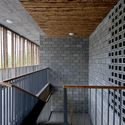





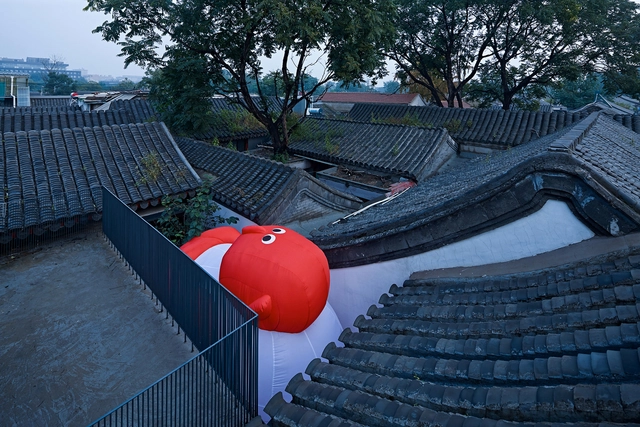

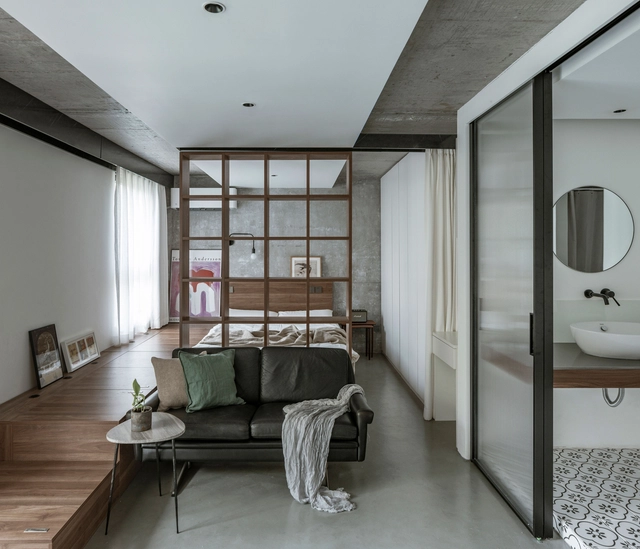


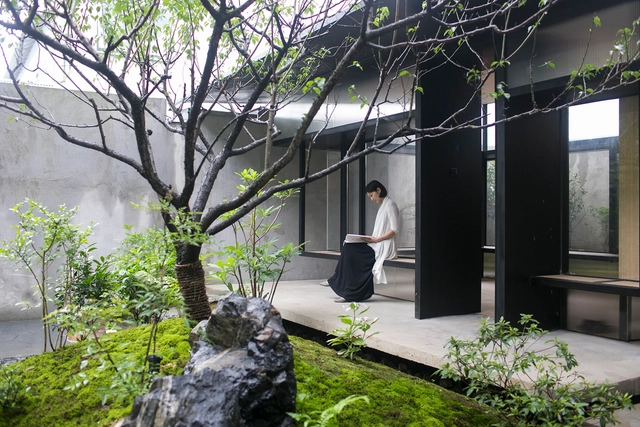
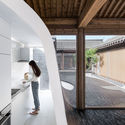
.jpg?1517237056 "Micro-Yuan’er / ZAO/standardarchitecture. Image © Mingming Zhang")