In his articles for ArchSmarter, Michael Kilkelly often praises the value of computers and automation, a sometimes controversial viewpoint with plenty of supporters on either side. In particular, his previous post on ArchDaily, "5 Reasons Architects Should Learn to Code" provoked a significant discussion. But what is the value of this automation? In this post originally published on ArchSmarter, he expands on his view of what computers can be useful for - and more importantly, what they can't.
I write a lot about digital technology and automation here on ArchSmarter, but deep down inside, I have a soft spot for all things analog. I still build physical models. I carry a Moleskine notebook with me everywhere. I also recently bought a Crosley record player.
I can listen to any kind of music I want through Spotify. The music world is literally at my finger tips. Playing records hasn’t changed what I listen to but it has changed how I listen to music. There’s more friction involved with records. I have to physically own the record and I have to manually put it on the turntable. It’s a deliberate act that requires a lot more effort than just selecting a playlist on Spotify. And it’s a lot more fun.
In the debate about how architects - both present and future - represent our ideas, it is easy to find a lot of articles supporting both sides. One can read as many arguments as they want and find valid points supporting both hand-drawing and computer production. One could argue that there is nothing prettier than a well done hand-rendering of a project. Another could say that, although hand-drawing is something that catches the eye, it is not practical at all, takes longer than doing it on the computer and does not allow architects to easily modify it.
There is however another facet that does not come up as frequently as it maybe should: how does this discussion affect students? I believe we lie in a cross-fire, between the idea of what architects do and what they actually do.
In his popular post on how architects can "work smarter, not harder," Michael Kilkelly suggests that you should "customize your tools to work the way you work" and "use macros to automate repetitive tasks." Both sound very helpful of course, but wouldn't those require you to to write some code? Yes - but according to Kilkelly this should be a tool available in every architect's toolkit. Originally published on ArchSmarter, here he offers 5 reasons that architects should learn to code.
As architects, we need to know a lot of stuff. We need to know building codes, structures, mechanical systems, materials. We need to know how to read zoning codes, how to calculate building area, how to layout office floor. The list goes on and on. Do we really need to know how to write computer programs as well?
Launched in May of 2014, ThinkParametric is an online platform for learning the tools of the digital architecture trade. Gaining access to their video tutorials and the benefit of their online community would usually set you back $29 per month, or $269 for an entire year. However, to celebrate a successful first year, on March 12th they announced an "Open Class Season," a full month for people to enjoy their courses for free.
Thanks to the increasing popularity of massive open online courses -- or MOOCs as they’re commonly referred to -- learning has never been easier (or more convenient). Sites like Coursera and edX offer free classes online from accredited and well-known universities across the globe, including Harvard, MIT and the University of Hong Kong. While some classes are more structured and include a set lesson plan, homework assignments, quizzes and the option to receive a certificate at the end, others can be set at your own pace and approached more independently.
Following our wildly popular article on Four Ways to Learn About Architecture for Free, we’ve compiled a list of upcoming online classes related to architecture, engineering, urbanism and design. So whether you’re looking to embark on a new topic or dive deeper into an already familiar subject, take a look at these free online courses after the break.
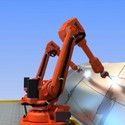
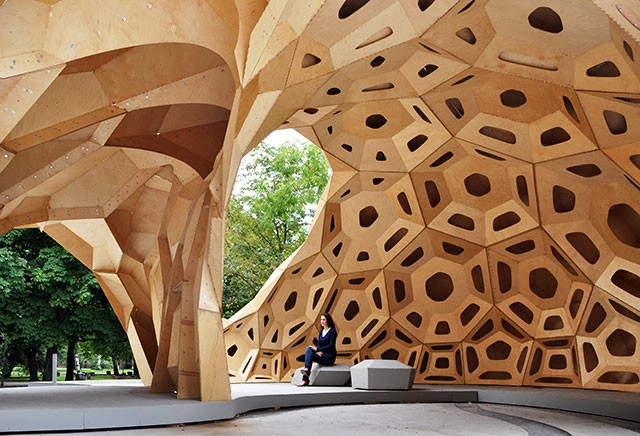
With a recently released animation entitled “We Start the Future of Construction,” Coop Himmelb(l)au announced their intention to take digital fabrication to a radical new scale, demonstrating how technology is impacting almost every aspect of the architectural profession. The advent of building information modeling and other modeling software has transformed how architects and engineers navigate the construction process, allowing us to achieve increasingly complex forms that can be modeled with the aid of CNC machining and 3D Printing, but still there remains a wide gap between the technologies available to architects and those employed by builders. When it comes to a building’s actual construction we have been limited by the great costs associated with non-standard components and labor - but now, the automated practices that transformed manufacturing industries could revolutionize how we make buildings.
Last week, ArchDaily sat down with co-founder, Design Principal and CEO of Coop Himmelb(l)au, Wolf D. Prix for his thoughts on the future of construction and the role of the architect in an increasingly technological practice. Read on after the break to find out how robots could impact architectural design, construction, and the future of the profession.
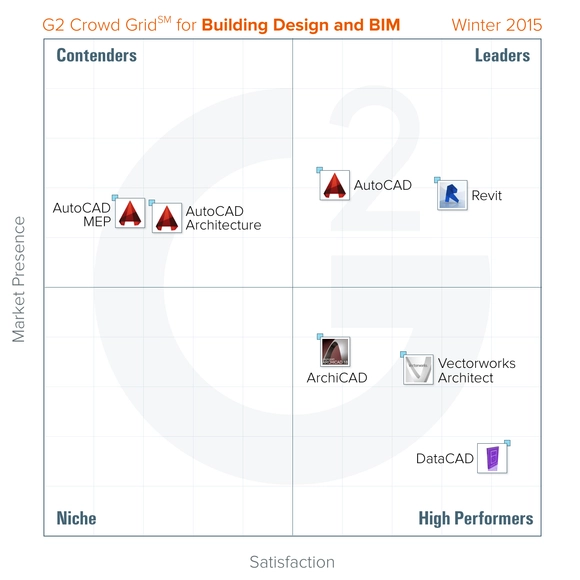
The first Grid℠ winter report from G2 Crowd has been released, placing DataCAD as the CAD software delivering the highest overall levels of customer satisfaction.
Using over 180 reviews from industry professionals, the Grid℠ plots software satisfaction levels against market presence (determined by vendor size, market share, and social impact), categorizing products as a "Leader," "High Performer," "Contender," or "Niche." G2 Crowd's review platform encompasses all CAD software widely used within architecture and construction, ranging from BIM to tools and libraries for mechanical, electrical, plumbing, and architectural design and construction.
The current state of architectural design incorporates many contemporary ideas of what defines unique geometry. With the advent of strong computer software at the early 21st century, an expected level of experimentation has overtaken our profession and our academic realms to explore purposeful architecture through various techniques, delivering meaningful buildings that each exhibit a message of cultural relevancy.
These new movements are not distinct stylistic trends, but modes of approaching concept design. They often combine with each other, or with stylistic movements, to create complete designs. Outlined within this essay are five movements, each with varying degrees of success creating purposeful buildings: Diagramism, Neo-Brutalism, Revitism, Scriptism, and Subdivisionism.
Building Information Modeling (BIM) has been an invaluable technological advancement for the architecture, engineering, construction and building management industries. But for people who don’t use it on a daily basis, BIM can seem overwhelming. This animated video breaks BIM down in layman’s terms explaining what it is, how it works and what the benefits of using it are.
Read on after the break to learn more about BIM and our interview with Viktor Várkonyi, the CFO of Graphisoft, one of the frontrunners in BIM development.
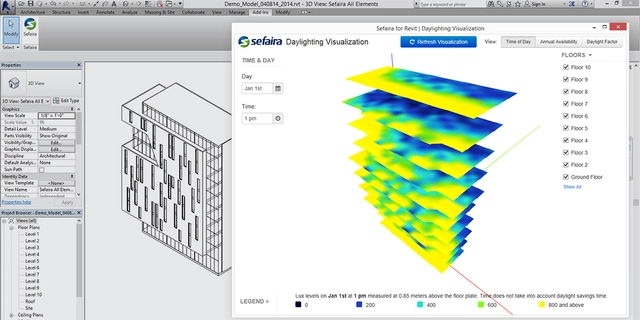
Daylight Visualisation alongside BIM. Image Courtesy of Sefaira
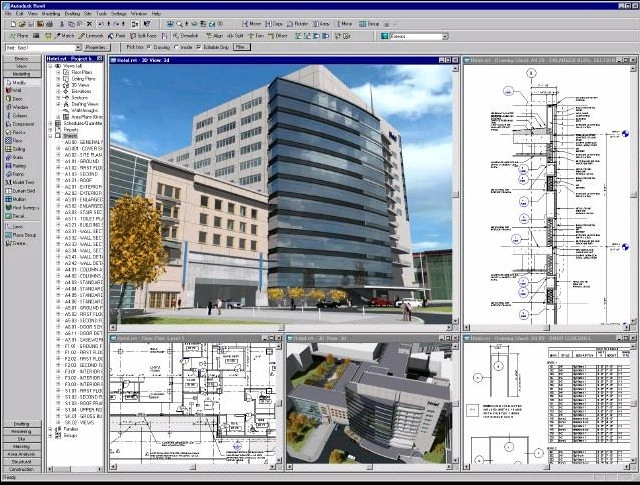
Sefaira, one of the leading software designers for high-performance building design, have recently announced a new real-time daylight analysis and visualisation tool which runs within Autodesk Revit, one of the most commonly used Building Information Modelling (BIM) enabled (Windows native) design packages. Sefaira for Revit allows for early stage analysis, leading to "more informed design decisions based on multiple daylighting metrics."
Videos
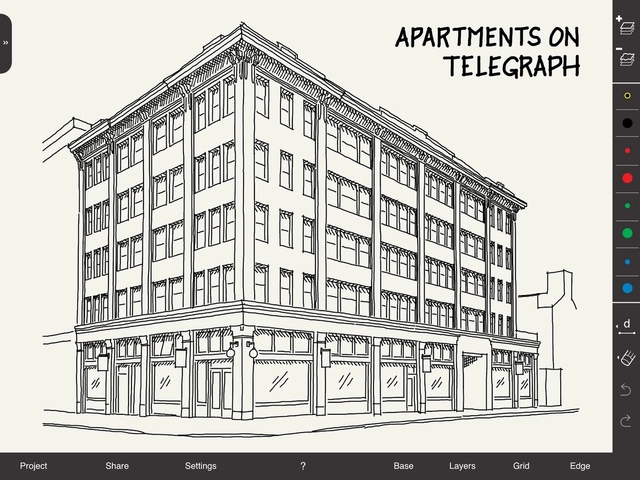
Arrette Scale: perspective. Image Courtesy of Arrette Scale
Building upon our Top 10 Apps for Architects, this collection brings together some of the best quality and most valued technical apps for designing, sketching, calculating and collaborating. Although the majority of those featured here are designed solely for the iOS platform, every time we collate lists such as these it's clear that more and more high quality apps for the Android and Windows platforms are being developed. From condensed versions of large scale software packages that architects and designers use every day, to blank canvases to scratch ideas down onto, you might just find an app that could improve the way you work.
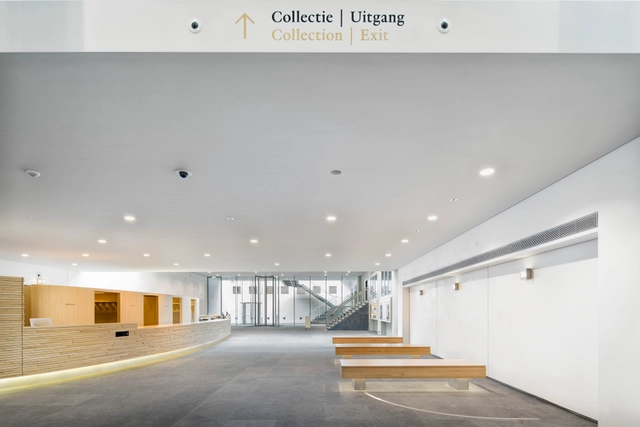
The Mauritshuis, a Dutch 17th century city palace in The Hague, will reopen this week following a large scale renovation and extension designed by Hans van Heeswijk with servicing and fire engineering undertaken by Arup. Similar to Amsterdam'sRijksmuseum, which reopened after a ten year restoration and remodelling in 2013, the Mauritshuis Royal Picture Gallery exhibits one of the finest collections of Dutch Golden Age paintings including Johannes Vermeer's Girl With a Pearl Earring. Alongside a large scale renovation, Hans van Heeswijk have also extended the galleries with new exhibition spaces, an auditorium and educational spaces.
In this article, originally appearing on the Australian Design Review as "Tolerance and Customisation: a Question of Value", Michael Parsons argues that the complex forms made possible by digital fabrication may soon be victims of their own popularity, losing their intrinsic value as they become more common and the skill required to make them decreases.
The idea of tolerance in architecture has become a popular point of discussion due to the recent mainstreaming of digital fabrication. The improvements in digital fabrication methods are allowing for two major advancements: firstly, the idea of reducing the tolerance required in construction to a minimum (and ultimately zero) and secondly, mass customisation as a physical reality. Digital fabrication has made the broad-brushstroke approach to fabrication tolerance obsolete and now allows for unique elements and tolerance specific to each element. The accuracy that digital fabrication affords the designer, allows for the creation of more complex forms with greater ease and control. So far, this has had great and far reaching implications for design.
Read on to find out how this ease of form-making could diminish the success of complex forms.
Trimble Buildings Group have recently released SketchUp 2014, the latest version of its 3D modelling platform for architects, engineers, design and construction professionals. With "more than 30 million unique activations in the past year", SketchUp is claimed to be the most widely used 3D modeling software in the world today. The latest incarnation of the simple tool features a new 3D Warehouse and some interesting integrations into the world of Building Information Modelling (BIM).
Screenshot of a Revit Model. Via Flickr CC user. Used under Creative Commons
This article on Line/Shape/Space by Jeff Yoders discusses how BIM can be used to good effect by bringing different professionals together early on in a design project. By utilizing the shared BIM model over the cloud - or even by providing a dedicated "Computer-Aided Visual Environment" or "BIM CAVE" (seriously) - clashes can be detected early, design priorities can be more balanced, and ultimately the time and cost requirements of a project can be significantly reduced. You can read the full article here.
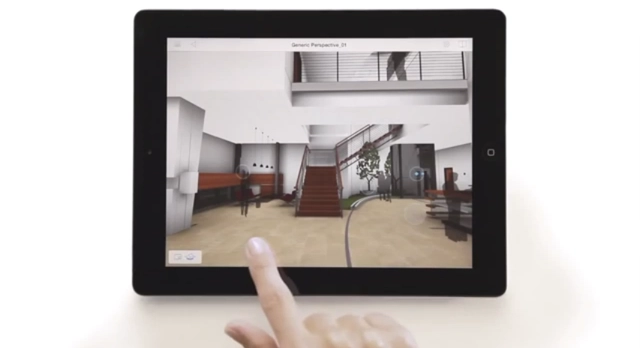
GRAPHISOFT’s latest iPhone and iPad App, a companion to ArchiCAD, has just been released. The heart of the technology, designed for easy BIM project viewing, is the “Hyper-model,” which enables the full integration of 2D and 3D plans. This makes navigation not only more intuitive, but a magnitude smoother and faster than most other construction-related model or documentation viewer mobile apps.
Get a more detailed look at the technology in action, after the break...
https://www.archdaily.com/441492/the-latest-app-from-graphisoft-bimx-docsSponsored Post
Seattle's citywide model. Image Courtesy of Autodesk
This article, by Klaus Philipsen, FAIA originally appeared on his blog Community Architect.
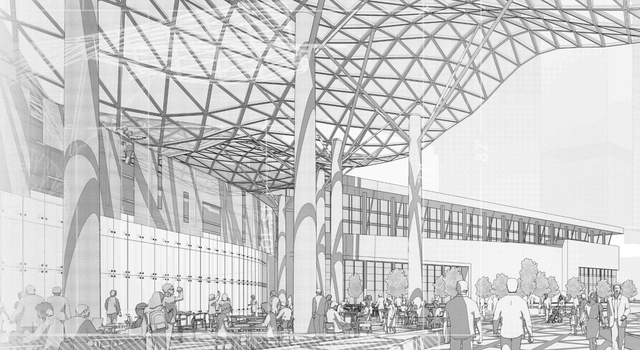
As BIM (Building Information Modeling) slowly finds broader acceptance in the architecture and engineering of individual buildings, perhaps it is time to consider the next scale: the city. Just like virtual models help us design and understand buildings and embed information, virtual city simulations could have an application in real city planning, allowing us to go from “flat” GIS to three dimensional information modeling that includes terrain, infrastructure, buildings and public spaces. Could virtual cities be the answer to "smart cities"? Find out after the break.
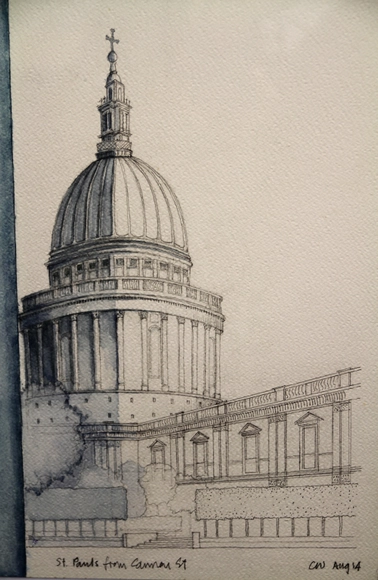
Our friends at Arup Connect spoke with Matt Williams, a leader of the façade engineering group in Arup’s Americas region and one serious sketcher, about the role of sketching in the digital age. The following interview, originally titled "To Sketch or Not to Sketch," discusses how sketching enables communication and how our over-reliance on technology isn't really as efficient as we may think.
One of the things we’ve been trying to develop in the façades group is people who can relate to the architect, developing and responding to the key architectural requirements. Having come from an architectural background myself, historically there seems to be a bit of a conflict, if that’s the right word, between architects and engineers. There shouldn’t be, though. Everyone wants the same thing at the end of the day: a successful project.
Read the rest of the interview, after the break...