Videos
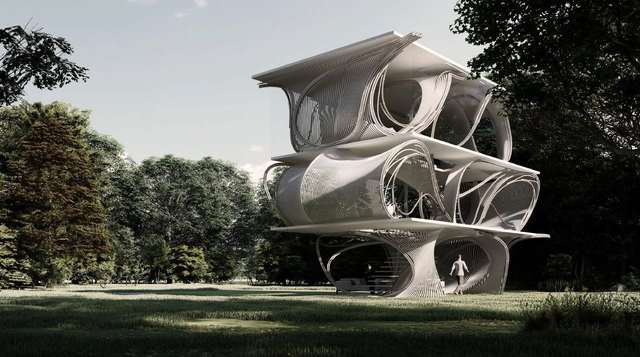
Slab House Proposal / Skeleton. Image Cortesía de reBENT
The reBENT project, developed by the Research Group 9 of the March 2019-20 Program of the Bartlett School of Architecture (UCL), explores the interactive relationship between augmented reality (AR) and manual construction processes using PVC pipes –highly resistant and cheap– as a base research material. In addition to taking advantage of its active bending properties to interact with AR, this material provides a fast and affordable system for the creation of complex concrete structures made by weaving together a series of bent PVC pipes and reinforcing bars, which are then used as formwork for glass fiber reinforced concrete (GFRC).
So far, the exploration of this hybrid approach –neither purely analog nor purely automated– has led to the design of prototypes, architectural elements, and habitable structures. In addition, the team developed an augmented reality platform for Microsoft Hololens in order to guide the construction and customization process through holograms.
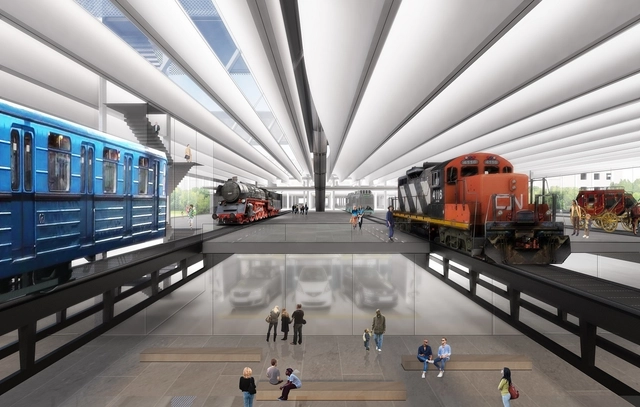
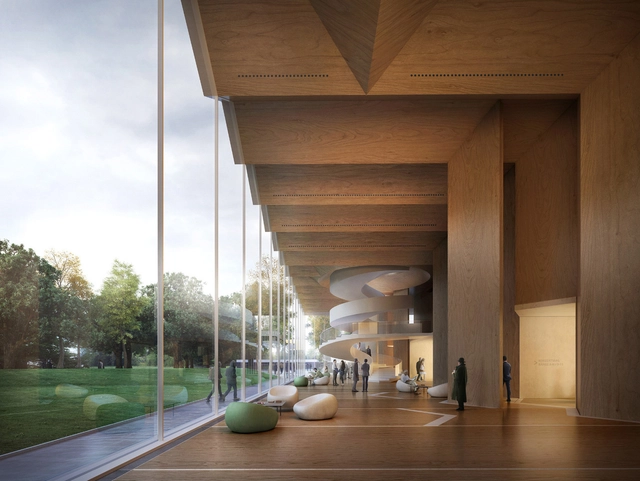
Museo de transporte húngaro. Image Cortesía de Diller Scofidio + Renfro
According to Howard Gardner, human intelligence can be classified into 8 different categories. One of these is spatial intelligence, which describes the ability to mentally create and imagine three-dimensional spaces. Architecture is one of many disciplines that benefits from this ability and in this article we will explore just how visual representation in architecture has evolved throughout history--from displaying the most brilliant of ideas to capturing the wildest of dreams.
Architects don’t make buildings. Architects make drawings of buildings. But of course, someone has to make the building. The construction industry is one of the largest economic sectors and we all interact with the built environment on a daily basis, but the actual work of getting a building from drawing to structure has barely evolved over the decades. While the rest of the world has moved into Industry 4.0, the construction sector has not kept pace. Architecture has begun to embrace some digitalization. After all, not many of us work with mylar on drafting tables anymore. So with the architecture industry’s everlasting link to the construction industry, will the latter pick up some new technological tricks by association? And when it does, how will that change the role of the architect?
Throughout history, people from all walks of life with little in common have found ways to unite in neighborhood parks and filled stadiums to put those differences aside for the sake of the sports they love. Sports, and sports fandom, is a source of global unity, and perhaps fewer events in the world can generate such a wide range of emotions quite like a live match.
Every so often, the field of architecture is presented with what is hailed as the next “miracle building material.” Concrete enabled the expansion of the Roman Empire, steel densified cities to previously unthinkable heights, and plastic reconstituted the architectural interior and the building economy along with it.
But it would be reasonable to question why and how, in the 21st century, timber was accorded a miracle status on the tail-end of a timeline several millennia-long. Though its rough-hewn surface and the puzzle-like assembly it engenders might seem antithetical to the current global demand for exponential building development, it is timber’s durability, renewability, and capacity for sequestering carbon—rather than release it—that inspires the building industry to heavily invest in its future.
Shifts in technology reflect how designers are creating experiences of architecture and cities. New advances engender novel ways of working, and in turn, shape our design process. As a practice defined by pushing boundaries, experimenting with workflows, and embracing new design technologies, Morphosis has a forty-year history of enthusiastically wondering at the future.
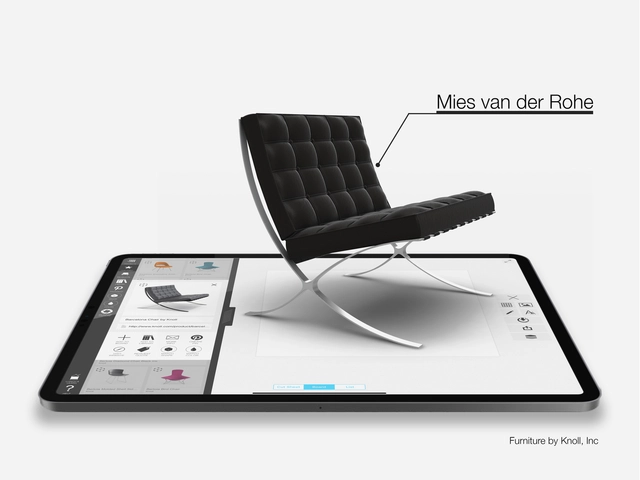
Courtesy of Morpholio, Theia Interactive and Knoll
Morpholio has unveiled a suite of new iconic furniture designs brought to life through augmented reality with Morpholio Board. Joining forces with manufacturer Knoll and one of the world’s top AR visualization companies, Theia Interactive, the team is showcasing a range of work from designers like Eero Saarinen and Marcel Breuer to Mies van der Rohe’s iconic Barcelona chair.
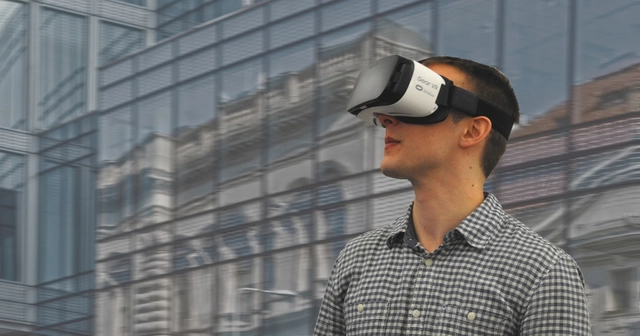
With the popularization of virtual reality and augmented reality, new ways of exploring architectural representations have become available to professionals and students. Immersion in three-dimensional digital models is increasingly common, whether through a computer screen, smartphone or VR headsets. In light of this reality, which seemed overly futuristic up until a few years ago, the online platform Tour Fácil has launched a free plugin that can view exported 360-degree images from SketchUp in virtual or augmented reality.
Unlike its TV and film counterparts, which imagine the future as an over-populated dystopian nightmare overrun with violence and chaos, Black Mirror paints a picture of a near future that aligns far more with our current reality--and nowhere is this more apparent than in the architecture shown in the series.
Squint/Opera, BIG, and UNStudio have collaborated in the design of Hyperform, a revolutionary data-driven design tool that allows architects across the world to collaborate in augmented reality. The tool allows designers to immerse themselves in a virtual 3D environment, where site images, maps, data, and 3D models can be uploaded, viewed and altered through collaboration.
https://www.archdaily.com/919404/big-unstudio-and-squint-opera-launch-ar-design-toolNiall Patrick Walsh
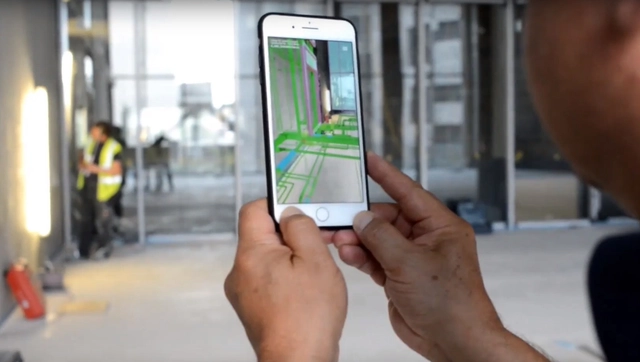
A technological innovation is revolutionizing one of the oldest professions in the world. Augmented reality has just broken onto the scene and has already been transforming civil construction. The changes are seen not only in designing and modeling, but also in building. Augmented reality benefits the entire construction team: engineers, designers, architects, project managers and service providers.
Unlike virtual reality, which creates a totally new and independent environment of the real world, augmented reality includes virtual elements that interact with what already exists. It is thus possible to combine virtual architectural designs with the reality of the construction site, increasing efficiency and accuracy, reducing the occurrence of errors and saving time, money and resources.
Morpholio has unveiled AR Sketchwalk, a new augmented reality tool geared towards helping architects bridge the gap between model and reality. Released today, AR Sketchwalk allows designers to use augmented reality to dive into their sketches to give both their clients and themselves a truer sense of the space.
https://www.archdaily.com/913039/morpholio-unveils-ar-sketchwalk-an-augmented-reality-tool-to-immerse-users-in-designKatherine Allen
Augmented Reality. Image Courtesy of Matt Alderton
The Serpentine Galleries, Google Arts & Culture and trustee David Adjaye have released a call for augmented reality (AR) architecture proposals to run alongside the 2019 Serpentine Pavilion this summer. Applicants are asked to propose "imaginary city spaces and speculations on the built environment to be developed and experienced” in AR onsite at the galleries. The call invites applicants to consider AR as a digital layer that offers new opportunities to design, visualize and experience.
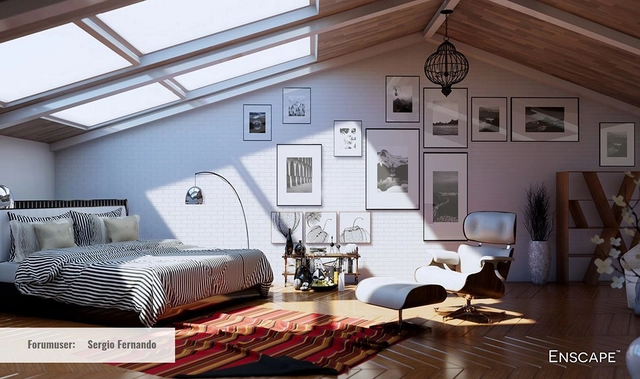
Virtual reality offers benefits that, just years ago, were hardly even imaginable. Projects can be walked through before being built; the interiors fully visualized before all the details are decided. It allows architects and clients the ability to work as true collaborators in the design of a project.
https://www.archdaily.com/909312/exploring-your-project-in-virtual-reality-7-tips-from-the-experts-who-make-itKatherine Allen
Fologram has recently built the world’s first pavilion-scale steel structure using the HoloLens, displaying the possibilities of integrating standard CAD workflow with augmented reality. By displaying the generative design model through holographic instructions rather than traditional 2D drawings, it explores the potential of revolutionizing the bridge between design and construction.
Before airplanes, it took mail carriers on horseback months to transport letters across the country. Before washing machines, it took a full day of physical exercise to wash and dry a family’s laundry. And before cranes, it took decades—sometimes centuries—to build large structures such as castles and cathedrals.
The point being: Whatever you do, technology probably gives you a better way to do it.
Even with tech like virtual reality, augmented reality, 3D printing, computational design and robotics already reshaping architecture practice, the design community is just scratching the surface of the potential of new technologies. Designers who recognize this and invest in building skills and expertise to maximize the use of these tools in the future will inherently become better architects, and position themselves for entirely new career paths as our profession evolves. It is a uniquely exciting moment for architecture to advance through innovative use of technology. Even just a decade ago, designers with interests in both architecture and technology were essentially required to pursue one or the other. Now, with architecture beginning to harness the power of cutting-edge technologies, these fields are no longer mutually exclusive. Rather than choose a preferred path, today’s architects are encouraged to embrace technology to become sought-out talent.
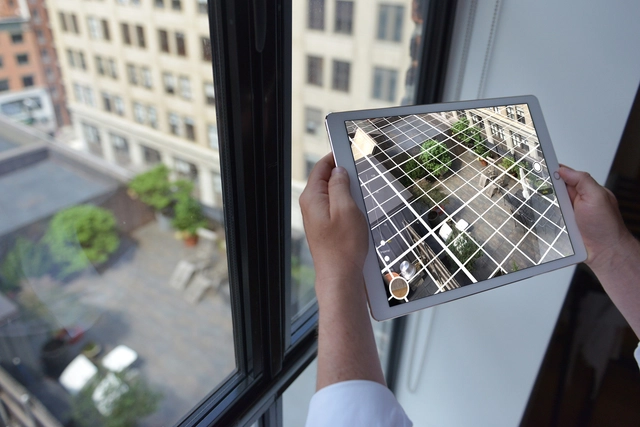
With the launch today of Apple's iOS 11—and with it, the release of the company's powerful system for augmented reality apps, ARKit—Morpholio has released a new update to their popular Trace app that allows users to sketch over photographs with perfect accuracy. While it has always been an option to sketch over photographs in Trace, the new "Perspective Finder" tool superimposes a scaled grid over the photograph that helps designers follow the perspective of the image and measure their drawings accurately.
Ai_Qing_Courtesy_of_KPF.jpg?1592356426&format=webp&width=640&height=580)










.jpg?1552384741)



.jpg?1528390053)