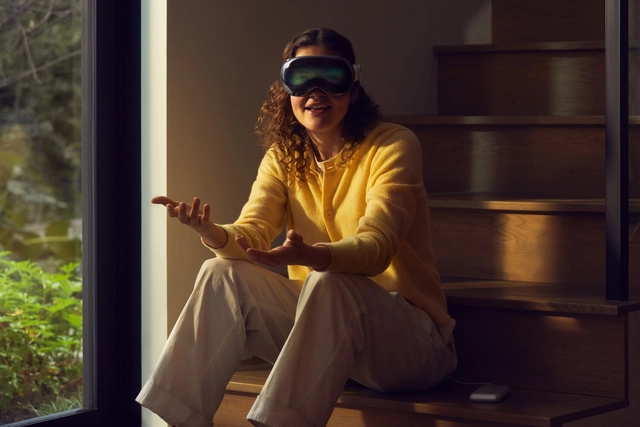
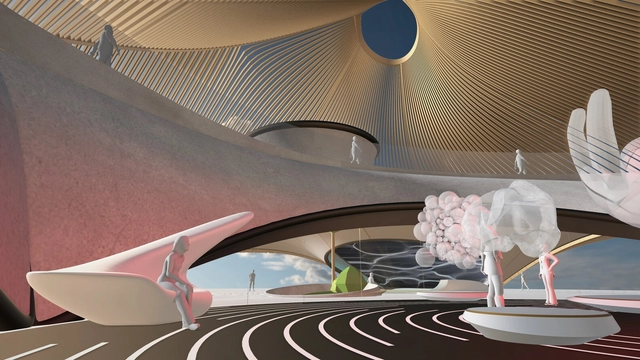
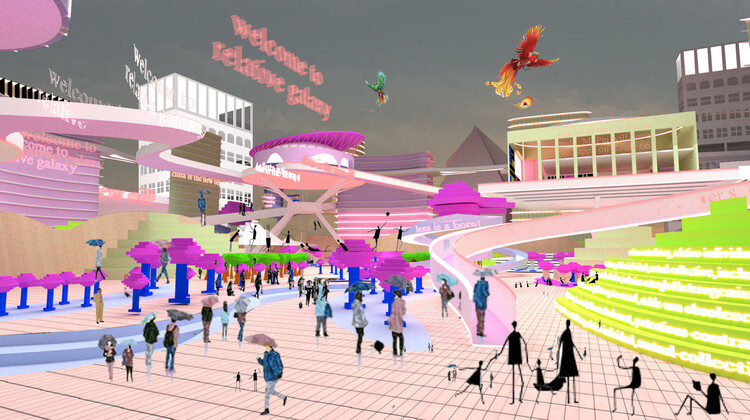
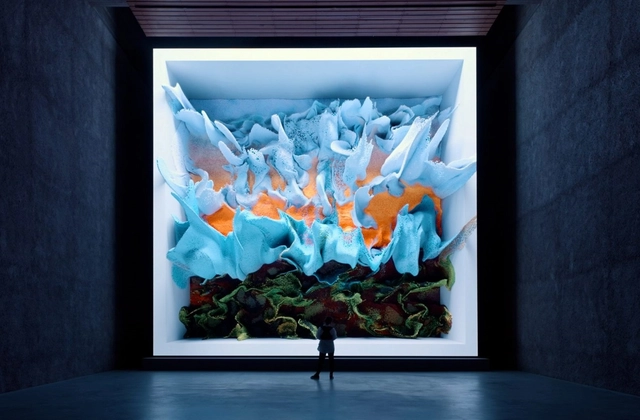
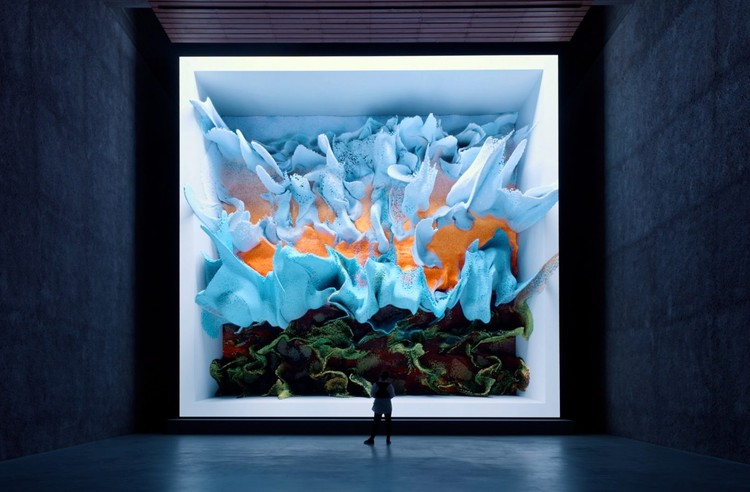
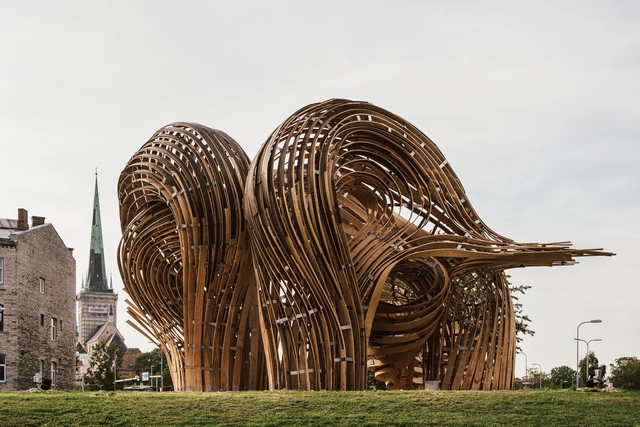
On June 5, Apple launched Apple Vision Pro, a new type of spatial computer that uses augmented reality goggles to allow users to experience a blend between the digital and physical worlds. The device promises to offer its users an infinite canvas for apps, larger and more immersive than traditional displays, while allowing them to stay present and connected to others. It features visionOS, the first spatial operating system to create this new way of interacting with digital content. Previous concepts like the metaverse have promised to transform the way we experience digital worlds, with architects taking the opportunity to delve into the design of restriction-free virtual spaces. Could this new device bring new ways of experiencing three-dimensional spaces, to better integrate architecture with digital environments?
Can current design and manufacturing technologies be incorporated into vernacular and traditional construction techniques? On the IE University campus in Segovia, a group of researchers from IE University, Princeton University, and the University of Bergamo built an unreinforced masonry structure called innixAR that demonstrates how digital technologies can enhance craftsmanship. This pavilion explores the intersection between the latest augmented reality (AR) innovations and 4D funicular design to allow vault craftsmen to build masonry structures without the need for physical guides and costly temporary molds.
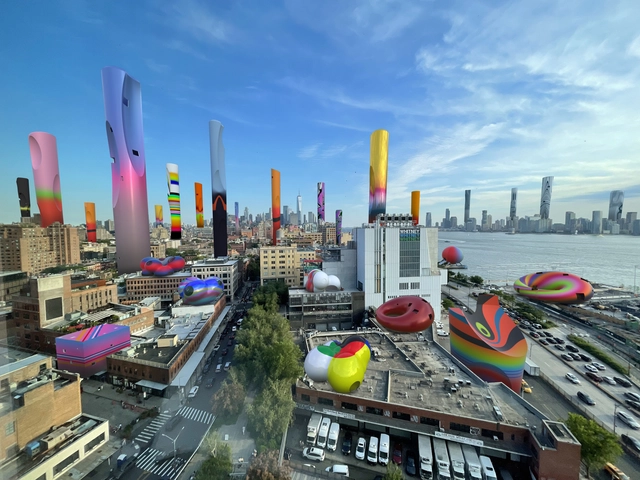
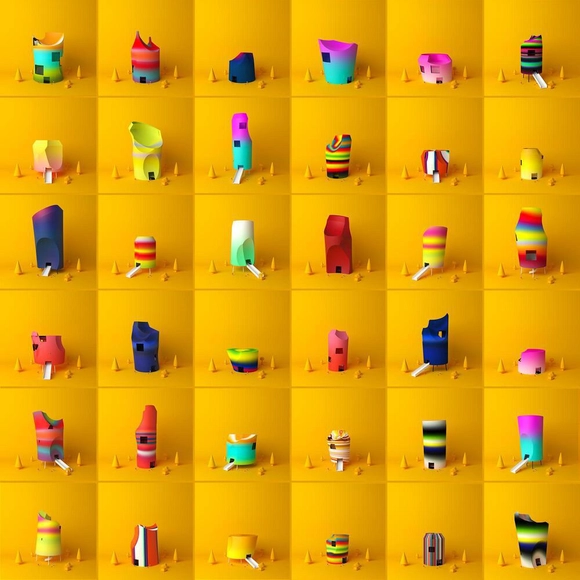
The promise of the metaverse, this new type of three-dimensional and immersive digital space, is proving to become more and more appealing to architects eager to explore the new realm of virtual creations. As it currently stands, the metaverse does not have a singular definition but is composed of many narratives and explorations. This unknown land is however fruitful ground for architects, who have to opportunity to shape not only the new environment but also the experiences of future users. The SOLIDS project represents one response to these conditions. Developed by FAR, an architect and engineer working with digital environments, SOLIDS uses a generative process to design unique, metaverse-compatible buildings.
The new technologies of the digital world caused changes in architecture and urbanism. New materials, new construction techniques, and new ways of manufacturing and building have changed how we design and think about construction. Besides, these technologies reveal possibilities of interaction between society and architecture, transforming the understanding of architecture and its purpose.
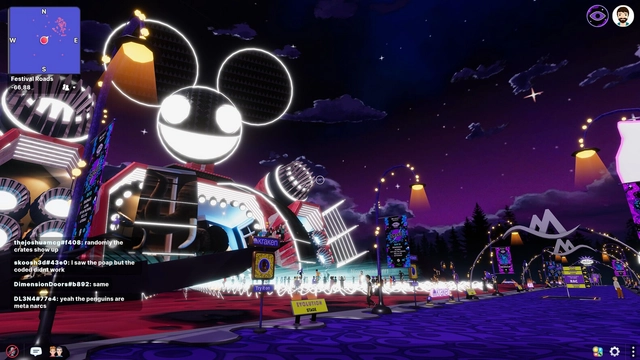
DEADMAU5 The Metaverse Festival. Image by Duncan Rawlinson flickr under Attribution-NonCommercial 2.0 Generic (CC BY-NC 2.0).
“All the physical spaces that we (architects) design – buildings, interiors and cities are born as metaspaces, and we call them 3D models”. With this statement Brian Jencek, director of planning at San Francisco-based architecture firm HOK, narrows the boundaries between the current way of designing and the future of architecture in the metaverse. According to him, we are not that far from this technology, since we already use the same tools that visual designers use to create realistic environments, such as Unity, Twin motion and Blender.
Everyone’s experience of a city is unique. Whether one is visiting a place for the first time or has lived there all their life, their experiences are shaped by their personal interactions with the built environment. Buildings, landscapes, and streets come together to offer an opportunity for sensory stimulation, however, most of them are unable to provide inspiration. While a city’s infrastructure accounts for livability, equal importance isn’t given to enjoyability. Play and games embedded in the city’s fabric can help improve user engagement with urban spaces.
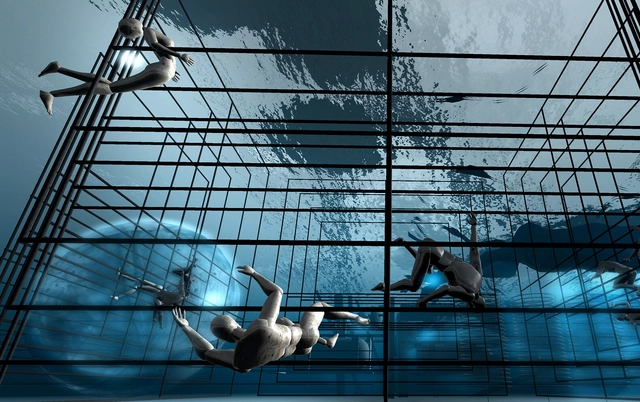
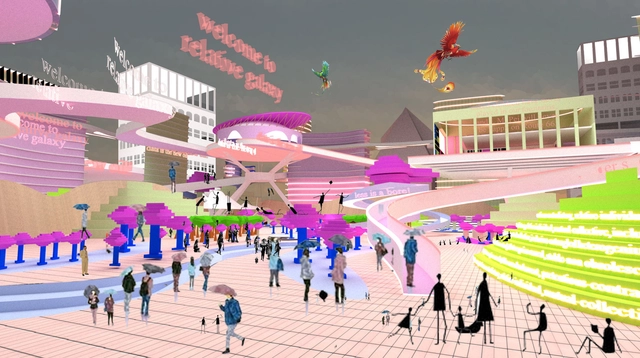
Image: Elif Ayiter/Alpha Auer/..../, via VisualHunt
Imagine the daily life of an architect today. There is a demand for a new project, a blank canvas full of countless possibilities. The creative delight is about to be started. The main constraints are established: brief, analysis of the terrain and surroundings, solar orientation and prevailing winds. The first sketches are created, always combined with structural knowledge, even if basic, fundamentally determining for those who live in the gravitational acceleration of 9.807 m/s².
But what if only the brief remains among these basic premises?
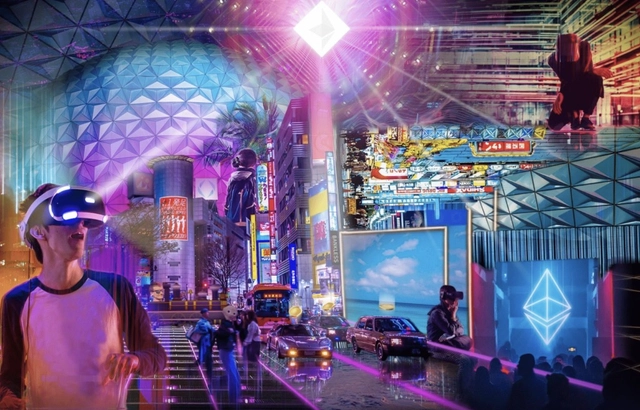
We live in a world where the experienced, remembered, and imagined, as well as different moments in space and time concerning the past, present, and future are inseparably blended. As of recent, we are being offered various mediums to gain access to other planes of existence, utilizing immersive technologies like virtual and augmented reality (VR and AR), creating a pathway to the metaverse in which we are transported to spaces that are capable of feeling more ‘real’ than anything we presently experience.
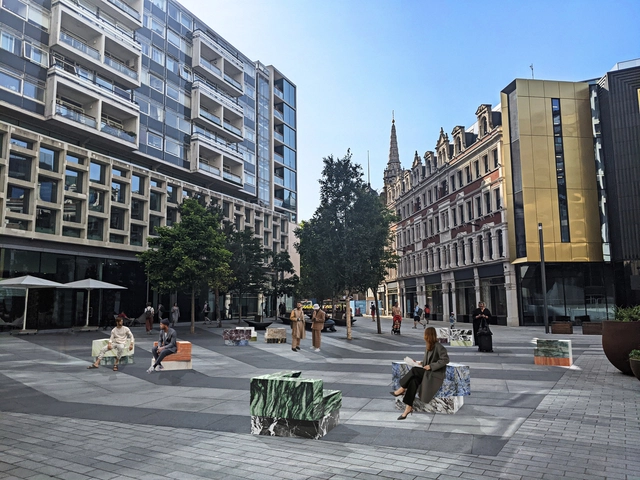
Landmark Project 'Swivel' by Sabine Marcelis. Image Courtesy of Sony Design
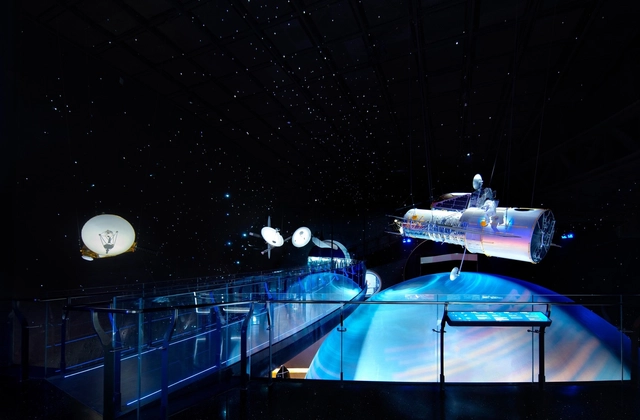
The London Design Festival is an annual event that brings together designers, practitioners, retailers, and educators from across the globe. This year’s program of events, exhibitions, and installations invites creative leaders to exchange ideas and solutions for some of the most pressing issues of our time, like climate change, pollution, and resource depletion. The festival includes the Landmarks Projects. As part of this initiative, Rotterdam-based designer Sabine Marcelis has created “Swivel”, an outdoor installation in central London. Other installations like Sony Design’s “Into Sight” pavilion or Sou Fujimoto’s “Medusa” exhibition explore visual and sensorial effects through physical and virtual mediums.
The metaverse promises to revolutionize our way of life. By integrating immersive technologies like virtual and augmented reality (VR and AR), it hopes to add another layer to the way we experience everyday life. It is suggested that the metaverse will create virtual spaces where people can meet and share experiences regardless of geographical constraints. The possibilities seem endless: exchanging knowledge, encouraging professional collaboration, developing and democratizing art, education, culture, and even enabling political engagement. Social interactions are at the core of the idea of a metaverse. This raises the question: how can the new, virtual spaces acquire the properties of public spaces?
Architecture shapes our lives every day, but how can it be decentralized? At the core of efforts to design extended reality (XR) environments is a desire to make these projects more human and more relatable. As technologists, architects, and users themselves develop new tools for the metaverse, as well as augmented and virtual spaces, new projects are increasingly democratized and open source. At the same time, the design process is being reimagined.
As Antoine Picon describes in Architecture and the Virtual Towards a new Materiality? : "An architectural project is indeed a virtual object. It is all the more virtual that it anticipates not a single built realization but an entire range of them. …Whereas the architect used to manipulate static forms, he can now play with geometric flows. Surface and volumes topological deformations acquire a kind of evidence that traditional means of representation did not allow.”
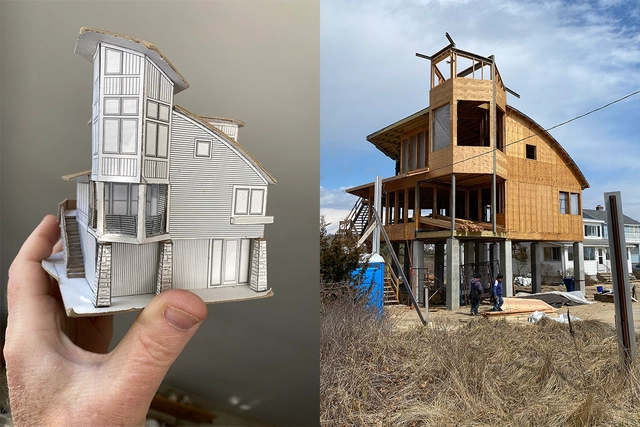
Model and Photograph. Image Courtesy of Duo Dickinson
We deal with buildings every day. We sleep in them, work in them, live our lives using their accommodation. But like a song or a painting, a person usually helps create them, with those who use and build them, then the world receives that work. But before they are built, buildings are just ideas.
The importance of the use of advanced technologies, such as the likes of virtual reality in the scene of architecture, is becoming increasingly necessary. No matter how beautiful a rendered image may be, it will always lack the capacity to fully convey the scope and feel of a project as a whole, further perpetuating the necessity to incorporate the use of these technologies at a professional practice level.
Architects who choose not to adopt the use of virtual reality technologies into their design process fall victim to being at a significant disadvantage, and the problem no longer even lies within accessibility, as VR is very much a possibility for architects of all backgrounds in the present age.
All aspects of society today are becoming increasingly more digital. Our interconnectedness and speed at which we are able to search and transfer information have made us more accustomed to exploring new ways that technology can impact our lives. Over the last few years, the rise of bitcoin, blockchain, and now the metaverse, has caused architects and designers to reconsider the notion of physical and virtual space. But beyond that, there’s an “in-between” of spaces that will be designed to support the technological escapism that the metaverse and web3 offer. While these virtual worlds are on the frontier of the digitization of everything, architects will play a huge part in designing the real-world physical spaces that can support them.
Across the globe, museums function as cultural landmarks – spaces of significance that quite often become defining symbols of a city’s architectural landscape. Historical examples such as the Museum de Fundatie in the Netherlands and The Louvre Museum in France continue to attract millions of visitors, with contemporary architectural interventions to them redefining their spatial contribution to their local context.
Imagine yourself welcoming your colleagues to a business meeting at your home. The table is set next to the infinity pool, under the shadow of a huge curved metal structure reminiscent of Zaha Hadid's most audacious designs except for the complete absence of pillars. Hovering in the air, the roof completes an idyllic setting for this mansion on a rocky hillside. The house was recently acquired as an NFT and is digitally accessed via encrypted code. That's right, this is your virtual home. The physical one is a small 40m2 apartment in the center of one of the busiest and most polluted cities in the global south.
Working remotely throughout the past year has accelerated the introduction of new approaches to real-time rendering, and with it, a new necessity was born: how can a person feel physically present inside a space, without actually being there? Ultimately, designers resorted to the virtual world, a vast realm of interactive built environments that can be accessed from the comfort of one's home. Even the tools utilized, such as headsets and goggles, have become more accessible to the vast majority of the public and are being sold at a lower price than they initially were. We have become accustomed to build, modify, and navigate between different environments, going back and forth between what is real and what isn't. Truth is, virtual has become the new normal.