A 3D visualization multiplex is a system to instantly visualize 3D models on multiple devices: desktop computers, smartphones, tablets, augmented reality gear, and virtual reality glasses.
It's an everyday tool to streamline conversations between architects, engineers, contractors, their clients, and the rest of the world.
With the formidable combination of CAD software programs - e.g. SketchUp or Revit - and a multiplex, 3D storytelling has never been simpler.
An 18th century baroque palace in Karlsruhe, Germany has become the canvas for a dazzling light mapping projection in the latest project by Zaha Hadid Architects.
Named “Behaviour Morphe,” the projection display was created in collaboration with composer Max Cooper and leading digital artists Andy Lomas and Mubbasir Kapadia for the city’s 2017 Schlosslichtspiele Festival, exploring how digital spatial concepts could shape the living spaces of the future.
Apple’s fall 2017 Keynote, which at the time of publication is already underway, is the first ever event held at the new Steve Jobs Theater right at the center of the Apple Headquarters in Cupertino. Every year at its fall keynotes, the company makes it major product announcements—last year, they announced the iPhone 7, Apple Watch series 2, and Airpods. This year, most of the hype surrounded the expected announcement of the iPhone 8 (and iPhone X!).
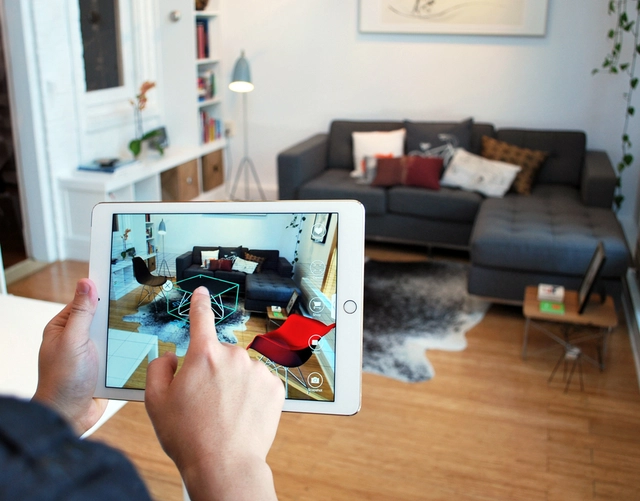
However, we have also been eagerly awaiting the announcement of updates to iOS 11 and its release to the public. First introduced on June 5, 2017 at the Worldwide Developers Conference, the discussion of the new Apple operating system will feature user updates but also developer updates—and it's here where we find the true star of the show: ARKit, the back-end tools which developers can use to create next-generation augmented reality (AR) apps for users of iOS 11 devices.
https://www.archdaily.com/879403/the-real-star-of-the-apple-keynote-arkit-augmented-reality-technologyAD Editorial Team
This article was originally published by Archipreneur.
Virtual reality and augmented reality tools for the AEC industry are getting increasingly better and more optimized. As prices keep dropping, there are fewer reasons why every architect, engineer, contractor, and owner shouldn’t use some form of VR/AR in bringing their projects to life.
From being a novelty a few years ago, VR/AR solutions are slowly becoming a medium that’s transforming the way professionals in the AEC industry communicate, create and experience content. Offering a more immersive experience of architectural designs, but also products and areas related to space building, VR and AR tools are becoming an industry standard that offers rapid iterations and opportunity to refine designs in collaboration with clients and colleagues.
https://www.archdaily.com/878408/the-top-5-virtual-reality-and-augmented-reality-apps-for-architectsLidija Grozdanic for Archipreneur.com
Zaha Hadid Architects, collaborating with digital artists and computer science researchers Andy Lomas and Mubbasir Kapadia, have been selected to create a projection mapping light show at the 2017 Schlosslichtspiele Festival in Karlsruhe, Germany. Titled ‘Behaviour Morphe,’ the dynamic light display will be projected onto the city’s 18th century baroque palace, simulating how users move throughout and interact with the building’s interior spaces.
Augmented reality provides us with new research field of architecture. Now you do not need architectural models. We can see the building as it is with all the details as a virtual model. These properties of augmented reality give us new opportunities. For example, we can compare the buildings from different regions of the world, from different eras in the same scale. We can make collections of buildings, unimaginable compositions.
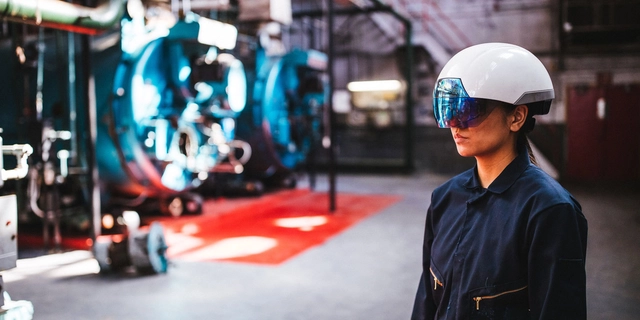
Imagine you’re part of a crew constructing a new office building: Midway through the process, you’re on-site, inspecting the installation of HVAC systems. You put on a funny-looking construction helmet and step out of the service elevator. As you look up, there’s a drop ceiling being installed, but you want to know what’s going on behind it.
Through the visor on your helmet, you pull up the Building Information Model (BIM), which is instantly projected across your field of vision. There are heating ducts, water pipes, and electrical boxes, moving and shifting with your point of view as you walk along the corridors. Peel back layers of the model to see the building’s steel structure, insulation, and material finishes. It’s like having comic book-style X-ray vision—and soon, it could be a reality on a construction site near you.
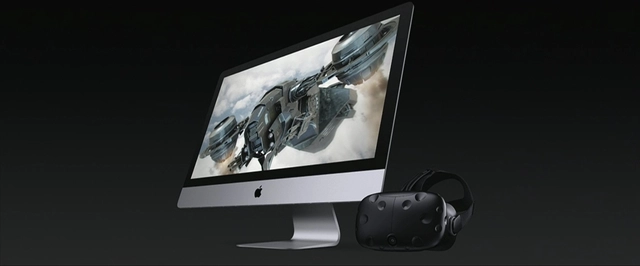
At Apple's Worldwide Developers Conference (WWDC) today, the US-based tech giant announced the latest slate of performance updates to their software and hardware products. Targeting software developers and other high-end users, the event was highlighted by the announcement of significant upgrades to their computer’s graphics and processing capabilities—or in architect’s terms—the components required to work on projects like creating content within a VR experience or real-time 3D rendering.
The ability to draw well is one of the most coveted skills in architecture. Unfortunately for those without an innate gift for sketching, it's also one of the most difficult to learn—even if it can, contrary to popular opinion, be learned with commitment and practice. But for those poor souls without such talents, there is now a fix: an app called SketchAR.
Available for iPhone and Android devices that incorporate Google's Tango technology, SketchAR can take photographs or other images, convert them into sketchable line drawings, and then use augmented reality to overlay them onto real-world surfaces.
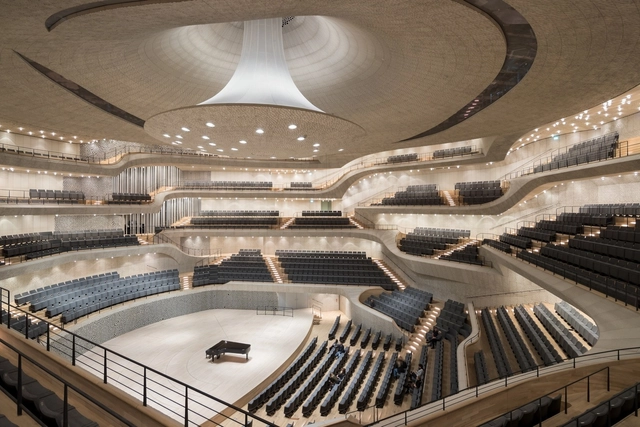
The Washington Post (WaPo) has launched a new architectural augmented reality series that will provide readers with an in-depth look at the details behind some of the world’s most innovative new buildings. For its first edition, architecture critic Philip Kennicott narrates an AR projection of the unique ceiling of the main concert hall at Herzog & de Meuron’s recently completed Elbphilharmonie in Hamburg, Germany.
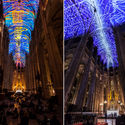
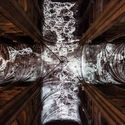
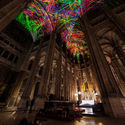
Digital artist Miguel Chevalier has transformed the ceiling of the Saint-Eustache Church into a dynamic, imaginary sky chart for the 2016 Nuit Blanche Festival in Paris. The installation, titled Voûtes Célestes, illuminates the soaring ceilings with 35 different colored networks to create glowing webs of light that highlight the church’s gothic architecture.
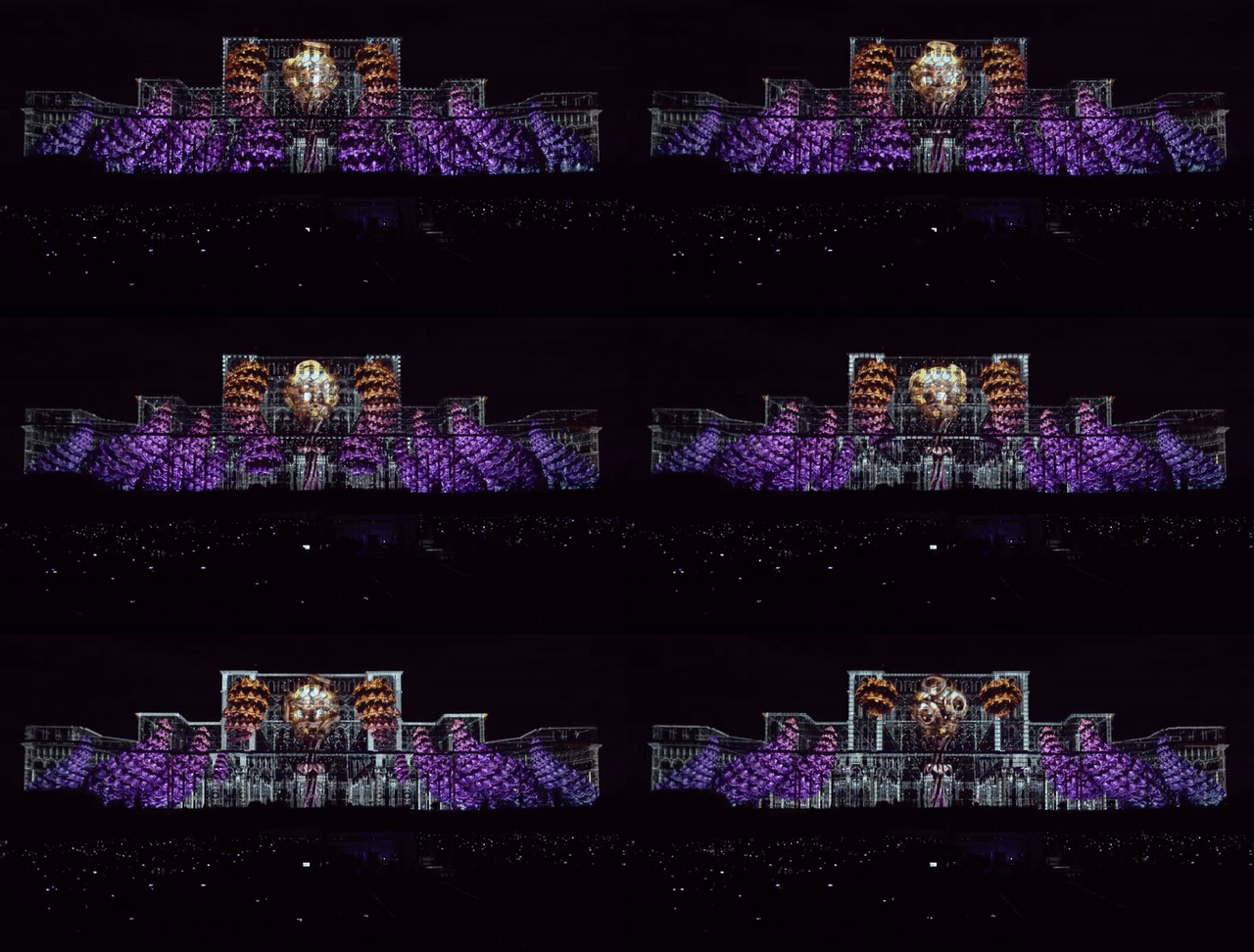
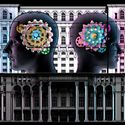
Installation art collective Limelight has transformed the Parliament Building of Romania into a eye-popping, psychedelic light show for the iMapp Bucharest International Video Mapping Competition. Titled “Interconnection,” the video utilized projection mapping (also known as spatial augmented reality) techniques to render the world’s third largest building in a blaze of shape-shifting, technicolor graphics and animations. Taking home top honors at the event, the projection required the use of 104 video projectors to cast the 23,000 square meter surface of the Parliament’s front facade in over 1 million ANSI lumens.
According to its creators, “the projection mapping shows the interconnectedness of all things from micro to macro as well as the outer and the inner universe. Conjuring emotions and feelings, the amazing display of color, light and sound aims to reopen the dialogue between the internal and the external, through a cinematic journey from the state of separation to the state of eternal openness.”
Check out animation stills and the full video performance after the break.
Augmented reality is not a new piece of technology. The term has existed in some form since the early 90s, and it has had practical effects for architects since at least 2008, when ArchDaily posted its first AR article about a plugin for Sketchup that allowed users to rotate a digital model around on their desk using just their bare hands. But these past few weeks, society was given its first glimpse of augmented reality’s potential to affect the way we interact with the places we occupy.
That glimpse, of course, has been provided by Pokemon GO, the location-based augmented reality mobile game that allows players to capture virtual creatures throughout the real world. With more many active daily users as Twitter and a higher daily usage time than social media apps like Snapchat, Instagram and Whatsapp, it cannot be denied that the game has captured our attention unlike anything that has come before it.
Videos
Still from "Concrete Love" showing Gottfried Böhm's Neviges Mariendom. Image Courtesy of New York Architecture & Design Film Festival
October has become a busy month in the design world. If you’re living in the United States, New York specifically, it means Archtober: a portmanteau that means the city is flooded with architecture activities, programs and exhibitions, piled onto an already rich design calendar. One of these events is the New York Architecture & Design Film Festival, which started on Tuesday night and runs through Sunday October 18th, and will screen 30 films from around the world in 15 curated, themed programs.
This week, I was able to visit the festival to absorb the atmosphere and speak to the festival's director Kyle Bergman, to learn the ins and outs of this year’s festival, how things got started, and where it will go in the future.
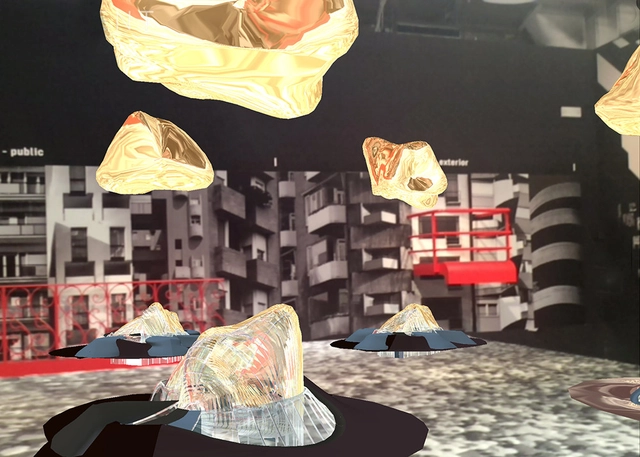
This year at the Venice Biennale, not all of the exhibitions are visible. Ozel Office of Los Angeles have "hacked" the Venice Biennale with the help of some major architecture firms: Asymptote Architecture, Greg Lynn Form, Neil M. Denari Architects, Murmur, and Oosterhuis Lenard. Together, these firms have created a rogue digital addition to the Biennale only accessible through a virtual portal revealing a world of levitating models, movable objects, and much more, activated by physical components of the Koolhaas-curated central pavilion.
Find out how you can hack the Biennale after the break.
The DMY International Design Festival Berlin Awardannually highlights the most exceptional works in contemporary product design, with strong consideration of the teams’ approaches, rather than just their final results. This year, a facet of the Ecole Polytechnique Fédérale de Lausanne - EPFL + ECAL Lab – was named one of the winners for their exhibition ‘Give Me More’. Eight installations depicted augmented reality scenarios, combining analogue materials and digital applications to “turn technology into a new medium.”
Augmented Reality is a new technology that is starting to spread. Basically, it consists on mixing 3D model with live footage in real time. This concept has been applied to futuristic interfaces, and it can be very helpful for architects as it allows you to take 3D Models a step further, placed on the real world and show it to your clients.
Thanks to the AR-media Plugin for Sketchup, you can start playing with Augmented Reality. This plugin allows you to place the 3D Model over live video from your webcam, and move it around as you can see on the above video. The plugin calculates the planes on the live footage thanks to a sheet you need to print out, which allows the software to calculate the distance and inclination.
So, all you need is Google Sketchup (free), a webcam, then download the trial version of the AR-Media Sketchup plugin (limited to 30 seconds), print the sheet and you can start playing with your models.
We just did it at the office with Aravena´s ORDOS 100 model, and it´s very impressive. Try to use a small model to start, since the 30 sec countdown starts running when the software launches and it can take a while to start completly, depending on the model.










.jpg?1445011714&format=webp&width=640&height=580)