This book tells the story of Eyes of the City—an international exhibition on technology and urbanism held in Shenzhen during the winter of 2019 and 2020, with a curation process that unfolded between summer 2018 and spring 2020. Conceived as a cultural event exploring future scenarios in architecture and design, Eyes of the City found itself in an extraordinary, if unstable, position, enmeshed within a series of powerfully contingent events—the political turmoil in Hong Kong, the first outbreak of COVID-19 in China—that impacted not only the scope of the project, but also the global debate around society and urban space.
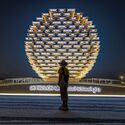
UK’s contribution to Expo 2020 Dubai is a wooden sculptural structure that celebrates cultural diversity and collaboration, highlighting Britain as a meeting place of cultures and ideas. Created by artist and designer Es Devlin, the Poem Pavilion uses advanced machine learning algorithms to transform the input of visitors into collective poems. The latter can be read in illuminating displays on the façade, transforming the pavilion into the exhibit itself.
Artificial intelligence is transforming how we design and build. By 2050, the effects of AI adoption will be widely felt across all aspects of our daily lives. As the world faces a number of urgent and complex challenges, from the climate crisis to housing, AI has the potential to make the difference between a dystopian future and a livable one. By looking ahead, we're taking stock of what's happening, and in turn, imagining how AI can shape our lives for the better.
Artificial intelligence, machine learning and generative design have begun to shape architecture as we know it. As systems and tools to reimagine the built environment, they present diverse opportunities to rethink traditional workflows. Designers also fear they may inversely affect practice, limiting the services of the architect. Looking to building technologies, new companies are creating software and projects to explore the future of design.
Architecture is a long-standing profession, one that has produced the iconic landmarks we admire around the world, monuments which we revere around the world, and played a part in establishing the organisation of the cities we live in today. This description, however, is architecture in the traditional sense - and there are numerous examples of individuals and firms who have strayed away from traditional architectural practice, either through delving into adjacent fields or 'disrupting' the field with the harnessing of new technologies.
The human scale spans both physical dimensions and sensory perception. Designers create spaces and objects like steps, doorways and chairs that are closely aligned to human measurement and how we see the world. But as we look beyond the human scale, new ideas and typologies emerge that help us rethink how we conceptualize architecture and build for the future.
Martin C. Pedersen discusses with Frank Stasiowski, the founder and president of PSMJ Resources, his take on AI and the future of the profession. The author explains that six years ago he "interviewed Frank Stasiowski, the founder and president of PSMJ Resources, a management consulting firm that specializes in architecture, engineering, and construction firms. In addition to advising firms on strategic and growth planning, leadership and succession plans, mergers and acquisitions, and a host of other issues, Stasiowski spends a lot of his time analyzing where the industry is likely to evolve in the future, especially as technology takes an increasingly important role". Finding him one of the keenest observers of the industry, Pedersen talked to Stasiowski to get his opinion on AI and the future of the architectural profession.
Believing firmly that "architecture is [...] too important to leave solely to architects", Ole Bouman embarked on diverse activities throughout his three decades of work, reflecting on “architecture, not so much as the art or technique of making buildings, but architecture as the intelligent way to organize our lives on earth, and infuse it with purpose”.
After having shared Bouman's essay Finding Measure, ArchDaily had the chance to discuss with DesignSociety’s founding director his thoughts on the role of architecture, the current challenges of the world, the digital revolution, and many other thought-provoking topics.
Mars House designed in May 2020 by Artist Krista Kim, has become the first sold digital NFT home in the world. The 3D digital file that can be experienced in virtual reality, was just acquired. Rendered using Unreal Engine, a software used to create video games, the house can be experienced in VR, but could also be experienced through augmented reality (AR) environment in apps. A structure comprised of light, Mars House generates a healing atmosphere, with a musical accompaniment by Jeff Schroeder of The Smashing Pumpkins.
There is an astonishing degree of complexity, order, and beauty in the natural world. Even so, and especially within the realm of living things, nothing is more complex than it needs to be to sustain its existence. Every aspect of the system serves a purpose. If it does not, the unneeded component eventually ceases to exist in future generations. Even with these constraints of resource and energy efficiency, we find boundless beauty and harmony in the natural world. Contrast nature’s “just the right amount of complexity” to the way many architects design buildings today. While nature is only as complex as it needs to be, architects and designers add excessive and inessential complexity to their buildings and landscapes when none is warranted.
Are machines capable of design? Though a persistent question, it is one that increasingly accompanies discussions on architecture and the future of artificial intelligence. But what exactly is AI today? As we discover more about machine learning and generative design, we begin to see that these forms of "intelligence" extend beyond repetitive tasks and simulated operations. They've come to encompass cultural production, and in turn, design itself.
As we are entering 2021 after a year of anxiety and uncertainties, what are your expectation for our future? The UN75 survey reports that most people around the world hold greater optimism for the future: “Globally, many more respondents believe people will be better off in 2045 than today (49%) compared to those who believe people will be worse off (32%).”
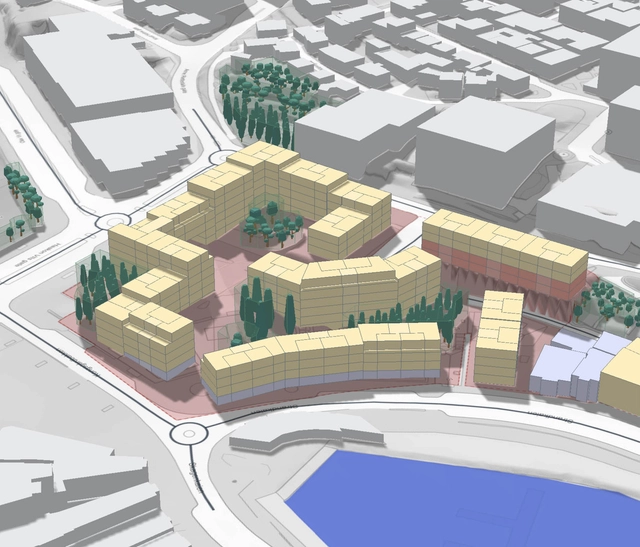
Autodesk has just acquired Spacemaker, a platform that “gives architects and developers the automation superpower to test design concepts in minutes” and explore the best urban design options. Targeting architects, urban designers, and real estate developers, the cloud-based AI-powered generative design helps professionals taking better early-stage design decisions.
More than 55% of the world’s population lives in cities, with that number only expected to increase in the coming decades. Despite the rising population in urban areas, local governments continue to raise flags about inadequate infrastructure and the declining quality of life that cities are facing. Perhaps the large scale problems that we typically categorize as urban innovation, inclusion, and infrastructure, can be solved if we get to the root of the smaller troubles, that we may not even know existed. It’s time to take urban issues off the back burner and improve cities not just for today, but for the long term future.
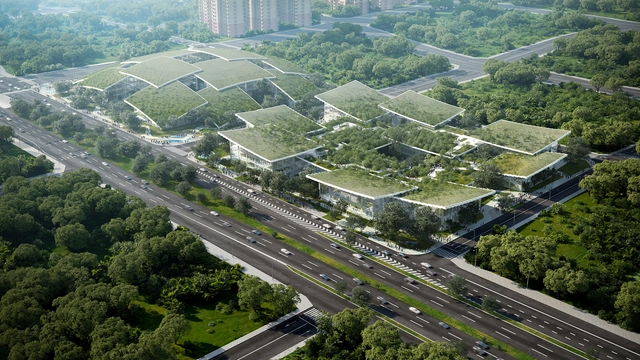
BIG has unveiled its design for AI CITY, the future home for Terminus Group, a smart service provider. Imagined as the new center of innovation for China, the project will be dedicated to "artificial intelligence, robotics, networking, and big data”. Located in Chongqing, in southwest China, known as the “mountain city”, the project is set within the Chongqing Hi-Tech Industrial Development Zone.
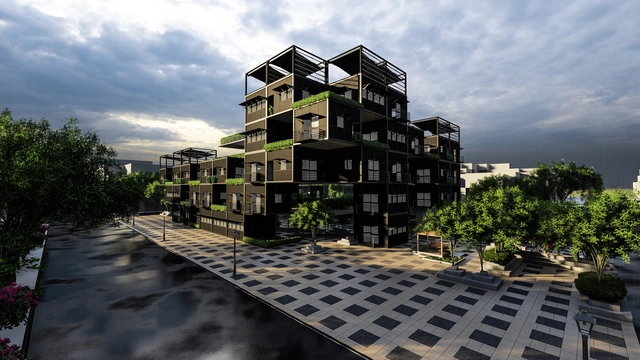
Part of Reparametrize Studio’s ongoing research on “Re-Coding Post War –Syria”, “House Re-Coding” is a new generation of housing solutions adaptable to the post-war cities. Focusing on innovation, collecting comprehensive infrastructural and socioeconomic analytics data through Artificial intelligence, the project seeks to envision the future of post-war cities, as a Smart urban development where all different actors come together, using the existing, and still useful, urban fabric.
Architects don’t make buildings. Architects make drawings of buildings. But of course, someone has to make the building. The construction industry is one of the largest economic sectors and we all interact with the built environment on a daily basis, but the actual work of getting a building from drawing to structure has barely evolved over the decades. While the rest of the world has moved into Industry 4.0, the construction sector has not kept pace. Architecture has begun to embrace some digitalization. After all, not many of us work with mylar on drafting tables anymore. So with the architecture industry’s everlasting link to the construction industry, will the latter pick up some new technological tricks by association? And when it does, how will that change the role of the architect?
Videos
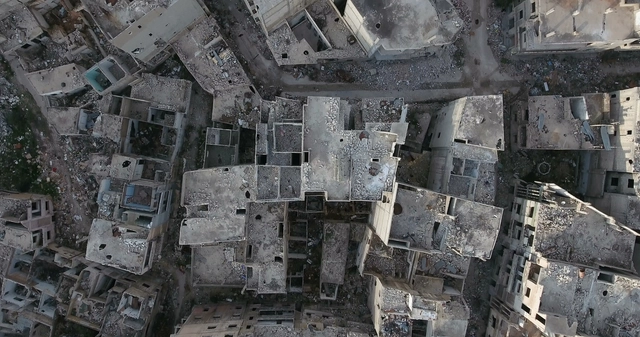
the city of Homs in Syria. Image via Shutterstock/ By Fly_and_Dive
In a world devastated by war and destruction, new ideas for future reconstruction of cities are emerging. The latest technologies are creating opportunities to shape better built environments and better urban experiences. While the world has had its fair share of failed attempts of post-war reconstruction, the 21st century is promising concepts more in touch with culture, integration, and sustainability.
As we all know, technology is the game-changer of this century. It has ultimately modified how we design and build, and with the development of Artificial Intelligence, boundaries have been pushed furthermore. Able to transform the environment we live in, AI can also help shape a better version of the environment we have lost.






























Ai_Qing_Courtesy_of_KPF.jpg?1592356426&format=webp&width=640&height=580)