1. ArchDaily
  2. Artificial Intelligence

Artificial Intelligence: The Latest Architecture and News

Benjamin Bratton on Artificial Intelligence, Language and "The New Normal"

Subscriber Access | 

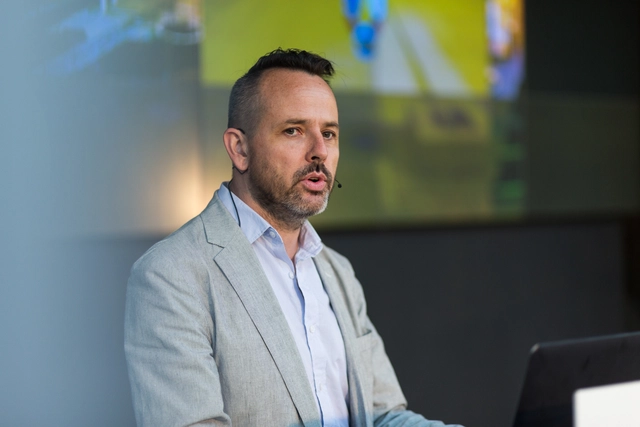
Benjamin Bratton, Professor of Visual Arts and Director of the Center for Design at the University of California, San Diego, is the new Programme Director at Moscow's Strelka Institute. The New Normal is based on the premise that "something has shifted. [...] We are making new worlds faster than we can keep track of them, and the pace is unlikely to slow."

Have our technologies have advanced beyond our ability to conceptualize their implications? "One impulse," the course advocates, "is to pull the emergency brake and to try put all the genies back in the bottle." According to Bratton, this is hopeless. "Better instead to invest in emergence, in contingency: to map The New Normal for what it is, and to shape it toward what it should be."

Going Live – Volume #49: Hello World!

Subscriber Access | 

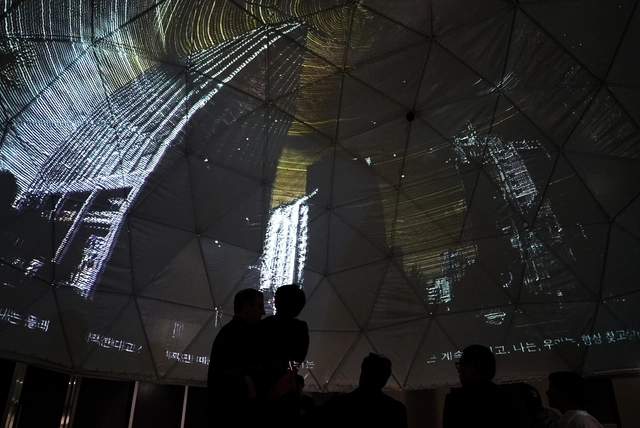
The following essay by Nick Axel (Volume's Managing Editor) first published by the magazine in their 49th issue, Hello World!

With the rise of computational networks and power, cognitive models developed and debated over in the postwar decades have finally been able to be put to work. Back then, there was a philosophical debate raging alongside the burgeoning field of computer science theory on the nature of consciousness, in which machines of artificial intelligence served as a thought experiment to question humanity. Yet with the proliferation of data and the centralization of its archives, theoretical practice moved from conceptual experiments to empirical tests.

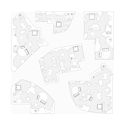
Going Live – Volume #49: Hello World! - Image 1 of 4
© Volume

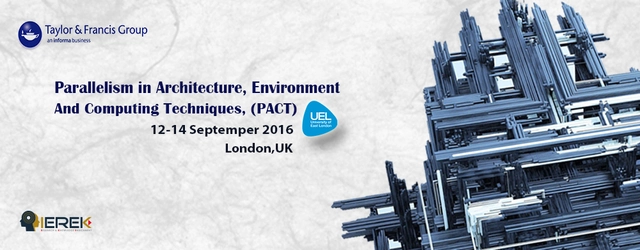
Conference: Parallelism in Architecture, Environment And Computing Techniques, (PACT)

The theme of Parallelism in Architecture, Environment and Computing Techniques (PACT) 2016 explores the relations between computational design in architecture, organizational and global, ever-changing and pervasive contexts. PACT 2016 aims to gather practitioners and researchers interested in investigating and improving the state of practice of computational design software in the architectural discourse, where practicing design computing experts can explain the challenges they face in their day-to-day practices, and collectively induce an impact on the future of the field.

TERMES: A Robotic Swarm That Collectively Constructs Modular Structures

Termite mounds offer a fascinating architectural quandary: how is it possible that these towering structures (which include complex systems of openings, passages, large volumetric spaces, and even active ventilation systems and humidity regulation) are constructed with no centralised control or planning? The spatial complexity that these thousands of insects can collectively achieve has inspired a Harvard team to create TERMES, a project focused on programming an artificial robotic swarm to build modular structures.