The convergence of artificial intelligence (AI) and urban planning holds significant promise for creating more intelligent, efficient, and sustainable cities. This fusion entails the integration of cutting-edge technologies that can guide decision-making, enhance resource allocation, predict trends, engage citizens, and more. In this framework, where AI is seen as a tool for advancing various urban aspects, there has been a surge in the development of applications, software, and other technological systems tailored to support urban planning. Below, we have highlighted some global studies and technologies applied from urban morphology to community involvement.
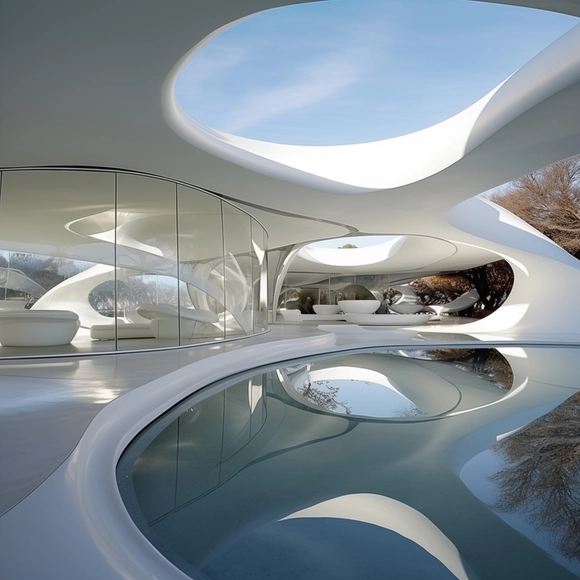
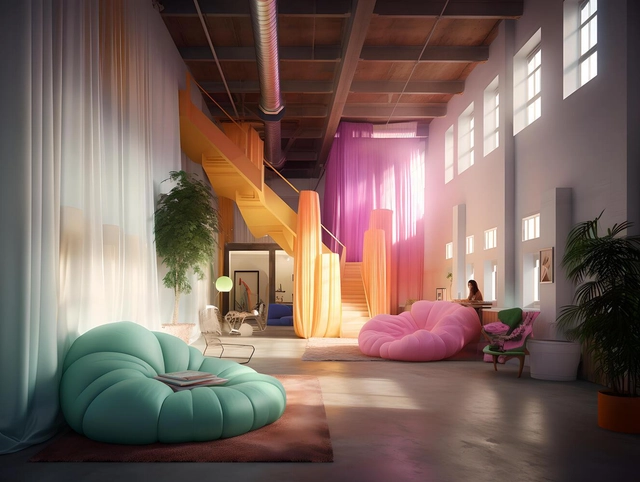
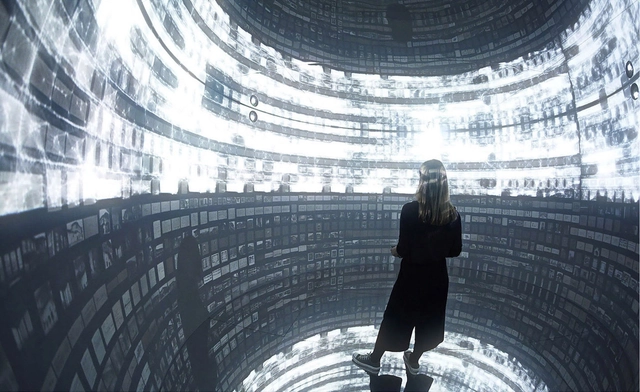
The Museum of Temporal Delight. This image was created, in Midjourney, using 5 language prompts and a few small refinements. Image Courtesy of John Marx/ Form4 Architecture
This article is the seventh in a series focusing on the Architecture of the Metaverse. ArchDaily has collaborated with John Marx, AIA, the founding design principal and Chief Artistic Officer of Form4 Architecture, to bring you monthly articles that seek to define the Metaverse, convey the potential of this new realm as well as understand its constraints.
In so many ways the introduction of AI software has created a sense that we live in a world predicted by science fiction novels. We commonly have rested on the assumption that computers will never be capable of designing. That time has now arrived, and with it comes an opportunity to confront the positives and negatives these new technologies offer.
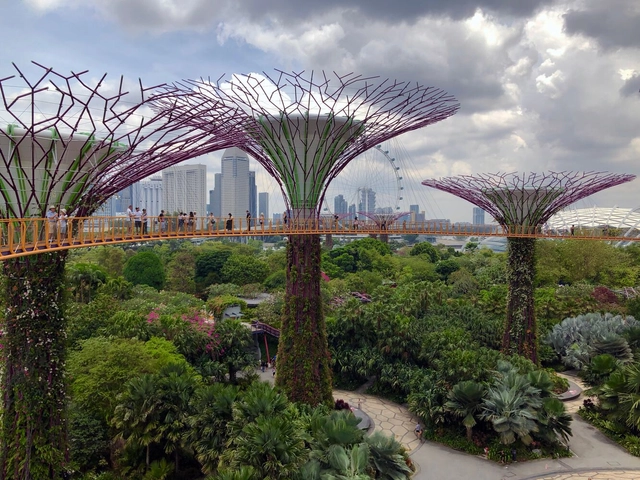
Marina Gardens, Singapore. Image by Nick Fewings Unsplash
For a long time, sustainability in the architectural field was synonymous with technology. Efficiency was directly linked to innovative technological devices that adorned buildings with gadgets. Nowadays, however, sustainability increasingly encompasses different strategies that also involve acknowledging vernacular techniques and local materials as crucial for creating sustainable and carbon-neutral buildings.
Nevertheless, regardless of the technique or materials employed, the common denominator is the pursuit of reducing the carbon footprint of our architecture, which demands changes in how buildings are conceived, constructed, and operated. In other words, whether returning to vernacular methods or utilizing cutting-edge applications, these strategies aim to reach the same destination and, therefore, are equally valid despite being vastly different.
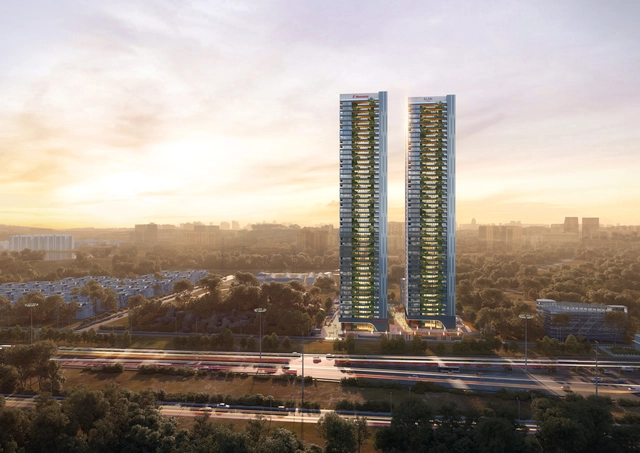
Courtesy of Architectural Dialogue | Elan - Meenakshi
Architecture competitions are platforms where innovation meets imagination, where the boundaries of what we know about design and architecture are relentlessly pushed. Serving as spaces for architects and designers to realize groundbreaking ideas, competitions challenge our conventions and shape our future environments. While countless creative concepts are proposed, only a handful are realized. In fact, these winning designs stand as a showcase for the creativity of architects, redefining our future built environments.
These winning projects demonstrate the global initiative to rethink the way we interact with spaces. HOKA fosters community interaction, while RITSO Resort merges tradition with modernity. Science Forest transforms museums into hubs for dialogue, and Elan-Meenakshi apartments in Hyderabad integrate urban living with green spaces. Ranging from Vietnam, Greece, Rome, to India, these examples showcase the transformative potential of architecture competition winners, reshaping our perception and interaction with the spaces we inhabit.
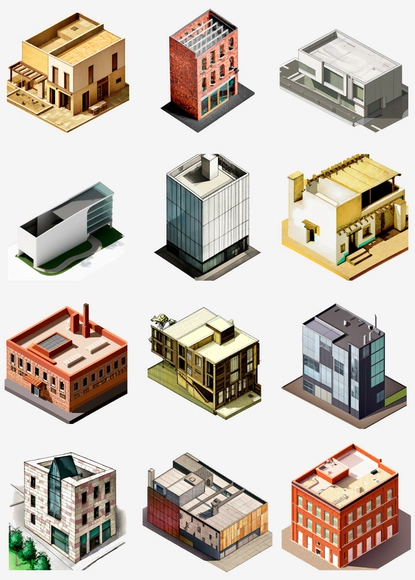
A contemporary building immersed in a built environment. This building is made of (material). An isometric view with realistic textures. Image via DALL.E 2
As AI has become more accessible, we have witnessed examples illustrating its diverse applications. Prominent among these are generative AIs, which excel in their ability to “create” images through prompts, many distinguished by their composition and vividness. These AI systems are neural networks with billions of parameters, trained to create images from natural language, using a dataset of text–image pairs. Thus, although the initial question posed by Turing in the 1950s, “Can machines think?” still recurs today, the generation of images and text is grounded in existing information, limiting their capabilities.
What has surprised many is the increasingly apparent closeness to overcoming the Turing test and the growing similarity, in terms of visualizations, to what an architect with skills in this field can achieve. In this context, while the debate persists in the architectural community about whether AI can process architectural concepts, this article explores how it interprets materials to develop these visual representations. With that in mind, a single prompt was developed for this experiment (with materiality as its variable) to delve into the obtained results.
https://www.archdaily.com/1010723/does-ai-correlate-materiality-with-contemporary-architecture-an-experiment-with-six-building-materialsEnrique Tovar
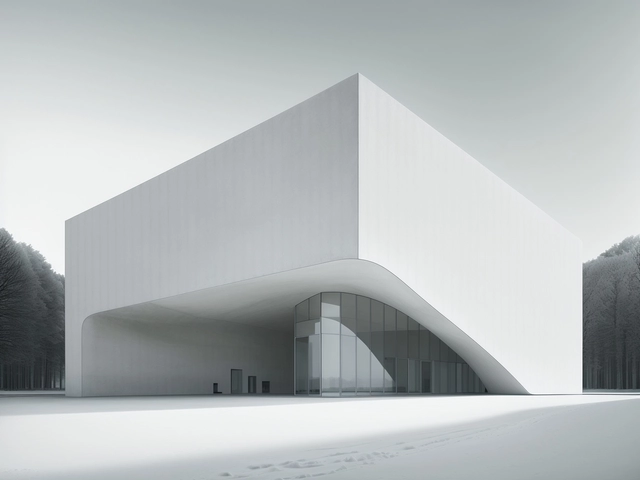
Image created under the prompt: A minimalist, white building with high, curved solid walls, curtain walls, and robust concrete columns in a Nordic environment. Image via LookX AI
Nowadays, architectural work is closely linked to technology and the advances that emerge in this field. In that sense, various aspects of artificial intelligence have been widely discussed. The reality is that, rather than plunging into a competition of capabilities between Architects vs AI, —with nuances that could evoke some aspects of the ideology of 19th-century English Luddites— advances in this field can be seen as tools to optimize processes and open new perspectives within the profession.
In this context, architecture often spans various stages, from early phases where data decisively shapes built environments to later ones where generative design tools for spaces play a fundamental role in spatial configuration. In this process, visualization plays the crucial role of graphically understanding the expression of what is being designed. Thus, iterating on the visualization and evaluating each of the results is vital not only to express ideas but also to use those visualizations to interpret aesthetic elements.
https://www.archdaily.com/1010426/prompting-creativity-the-role-of-ai-in-visualization-and-design-tools-for-architectsEnrique Tovar
The world of architecture is a captivating fusion of artistic expression and scientific precision. My journey in the realm of architecture started with a profound exploration of its rich history. It was the awe-inspiring works of Renaissance masters that propelled me onto a transformative trajectory, guiding me toward harnessing the immense potential of artificial intelligence and algorithms in architectural design.
In 2022, a wider audience gained access to unexpectedly powerful AI tools, including Stable Diffusion, Midjourney, and DALL-E 2 for text-to-image generation, as well as the human-like chatbot OpenGPT.
One year later, pundits, organizations, and governments have stated these technologies will pose profound risks to society and humanity—from automation-spurred job loss to disrupting democratic processes to the automatization of weapons.
Architecture is a unique field that combines equally constant aesthetic and functional needs, while immersed in dynamic technological environments. At this juncture, design processes and buildings are becoming increasingly intricate, requiring architects to manage projects efficiently while fostering multidisciplinary and multi-level collaboration throughout workflows. Additionally, the new technologies and tools we employ in the process must evolve at the same pace —sometimes even faster— by embracing aspects such as sustainability and efficiency, all while keeping an eye on the future.
The tools available in the multidisciplinary architectural environment have evolved significantly quickly. Both students and experienced architects have now nearly completely transitioned from manual methods to computer-aided drafting software. Today, we find ourselves immersed in the era of architecture driven by technologies such as Building Information Modeling (BIM), artificial intelligence, and digital processes. At the same time, the fundamentals of BIM and its historical background trace back to the early days of computing, research, and new technologies, which sparked a rapid evolution within the AEC industry and among its professionals.
https://www.archdaily.com/1008860/bim-and-the-future-of-architecture-accelerating-design-processes-with-archicad-27Enrique Tovar
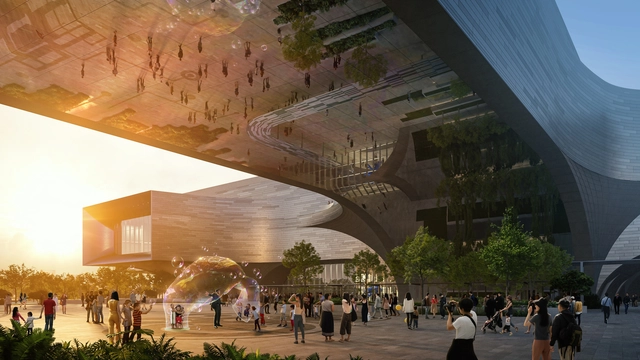
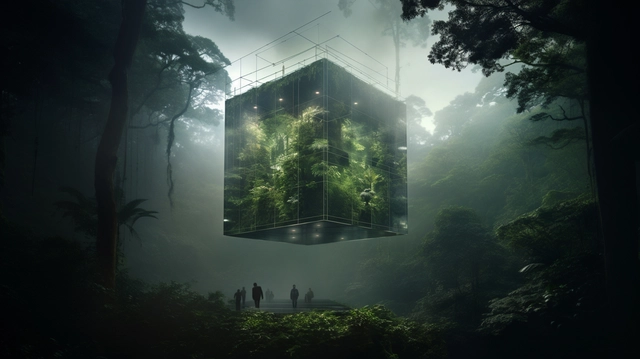
museum of a rainforest. Image Courtesy of Ralph Appelbaum Associates
This article is the sixth in a series focusing on the Architecture of the Metaverse. ArchDaily has collaborated with John Marx, AIA, the founding design principal and Chief Artistic Officer of Form4 Architecture, to bring you monthly articles that seek to define the Metaverse, convey the potential of this new realm as well as understand its constraints.
Artificial Intelligence is at the genesis of creating fundamental changes in the way we design and construct buildings and cities. Some of these changes will be abrupt and disruptive to normative practice. Others will take more time to feel the effect of this new technology, but the change will be pervasive. When combined with the Metaverse, AI will also offer vast opportunities for the profession to expand and grow. The kinds of spaces and environments we design in the Metaverse will be, in some aspects, very different from what we currently design in the physical world alone. AI evolves every day, and we are compelled to learn while we innovate. AI has proven it is a powerful tool to assist designers and offers the potential to challenge us to alter our design process. Combining AI with narrative design is one of those challenges.
Will Artificial Intelligence replace architects in their roles? In the May 2023 edition of Building magazine, Thomas Lane suggests that AI has the potential to automate up to 37% of the tasks typically carried out by architects and engineers. This automation, though, is likely to target routine and less creative tasks, allowing professionals to concentrate on more strategic and imaginative aspects of their work.
Just as Revit and 3D software did not replace architects but only transformed their workflows, the same principle holds for AI tools. AI is poised to bring about new tasks, such as AI management, alongside existing responsibilities, signaling a shift in how architects work.
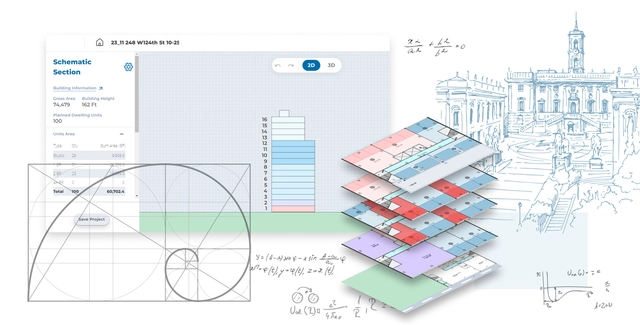
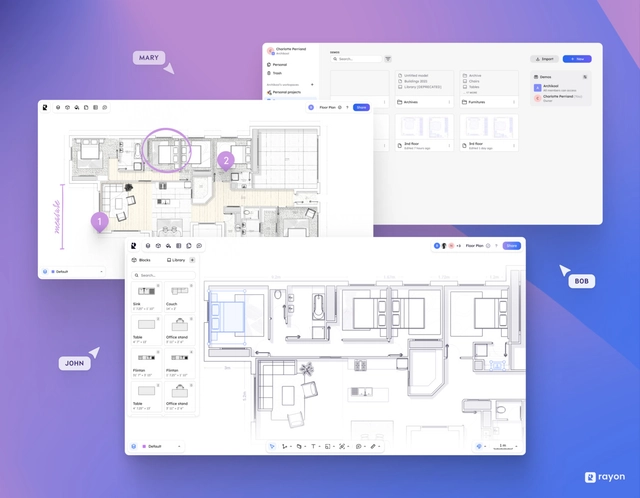
Rayon, an innovative online design tool that aims to create a new collaborative approach to developing "mundane buildings" within the city, has been selected as part of ArchDaily's 2023 Best New Practices. Founded in 2021 by Bastien Dolla and Stanislas Chaillou, it is a collaborative design software that brings together professionals in the architecture, engineering, and construction (AEC) industries. The software company believes that there is a “culture of the ordinary” in architecture. This culture represents an ecosystem of buildings that may seem unremarkable or aren't impressive landmarks in the city. However, these buildings and their construction professionals make up 90% of the urban fabric and contribute to the design culture that collectively gives identity to the city. The founders believe previous software generations have neglected this culture and propose Rayon as a novel tool to fill that gap by enhancing collaboration and user ergonomics.
Equipe do Estudio Guto Requena. Photo Courtesy by Guto Requena.
During July, we delved into the Design Process as our monthly topic. Inspired by practices that intersect various uncommon layers in their creations, we talked with architect Guto Requena. When designing, his studio experiments with different digital technologies through a sustainable lens and with a keen eye on social issues, aiming to deliver innovative and emotional experiences. Today, the architect boasts numerous national and international awards, including the ArchDaily Building of the Year and the UNESCO Prix Versailles.
In the interview, Requena shares his journey, highlighting the diversity of his team as a critical innovation point in his firm. He also addresses crucial questions about fostering innovation and creativity with new materials in architecture, among other topics.
cove.tool futuristic architecture designed by artificial intelligence, perfected by human creativity. Image Courtesy of cove.tool
Artificial Intelligence (AI) is poised to shape the future of architecture. As the AEC (Architecture, Engineering, Construction) industry rapidly evolves, AI matches the momentum. With these simultaneous evolutions, a burning question arises: will architects continue to be the primary creators of our built environment, or will AI dominate?
Illustrations from the Icon, where large structures provide a context for an overlapping of physical and virtual experiences. Image Courtesy of John Marx/ Form4 Architecture
This article is the fourth in a series focusing on the Architecture of the Metaverse. ArchDaily has collaborated with John Marx, AIA, the founding design principal and Chief Artistic Officer of Form4 Architecture, to bring you monthly articles that seek to define the Metaverse, convey the potential of this new realm as well as understand its constraints.
Of all the attributes that will define the Metaverse the single most important is that of experience. As we move more deeply into the Anthropocene Era humans seem to be shifting their interests from collecting things to collecting experiences. As the demand for experiences grows more intense and detailed, the need for content, and the clever and effective use of that content, will rise exponentially. From a more detailed perspective, the management and quality of those experiences will determine the initial success of the Metaverse. This is where the concept of a Responsive AI Concierge comes into play.
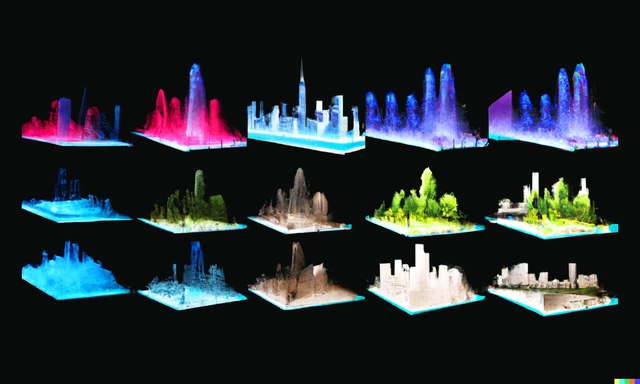
Image created using AI under the prompt: A futuristic architectural landscape exemplifying data-driven architecture. Image via DALL.E 2
Architecture is a multifaceted discipline influenced by diverse sources of data and information, which play a fundamental role in shaping architectural production. In the past, horological instruments like the sundial were used to obtain data, such as time, and gain knowledge of solar incidence at different times of the year and geographical locations. This made it possible to determine the optimal orientation of buildings, resulting in benefits such as better use of sunlight and greater thermal comfort.
Although cultural, social, and even religious factors can influence architectural design, quantitative factors are especially relevant when making decisions in the early stages of the creative process, during construction, and throughout the life cycle of a building. Therefore, it is important to collect and process relevant information, such as location, solar incidence, occupancy capacity, occupant interactions, energy performance, and carbon emissions, among other aspects.
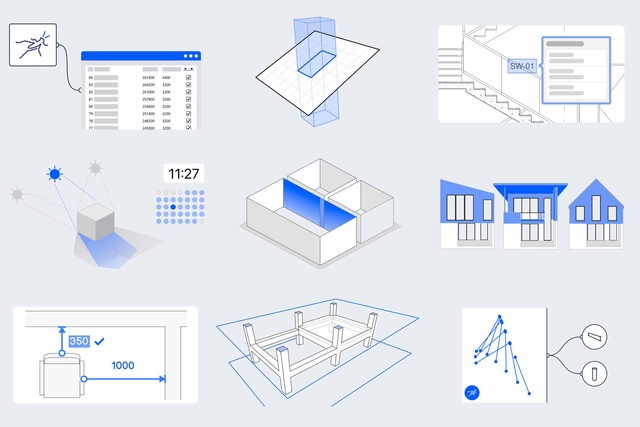
https://www.archdaily.com/1003902/data-driven-architecture-delving-into-4-building-information-toolsEnrique Tovar
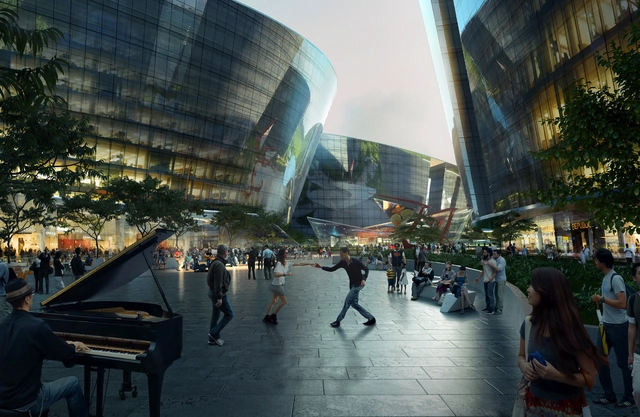
Project by Form4 Architecture investigating the opportunities for unsolicited participatory interaction in space, like street dancing, something that could be replicated in the Metaverse if its spatial quality had similar depth. Image Courtesy of Form4 Architecture
This article is the second in a series focusing on the Architecture of the Metaverse. ArchDaily has collaborated with John Marx, AIA, the founding design principal and Chief Artistic Officer of Form4 Architecture, to bring you monthly articles that seek to define the Metaverse, convey the potential of this new realm as well as understand its constraints.
For architects, one of the most captivating aspects of AI and the Metaverse is that of placemaking. How do we create compelling places that bring people to this new world and enable them to enjoy their experience there, getting them to return once the novelty has worn off? How much of this digital world needs to connect back with our day-to-day physical environs for it to feel meaningful and how do these artificial cities, towns, and neighborhoods come to life?