1. ArchDaily
  2. Artificial Intelligence

Artificial Intelligence: The Latest Architecture and News

Beyond Buildings: ArchDaily's November Editorial Focus

Audio available

"Design a cultural center on a desert coastline, in the style of Alvar Aalto, wood structure, golden hour, aerial drone shot, photorealistic, 4K." Within seconds, a line like this returns a convincing image. What is less visible is the shift it demands. For centuries, architectural imagination relied on the body: the hand that sketches, the fingers that shape a model, or, more recently, the click of a mouse in computational tools. Words came afterward, to explain what had already taken form. Today, the order is increasingly reversed. Before an image can exist, it must first be described: its references named, its materials listed, its mood specified.

This translation is not trivial. Intuition rarely arrives as a written sentence, and much of what architects imagine resists description. Yet as words increasingly become the entry point to the image, they also shape what can be imagined. The vocabulary available to describe a space begins to define the space itself.


Beyond Buildings: ArchDaily's November Editorial Focus - Image 1 of 4Beyond Buildings: ArchDaily's November Editorial Focus - Image 2 of 4Beyond Buildings: ArchDaily's November Editorial Focus - Image 3 of 4Beyond Buildings: ArchDaily's November Editorial Focus - Image 4 of 4Beyond Buildings: ArchDaily's November Editorial Focus - More Images+ 3

From Atoms to Universes: The Architecture of Everything in the Age of AI

 | Sponsored Content
Audio available

AI has become a consumer product faster than it has become a discipline. Each week brings new models and more information than anyone can absorb, and the easy response is uncritical consumption. Architecture needs a different strategy, built on criticism and method. AI is now acquiring spatial intelligence, the capacity to understand how physical space behaves, and architects can test a project against its environment while they design it. Used with judgment, AI can bring architects closer to nature and its complexity, and make them better builders. We simulate the world to learn how to inhabit it.
Subscriber Access

“Architecture Must Return to Its Essence”: Wang Shu and Lu Wenyu on the 2027 Venice Architecture Biennale

Audio available

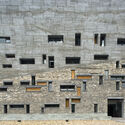
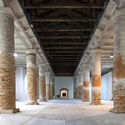
"Architecture must return to its essence." With this statement, Wang Shu and Lu Wenyu establish the central premise of their curatorial vision for the 20th International Architecture Exhibition of La Biennale di Venezia, taking place from May 8 to November 21, 2027, across the Giardini, the Arsenale, and throughout Venice. Titled "Do Architecture – For the Possibility of Coexistence Facing a Real Reality", the exhibition calls for a return to the physical act of making architecture, at a time when, according to the curators, the discipline has become increasingly disconnected from lived reality through excessive abstraction, commercialization, and digitalization.

Rather than focusing on what architecture might become, the curators propose a renewed engagement with the present, questioning what it means to practice architecture today through materials, construction, local knowledge, and direct experience. This approach builds on ideas that have long informed the work of Amateur Architecture Studio, founded by Wang Shu and Lu Wenyu in 1997, particularly their exploration of traditional building techniques, material reuse, and the relationship between architecture and place.The exhibition also places the question of coexistence at its center, exploring how architecture can bring together seemingly opposing conditions, from technology and craftsmanship to urban and rural ways of building, while remaining grounded in the specific realities of each place.

“Architecture Must Return to Its Essence”: Wang Shu and Lu Wenyu on the 2027 Venice Architecture Biennale - Image 1 of 4“Architecture Must Return to Its Essence”: Wang Shu and Lu Wenyu on the 2027 Venice Architecture Biennale - Image 2 of 4“Architecture Must Return to Its Essence”: Wang Shu and Lu Wenyu on the 2027 Venice Architecture Biennale - Image 3 of 4“Architecture Must Return to Its Essence”: Wang Shu and Lu Wenyu on the 2027 Venice Architecture Biennale - Image 4 of 4“Architecture Must Return to Its Essence”: Wang Shu and Lu Wenyu on the 2027 Venice Architecture Biennale - More Images+ 8

Call for Entries Open | 1st Design + AI Hackathon URP 2026: Transformable Multifunctional Furniture

Call for Entries | 1st Design + AI Hackathon URP 2026: Multifunctional Transformable Furniture

Subscriber Access

Ornamentation in the Age of Algorithms: Can Technology Bring Back Architectural Detail?

Audio available

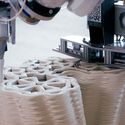
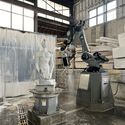
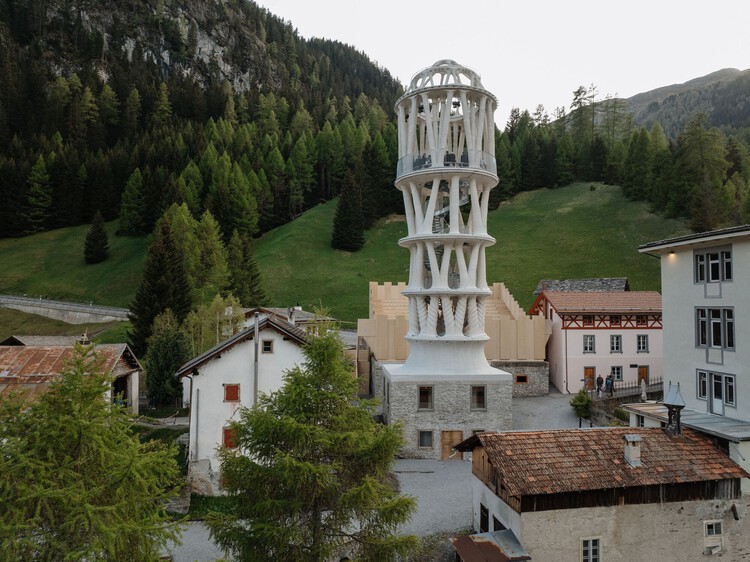
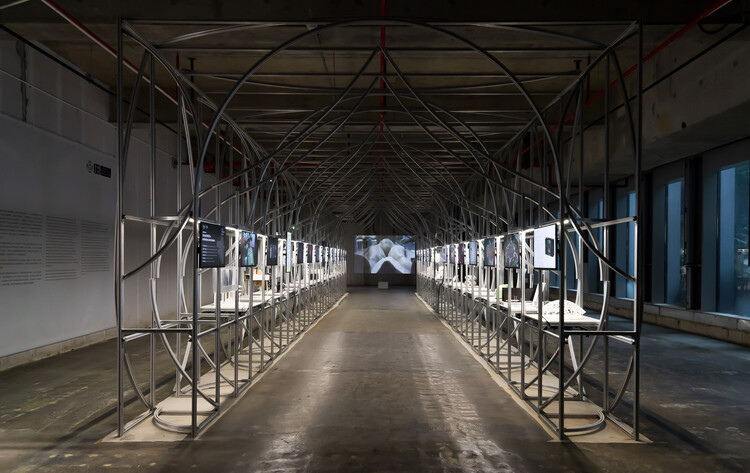
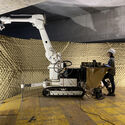
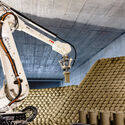
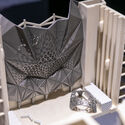
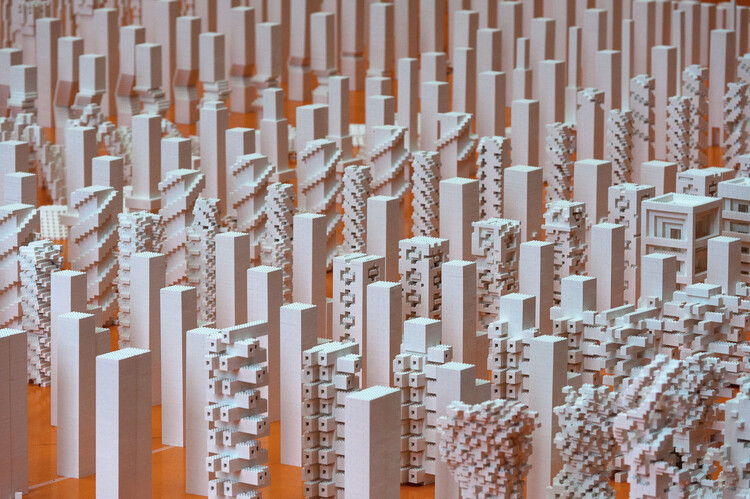
Architectural ornamentation has been a recurrent subject of debate across the industry for decades. A practice that was largely abandoned during the Modernist movement could now be standing on a platform that might, again, allow its resurgence, due to the current convergence of robotics, artificial intelligence (AI), and digital fabrication. Technology has seemingly removed the primary obstacle to decorative detail: the high cost of skilled manual labor. However, this new technical capacity demands a critical examination: What does ornamentation truly represent, and what do we gain or lose by resurrecting it through algorithmic design?

Ornamentation in the Age of Algorithms: Can Technology Bring Back Architectural Detail? - Image 1 of 4Ornamentation in the Age of Algorithms: Can Technology Bring Back Architectural Detail? - Image 2 of 4Ornamentation in the Age of Algorithms: Can Technology Bring Back Architectural Detail? - Image 3 of 4Ornamentation in the Age of Algorithms: Can Technology Bring Back Architectural Detail? - Image 4 of 4Ornamentation in the Age of Algorithms: Can Technology Bring Back Architectural Detail? - More Images+ 3

The Ergonomic Office Chair in the Age of AI

 | In Collaboration
Audio available

The office chair has evolved alongside changing workplaces over time. In each office era, the chair has reflected the way people work. Early office seating was built for clerical work: fixed wooden chairs arranged in rows across large administrative offices, where paperwork followed standardized routines. By the 1980s, computers began changing how people occupied a desk, and office furniture followed. Designers approached seating through ergonomics and biomechanics, refining adjustable height, lumbar support, synchronized recline, and the relationship between the body and the workstation. Later designers combined ergonomic research with new materials such as breathable suspension mesh instead of conventional foam upholstery.

AI x Gaudi: Architecture Competition + AI Course

AIxGaudi: A new format integrating advanced AI training and an international architecture competition

From Sketch to Render: How to Integrate Artificial Intelligence into the Workflow

 | Sponsored Content
Audio available

Artificial intelligence has evolved from an emerging technology into an everyday tool. Architects and interior designers are integrating it into their workflows, shortening the time between an initial idea and its realization. In the field of visualization, AI has naturally integrated into existing tools and processes, working alongside software such as Revit, AutoCAD, SketchUp, Lumion, Enscape, or Twinmotion.

Against this backdrop, Render AI was launched over three years ago with a clear goal: to integrate into the creative process quickly and intuitively. It is an AI-powered rendering tool designed for architecture, design, and interior design firms, capable of transforming sketches, 3D models, Revit screenshots, drawings, or photographs into client-ready presentation images.

Indian Architects Rethink the Digital Vernacular Through AI, Craft, and Memory

 | Sponsored Content
Audio available

The second episode of the Room For Dreams podcast series introduces a compelling dive into how architecture can embrace the future without losing its soul. Recorded live at Milan Design Week 2026 in cooperation with INDX|GLOBAL, this episode features architects Arun Sharma and Jaskaran Singh as they unpack the true meaning of the digital vernacular.

When Does BIM Become Necessary in Interior Design?

 | Sponsored Content
Audio available

Interior designers who find themselves facing project parameters, budget constraints, client demands, and the maintenance of a design aesthetic have a lot to juggle. Tight turnaround schedules put pressure on designers when clients request multiple revisions. A mismatch between drawings and renderings undermines the delivery of a cohesive design plan. In today's competitive, digitally driven architectural field, success follows when designers can provide technical details from concept to construction by leveraging advanced technology and strategic tools within a single modeling software.

How Real-Time Tools Are Transforming Architectural Practice

 | In Collaboration
Audio available

Architecture has always depended on systems of representation to make ideas visible before they exist. But where Filippo Brunelleschi's fifteenth-century linear perspective once organized space according to human perception, today's architects face an unprecedented saturation of imagery. AI generates atmospheres in seconds, and projects circulate continuously long before construction begins. But the abundance of images does not necessarily produce greater clarity and as architectural workflows become faster and more fragmented, visuals sometimes circulate detached from the decisions, constraints, and intentions that generated them. The real value of modern visualization is no longer just about rendering a final image—it is about how design and visual communication are understood collectively throughout the entire process.

How AI Is Transforming the Architectural Visualization Workflow

 | Sponsored Content
Audio available

Architectural visualization has long played a key role in communicating and shaping design ideas. Today, that role is expanding. With the rise of artificial intelligence, visualization is becoming more deeply embedded throughout the entire design workflow, supporting faster iteration and more informed decision making.

Rethinking the Architecture Firm for the AI Era

 | In Collaboration
Audio available

Artificial intelligence has made its way into almost every corner of professional workflows, prompting the architectural industry to rethink how it works. To adapt to this shift, firms are now facing the limits of a model that has changed very little over the past few decades.

What has shifted, and noticeably so, is the pressure on productivity. Today's studios are expected to deliver more work faster and with greater accuracy, while managing tighter budgets, complex regulations, and rising client expectations. In practice, this translates into compressed timelines and a constant demand for precision that leaves little room for error. Often, much of this pressure falls on a small group of individuals who hold critical project knowledge.

What Architects Expect From AI Tools in 2026

 | Sponsored Content
Audio available

Artificial intelligence is no longer a distant concept in architectural practice. It is rapidly becoming a practical tool used by firms around the world to accelerate design workflows, generate visualizations, and explore new creative possibilities.

According to a new industry survey conducted by Chaos in collaboration with Architizer, architects are already integrating AI into their daily work. Nearly 800 architects and designers from around the globe participated in the study, sharing insights into how they use AI tools, how much time the technology saves, and how they believe artificial intelligence will shape the future of architecture.

Architecture’s Blind Spot: The Gap Between Design and Construction

 | In Collaboration
Audio available

Initial sketches in notebooks and tracing paper, conceptual diagrams, perspectives, physical models, and massing studies capture the architectural imagination. But they represent only the beginning of the practice. The real challenge is translating ideas into buildable systems. Every wall, junction, and assembly must be resolved in detail, with systems working together in a way that allows the project to be built as intended. This is where most of the effort, complexity, and risk are concentrated, and where projects are ultimately resolved or begin to stumble.

It is in this context that the Design Development (DD) and Construction Documentation (CD) take place, when the project must address the full weight of coordination, components, performance, and constructability. While schematic design defines spatial and formal directions, DD and CD demand answers to a different set of questions: how do systems come together? How is performance maintained at transitions? Which products, tolerances, and sequences will allow the project to hold together as it moves from model to construction?

From Cloud to Coast: The Physical Cost of AI in Hong Kong’s Borderlands

Audio available

Amid the rapid build-out of data centres and AI economies across the Greater Bay Area—and alongside the celebration of AI as a tool and "author," as featured in 2025 Hong Kong–Shenzhen Bi-City Biennale of Urbanism\Architecture (Hong Kong)—a parallel question becomes unavoidable: how do the planning and construction of AI infrastructure actually begin to shape everyday life? Many of the facilities already built remain intentionally distant from daily experience. The "cloud" may be marketed as immaterial, but its architecture is profoundly physical: high-power, high-heat, service-heavy environments that are often sited in remote or low-density areas to take advantage of lower land costs and to minimize friction with nearby communities. Security and risk management further reinforce this logic. Data centres hold sensitive, privileged information—corporate assets, legal records, government and institutional data—and remoteness becomes part of their operating model, keeping the infrastructures of AI both spatially and socially out of sight.

From Cloud to Coast: The Physical Cost of AI in Hong Kong’s Borderlands - 2 的图像 4From Cloud to Coast: The Physical Cost of AI in Hong Kong’s Borderlands - 6 的图像 4From Cloud to Coast: The Physical Cost of AI in Hong Kong’s Borderlands - 3 的图像 4From Cloud to Coast: The Physical Cost of AI in Hong Kong’s Borderlands - 4 的图像 4From Cloud to Coast: The Physical Cost of AI in Hong Kong’s Borderlands - More Images+ 7

Compute Isn’t Weightless: AI Infrastructure and the Architecture of the City

Audio available

As artificial intelligence continues to disrupt sectors of the economy and reshape entire industries, institutions and individuals alike are bracing—and rapidly adapting—to the changes that machines seem to hold over our heads. Yet the more precise pressure is not simply AI altering the way people work and live, but the business models and investment logics of the companies developing these systems: the concentration of capital, the new requirements for compute, the race for compartmentalized talent, and the infrastructural footprint needed to sustain it. In the Greater Bay Area—anchored by Guangzhou, Shenzhen, and Hong Kong—this dynamic is especially pronounced. Government-led initiatives are actively accelerating the industry's growth, with policy and planning mechanisms beginning to translate an ostensibly intangible field into physical form: zoning updates, earmarked land, and the emergence of AI-oriented building types, from research laboratories to large-scale data centers.

Compute Isn’t Weightless: AI Infrastructure and the Architecture of the City - Imagem 1 de 4Compute Isn’t Weightless: AI Infrastructure and the Architecture of the City - Imagem 2 de 4Compute Isn’t Weightless: AI Infrastructure and the Architecture of the City - Imagem 3 de 4Compute Isn’t Weightless: AI Infrastructure and the Architecture of the City - Imagem 4 de 4Compute Isn’t Weightless: AI Infrastructure and the Architecture of the City - More Images+ 23

Subscriber Access

The Machine in the Age of Collective Practice

Audio available

This article is part of our new Opinion section, a format for argument-driven essays on critical questions shaping our field.

Every architectural epoch has been defined by its instruments. The compass, the drawing board, the camera, and the computer have each altered how architects think and produce. Yet the current moment feels qualitatively different. As artificial intelligence and generative systems enter daily workflows, tools cease to be passive extensions of the architect's hand and begin to operate as semi-autonomous agents. They propose, optimize, and simulate, producing outcomes that are, at times, beyond the author's full anticipation.

The Machine in the Age of Collective Practice - Image 1 of 4The Machine in the Age of Collective Practice - Image 2 of 4The Machine in the Age of Collective Practice - Image 3 of 4The Machine in the Age of Collective Practice - Image 4 of 4The Machine in the Age of Collective Practice - More Images+ 17