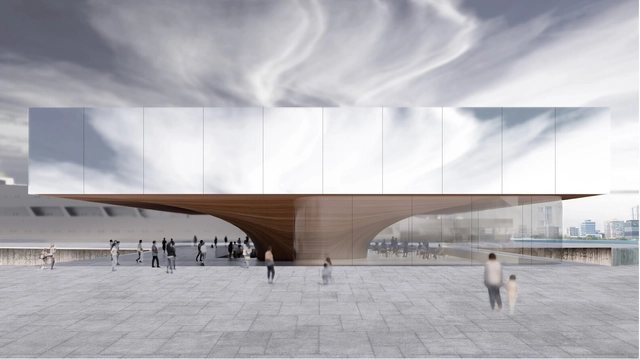
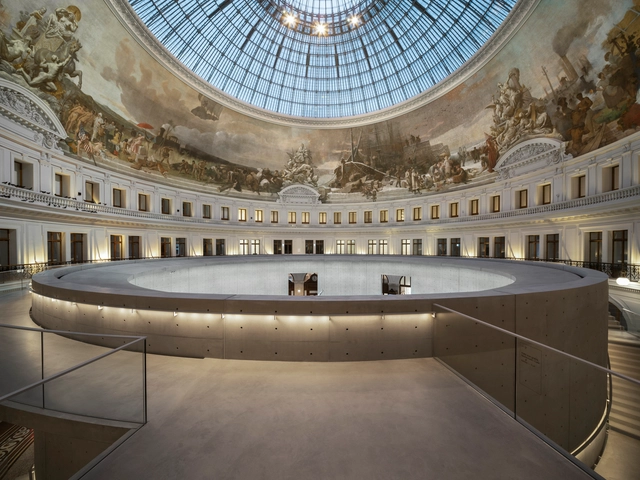
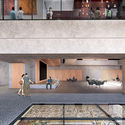
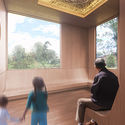
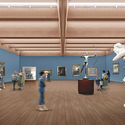
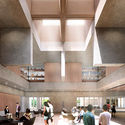
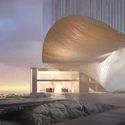
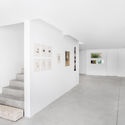
The Art Gallery of New South Wales expansion designed by SANAA is set to open to the public on December 3rd, 2022. The project, dubbed Sydney Modern Project and first revealed in 2019, is the most significant cultural development in the city in almost five decades since the opening of the Sydney Opera house. The new building designed by SANAA, together with Australian practice Architectus as executive architect, features a series of pavilions of various sizes and gallery volumes cascading towards the harbour. The structure that opens toward its surroundings is designed to provide a backdrop for 21st-century art.
This week’s curated selection of Best Unbuilt Architecture highlights museum projects submitted by the ArchDaily community. Through examples from all around the world, the article explores how these spaces of knowledge and discovery are designed to inspire and inform.
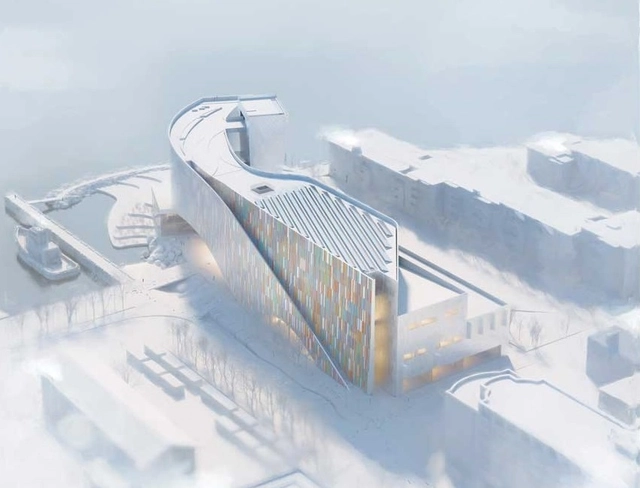
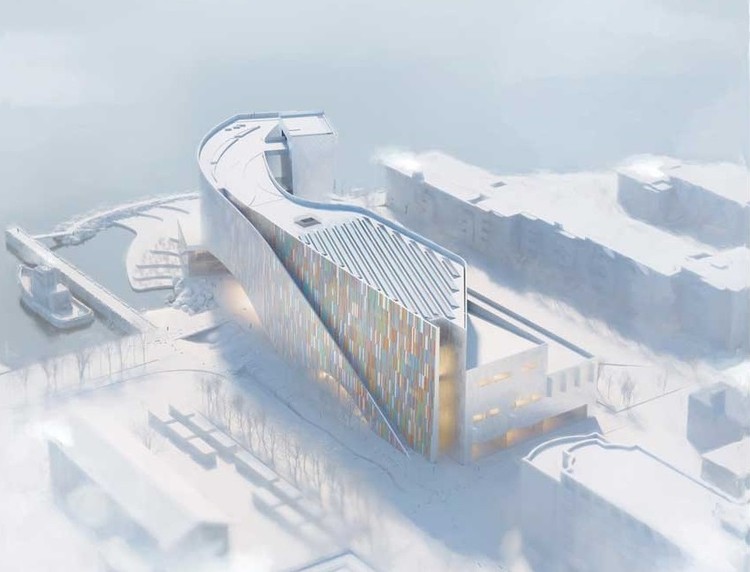
Featuring a vertically developed art museum in Finland, a structure that merges with the landscape in China, or a maritime museum shaped by the conditions of the shoreline in Brazil, the round-up spans various kinds of museums and art spaces, as well as different attitudes towards the built or natural environment. The following projects reveal the ideas that shape museums in different contexts, illustrating diverse approaches towards what constitutes an institution of learning.
Ever since the period of the Renaissance in Europe, the indivisible relationship between art and architecture has long been heatedly discussed and vividly reflected in numerous classical books and buildings. With the deep connection that unites art and architecture together, designers, artists, and architects have been actively collaborating and came up with solutions on how we can house and exhibit art in the form of changing spaces.
The SO – IL-designed 21,000 square foot multi-building “art campus” in East Williamsburg, Brooklyn, is set to open on June 5th, 2021, with construction projected to conclude by May 2021. Serving as the Amant Foundation’s new headquarters, the complex will host exhibitions, public events, archival projects, performances, and residency programs.
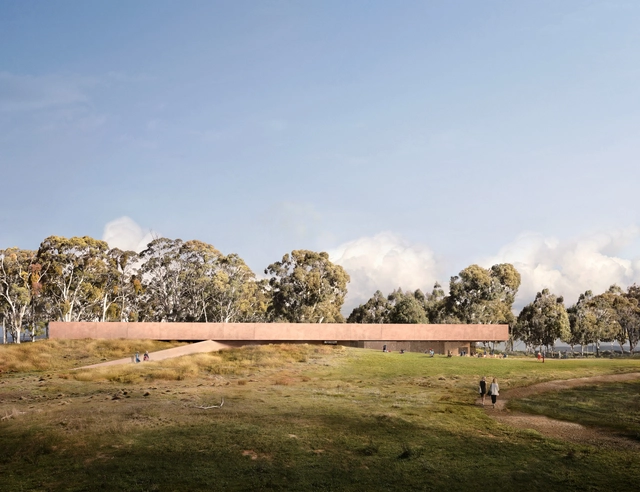
The internationally-acclaimed architecture firm Snøhetta has recently been selected to design two new art spaces in Australia and United States. Snøhetta will create the new Heysen Art Gallery in Adelaide- a rammed earth structure blending into the landscape and housing the works of renowned artists Hans and Nora Heysen. The studio was also selected to lead the expansion and re-design project for Dartmouth College Hopkins Center for the Arts, a vital creative hub for the New England Region.
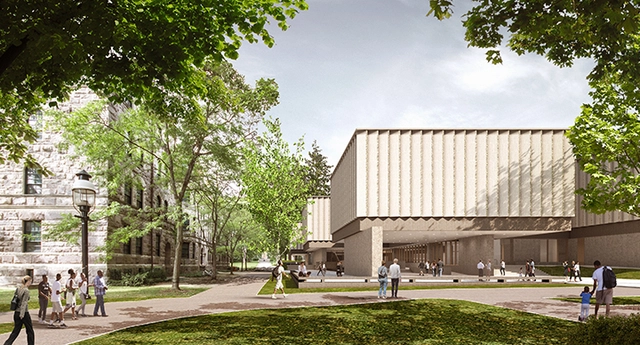
Sir David Adjaye has created an inclusive new vision for Princeton University Art Museum’s new building. Located at the heart of the campus, the project will replace and roughly double the square footage of the existing facility. Construction is scheduled to begin in 2021 with an anticipated opening in late 2024.
Courtesy of DIALOG, Acre Architects, Brackish Design Studio and Shannon Webb-Campbell
The Art Gallery of Nova Scotia has announced three finalists in the competition to create a new gallery along the Halifax waterfront. As a central component of a new arts district, the design will be part of a larger public gathering place along the Salter Block that showcases contemporary art and public programs. The design aims to increase opportunities to access and experience art, celebrate diverse stories through the arts, and enhance the waterfront experience.
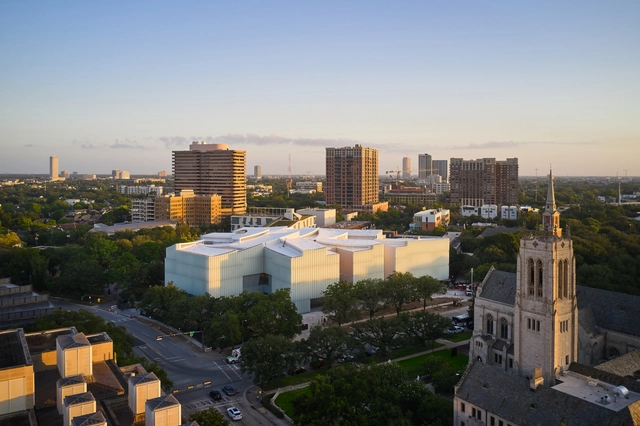
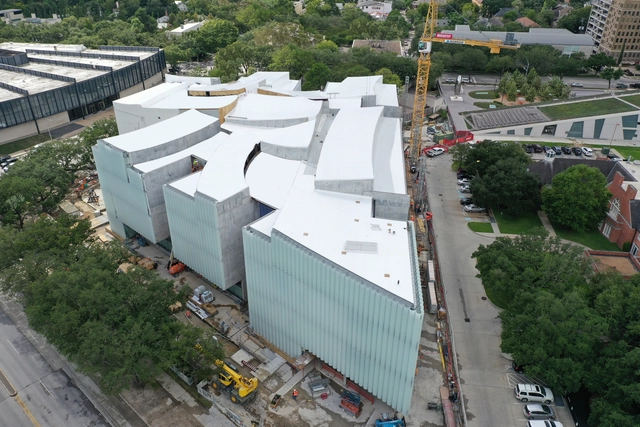
Designed by Steven Holl Architects, the third gallery building on the MFAH Susan and Fayez S. Sarofim Campus, the Nancy and Rich Kinder Building will open to the public on Saturday, November 21, 2020. Dedicated to the Museum’s international collections of modern and contemporary art, the newest addition will exhibit a wide range of works, ranging from painting and sculpture to craft and design, video, and immersive installations.
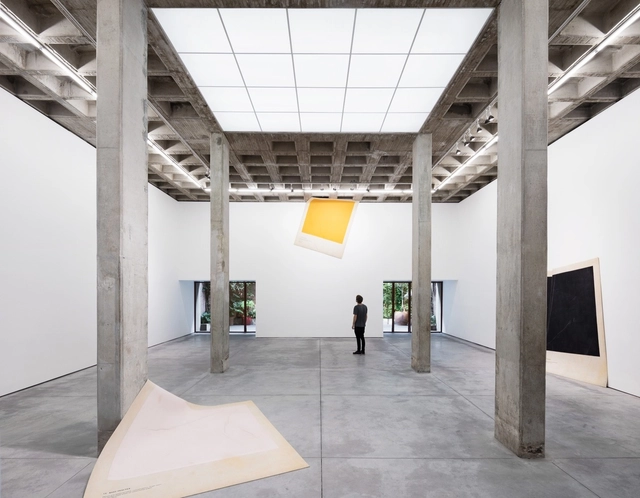
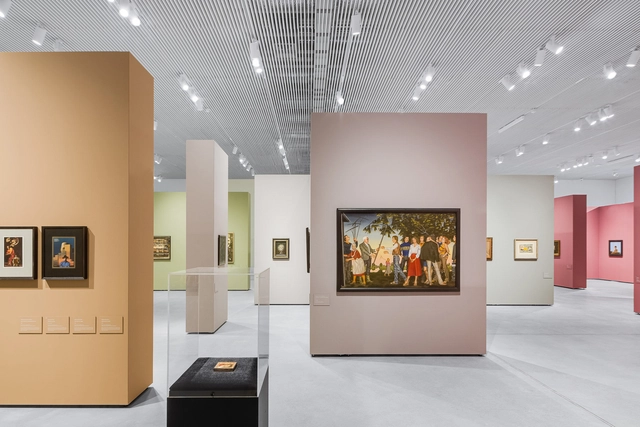
Overall, when designing exhibition spaces, certain aspects contribute to an effective display of the pieces: diffuse lighting, spatial distribution, and high ceilings are some of them. The combination of these features with rooms that are able to transform themselves (using elements that can be perforated, repainted, and adapted according to each exhibition), is common in many art galleries, expressing the dialogue between art and architecture.
The Nancy and Rich Kinder Building for modern and contemporary art, part of the Museum of Fine Arts in Houston is scheduled to open for the public on November 1st 2020. The intervention was conceived for the “display of the important and rapidly growing MFAH collections of 20th- and 21st-century art”.
Choosing the right lighting for any space can be a complex decision. Considerations need to be made with respect to the purpose, form and function of the lighting application. Design and aesthetics also play a role in the equation. With so many options for lighting on the market, it takes specialized knowledge and understanding to determine the best fit for your space. Even more challenging than finding lighting for a generic space, an art gallery or museum application can be difficult and even overwhelming to light properly. LED lighting has simplified a large chunk of lighting for art display.
https://www.archdaily.com/927023/the-art-of-lighting-artDavid Hakimi
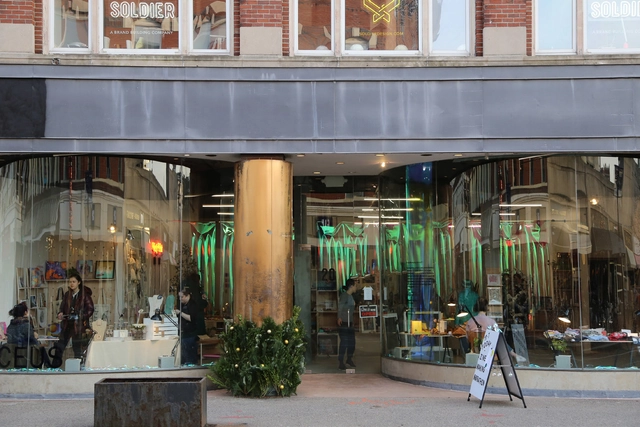
As retail moves evermore online, vacant storefronts have become ubiquitous sights in American cities and towns. Often located in formerly prime downtown real estate, the darkened windows have a knock-on effect, sapping urban vibrancy and sometimes falling into disrepair. Discourse surrounding the predicament of dead malls and traditional retail space is ongoing, but a one-size fits-all solution clearly isn't the answer here.
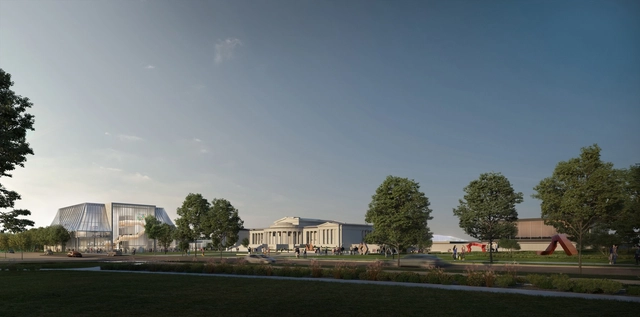
OMA has released new images of their proposed expansion project to the Albright-Knox Art Gallery in Buffalo, New York. The “bold, freestanding building” forms part of the AK360 expansion project, which also includes an OMA-led preservation and improvement project of the existing campus.
The new building will add 29,000 square feet of much-needed space for the display of exhibitions and the museum’s art collection, while also incorporating visitor amenities linked through a wraparound promenade.
https://www.archdaily.com/897099/oma-releases-images-of-albright-knox-art-gallery-expansion-in-new-yorkNiall Patrick Walsh
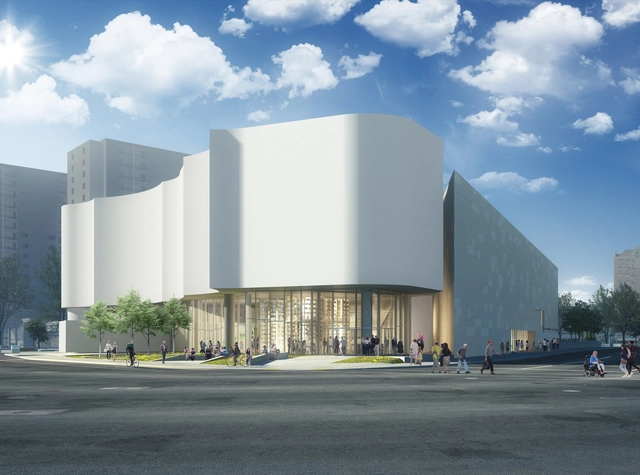
Arranged over four stories, the scheme is an addition to the 1971 museum designed by Gustavo Da Roza, and seeks to form a new cultural landmark for downtown Winnipeg.
https://www.archdaily.com/896511/michael-maltzan-architectures-inuit-art-centre-breaks-ground-in-winnipegNiall Patrick Walsh
Kéré Architecture has recently completed the scenography for “Racism. The Invention of Human Races,” an exhibition at the Deutsches Hygiene-Museum, Dresden. The atmospheres within each of the three spaces are unique yet harmonious, aiming to connect “the rooms’ architecture with the rooms’ theme.” Using a variety of high-quality materials and engaging structures, the journey hopes to show a conflict between people’s desires for stability and the organic need for social transformation, emphasizing the charm of the temporary and importance of conversation.
https://www.archdaily.com/895830/diller-scofidio-plus-renfro-and-woods-bagot-win-star-studded-competition-for-adelaide-contemporary-art-museumNiall Patrick Walsh