The MAS in Collective Housing is celebrating its 10th anniversary and we want to share our happiness for that achievement. After having here 256 alumni from 38 different countries, and 70 international workshops, we are convinced that we are doing right. The application period for the 2019 edition is already opened.
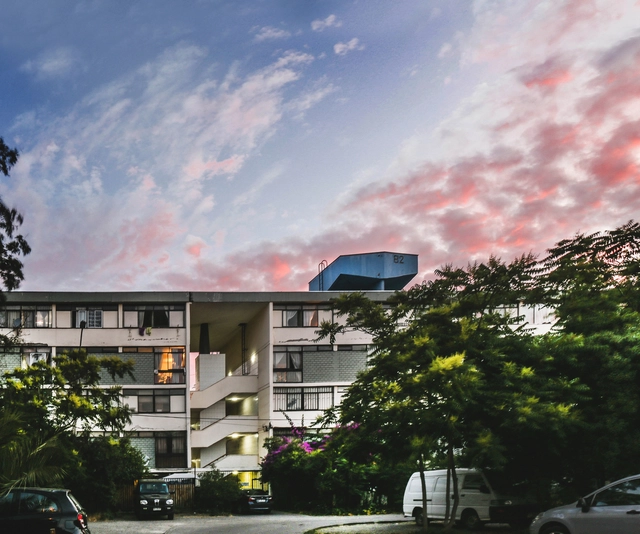
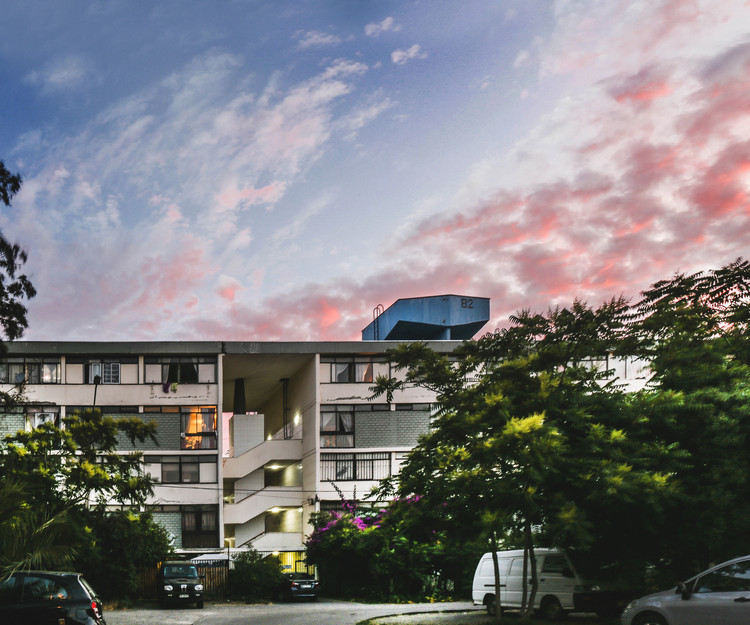
The modern movement was a key player in the cultural construction of Chile in the 20th century. Although the first projects came from the private sector, their urban and landscape principles were adopted by the modernizing project of the welfare state that began to be built after the social conflicts that exploded in the 1920s.
During chile's industrialization process, the State's housing construction incorporated concepts such as liveability, and universal access to housing and sanitation, which were put to the test early on in the reconstruction of cities such as Chillán after the 1939 earthquake. As Chile is a country that is familiar with earthquakes, it was necessary to readjust the concepts of the modern movement to national structural requirements, that is, resizing the reinforced concrete sections, which gave them a heavier visual expression than in Brazil or Argentina.
From the daring vision of Sergio Larraín García-Moreno and Jorge Arteaga in the Oberpaur building - the first of the modern movement - to the urban visions of BVCH in the Villa Portales, or the first exercises in height in the upper middle class sectors, the modern movement has left its mark on our society and in our cities. However, only one of the projects presented here is declared a historical monument.
In this edition of the architectural guides, we present you twenty chronologically ordered projects that reflect the evolution of the modern movement in Santiago, Chile.
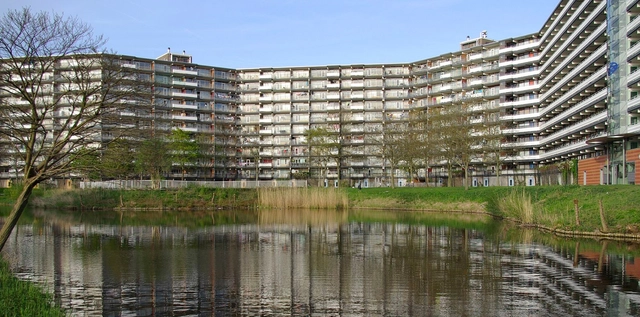
How can we plan a better city? The answer has confounded architects and urban planners since the birth of the industrial city. One attempt at answering came in the form of a spectacular modernist proposal outside of Amsterdam called the Bijlmermeer. And, as a new two-part episode by 99% Invisible reveals, it failed miserably. But, like all histories, the story is not as simple as it first appears.
New York-based Stephen B Jacobs Group has almost completed construction on a pair of towers at 29-26 Northern Boulevard in Long Island City. Dubbed the QE7 for its adjacency to the Q, E, and 7 trains (not to mention its cruise ship-like amenities), the pair of towers will contain 467 units, including 13 floors dedicated to the largest co-living development in North America. What makes this building so unique, however, is how the architects and engineers devised a solution to overcome noise generated by the three neighboring subway lines.
Modern cities, especially New York, are always looking for ways to increase density, which often means building in locations that were once overlooked due to their particular site conditions. We spoke with SBJGroup principal Isaac-Daniel Astrachan to find out how his firm managed to reduce noise levels on this site.
The hyperrealistic representation of architecture is not a new concept due to the ubiquity of tools that offer the possibility of creating perplexing images with photographs. However, those who defend the expressive capacity of hand drawings have found ways to take advantage of the digital tools of the last decades to represent their architectural projects.
A new group of young Mexican architects is committed to a form of representation that relies on tools from our era, simultaneously taking up concepts from the sixties and seventies, where the technique of collage made it possible to face the frustrating reality that took place at the time to represent the utopias thought up by architects.
Everyone knows that becoming an architect translates to a lot of time in front of a computer screen, or on-site or in the model shop—or waiting for renders to finish. But we also know that being a good architect is about much more; truly savvy architects and really thoughtful projects often spring from strong theoretical, philosophical or practical trains of thought (and they are not always directly inspired by architecture itself!).
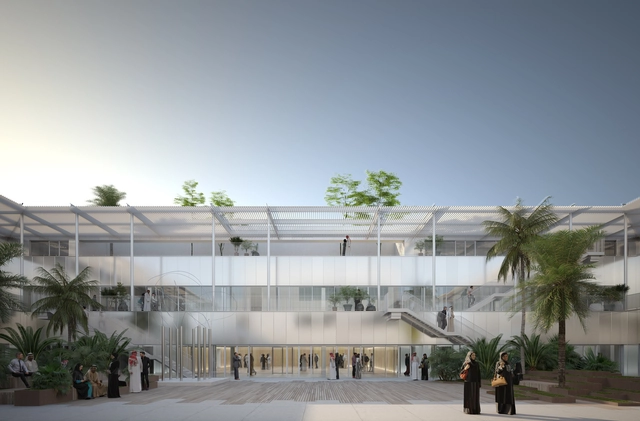
Thanks to Art Jameel, a Middle Eastern non-profit arts organization, a new arts district is taking shape in Jeddah, Saudi Arabia. Since the crowning of Prince Mohammad bin Salman, Saudi Arabia has shifted focus from oil to arts and technology. The new multidisciplinaryart center, named Hayy, is a 17,000 square meter step in the right direction.
Why does a film garner critical acclaim? Is it captivating performances from its actors? Stunning tableaus and cinematic moments? Or, could it be the intricate sets where tales of drama, laughter, love, and loss play out?
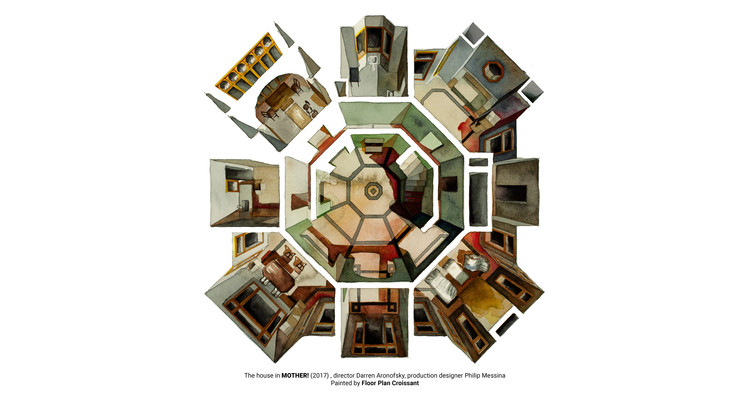
Following her stunning watercolor prints of last year’s Oscar nominees and the Netflix sensation Stranger Things, architect and illustrator Boryana Ilieva provides a glimpse into the elaborate sets of 6 stand-out films from 2017. With the Golden Globes broadcasted earlier this month and the Academy Awards only a few weeks away, the homes in these award-winning motion pictures deserve as many accolades as the Hollywood stars who inhabit them.
Trained in Architecture, Urban Design, and Theory, Alina Sonea illustrates the complex and often paradoxical nature of the cities we inhabit. The Feldkirch-based artist and architect has, since 2013, completed a series of detailed illustrations that employ graphic yet delicate black lines to render dense images of fantastical metropolises.
A great photograph is often as important as a great building—sometimes even more. From the pages of glossy magazines to the galleries of digital publications and online portfolios, high-quality photography is crucial for contemporary architects. Yet the array of camera options, equipment, accessories, and technical jargon (aperture, ISO, shutter-speed, etc.) can be dizzying, if not intimidating. So what happens when the camera in your iPhone is no longer enough?
To ensure emerging practitioners and professionals alike take the perfect shot, Eric Reinholdt summarizes at length the photography equipment used in his own practice in this two-part video from 2016. The first instalment on the architect, writer, and photographer's channel 30X40 Workshop makes it clear that his preference is a digital SLR camera. The 20+ megapixel image quality as well as range of larger aperture lenses with added versatility are crucial features for large format printing and digital publishing. Canon and Nikon are among the suggested brands as they are established with a large offering of products. And, are expected to provide additional upgrade paths as new equipment is released.
Musicians of all ages and genres feature the Barbican in their music videos. Youtuber Phil Gyford’s playlist “The Barbican in Music Videos” compiles songs from artists including British rapper Skepta, UK rock band Coldplay, the infamous electronic musician Moby, and guitarist James Morrison. Even modern pop artist Dua Lipa strut her stuff through the Barbican while singing her song, “Blow Your Mind (Mwah).”
But what makes the Barbican the perfect set for a professional music video? Perhaps artists were attracted to its remarkable Brutalist style. Maybe the architecture was used for it’s historical or political significance.
Perkins+Will is creating a whole new world 62 miles northwest of Shanghai for the Suzhou Science & Technology Museum. Inspired by shan sui, the Chinese phrase for "mountain-water,” the complex lies at the foot of Lion Mountain and adjacent to Shishan Lake. The 600,000 square foot museum will be the focal point of a new cultural neighborhood in Shishan Park.