Why does a film garner critical acclaim? Is it captivating performances from its actors? Stunning tableaus and cinematic moments? Or, could it be the intricate sets where tales of drama, laughter, love, and loss play out?
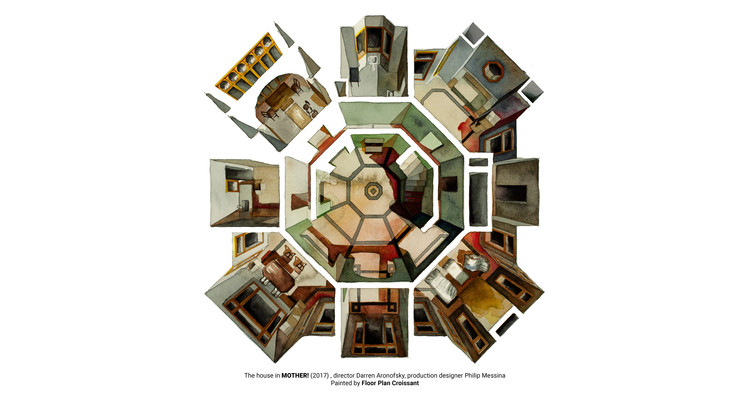
Following her stunning watercolor prints of last year’s Oscar nominees and the Netflix sensation Stranger Things, architect and illustrator Boryana Ilieva provides a glimpse into the elaborate sets of 6 stand-out films from 2017. With the Golden Globes broadcasted earlier this month and the Academy Awards only a few weeks away, the homes in these award-winning motion pictures deserve as many accolades as the Hollywood stars who inhabit them.
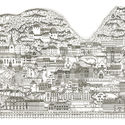
Trained in Architecture, Urban Design, and Theory, Alina Sonea illustrates the complex and often paradoxical nature of the cities we inhabit. The Feldkirch-based artist and architect has, since 2013, completed a series of detailed illustrations that employ graphic yet delicate black lines to render dense images of fantastical metropolises.
A great photograph is often as important as a great building—sometimes even more. From the pages of glossy magazines to the galleries of digital publications and online portfolios, high-quality photography is crucial for contemporary architects. Yet the array of camera options, equipment, accessories, and technical jargon (aperture, ISO, shutter-speed, etc.) can be dizzying, if not intimidating. So what happens when the camera in your iPhone is no longer enough?
To ensure emerging practitioners and professionals alike take the perfect shot, Eric Reinholdt summarizes at length the photography equipment used in his own practice in this two-part video from 2016. The first instalment on the architect, writer, and photographer's channel 30X40 Workshop makes it clear that his preference is a digital SLR camera. The 20+ megapixel image quality as well as range of larger aperture lenses with added versatility are crucial features for large format printing and digital publishing. Canon and Nikon are among the suggested brands as they are established with a large offering of products. And, are expected to provide additional upgrade paths as new equipment is released.
Musicians of all ages and genres feature the Barbican in their music videos. Youtuber Phil Gyford’s playlist “The Barbican in Music Videos” compiles songs from artists including British rapper Skepta, UK rock band Coldplay, the infamous electronic musician Moby, and guitarist James Morrison. Even modern pop artist Dua Lipa strut her stuff through the Barbican while singing her song, “Blow Your Mind (Mwah).”
But what makes the Barbican the perfect set for a professional music video? Perhaps artists were attracted to its remarkable Brutalist style. Maybe the architecture was used for it’s historical or political significance.
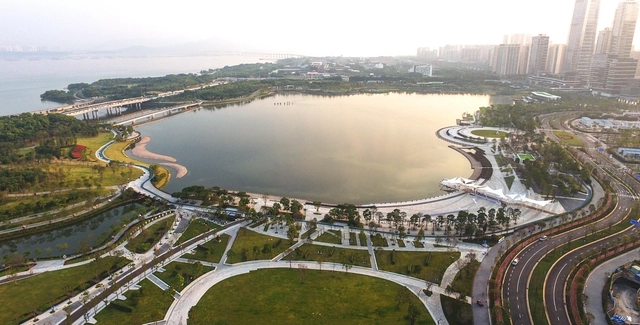
Perkins+Will is creating a whole new world 62 miles northwest of Shanghai for the Suzhou Science & Technology Museum. Inspired by shan sui, the Chinese phrase for "mountain-water,” the complex lies at the foot of Lion Mountain and adjacent to Shishan Lake. The 600,000 square foot museum will be the focal point of a new cultural neighborhood in Shishan Park.
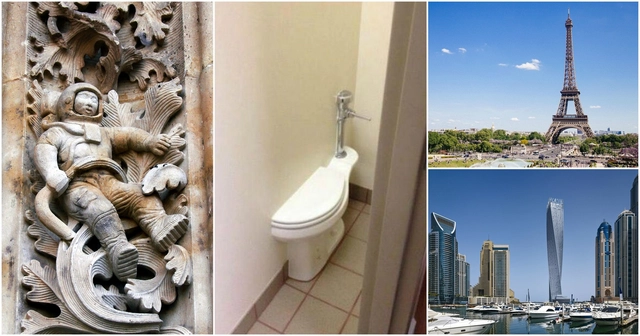
Fact-checking website Snopes (also known as the internet's first fact-checking website) has now been debunking Urban Legends and setting the record straight when it comes to "questionable" and/or fantastic stories for 23 years. In its two decades of operation, it has amassed not only thousands of well-researched explanations to perplexing myths but has also garnered the praise of news outlets like The New York Times, CNN, and Forbes. So what can Snopes tell us about our dear profession? Get your facts right with our list of dubious (and some not-so-dubious) claims about architecture, buildings, and city design.
https://www.archdaily.com/886227/fact-check-which-of-these-architecture-rumors-are-actually-trueAD Editorial Team
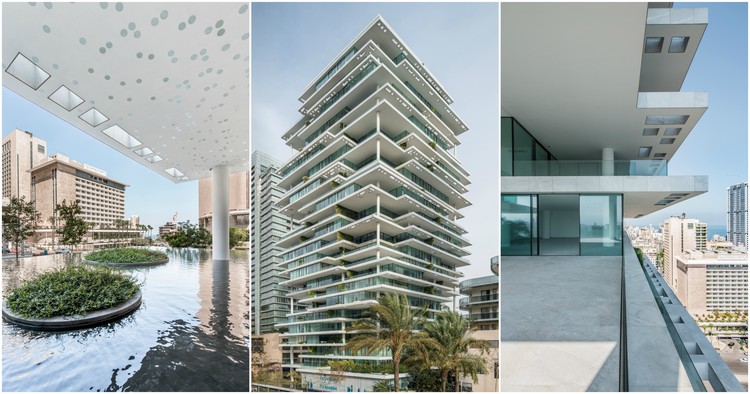
In the rapidly burgeoning city of Beirut, the post-war building boom is far from over. Much like its middle-eastern neighbors, it boasts of a plump share of designer architecture—as critic Oliver Wainwright refers to it, “a diverse shopping list”. It is here that the Beirut Terraces, a residential complex designed by Herzog & De Meuron, rises up to 119 meters, occupying a prominent place in the city’s skyline. In this collection of photographs by Bahaa Ghoussainy, one sees the Beirut Terraces from within, getting a glimpse of both the interior, as well as the multiple, unique views offered from inside the building.
If you are missing the capacity to create emotion, then it doesn’t work, it’s not enough. – Renzo Piano
In this in-depth biographical video by the Louisiana Channel, Renzo Piano talks about his earliest influences, why traveling is essential, the pleasures of drawing, what creativity really means, how “computers are a bit stupid,” the way “beauty can change the world,” and more.
https://www.archdaily.com/886603/renzo-piano-creativity-is-only-possible-when-you-share-creativityZoya Gul Hasan
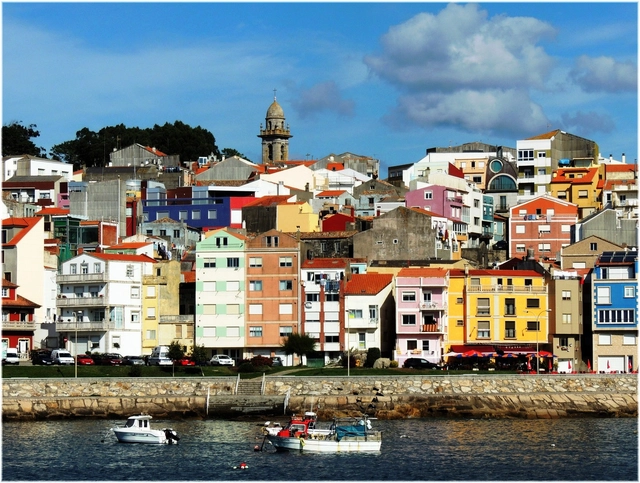
Last October 23, in the small Galician city of Ares (Spain), the "Guide of colors and materials" was publicly presented, with which the administration of the Galician community - in collaboration with the Galicia College of Architects (COAG) - aims to establish aesthetic criteria and recommendations in the search for a better image and urban quality of Galician populations.
This document is composed of fourteen volumes and its publication was made possible by a laborious process in which, for a year, architects, historians, and graduates of Fine Arts, had analyzed more than 3,800 buildings in rural, urban and peri-urban areas, as well as in industrial properties in the four Galician provinces.
https://www.archdaily.com/885343/galicia-publishes-a-guide-to-colors-and-materials-of-its-traditional-architectureJavier García Librero
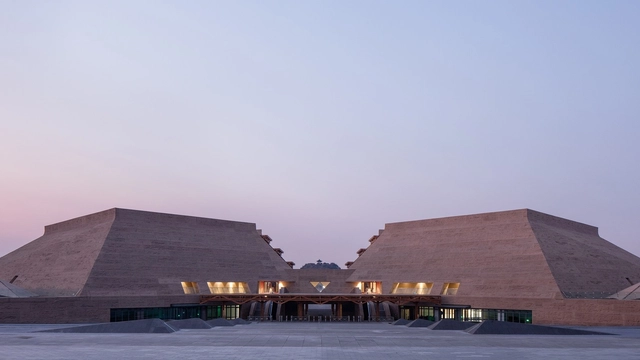
https://www.archdaily.com/884246/tianjin-sino-canadian-ecological-demonstration-zone-exhibition-and-reception-center-ccdi-progressive-atelier罗靖琳 - Jinglin Luo
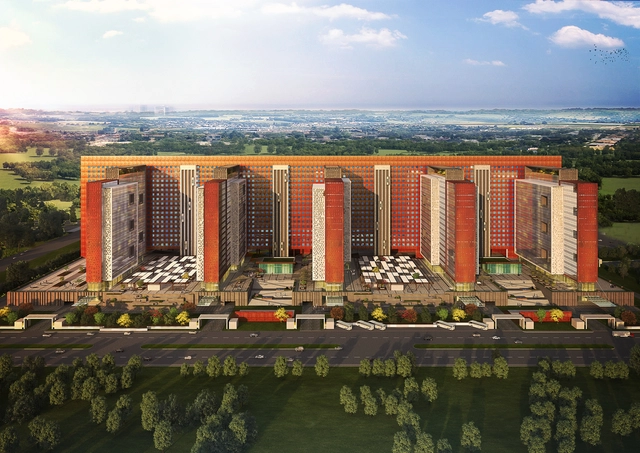
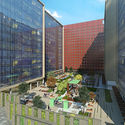
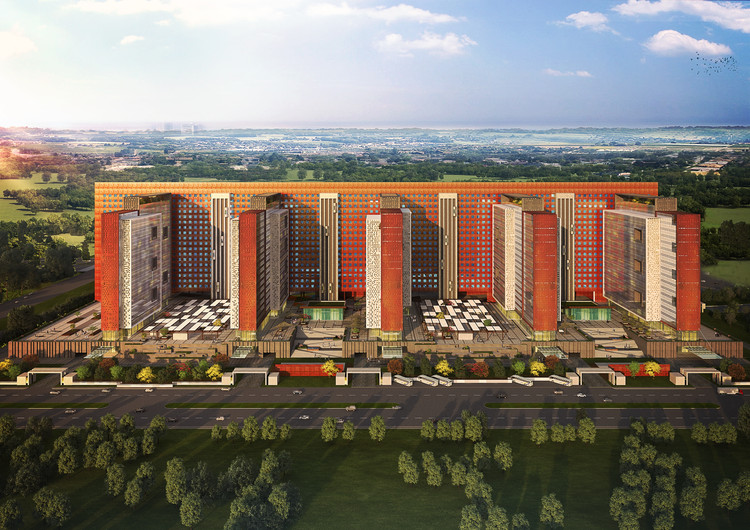
Could you ever imagine working in a small city? A new massive office building by Morphogenesis is being built to accommodate over 45,000 people for the Surat Diamond Bourse office in Surat, Gujarat, India. At 6.5 million square feet, and housing over 4,000 offices, it will be the second largest office building in the world, placing only behind the Pentagon in Washington D.C. Although its physical footprint may be large, the office building was designed in a manner to minimize its ecological footprint. Passive design strategies such as day-lit workspaces, natural ventilation, and indoor/outdoor spaces not only make the Surat Diamond office an efficient climate-responsive design, but also a key player for achieving aesthetic and comfortable working spaces.
















.jpg?1515170830)
.jpg?1515171598 "© Bahaa Ghoussainy")
.jpg?1515171343 "© Bahaa Ghoussainy")
.jpg?1515170657 "© Bahaa Ghoussainy")
.jpg?1515171187 "© Bahaa Ghoussainy")
.jpg?1513786994)
.jpg?1513786984 "© Xia Zhi")
.jpg?1513786942 "© Xia Zhi")
.jpg?1513786963 "© Xia Zhi")
.jpg?1513786685 "© Xia Zhi")
.jpg?1513787005)
















.jpg?1510240297&format=webp&width=640&height=580)
.jpg?1510240074 "Courtesy of BWAO")
.jpg?1510240251 "Courtesy of BWAO")
.jpg?1510320149 "Courtesy of BWAO")
.jpg?1510319997 "Courtesy of BWAO")
.jpg?1510240297)


