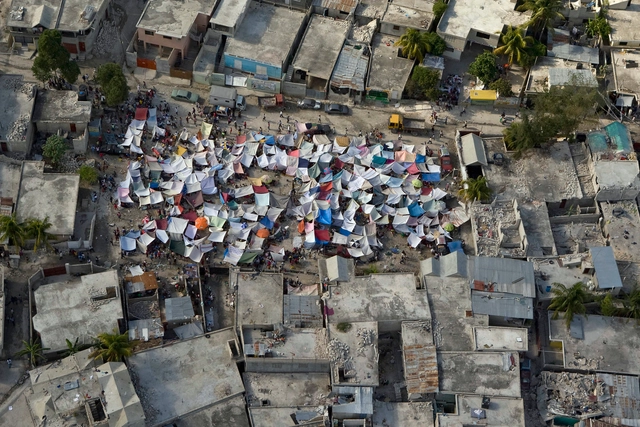
Haiti after the 2010 earthquake. Image via Flickr user: United Nations Development Programme, lincensed under CC BY-NC-ND 2.0
Haiti is suffering the consequences of a magnitude-7.2 earthquake that worsen a national crisis. News agencies have published photographs of collapsed buildings in Port-au-Prince recalling the destruction due to the 2010 earthquake.
As humanitarian aid is been deployed around the world to collaborate in rescue, shelter, health care, and food, questions arise: how does architecture help?
In a Design and the City episode - a podcast by reSITE on how to make cities more livable – architect and founder of Doula x Design and co-founder of SHoP Architects Kim Holden discusses how rethinking and redesigning the ways birth is approached can change the outcomes of labor and birth experiences, and improve the qualities of life for both the babies and women giving birth to them. The interview explores how it is crucial to investigate the spaces where generations come into this world, just as we have been planning and building better cities for them to work and live in.
The Royal Institute of British Architects (RIBA) and the Jencks Foundation announced renowned Indian architect Anupama Kundoo as the winner of this year's RIBA Charles Jencks Award. The accolade given in recognition of significant contributions to the theory and practice of architecture acknowledges Kundoo's holistic practice that marries theoretical investigations, material research and sustainable building methods.
The automation of architectural design and rendering has been further accelerated by digital production tools. Tools such as 3D printers, assembly robots, and laser cutters, have all but perfected the design and construction process and have proven essential in optimizing resources, improving precision, and increasing control of the process.
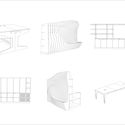
In woodworking, the most frequently used digital production tools are milling machines or CNC (computer numerical control) routers. These tools facilitate the rendering of 2D vectoral drawings and 3D models, codifying them into instructions for the machine to follow and execute. Through this process, which starts with digital archives (typically created using design software widely known as AutoCad), milling machines and CNC routers can rapidly and precisely cut wood, producing ready to assemble pieces.
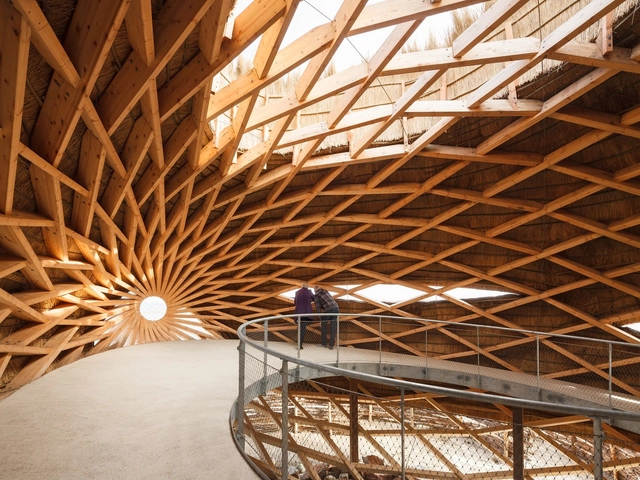
Over the past couple of years, many designers have voiced their commitment to ethical and ecological sourcing, resorting to frugal designs through local materials, traditional techniques, and equitable architecture. Having this approach in mind, many found inspiration in their cultural heritage, reimagining ancient designs in contemporary contexts.
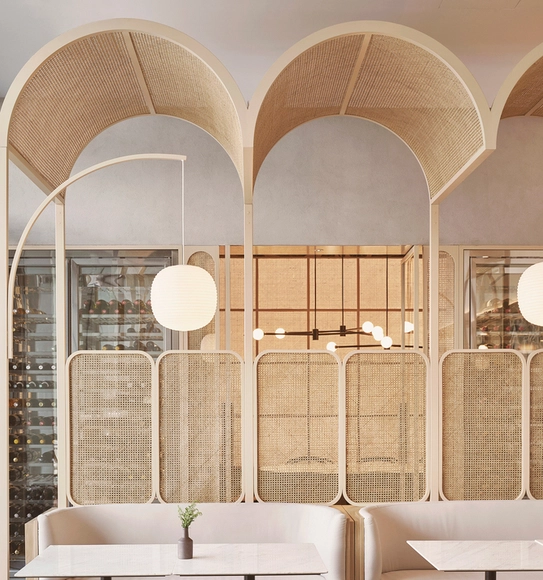
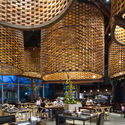
When thinking of recycled design trends, we can't overlook one of the most well-known and popular materials that was shared by nations all around the globe over the span of 100 years; on balconies, outdoor patios, gardens, and indoor living spaces: rattan. It is estimated that almost seven hundred million people worldwide use rattan, with many countries presenting it as an integral part of their cultures. In this article, we look at how architects and designers integrated rattan in their designs and found numerous ways to make the best out of Southeast Asia's popular local material.
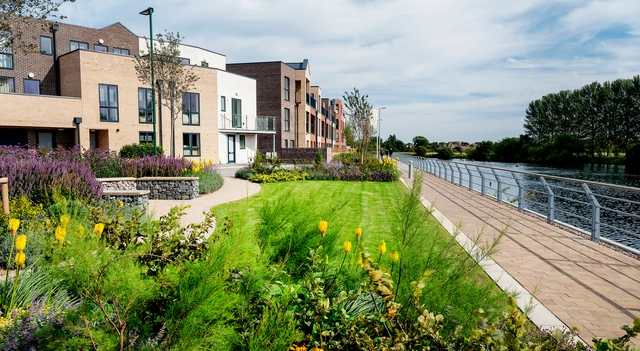
Courtesy of Trent Basin, Nottingham, UK. Blueprint Regeneration, Martine Hamilton Knight
A new report from the Intergovernmental Panel on Climate Change (IPCC) states that global warming of 1.5°C (2.7 °F) is essentially inevitable in coming decades. The question now is whether the world can prevent further, more destructive warming of 2°C (3.6°F), or, even worse, 3°C (5.4°F), which is what current policies put us on a trajectory to experience. Our economies can only put another 420 gigatons of greenhouse gas emissions into the atmosphere if we want a good chance of keeping a temperature increase to 1.5°C instead of 2°C. At our current pace, the world’s carbon budget will be used up before 2030. We need to phase out fossil-fuel use, build thousands of new clean power plants -- and swiftly move to power our homes, offices, schools, and transportation systems with clean energy.
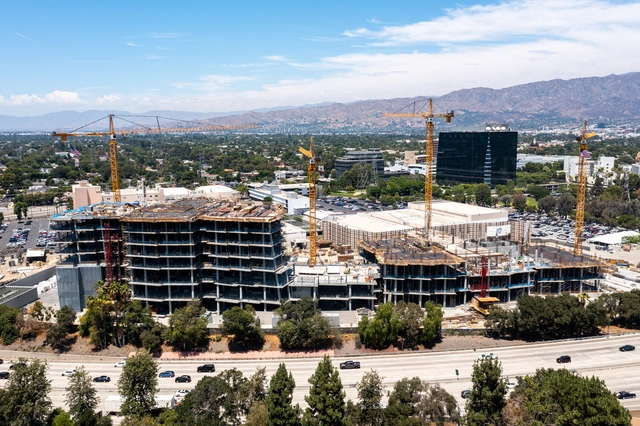
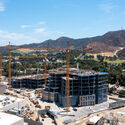
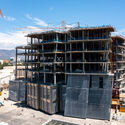
Construction is underway for Gehry Partners' Second Century Project, which will house the new headquarters of Warner Bros. After breaking ground in early 2020, the project now has its structural framework in place, and the façade is currently taking shape. Set for completion in 2023, in time for the production company's centennial, the design features a series of mid-rise, slanted office towers grouped within two distinct structures resembling "icebergs floating along the freeway".
The ChicagoArchitecture Biennial has revealed the calendar for this year’s program of events, lectures, workshops and performances exploring how architecture shapes communities and cities. Titled The Available City, this edition aims to highlight the potential of vacant urban areas as community spaces, with the event debuting on September 17 at 12 sites across Chicago featuring 16 interventions that activate unused plots. The projects are complemented by a series of outdoor programming, as well as digital events that kick off on August 17.
According to data from CRED (Centre for Research on the Epidemiology of Disasters) and UNISDR (UN Office for Disaster Risk Reduction), in a report released in 2016, the number of disasters related to the climate change has duplicated in the last forty years. The need for temporary shelters for homeless people is, as well as an effect of the climate crisis, is also one of the consequences of the disorderly growth of cities, which leads to a significant part of the world population living in vulnerable conditions due to disasters.
Too often buildings end up as waste at the end of their lifecycle. How can the built environment move towards a circular economy, and in turn, reimagine how valuable materials are tracked and recycled? Looking to address this issue, material passports are one idea that involves rethinking how materials are recovered during renovation and demolition for reuse. The result is when a building is ready to be demolished, it becomes a storage bank for useful materials.
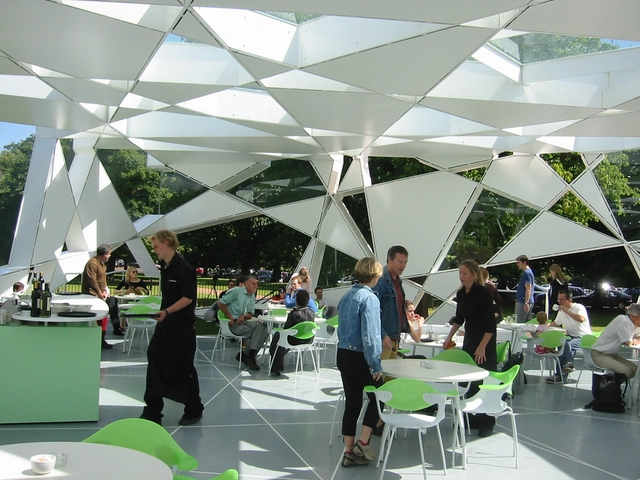
Serpentine Gallery Pavilion. Image Courtesy of Toyo Ito & Associates, Architects
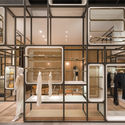
Examining the work of Tokyo architect Toyo Ito (b. 1941) – particularly his now seminal Sendai Mediatheque (1995-2001), Serpentine Gallery (London, 2002, with Cecil Balmond), TOD's Omotesando Building (Tokyo, 2004), Tama Art University Library (Tokyo, 2007), and National Taichung Theater (2009-16) – will immediately become apparent these buildings’ structural innovations and spatial, non-hierarchical organizations. Although these structures all seem to be quite diverse, there is one unifying theme – the architect’s consistent commitment to erasing fixed boundaries between inside and outside and relaxing spatial divisions between various programs within. There is continuity in how these buildings are explored. They are conceived as systems rather than objects and they never really end; one could imagine their formations and patterns to continue to evolve and expand pretty much endlessly.
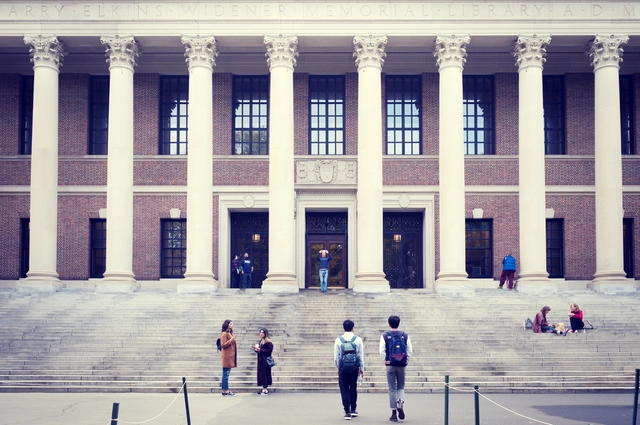
Harvard University in Cambridge, Massachusetts, USA. Image via Shutterstock/ By Marcio Jose Bastos Silva
In order “to help architects and students to get to know the best International Master’s programs available”, the Best Architecture Masters (BAM) has established its annual list of top postgraduate architecture curriculums. Based on the QS Ranking by Subjects – Architecture / Built Environment, for the 2021 edition, 22 Universities were selected to be evaluated, by an Expert Committee, formed by 15 professors from all over the world.
In 2021, the Harvard Master in Architecture II continued to lead the ranking, and Colombia maintained second place with its Master of Science Degree in Advanced Architectural Design. TU Delft in the Netherlands took on the third position, becoming the best in Europe while Tsinghua University in China followed in the fourth position, becoming the best in Asia. The Master in Architecture of the Pontificia Universidad Católica in Chile occupied the 15th position and was named the best program in Latin America.
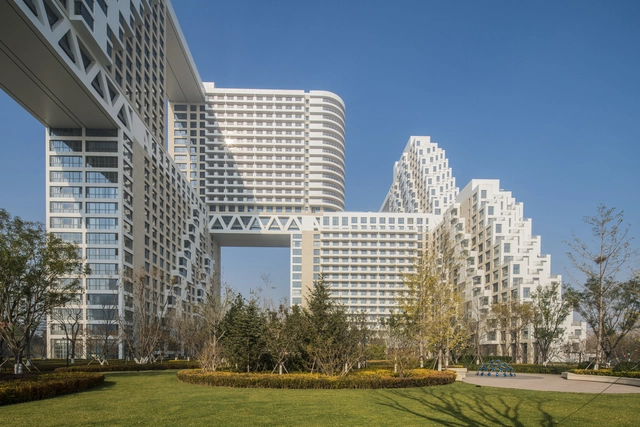
By now an architectural classic, Safdie’s Habitat ’67 represents a highly influential vision for a community-oriented, nature-infused urban housing model, and at the same time, a critical example of the possibilities of prefabrication. Fifty years after the design of Habitat ’67, Safdie is still exploring this vision of urban living, further developing the concept with projects such as Altair Residences, Qorner Tower and Habitat Qinhuangdao. Rooted in the architect’s motto - “for everyone a garden”, the new projects capitalise on outdoor terraces, natural light and ventilation, as well as communal spaces.
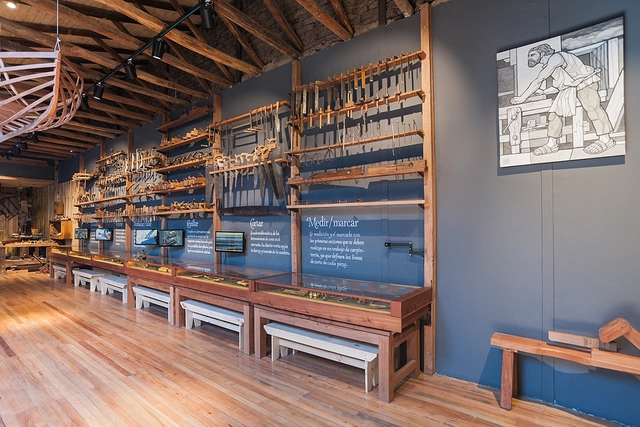
Wood is one of the most versatile materials used in construction nowadays and can be used for many different purposes, from beginning to end of the building process. Working with wood in a building requires specific skills that are very different from the skills of a bricklayer. Carpentry and joinery are the two main trades that handle wood in architecture and construction.
There is a fine line between the two, and people are often confused about which professional is the best suited for a particular job. This article will address the difference between the two practices to help you choose which one is best for your project.
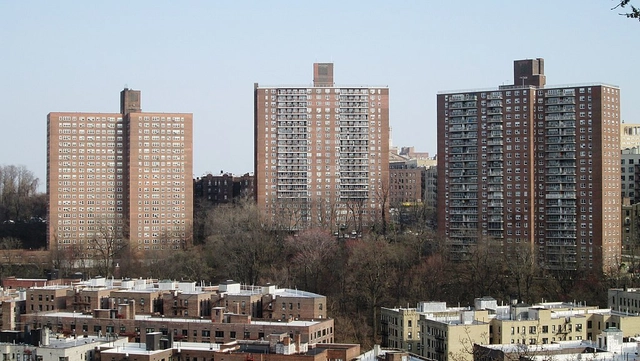
In the world of design and urban planning, aesthetics and functionality seem to take the spotlight, especially in how large-scale housing projects are developed. While this can be a good thing that continuously pushes the modern boundary of what we consider to be a dwelling, in some aspects, it has shined a negative light on how we perceive and stigmatize “bad design” in public and affordable housing, the socioeconomic factors that have created the need for it, and the types of residents who benefit most from these types of housing policies.
The Second Studio (formerly The Midnight Charette) is an explicit podcast about design, architecture, and the everyday. Hosted by Architects David Lee and Marina Bourderonnet, it features different creative professionals in unscripted conversations that allow for thoughtful takes and personal discussions.
A variety of subjects are covered with honesty and humor: some episodes are interviews, while others are tips for fellow designers, reviews of buildings and other projects, or casual explorations of everyday life and design. The Second Studio is also available on iTunes, Spotify, and YouTube.
This week David and Marina are joined by Samantha Burton, Vice President atYoung & Burton, a General Contractor company that focuses on custom residential projects.
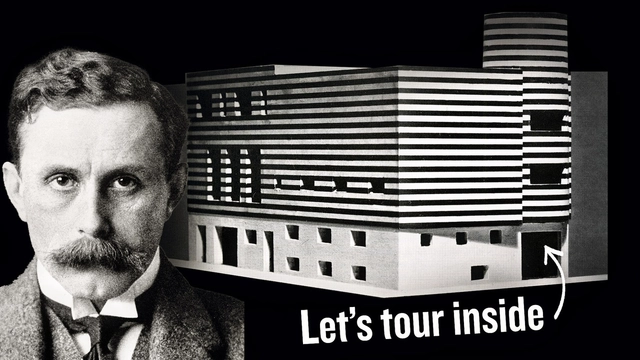
The unbuilt design of a home for Josephine Baker by the architect Adolf Loos is perhaps one of the most analyzed unbuilt homes of Modernism. Its design and history touch on a number of complex social and political issues during the early 20th century. The design comes when Josephine Baker, an African American entertainer is beginning her rise to superstardom and represents a thoroughly modern and fresh artistic voice. Meanwhile, Adolf Loos was a physically ailing man on a steep moral and social decline. The house itself was never truly commissioned by Baker, rather it lives mostly as a fantasy concocted by the architect. This video presents the house through a 3D model and narrated walkthrough to discuss how and why the house was designed and allow you to explore this unique house for yourself.
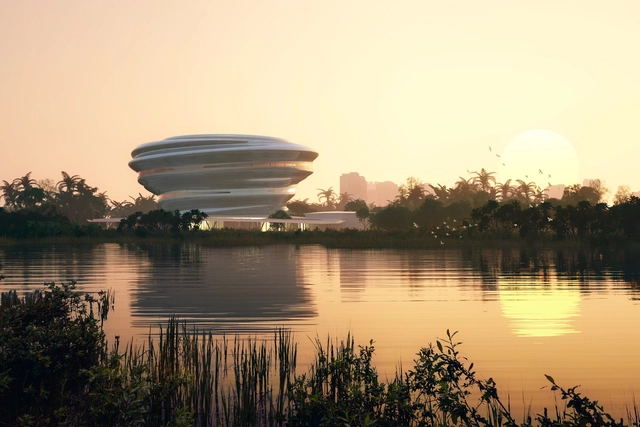
MAD Architects has unveiled his design proposal for Hainan Science and Technology Museum Haikou City, Hainan, China. Scheduled to break ground in late August 2021 and to be completed and open by 2024, the Hainan Science and Technology Museum is the firm’s second major public project in Hainan, after the Cloudscape, inaugurated in April 2021. Merging nature and technology, the project located on the city’s west coast will become an “important science venue and a major tourist attraction for Hainan's free trade port”.






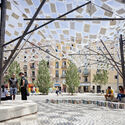
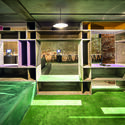
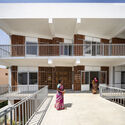

.jpg?1624956731&format=webp&width=640&height=580)
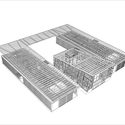


.jpg?1624956731)










Nacasa___Partners.jpg?1629103408 "Tod's Omotesando Building_interior. Image © Nacasa & Partners")


Kai_Nakamura.jpg?1629103497 "'Minna no Mori' Gifu Media Cosmos. Image © Kai Nakamura")