A new European architecture platform will launch in June this year, with the scope of supporting emerging architects and at the same time mobilizing the profession's efforts in delivering a sustainable, circular built environment. Operating on a grant from the Creative Europe initiative, LINA brings together 28 European and Mediterranean organizations from 23 countries, among which are several European biennials, triennials and festivals, museums, research networks and laboratories, publishing houses and universities. A successor to the Future Architecture platform, the initiative will be coordinated by the Faculty of Architecture at the University of Ljubljana and directed by Matevž Čelik.
If the maxim "the first impression is the one that stays" is taken seriously, in architecture, the entrance hall takes on a fundamental importance. This small space, in addition to welcoming the house, can also gain several other functions: storing objects, housing a waiting and reading area, distributing the movement of the residence, displaying a painting. Finally, there are several possibilities to think about and occupy this environment, so here we present three design guidelines that can help you when thinking about it.
The 22nd of March 2022 saw the twenty-ninth commemoration of World Water Day – as a worldwide water crisis continues to leave populations vulnerable. It is an extremely multi-faceted issue. Governance sadly determines water accessibility, with marginalized people disproportionally affected. Urban typologies are another factor. The over-pumping of groundwater sources to meet the water demands of Hanoi, for instance, has resulted in arsenic being drawn into Vietnam’s village wells.
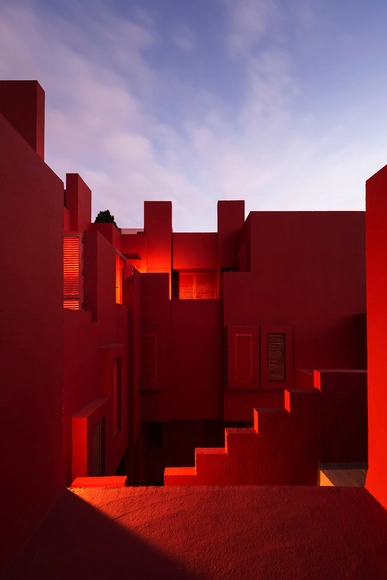
‘La Muralla Roja’ When the sun goes down III, is an evocative new Photo series by Andrés Gallardo. 5 years after initially visiting Ricardo Bofill’s creation, Gallardo revisited with the intention of creating a totally contrasting series, capturing the complex through sunset, the night and into sunrise. With regard to the fact that there are not many photographs in circulation during the night-time period, Gallardo set out to capture the complex during twilight, with the placid roll of the waves against the seafront.
‘La Muralla Roja’ translated as ‘The Red Wall’ is a vibrant housing project in Spain’s Calpe. Casbah is a term often mentioned in regards to this particular project, suggesting Bofill himself drew upon North African Arabic themes for his inspiration. Casbah refers to a citadel or castle, a walled central area of a town or city upon the traditional quarter. The Mediterranean complex mimics this built-up realm, with an entanglement of walkways, stairs, balconies, and bridges interlocking in harmonious effect.
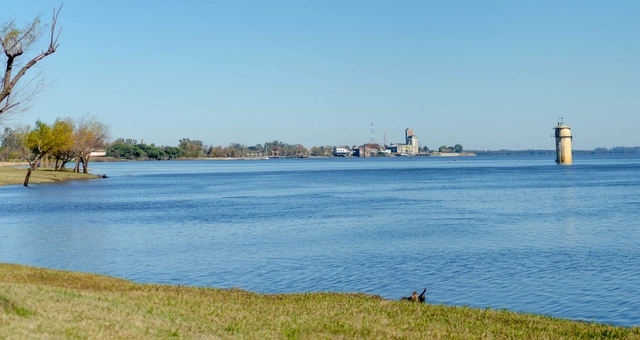
Foto panorámica de la playa de Paysandú. Imagen de Gabriel Stock Uruguay. Image via Shutterstock
The Municipality of Paysandú commissioned OMA (Office of Metropolitan Architecture) to draw up the project for the urban transformation of Paysandú's waterfront. Covering an area of about 350 hectares, the Master Plan extends from the "General José Artigas" International Bridge, which links Paysandú with Argentina on the northern border, to the mouth of the Sacra Stream.
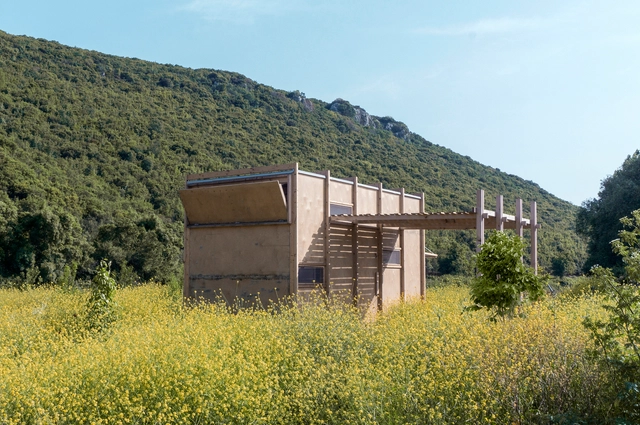
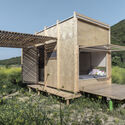
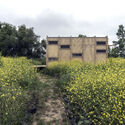
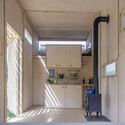
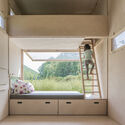
Architects Sevince Bayrak and Oral Göktaş from SO? Architecture&Ideas were attracted to the idea of having the opportunity to escape the urban bustle of Istanbul into a natural setting, and in 2017, they designed and built the Cabin on the Border. Since its completion, the project has undergone several changes, and the dwelling experience prompted the architects to re-evaluate their initial ideas and assumptions and change how they see the tiny house typology. Five years after the project's design, the architects share what they've learned from living in a tiny house, providing valuable insight for the design of such projects.
As with any industry, most skills are acquired through years of hands-on working and problem solving, and not just what's taught at school. For fresh architecture graduates, engaging with general contractors, engineers, and builders during their first site visits might feel overwhelming, especially since they are exploring the practical side of the practice.
Among the many things acquired on site are the terminologies used by construction workers that may not have been necessarily taught at school. And while an architecture dictionary might seem like the most suitable solution, carrying around a book with over 25,000 terms such as Cyril M Harris' Dictionary of Architecture and Construction wouldn't be the most convenient on a construction site. This is why we have put together list of 50 construction terms and concepts that every architect will come across at least once during their practice.
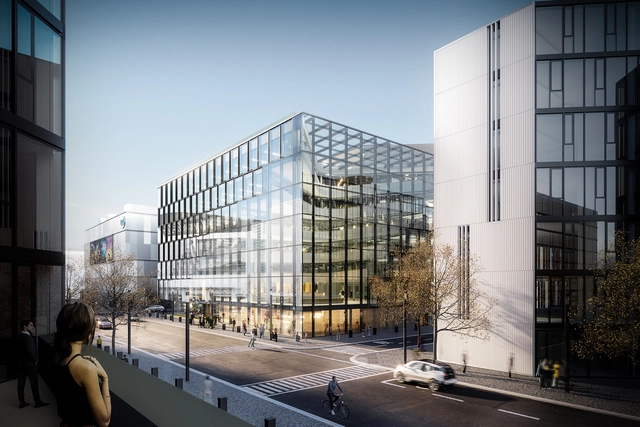
HENN’s Zalando BHQ-Z Building topped out in Berlin and, once completed, will strengthen the city’s identity as a tech hub. The project is the last structure to be built within the HENN’s three-building headquarter complex for Zalando. The design reinterprets the traditional Berlin block through a Z-shaped plan that transforms the usually private, interior courtyard into an inviting public space. At the same time, the building’s voids create a dialogue with the surrounding built environment.
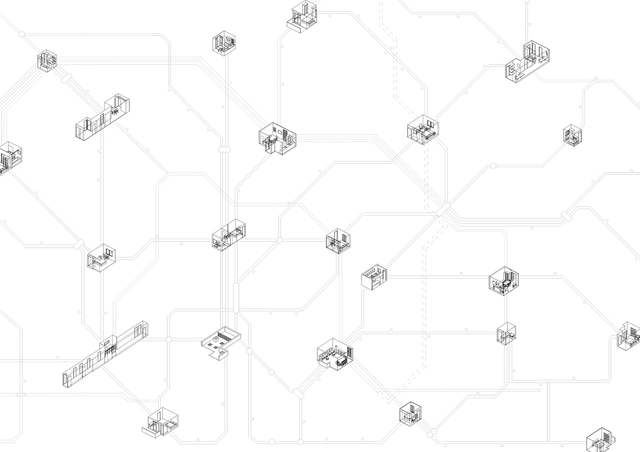
Una ciudad de habitaciones: La casa compartida como laboratorio urbano. Image Cortesía de Paula Olea Fonti
"A city of rooms" is a research work by architect Paula Olea Fonti that focuses on the study of shared housing, which is one of the most common ways for young students and professionals to live in the city. A popular and ordinary house, if you will. One that many architects would distinguish for its low architectural value.
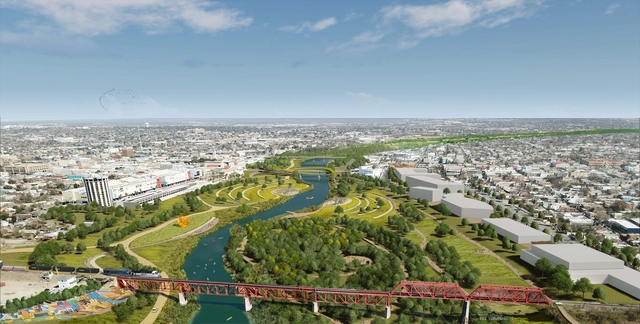
As part of a strategy developed in late 2021 by Ken Salazar (US Ambassador to Mexico), Deanna Kim (US Consul General in Nuevo Laredo), and Esteban Moctezuma (Mexico Ambassador) in collaboration with leaders politicians, and businessmen from the southern region of Texas and the Mexican state of Tamaulipas, Overland Partners has been announced in conjunction with Able City as the creators of the new 6.3-mile "Binational River Park" that will extend along the Rio Grande - Rio Grande between Laredo, Texas and Nuevo Laredo, Mexico. This new space aims to restore and revitalize the ecosystem as well as attract tourism and celebrate the multiculturalism that takes place in this border territory.
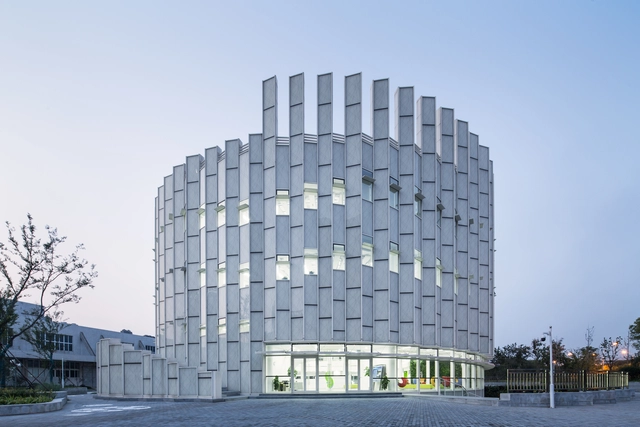
Nanjing Green Light House. Image Courtesy of Archiland International
Climate change mitigation has become a priority issue, with the architectural industry accounting for 38% of global energy-related CO2 emissions. In December 2015, the Paris Agreement proposed to limit global warming to less than 2 ℃ above pre-industrial levels and strive for no more than 1.5 ℃. The architectural industry must achieve net zero carbon emissions by 2050 in order to meet the Paris Agreement's goal.
China proposed at the 75th Session of the United Nations General Assembly on September 22, 2020, that "China will work to peak carbon dioxide emissions before 2030 and achieve carbon neutrality by 2060." It has defined its carbon neutrality goal and execution approach in order to solve global climate and environmental concerns effectively.
In the early 1980s, when I first saw the film The Social Life of Small Urban Spaces and then read the book, both by William H. Whyte, I was enthralled. I had met Holly, as he was affectionately known, while I was still a reporter at the New York Post in the 1970s, and we had great discussions about New York City, what planners got wrong, what developers didn’t care about. By the 1980s I was at work on my first book, The Living City: Thinking Small in a Big Way, and having conversations with Jane Jacobs, who would become my good friend and mentor. Jacobs had validated the small, bottom-up community efforts around New York City that I was observing and that would be the too-often-unacknowledged sparks to jumpstart the slow, steady rebirth of the city. My observations were resoundingly dismissed—even laughed at—by professional planners and urban designers, but they were cheered and encouraged by both Whyte and Jacobs, and today they are mainstream.
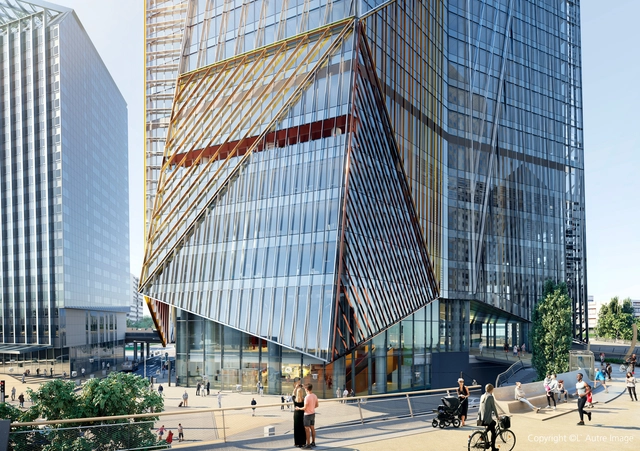
Overtaking the Tour Firstskyscraper, the 48-story, 220-meter HEKLA Tower will be the tallest building in Paris’s La Défense business district, as well as the second tallest building in all of France. Currently under construction and designed by Pritzker prize-winning Jean Nouvel, it is set to become a powerful architectural statement. Due to complete this 2022 in the midst of the sector’s redevelopment program, the futuristic skyscraper spreads over 76,000 sqm of floor area distributed in offices, services, lobbies, an amphitheater, projection rooms, performance halls, restaurants, bars, gyms and loggias. All of this with the aim of providing a unique user experience with vast, flexible workspaces that promote interaction and well-being.
The climate crisis has reshaped contemporary architecture. Sustainability has become a central guiding force in design, and in turn, architects are rethinking how to build today. For CO Adaptive Architecture, addressing the climate crisis begins with a process oriented practice. Together, Ruth Mandl and Bobby Johnston have created a firm that embodies how a values-based approach can tackle the most pressing issues of our time. The result is elegant and impactful architecture brought to life with poise and finesse.
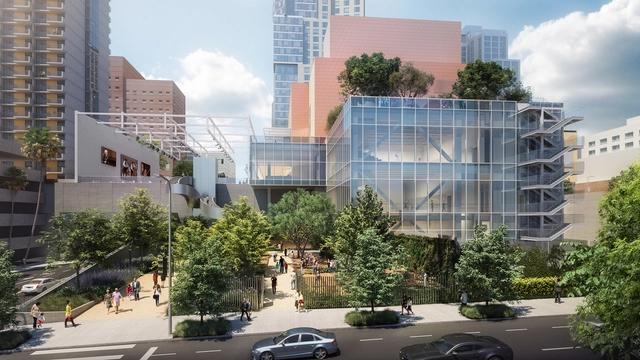
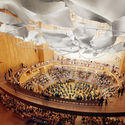
Rendering of the Colburn Center at the Colburn School. View from Hill Street West towards dance school entrance, adjacent park, and stairs leading up to Olive Street and public plaza.. Image Courtesy of Gehry Partners
The Colburn School, Los Angeles' renowned school for music and dance, has unveiled architectural designs by Frank Gehry for the Colburn Center, a 100,000 square-foot campus expansion that aims to inspire and promote the region’s young performing artists and organizations. The center will serve as a cultural and civic hub in the heart of Downtown LA through public programs, as well as performance and educational collaborations with local and touring artists.
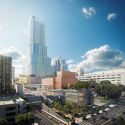
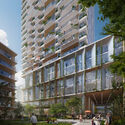
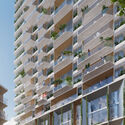
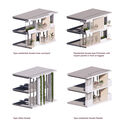
UNStudio revealed a mixed-use high-rise building design in Dusseldorf integrated within the new Belsenpark masterplan. The tower, designed in collaboration with OKRA Landscape Architects, results from an international architecture competition held by private developer Pandion and features a diverse ground floor programme tied together by a pocket park. The project integrates prefabrication and modular design, thus reducing the building's environmental impact.
A carbon neutral building is achieved when the amount of CO2 emissions is balanced by climate-positive initiatives so that the net carbon footprint over time is zero. Considering their unmatched ability to absorb CO2, planting trees is often viewed as the best carbon offsetting solution. But as cities become denser and the amount of available horizontal space for green areas drastically reduces, architects have been forced to explore other approaches. Therefore, to address these climatic challenges and connect people to nature, exterior green walls have become a rising trend in increasingly vertical cities. Even if there is research to claim that these can positively impact the environment, many question if they can actually contribute to a carbon neutral architecture. Although the answer may be quite complex, there seems to be a consensus: green walls can be effective, but only through good design.
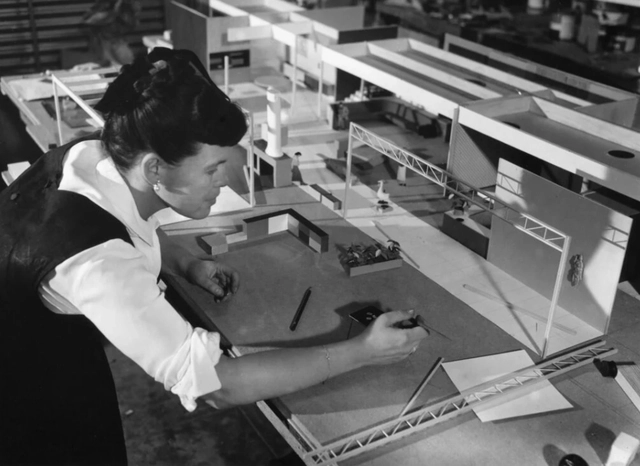
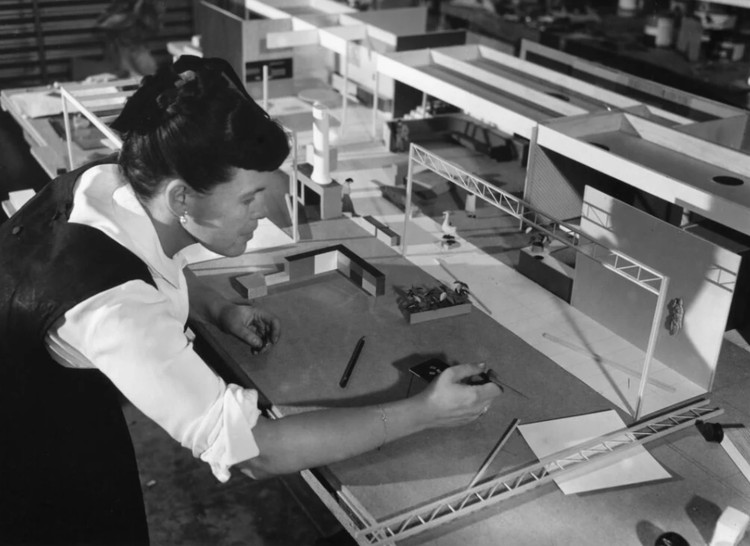
Ray working on a model for the Billy and Audrey Wilder House in 1950 (unbuilt).. Image Courtesy of Eames Office
On the heels of the Eames Office’s 80th anniversary marked by an exhibition and a Ray-inspired sneaker, director Eames Demetrios spoke to Metropolis about the matriarch who continues to inspire design.