As the world spins deeper into the third year of a global pandemic with no sign of abating, a new space race is forming over our heads. Entry is open to all, and the tickets are literal. The Architect's Newspaper's Jonathan Hilburg explores how the world's richest men are charting new paths for the human species, and how the public are reacting to the future of private space tourism.
Few structures are as elegant and ingenious as greenhouses. Largely built with simple and straightforward designs, these minimalist shelters create airy and light-filled spaces that shape indoor climate. Dedicated to the cultivation of plants and crops, they are diverse projects combining programs and systems to emphasize sustainability, education and conservation. At their heart, greenhouses are about experience and discovery.
The Second Studio (formerly The Midnight Charette) is an explicit podcast about design, architecture, and the everyday. Hosted by Architects David Lee and Marina Bourderonnet, it features different creative professionals in unscripted conversations that allow for thoughtful takes and personal discussions.
A variety of subjects are covered with honesty and humor: some episodes are interviews, while others are tips for fellow designers, reviews of buildings and other projects, or casual explorations of everyday life and design. The Second Studio is also available on iTunes, Spotify, and YouTube.
This week David and Marina answer the question, “Should I go to architecture school?” The two cover the relevancy of college/university, the architecture school experience, if studying architecture is needed to practice architecture, if having a degree helps with getting a job, preparing for architecture school, choosing the right degree, the cost of architecture school, and more.
https://www.archdaily.com/979573/the-second-studio-podcast-should-i-go-to-architecture-schoolThe Second Studio Podcast
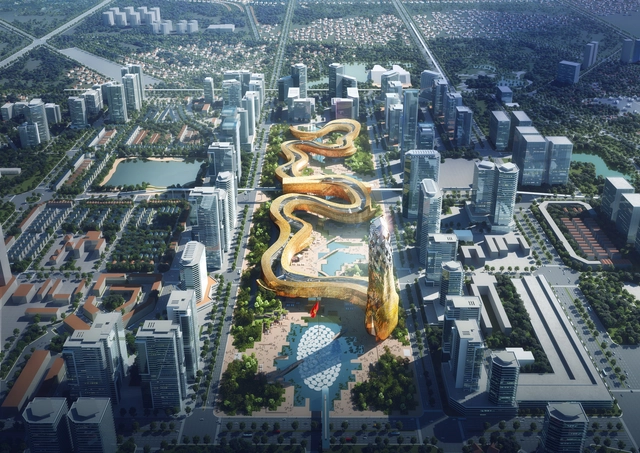
This week's curated selection of Best Unbuilt Architecture highlights designs submitted by established architecture practices, featuring conceptual works, competition entries and projects in different stages of development. From the transformation of a former mall into a healthcare facility in the United States, a masterplan for the redevelopment of a zoo in Canada to a brewery regeneration in China, the following explores a variety of designs by global architecture offices.
Featuring firms like Perkins +Will, Henning Larsen Architects, URBANUS or Mandaworks, this week's selection of unbuilt projects highlights worldwide interventions that illustrate a variety of ideas, from adaptive-reuse strategies, interventions in heritage sites and new models for public buildings.
PLP Architecture has unveiled plans for Tokyo Cross Park, an upcoming redevelopment of an entire district set to become the largest development site in the metropolitan area of Tokyo. The new 230-hectare "green heart of the city" will include four towers, two of which to be designed by PLP, a 31-metre-tall podium with an elevated green public realm, and a 2-hectare public plaza.
New images have been released by Studio Gang showcasing the construction progress of the firm's American Museum of Natural History Expansion in New York. Dubbed as the Richard Gilder Center for Science, Education, and Innovation, the project will link together 10 museum buildings, improving circulation and creating one monumental campus of exhibition galleries, state-of-the-art classrooms, an immersive digital theater, and a redesigned library.
One of the first elements used by humans to build shelters, wood is a versatile material that, along with technological advances, remains a protagonist in the construction industry, being used in different ways and moments in a work.
The immensity of China leads to the diversity of customs and climatic conditions. Each area has its own unique materials, construction methods, and climate adaptation measures. The regional characteristics of Chinese architecture are generally preserved in rural buildings. But we cannot overlook how contemporary technology may considerably improve the living and use conditions of rural buildings. What is the best way to create a balance between classic or inherent technology and new ones? How would the construction of rural architecture provide inspiration for the development of Chinese architectural cultural symbols?
2022 Pritzker Architecture Prize winner Diébédo Francis Kéré reported the great solutions of Burkina Faso. Kéré insists to build comfortable buildings at a reasonable price; to make users happy and inspire them to dream of a better life. The pride of the local culture is reinforced by the use of local materials and traditional techniques. And then Kéré‘s works in other countries show cultural emblems of Burkina Faso, which are the consequence of his own cultural accumulation.
Compared to that of the West and East, awareness and knowledge of the architecture of sub-Saharan Africa—Africa south of the Sahara Desert—is scant. A new book intends to mitigate this oversight, and it’s a significant accomplishment. Architectural Guide Sub-Saharan Africa (DOM publishers, 2021), edited by Philipp Meuser, Adil Dalbai, and Livingstone Mukasa, was more than six years in the making. The seven-volume guide presents architecture in the continent’s 49 sub-Saharan nation-states, includes contributions by nearly 340 authors, 5,000 photos, more than 850 buildings, and 49 articles expressly devoted to theorizing African architecture in its social, economic, historical, and cultural context. I interviewed two of the editors—Adil Dalbai, an architectural researcher and practitioner specializing in sub-Saharan Africa, and Livingstone Mukasa, a native Ugandan architect interested in the intersections of architectural history and cultural anthropology—about the challenges of creating the guide, some of its revelations about the architecture of Africa, and its potential impact.
https://www.archdaily.com/979526/a-remarkably-comprehensive-new-guide-to-the-architecture-of-sub-saharan-africaMichael J. Crosbie
The Transamerica Pyramid, a landmark in the skyline of San Francisco, is undergoing a revitalization project led by Foster + Partners and luxury real estate developers SHVO. Built in 1972, the 48-story Brutalist-style project was designed by American architect William Pereira, and was the tallest building in San Francisco for nearly half a century. The renovation will be the largest in the building’s 50-year history, will also see the expansion and upgrade of the adjacent Three Transamerica (545 Sansome).
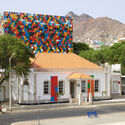
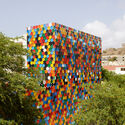
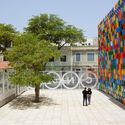
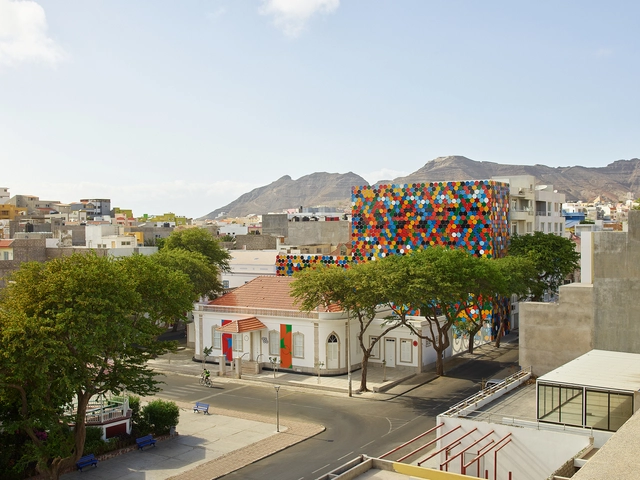
To honor the losses caused by the pandemic over the past two years, a temporary national memorial will be built in Bedworth’s Miners' Welfare Park in England on May 21st until May 28th. Designed by artist David Best, Sanctuary will serve as a powerful symbol of catharsis and rebirth for the whole community, giving them the chance to grieve the losses caused by the pandemic by writing messages or leaving mementos on the walls of the installation, which will then be burned on its last day.
You may have heard an architect colleague say that he chose to study architecture because of the numerous possibilities of action that this degree allows. The field of architecture is, in fact, very extensive, through which it is possible to embark not only on the most “traditional” attributions, but also to venture into various specificities that comprehend the role of the architect and urban planner.
Grimshaw, in collaboration with Nautes Architects, WSP, Vogt and Turner & Townsend, have been awarded first place in an anonymous competition for the renewal of Budapest Nyugati Railway Station. Selected from a shortlist of 12 international design firms, the winning design creates a "permeable station campus" with a series of car-free streets, walkways, public squares and a park, which open up the station complex to the city and restores its significance as one of the most vibrant and historic cities in Europe.
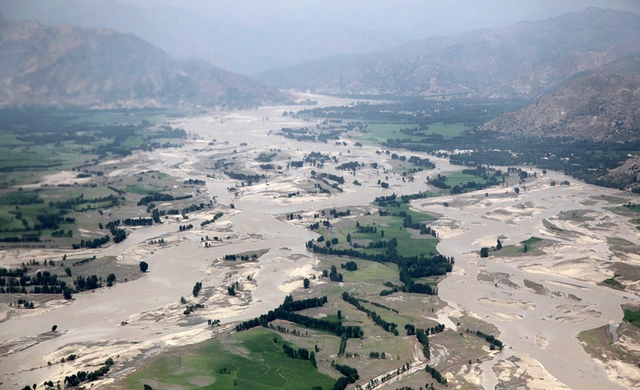
Coastal cities have always been a point of attraction for residents, tourists, and businesses. Alongside the aesthetic features, their proximity to the sea has made these cities a focal point for maritime transportation with the construction of ports, as well as hotspots for recreational and aquacultural activities. However, the past decades saw these particular regions threatened with a shortened lifespan; rising water levels, floods, and recurring cyclones, along with other natural disasters, have endangered coastal communities, putting their population, ecosystem, and built environment at risk.
Pritzker Prize 2022 Laureate Francis Kéré is known for “empowering and transforming communities through the process of architecture”, as the jury stated in its citation. In this recently published video, Martha Thorne, Dean of IE School of Architecture and Design and former executive director of the Pritzker Architecture Prize, shares some of the reasons why Francis Kéré has won the Pritzker Prize 2022.
Following Qatar's ambitious museum-building project to further promote cultural institutes in the country, Her Excellency Sheikha Al Mayassa bint Hamad bin Khalifa Al Thani, Chairperson of Qatar Museums has announced that OMA, Herzog & de Meuron, and ELEMENTAL will be designing three new museums in Doha that explore the themes of Islamic art, contemporary art, and evolution of the automobile industry respectively.
Construction broke ground on a new cruise terminal at Port of Miami designed by Arquitectonica for cruise operator MSC Cruises. With the capacity to process 36,000 passengers per day and simultaneously accommodate three mega cruise ships, the structure due for completion in 2023 will be the largest cruise terminal in North America. Located on the eastern end of the Port, the 4-storey structure makes the most of the long, narrow site by creating a layered embark and debark experience, expressed in its architectural image.
Like other professions, Architecture and Urbanism often revolves around its own language. What may seem like a basic term for professionals in the field, can often sound completely strange or meaningless to those starting their studies or who are curious about the field. For this reason, we created a small glossary with some words that are important to expand your vocabulary and contribute to a future discussion about your project.
https://www.archdaily.com/977606/vocabulary-of-basic-architecture-termsEquipe ArchDaily Brasil