The Architects' Journal’s 2018 student survey has revealed troublesome, though perhaps not surprising, trends within the profession. The results of the survey, drawn from nearly 500 students in the UK, suggest that the economically fortunate are more likely to succeed within a culture that promotes unsociable and unhealthy working hours.
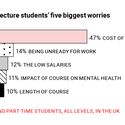
The numbers paint a bleak picture of the architecture student lifestyle in the UK, where, including tuition fees, students are now forking out an average of £24,000 per year. 44% of respondents identified this as the largest problem for them and their peers.
So as the traditional route into the profession becomes “increasingly out of reach for many,” is it time for schools and offices to reevaluate their methods in order to maintain a diverse, accessible architecture?
The Hungarian artist László Moholy-Nagy was one of the most influential thinkers, designers and art educators of the first half of the twentieth century. His experimentation with light, space and form generated international attention. Among those impressed by Moholy-Nagy's work was Walter Gropius, German architect and founder of the Bauhaus School, who made Moholy-Nagy one of the youngest instructors in the history of the Bauhaus. In his time at the Bauhaus, Moholy-Nagy utilized multi-disciplinary art practices to revolutionize abstract artistic media.
Los Angeles-based studio EC3 has revealed its design entry for a new 14.5-acre, cultural & sports center in Shenzhen’s growing Dalang neighborhood, hosted by the Shenzhen Longhua District Government and the Vanke Real Estate Co.
Indigenous co-design—a more specific form of the general concept of co-design in which an architect collaborates with a stakeholder community—is a collaborative design process between architects and the Indigenous community as the client. The Royal Architectural Institute of Canada (RAIC) recently released a unique resource aimed at designers, clients, funders and policymakers looking for a guide in Indigenous co-design.
Four Case Studies Exemplifying Best Practices in Architectural Co-design and Building with First Nationsbuilds on the success of the RAIC International Indigenous Architecture and Design Symposium held in May 2017. The four case studies set out to explore best practices in Indigenous co-design in the context of three First Nations and one Inuit community in Canada, with one case study selected from each of the four asset classes: "schools, community and cultural centers, administration and business centers, and housing."
The fall of the Iron Curtain in 1991 came not only with political, economic, and social implications but also left behind a distinctive style of architecture. This architecture, under the Soviet regime, was a system that relied on quantifiable targets, such as the Five Year Plan. These quotas forced architects to evaluate building projects in terms of material and labor costs, number of units, volume of skilled and unskilled labor, and so forth. As a result, architecture across these regions became an industrial commodity, an outward flex of power and technological innovation, and a collective of architects executing a Stalinist vision.
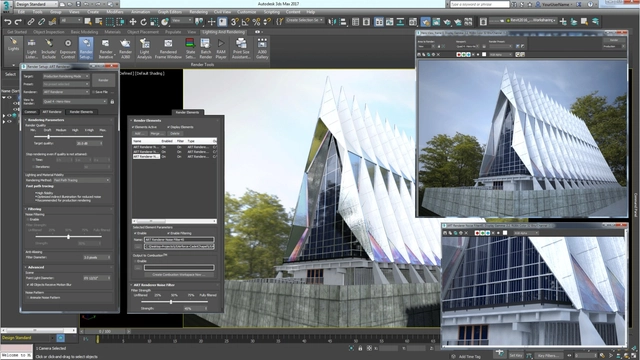
When you think of the age of hand drafted architecture drawings, what images come to mind? Is it the iconic plans of the Palladian Villas? Fast forward to present day, where architecture software is favored over hand drawings due to its efficiency and ability to create increasingly innovative structures. With all of the software available to architects, have you ever wondered which one might be the "best"? Luckily, TechRadar has just released their list of leading architecture software for this year.
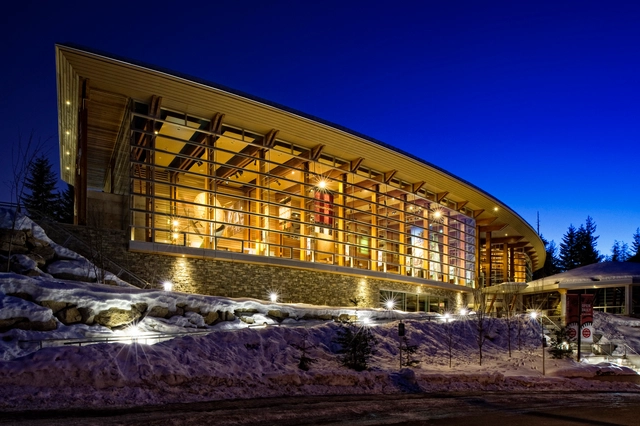
GroupGSA's design for the Four Seasons Reception Center in Chongli, Zhanjiakou, China, where the 2022 Winter Olympics will be hosted, has been announced as the winning bid. The building will be used as the main information center for all of the activities that will occur at the ski resort during the Olympic Games.
The topic of diversity in architecture has remained a mainstream issue in recent years—however, a recent article from Metropolis Magazine offers an account that is nevertheless surprising: a celebration of the unique contributions of women architects in the former socialist state of Yugoslavia. According to the essay, the highlighted women made their mark on the history of Yugoslavia "in spite of, not through the dismantling of, both the region’s and the profession’s male-dominated cultures."
Australia-based GroupGSA’s recent design for iCarbonX’s Super Headquarters in Shenzhen, China has been dubbed “outstanding” by the competition’s jurors. The firm was invited to submit an entry which explored iCarbonX’s goal to “build an ecosystem of digital life based on a combination of an individual’s biological, behavioral and psychological data, the Internet, and artificial intelligence.”
New renders have been released of Henning Larsen’s “luxurious hideaway in the Georgian mountains” after construction started on the 25000m², 135 room hotel earlier this year. The new Agobili Hotel is located at the Abastumani spa resort in Georgia, which itself has been a health retreat for both the Tsar family and general public alike. The new building hopes “to create a story about the magnificent place it inhabits.”
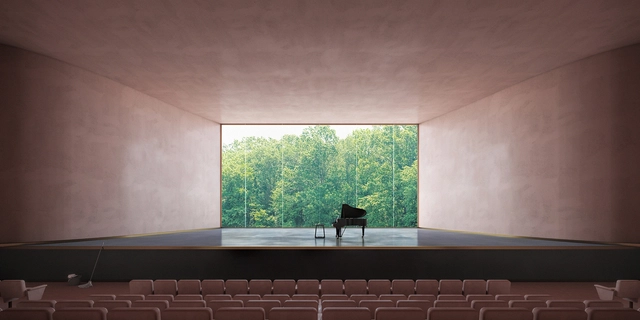
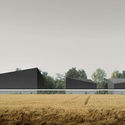
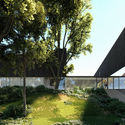
Located in a small village in Poland, this proposed music center honors the birthplace of famous Polish composer and pianist, Frédéric Chopin. Designed by ELEMENT as a part of an international competition, the Chopin Music Center captures the picturesque landscape of endless forests through "leisure and relaxation."
The Center integrates with the park through window views of Frédéric Chopin's birth house and the surrounding landscape. The proposed international music center utilizes a combination of natural materials and glazing to create a seamless connection with its site. The existing park can be reached by pathways and bridges near the building, prompting visitors to experience the outdoor area.
Rural Studio, a student-centered design/build program at Auburn University’s College of Architecture, Design and Construction, has announced a collaboration with the mortgage loan company Fannie Mae to support the school’s 20K Initiative. This initiative continues to contribute to the development of "beautiful, healthy and resilient houses that afford financially vulnerable homeowners the ability to live in dignity, security and well within their means."
As a means to address the shortage of affordable housing in the U.S., the research produced from this collaboration with Fannie Mae is being shared with educational institutions industry groups. Auburn University is also providing funding for the initiative through a grant to "further strengthen the collaboration with Fannie Mae, as well as support the development of additional stakeholder collaborations."
Late last month, Sketchfab launched an online store which will make it easier for designers to buy and sell 3D models. The platform’s 1.5 million creative professionals can monetize their work and customers who are working on a range of 3D projects will have the opportunity to purchase tens of thousands of high-quality 3D models and textures. The new launch also features a first-in-market, "Model Inspector."
Studio Gang founder Jeanne Gang has long been an advocate for change within the architecture field. Her studio's designs push boundaries all over the world, but Gang has recently used her firm to transform architectural practice in a different way—attacking the gender wage gap.
In a recent article from Fast Company, Gang writes about "discrimination and prejudice" throughout the US, but more specifically in the field of architecture.
Read on for more about how she closed the gender wage gap at her firm and is calling on other architecture firms to do the same.
Earlier this year, LEGO announced that they were beginning production on a new line of botanical-themed pieces made from sugarcane. This new line is just the start of the company's goal to only use sustainable materials in all major products and packaging by 2030. Here we will explore the process behind LEGO’s “going green” initiative, and the challenges they’ve faced in making more environmentally-friendly building blocks along the way.
Acting both as a “visionary landmark and an urban catalyst,” C.F. Møller Architects’ proposal for a new train station development in Altona, Hamburg, emphasizes the significance of green space within the city’s urban fabric. The project will have several uses, ranging from cafes, restaurants, and shops to offices and fitness centers. Its unique undulating roof landscape “embodies a collective and progressive vision of reinforcing Hamburg’s green credentials.”
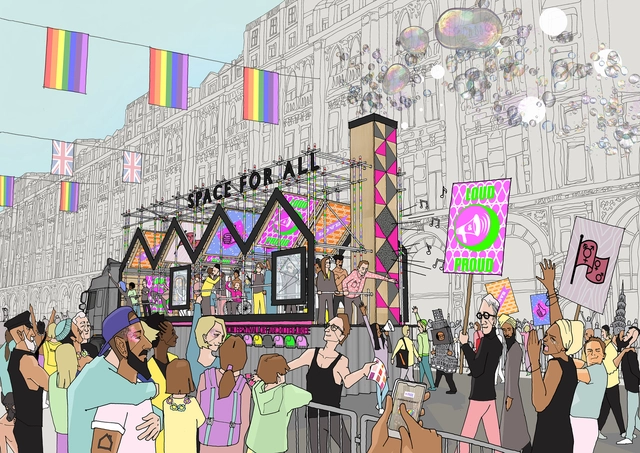
‘A Space For All’ by Hawkins\Brown has been announced as the winner of London Festival of Architecture (LFA) and Architects LGBT+’s Pride Float Competition, the design representing architecture in Pride London 2018. Forming a crucial part of the LFA’s 2018 program, the competition was open to students, graduates, emerging practices and established offices alike, with 'exploring identity' being the brief's core theme. The winning float advocates for increased LGBT+ acceptance and presence within the construction industry, combining “the dual identities of LGBT+ and being an architect.”
Render. Image Courtesy of MoederscheimMoonen Architects
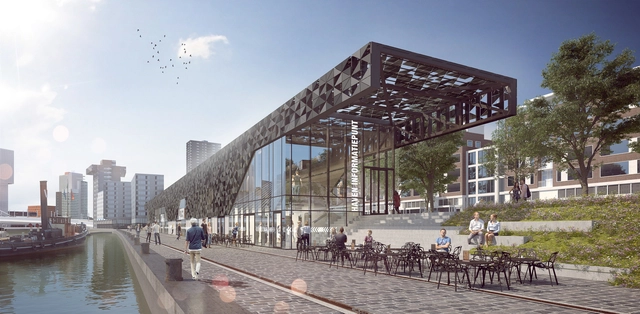
A new public pavilion from MoedersheimMoonen Architects is set to be built in the old 'Leuvehaven' port in Rotterdam. Located near the Erasmus Bridge, the pavilion intends to bring new life to the historic port of Rotterdam. The municipality of Rotterdam is also set to invest in a bustling residential climate, with this new pavilion housing multiple programs that will contribute to a "lively" and "greener" Maritime District.
The building will replace three existing pavilions, providing a new perspective for visitors to the Leuvehaven. Much of the structure and foundation from the existing buildings are reused in the new design, promoting sustainability, honoring the present conditions of the site, and bringing high-tech design elements to the historical context.
The various programs for the Pavilion will include "the Port Information Point of the Port of Rotterdam, two publicly accessible workshops from the Maritime Museum Rotterdam and two catering establishments with terraces by the water," with the surrounding exteriors space also to be renewed in phases.





















.jpg?1531354161)


.jpg?1531865940)