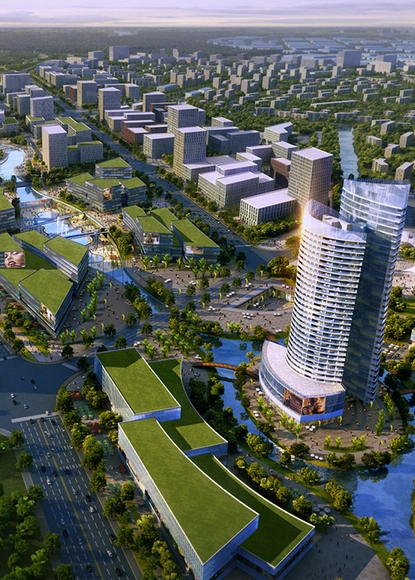
SBA International’s concept of a sustainable development among industry, business and residential in the Chinese city of Shenyang just won the first prize in the in the "Tiexi Waterfront Area" competition. Their ‘Clean City Concept’ includes a reduction of CO2 emissions, environmental green areas and office buildings which comply with the latest standards of a ‘Green Building’. The planning area is divided in three theme areas and in total covers an area of 90 square kilometers. More images and architects’ description after the break.
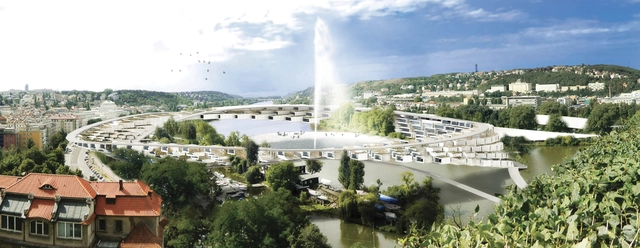
With the challenge of defining a new residential typology on the outskirt of a historic Prague zone that combines a pathway to cross the river and residential units over the Vltava River, Rasha Kiani and Mahdi Kamboozia proposed a new extension to Prague's urban space. Their concept, which won an honorable mention, makes a lively and vibrant community that joins both sides of the Vltava River by means of social activities in a dynamic space. More images and architects' description after the break.
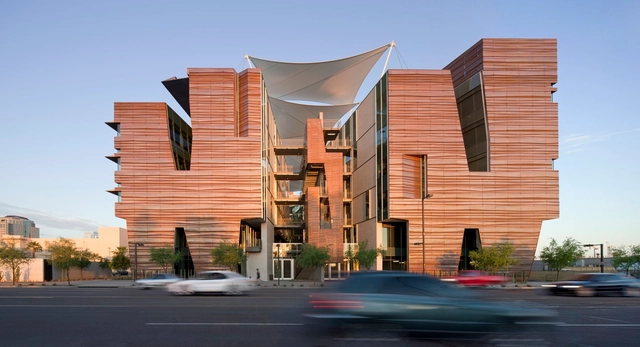
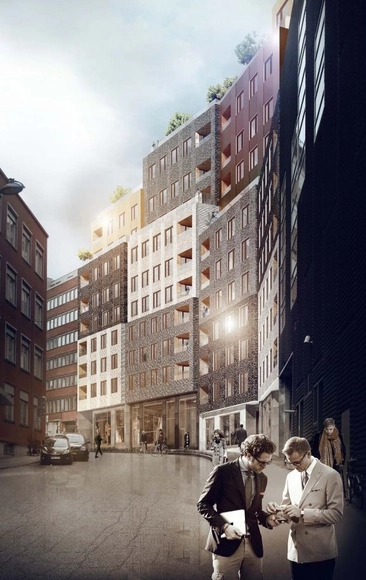
Designed by Kjellander Sjöberg, their 'Paradiset 19-21' housing project creates a distinctive residential infill on Western Kungsholmen in central Stockholm. A distinctive addition with a strong urban identity, the project is a pliable mini-Manhattan, landing in the city block and building a vibrant streetscape with premises on the ground floor and inviting activities with an expressive urban character. More images and architects' description after the break.
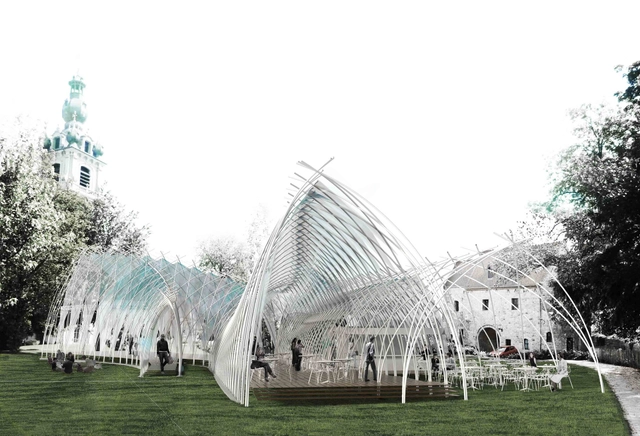
Designed by Appareil,their proposal for Naves, a temporary pavilion for the city of Mons, Capital of Culture in 2015, addresses a contextual relationship to the gothic surroundings as an exploration on lightness and transparency. Inspired by this historical context, this project explores structural and material logics to revisit the gothic arch; the ‘curve’ is examined as a bending element caught within a woven collaborative structure of glass fiber tubes, in which the use of compression is exchanged by the one of tension for the building to achieve maximum lightness. More images and architects' description after the break.
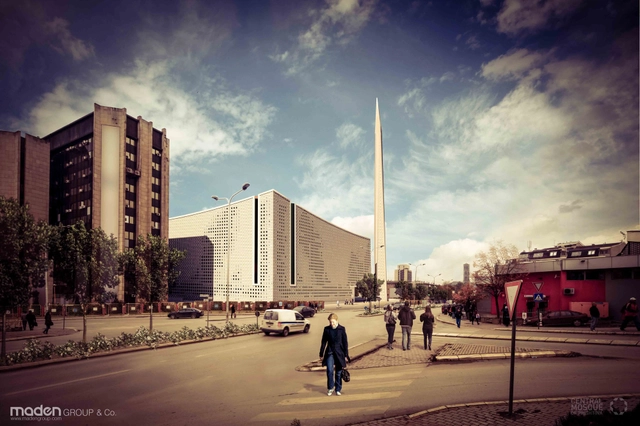
The idea behind the proposal for the Central Mosque of Pristina comes from the first religious needs and the study of the earliest styles of mosque architecture in Kosovo. Designed by Maden GROUP, the concept is to convey tradition through contemporary architecture while combining in the best mode of architecture and religious rules. Therefore, the architects developed in geometric foundations, by combining simple geometrical elements. More images and architects’ description after the break.










.jpg?1367262818&format=webp&width=640&height=580)






















.jpg?1367332639 "© George Fakaros")
.jpg?1367332678 "© George Fakaros")



.jpg?1367262821 "© Insula srl")
.jpg?1367262823 "© Insula srl")

.jpg?1367262818)