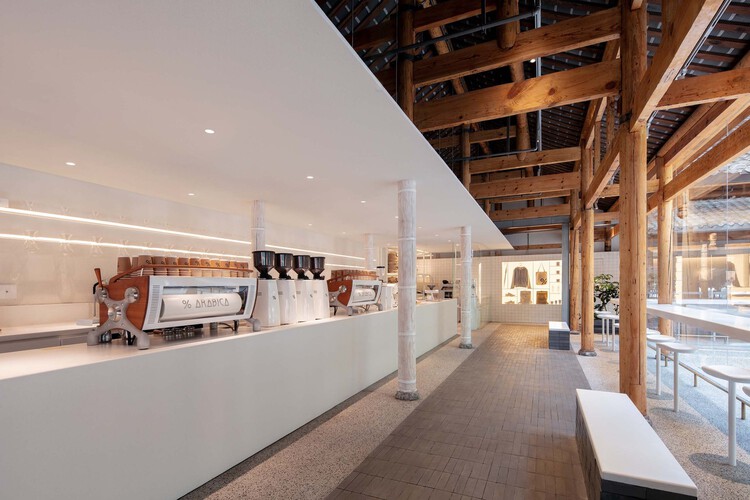
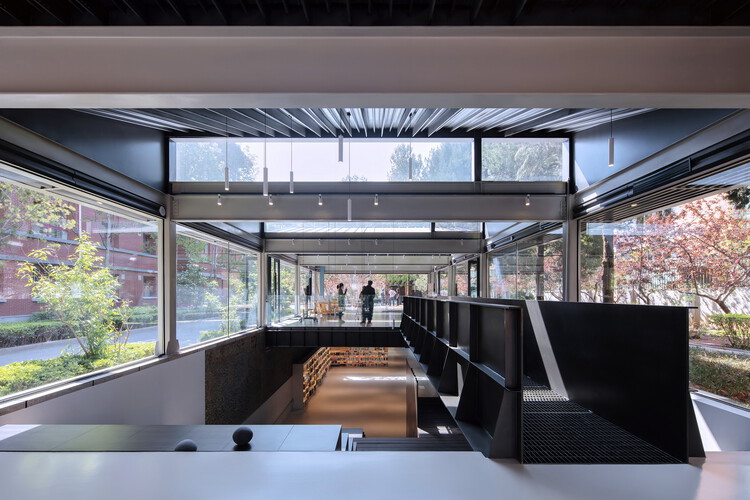
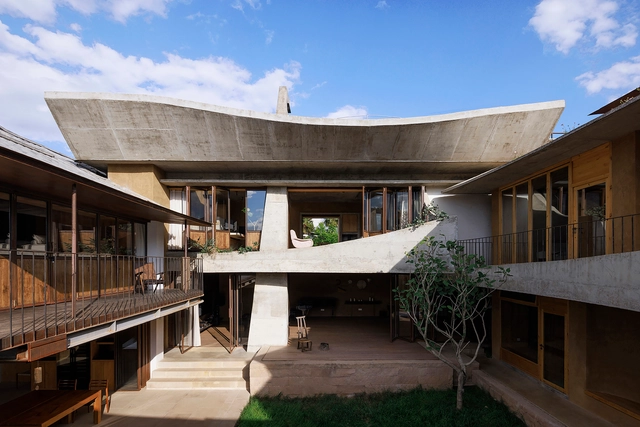
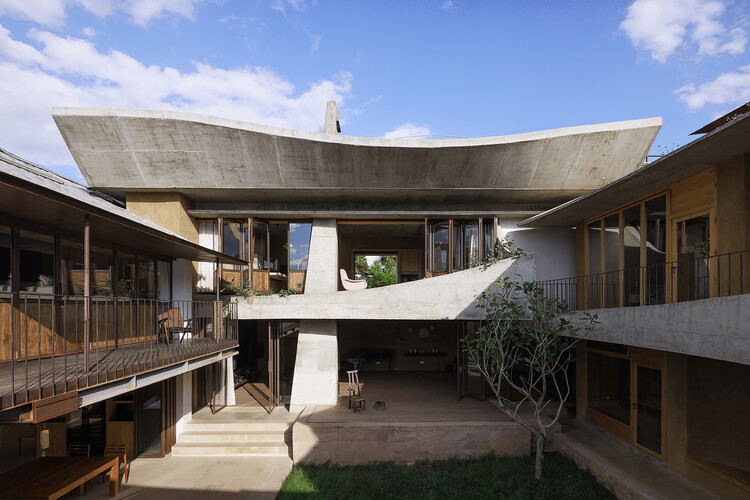
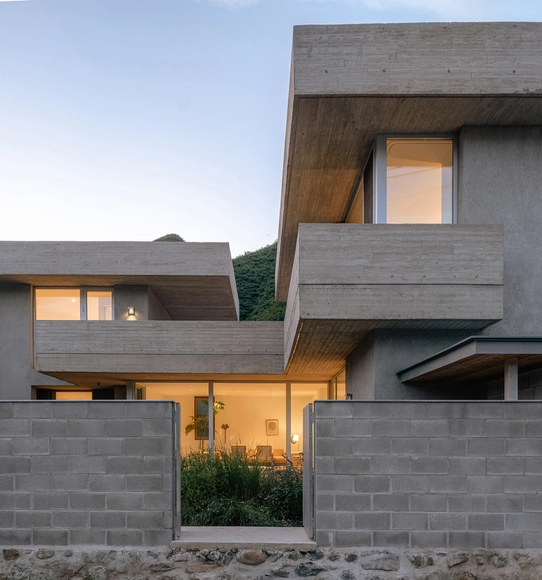
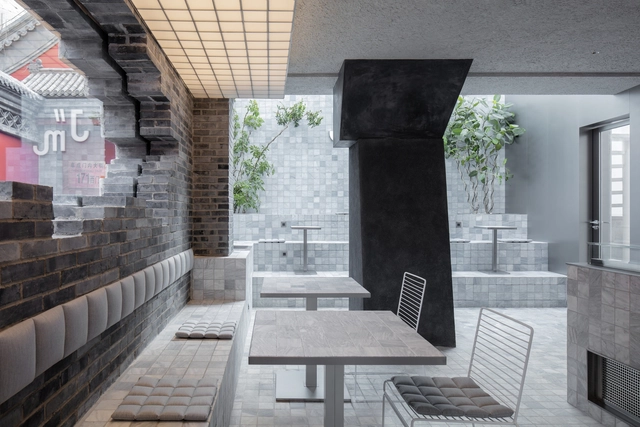
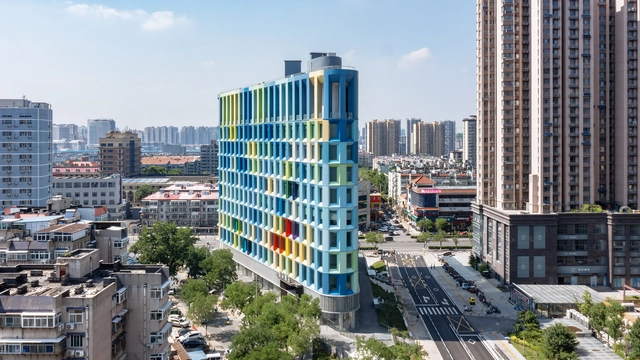
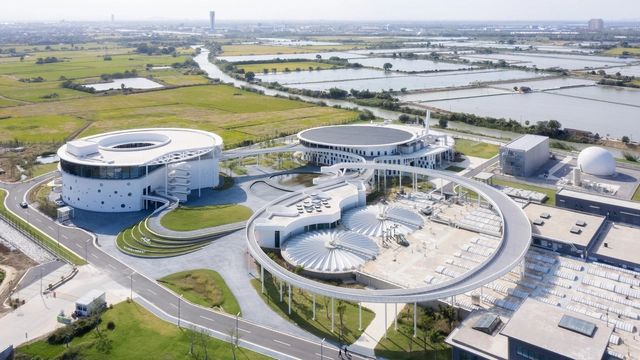
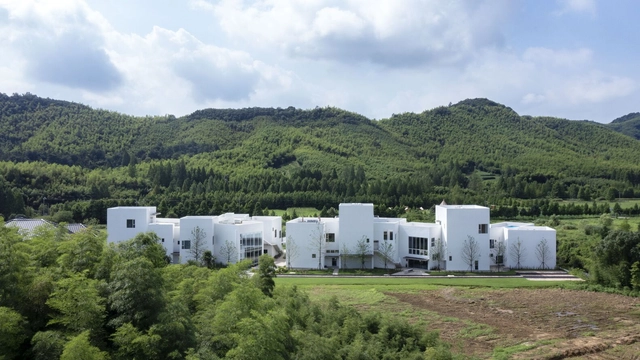
Craft in contemporary interiors is increasingly valuable in the way materials are joined and brought into relation with one another. As the appetite for fast, inexpensive, and profitable retrofitting grows, there is also a parallel desire for interiors that feel thoughtfully resolved: spaces where details are integrated, material assemblies are considered, textures transition with intention, and hardware is treated as part of the architectural language rather than an afterthought. In many contemporary Chinese interiors, craft operates quietly through the treatment of surfaces and structures: timber that retains its irregularity, terrazzo that records aggregate and handwork, or finishes that reveal the care of their making.
This is especially important in an era when digital images increasingly reward smoothness. Rendered interiors often appear seamless, frictionless, and complete before construction has even begun. Craft complicates this image. It introduces tolerance, texture, material resistance, and the sense that a surface has passed through human hands before becoming architecture. Imperfection is not necessarily a failure of precision. To the eye that knows how to read it, it can become evidence of process.