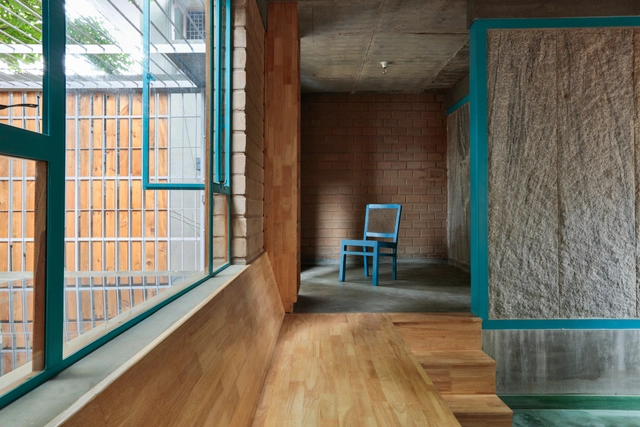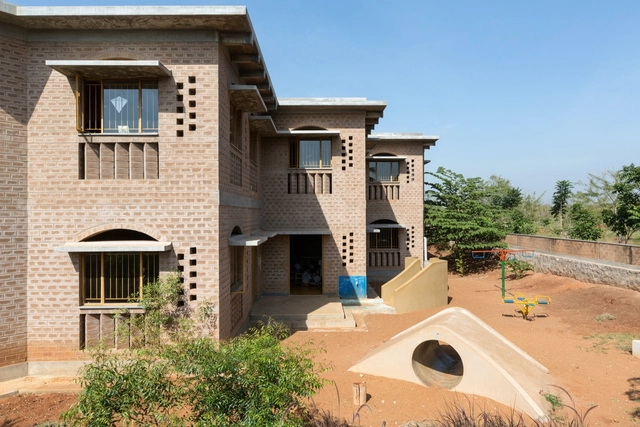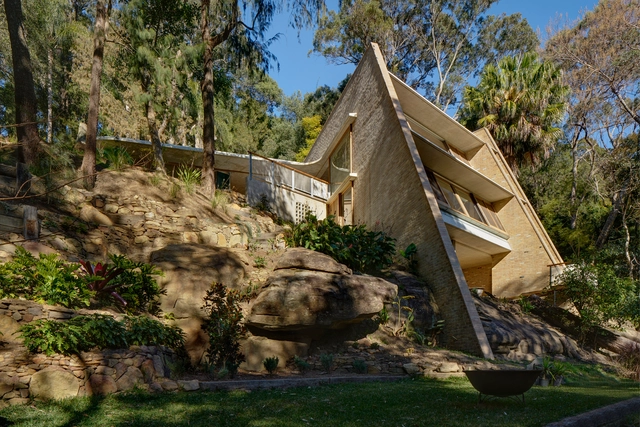
Vivek Muthuramalingam

BROWSE ALL FROM THIS PHOTOGRAPHER HERE

Sloped to Fit: 14 Homes That Embrace the Hill as a Catalyst for Their Design

Subscriber Access | 

When we think about cities, we often assume the orthogonal grid is the norm: neat, predictable, and rational. However, many urban areas around the world, notably those shaped by hills and uneven terrain, defy this convention. In cities like Lisbon, in Portugal orthogonal grids appear only in flatter zones such as Baixa, while surrounding areas like Alfama adapt organically to topography. These areas create more layered, irregular, and visually dynamic urban forms. Yerevan in Armenia, offers another urban example of this adaptation: the Cascade Complex transforms a steep hill into a terraced public space that connects different city levels while framing panoramic views. For other countries, this response to topography becomes even more critical. Cities like Tegucigalpa in Honduras or Valparaiso in Chile are defined by steep, irregular terrain that requires architects to engage deeply with the land. Designing in these contexts, especially for residential projects, demands technical adaptation and a contextual understanding that allows the slope to become a generative element in the design process.

Sloped to Fit: 14 Homes That Embrace the Hill as a Catalyst for Their Design - More Images+ 25

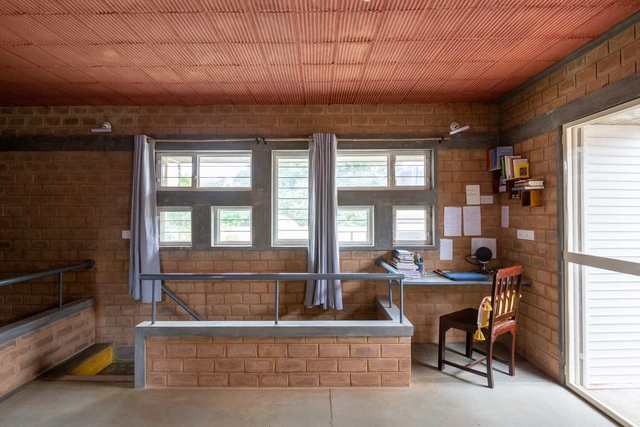
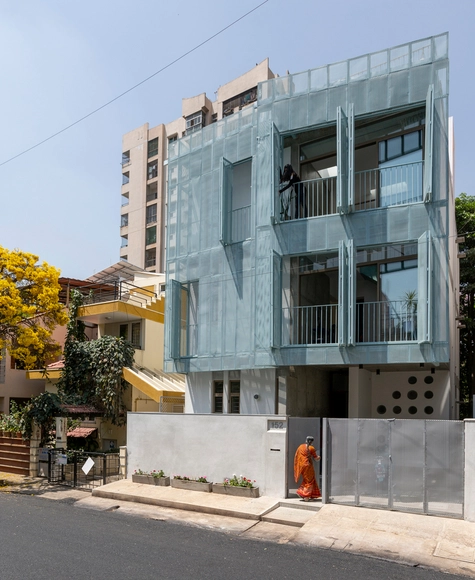
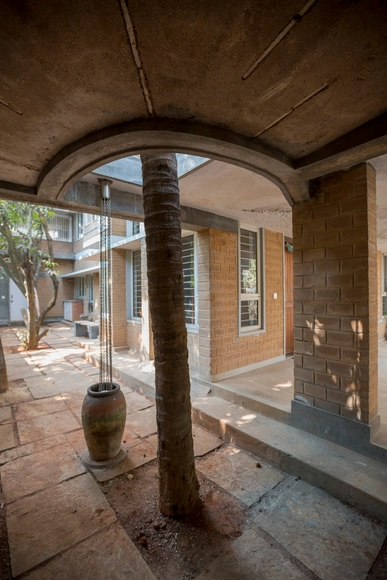
Deepthi and Hemanth's Home / Biome Environmental Solutions

Deepthi and Hemanth's Home / Biome Environmental Solutions - More Images+ 13

Bengaluru, India

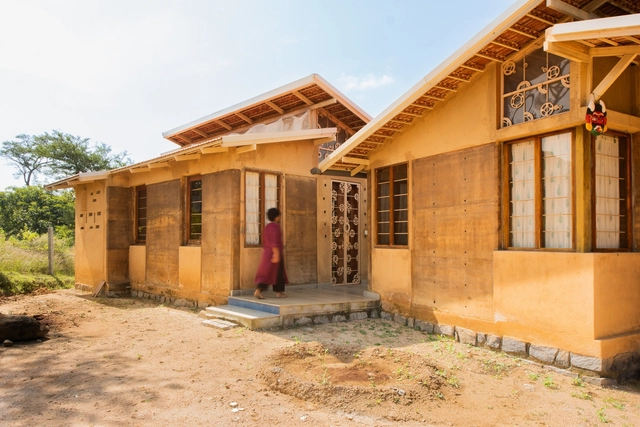
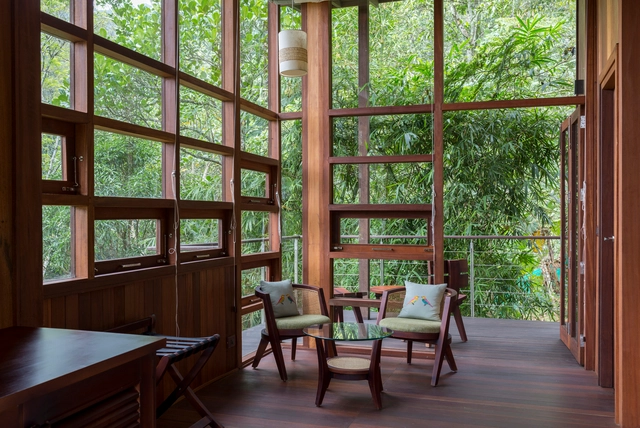
VAY, Coonoor Retreat Lodge / Biome Environmental Solutions

VAY, Coonoor  Retreat Lodge / Biome Environmental Solutions - Lodging
© Vivek Muthuramalingam

VAY, Coonoor  Retreat Lodge / Biome Environmental Solutions - More Images+ 13

Huligal, India

The Merits of Greenwashing: Social Stigma around Natural Construction in India

Subscriber Access | 

In recent years, India has seen a resurgence of interest in natural building materials, a movement driven by escalating environmental concerns and a growing desire to revive traditional lifestyles. From the busy streets of Mumbai to the serene villages of Kerala, architects, builders, and communities are coming together to experiment with the potential of earth, bamboo, lime, and other organic materials in shaping contextually relevant structures that also embody India's contemporary ideals. The shift towards using natural materials and other vernacular resources reflects a movement towards sustainability and a deeper connection with nature.

The Merits of Greenwashing: Social Stigma around Natural Construction in India - More Images+ 3

Breathing Enclosure / A Threshold

Breathing Enclosure   / A Threshold - More Images+ 33

  • Architects: A Threshold
  • Area Area of this architecture project Area:  12350 ft²
  • Year Completion year of this architecture project Year:  2021
  • Professionals: VSLA

House on 46 / Kumar La Noce

House on 46 / Kumar La Noce - More Images+ 31

Bengaluru, India
  • Architects: Kumar La Noce
  • Area Area of this architecture project Area:  179
  • Year Completion year of this architecture project Year:  2021
  • Manufacturers Brands with products used in this architecture project
    Manufacturers:  Technal, Asian Paints, Coori, Jaipur Rugs, Kohler, +3

Materials to Build India's Identity

Subscriber Access | 
Materials to Build India's Identity  - Featured Image
© Andre J Fanthome

Upon becoming a sovereign country, free from British Rule, the people of India found themselves faced with questions they had never needed to answer before. Coming from different cultures and origins, the citizens began to wonder what post-independence India would stand for. The nation-builders now had the choice to carve out their own future, along with the responsibility to reclaim its identity - but what was India's identity? Was it the temples and huts of the indigenous folk, the lofty palaces of the Mughal era, or the debris of British rule? There began a search for a contemporary Indian sensibility that would carry the collective histories of citizens towards a future of hope.

Materials to Build India's Identity  - More Images+ 26

International Women’s Day 2022: On Rebalancing Forces and Adjusting the Narratives

Subscriber Access | 

While women make up an equal part of the population, they are not equally represented when imagining, planning, designing, and constructing the built environment around the globe. Thriving to rebalance forces and close the gap of gender inequality, the world is moving slowly but surely into a more diverse, equitable, and inclusive future. Looking back at 2021, this year has seen the selection of Lesley Lokko as curator of the 2023 Venice Biennale, Anne Lacaton winning with her partner Jean-Philippe Vassal the 2021 Pritzker Prize, the 6th woman to ever receive the award, and the MAXXI Museum celebrating the transformative role of female architects in the profession's evolution over the last century.

The 2022 Women's International Day, according to the UN is centered on “Gender equality today for a sustainable tomorrow”, focusing on females involved in building a sustainable future, while the official platform of the 8th of March is concentrating its efforts on breaking the bias and eliminating discrimination. Recognizing every single day the female force that shapes the built environment, ArchDaily on the other hand, turned to its global audience this year, seeking input to shed light on even more women architects, from the four corners of the world. Always trying to reach new realms, this selection of 25 professionals is looking to adjust the historical narrative by highlighting pioneers of the field, to present established practitioners molding the world we live in, and to share profiles of activists and scholars, implicated in change.

International Women’s Day 2022: On Rebalancing Forces and Adjusting the Narratives - More Images+ 17

JP House / Kumar La Noce

JP House  / Kumar La Noce - More Images+ 33

Bangalore, India
  • Architects: Kumar La Noce
  • Area Area of this architecture project Area:  297
  • Year Completion year of this architecture project Year:  2021
  • Manufacturers Brands with products used in this architecture project
    Manufacturers:  Artemide

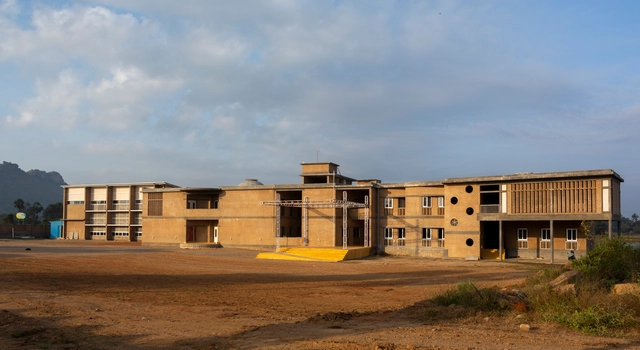
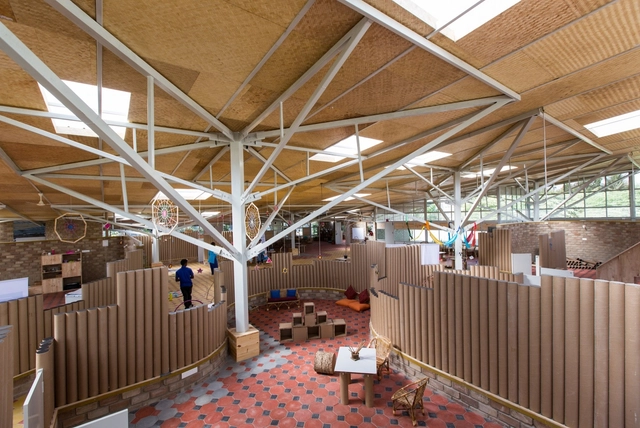
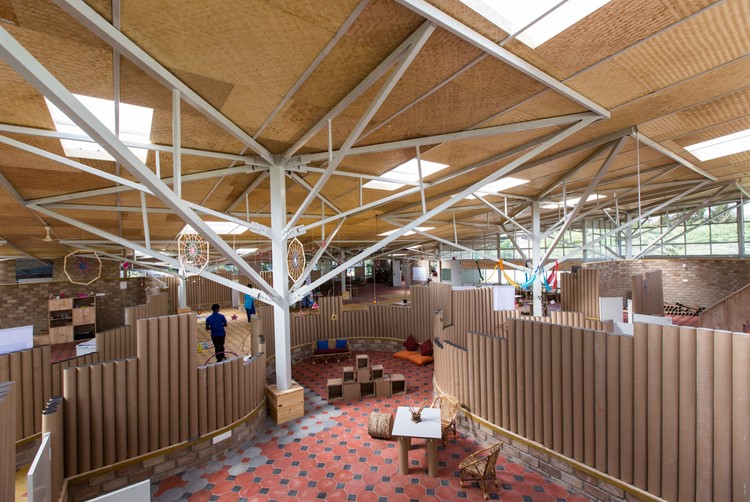
My First School / Biome Environmental Solutions

My First School / Biome Environmental Solutions - More Images+ 19

Tiruvannamalai, India

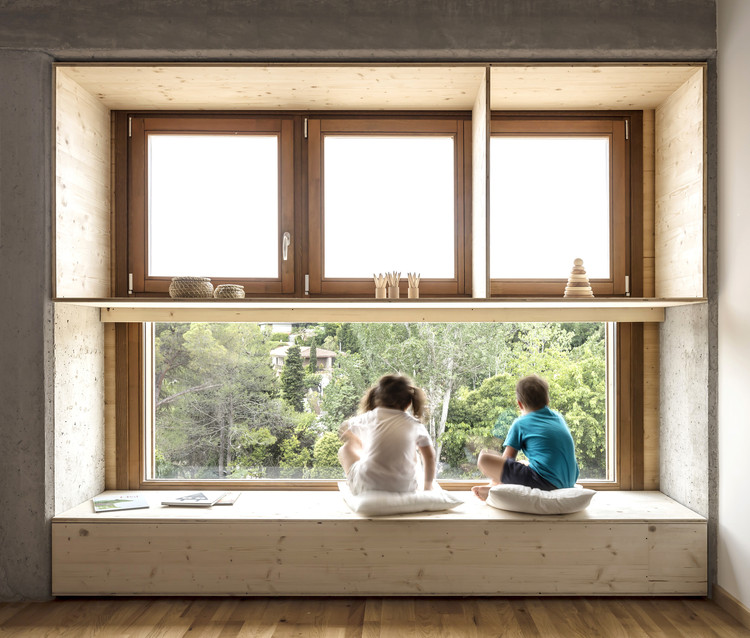
How to Design Schools and Interiors Based on Waldorf Pedagogy

Subscriber Access | 

Introduced by Rudolf Steiner, Waldorf pedagogy draws on the principles of anthroposophical philosophy. One of the theory's foundational characteristics is its holistic approach to the human being: feelings, imagination, spirit, and intellect are considered unique to every individual, and thoughts, feelings, and actions are understood to always be linked.

Thus, the focus of the philosophy is to cultivate individuals who are capable of relating both to themselves and to society (inter and intrapersonal intelligence) - fundamental skills for overcoming the challenges of the 21st century. This kind of learning takes place in schools that follow Steiner's method, introducing families to the school environment and bringing them into the community. Below, we review the operations and implications of this pedagogy. 

How to Design Schools and Interiors Based on Waldorf Pedagogy - More Images+ 14

ArchDaily's Sustainability Glossary : A-B-C

It is expected that within the next couple of decades, Earth will have absolutely nothing left to offer whoever/whatever is capable of surviving on it. Although the human race is solely responsible for the damages done to the planet, a thin silver lining can still be seen if radical changes were to be done to the way we live on Earth and how we sustain it. 

Since architects and designers carry a responsibility of building a substantial future, we have put together an A-Z list of every sustainability term that you might come across. Every week, a new set of letters will be published, helping you stay well-rounded on everything related to sustainable architecture and design. Here are the terms that start with letters A, B, and C.

How to Design for Visual Comfort Using Natural Light

Architects are increasingly aware of our influence on the well-being and good health of the users of our projects. Natural lighting –and how it should be complemented with artificial lighting– is an essential factor to consider for the visual comfort of interior spaces. But, do we know how to handle it correctly?

Office at #15 / Biome Environmental Solutions

Office at #15 / Biome Environmental Solutions - More Images+ 39

Cardamom Club / Kumar La Noce

Cardamom Club / Kumar La Noce - More Images+ 24

The Atelier / Biome Environmental Solutions

The Atelier / Biome Environmental Solutions - More Images+ 26

Arvindh and Priya's House / Biome Environmental Solutions

Arvindh and Priya's House / Biome Environmental Solutions - More Images+ 17

Bengaluru, India

Yellow Train School / Biome Environmental Solutions

Yellow Train School / Biome Environmental Solutions - More Images+ 20

Coimbatore, India