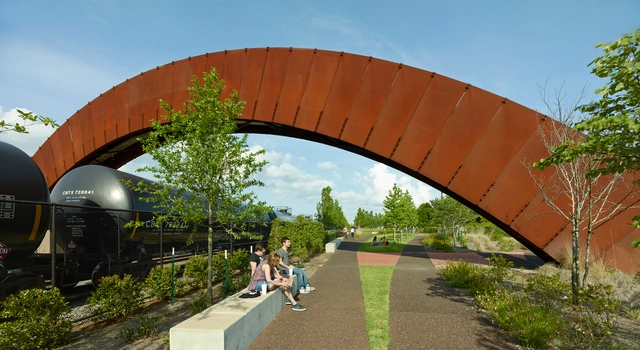
The use of steel in architecture is considered as one of the most innovative construction developments in history, allowing architects to create structures in scales they never thought they could. Fast-forward a few centuries, and steel remains as one of the most crucial materials in architecture. But there is a lot more to the material than just tensile strength and durability, some architects were well-aware of steel's potential and transformed it into lighting fixtures, facades, decorative elements, and finishes.
Here are 15 projects where architects looked beyond steel as structural support and explored its diverse possibilities in architecture.
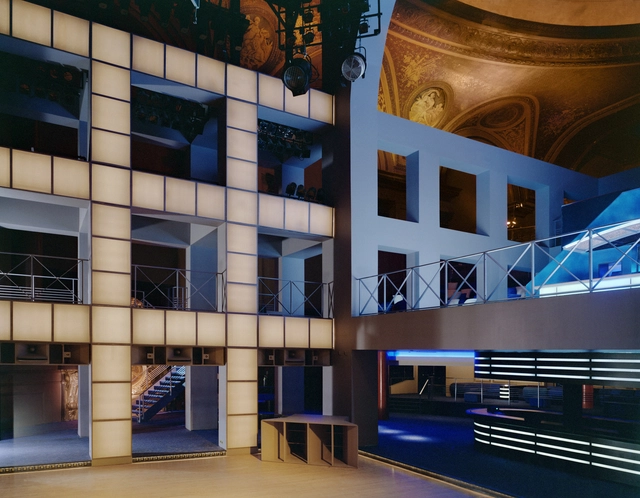
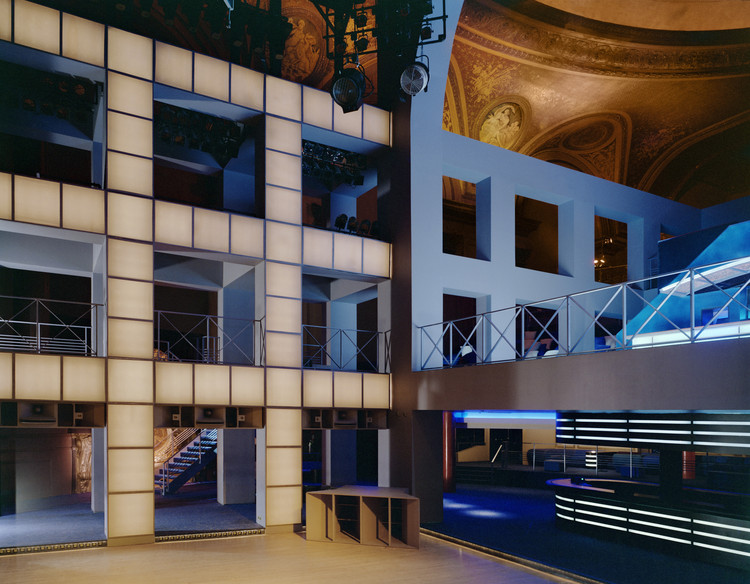
In May 1985, an old theater and concert hall opened its doors to the public for the opening of a brand new nightclub in New York City. Located on 126 East 14th Street, the project was commissioned by entrepreneurs Steve Rubell and Ian Schrager, owners of the also famous club Studio 54, and was conceived as a vibrant and luminous independent structure arranged inside a rather classic shell, which appears as a beautiful backdrop behind the clean geometry of Isozaki.
As The New York Times pointed out in its May 20, 1985 edition: 'Arata Isozaki is at once a great eminence of Japanese architecture and a source of some of its freshest thinking. And all sides of Mr. Isozaki are visible in the Palladium'.
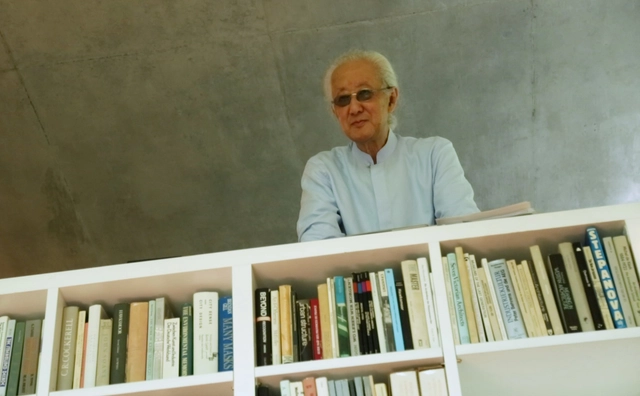
The prolific and varied career of 2019 Pritzker Laureate Arata Isozaki, which includes more than 100 works built on virtually every continent, gives us a huge amount of facts that are relevant to understanding his life and architecture. Considered the first Japanese architect to develop his work on a truly global scale, Isozaki took special care to respond to the context and the specific requirements of each project, expanding the heterogeneity of his work and resulting in a variety of styles from vernacular to high tech.
See below 20 fascinating facts that illuminate his particular genius:
https://www.archdaily.com/912602/who-is-arata-isozaki-20-things-to-know-about-the-2019-pritzker-laureateAD Editorial Team
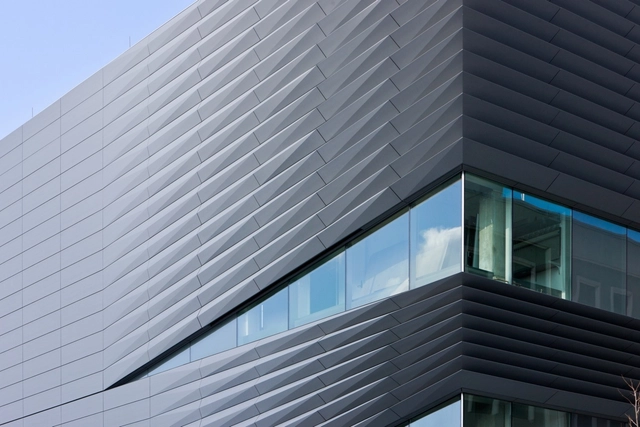
Zinc is a natural element extracted from ores. Its symbol, which appears in the dreaded Periodic Table, is Zn. Through a metallurgical process of burning its impurities (reducing zinc oxide and refining), it assumes a much more friendly appearance, and later becomes the sheets, coils, and rollers used in construction. The main characteristic of this material is its malleability, which allows it to be worked easily, allowing to cover complex forms in facades and roofs of buildings.
The New York Chapter of the American Institute of Architects has presented 27 projects with 2019 Design Awards. AIANY announced the results after two days of deliberations by a a jury of independent architects, educators, critics, and planners. For each of the five categories, winning projects were granted either an “Honor” or “Merit” award, and were chosen for their design quality, innovation and technique.
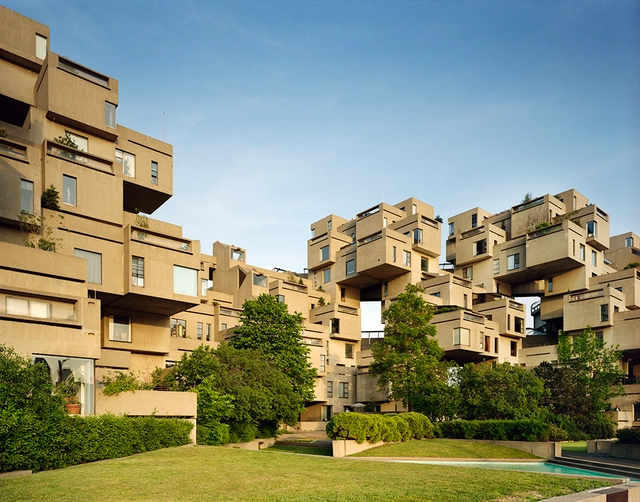
Moshe Safdie has been named the laureate for the 2019 Wolf Prize for Architecture. The award recognizes a winner in either painting, music, sculpture, or architecture. As one of Israel’s most prestigious international awards, the prize is bestowed upon luminaries for their accomplishments in advancing science and art for the benefit of humanity. The jury cited Safdie’s exemplary career motivated by the social concerns of architecture and his formal experimentation.
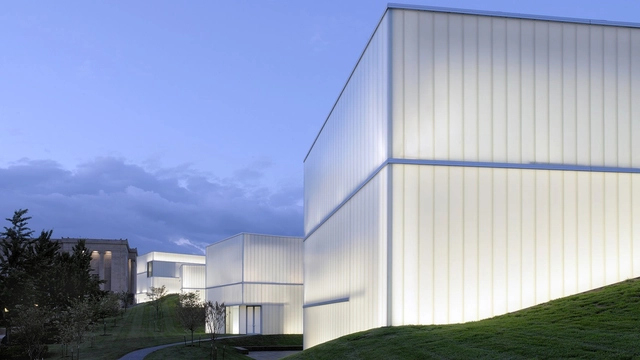
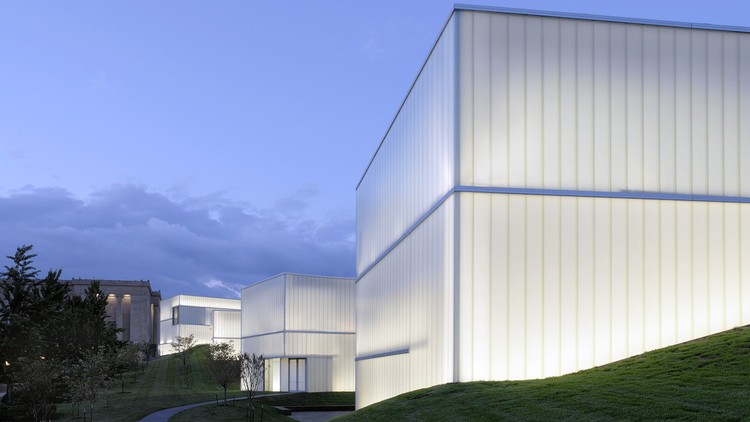
Recently, a new trend in architecture has emerged: Several of the latest projects highlighted by ArchDaily, including some winners in the Building of the Year Awards, are using permeable facades as an attractive option for their exterior finishes.
Recurrently we see how architects opt for translucent facades to create the envelopes of their buildings, promoting the entry of a large amount of natural light, while simultaneously controlling it during the day. Illuminated during the night, many of these projects can be seen in the dark, appearing as lanterns or lighthouses for their neighbors and community. Being exposed to changing conditions – day or night – to choose the right material, it's necessary to study in detail the orientation and location of the building, the pre-existing context, and the configuration of the interior spaces.
We present a system of glass panels that allow buildings with this type of façade –spanning from floor to ceiling without interruptions – with minimal frames and different colors, textures, thermal and acoustic performances.
Like food and clothing, buildings are essential. Every building, even the most rudimentary, needs a design to be constructed. Architecture is as central to building as farming is to food, and in this era of rapidly advancing technological change farming may offer us valuable lessons.
At last census count there were 233,000 architects in the United States; the 113,000 who are currently licensed represent a 3% increase from last year. In addition there’s a record number of designers who qualify for licensure: more than 5,000 this year, almost the same number as graduates with professional degrees. There is now 1-architect-for-every-2,900 people in the US. A bumper crop, right?
Rural Studio, a student-centered design/build program at Auburn University’s College of Architecture, Design and Construction, has announced a collaboration with the mortgage loan company Fannie Mae to support the school’s 20K Initiative. This initiative continues to contribute to the development of "beautiful, healthy and resilient houses that afford financially vulnerable homeowners the ability to live in dignity, security and well within their means."
As a means to address the shortage of affordable housing in the U.S., the research produced from this collaboration with Fannie Mae is being shared with educational institutions industry groups. Auburn University is also providing funding for the initiative through a grant to "further strengthen the collaboration with Fannie Mae, as well as support the development of additional stakeholder collaborations."


.jpg?1558680317&format=webp&width=230&height=230&crop=true)























.jpg?1531354161)


.jpg?1531865940)