Ramiro Ramirez

BROWSE ALL FROM THIS PHOTOGRAPHER HERE

Alejandro Aravena and Smiljan Radić Receive Chile's 2026 National Architecture Prize

Audio available

On Monday, 27 July, the shortlist of finalists for the 2026 National Architecture Prize was presented at an extraordinary session of the National Board of the Colegio de Arquitectos de Chile (Chilean Institute of Architects). Representing the institution, the five board members jointly awarded the prize to architects Alejandro Aravena Mori and Smiljan Radić Clarke, in recognition of their contributions to positioning Chilean architecture internationally. Both architects have been awarded the Pritzker Architecture Prize: Aravena in 2016 for his work with ELEMENTAL, and Smiljan Radić Clarke this year. The institution also recognised the quality of their work and the contribution of both professionals to the local development of the discipline, as two major figures in architecture from the context of a small country at the southern end of the world.
Between Housing Demand and Environmental Goals: Alejandro Aravena on Incremental Solutions and Net-Zero Concrete

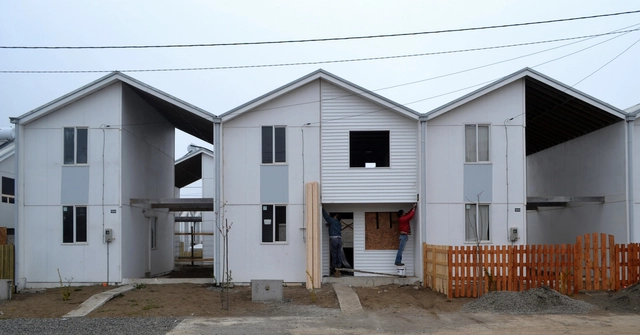
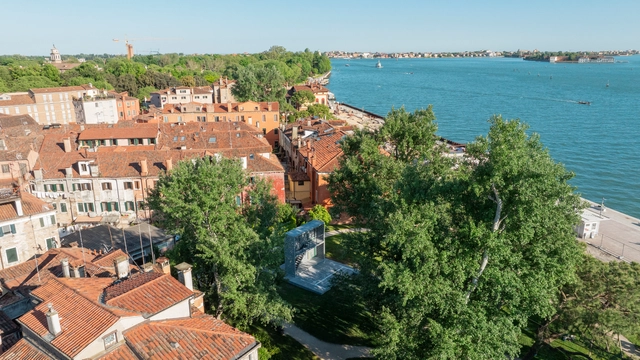
During the Time Space Existence exhibition, organized by the European Cultural Centre in Venice, Pritzker Prize-winning architect Alejandro Aravena and his firm ELEMENTAL unveiled a full-scale prototype for a new approach in incremental housing solutions. Titled the USB Core, standing for Basic Services Unit housing prototype, this proposal aims to demonstrate how efficient construction can provide all the essential housing components in a minimal space. The prototype is also the result of a collaboration between the architecture office and concrete manufacturer and researcher Holcim, and is built out of a newly developed type of net-zero concrete mix. It also incorporates fully recycled aggregates, in alignment with circular economy principles. The collaboration aims to demonstrate a more environmentally conscious yet cost-effective way of providing essential services to at-risk communities without harming the planet.

While on site in Venice, ArchDaily's managing editor Maria-Cristina Florian had the chance to sit down with Alejandro Aravena and discuss the implications of this collaboration, the urgent need for housing, and the role of the architect as the coordinator of a process involving many actors.

Between Housing Demand and Environmental Goals: Alejandro Aravena on Incremental Solutions and Net-Zero Concrete - More Images+ 29

What Are The Most Used Materials in Social Housing? 15 Diverse Applications and Construction Styles

Choice of building materials and the inherent continuous reflection about the reach and capabilities of architecture are an interesting alternative way to approach this issue. The materials used in social housing should address local and economic possibilities and the real needs for access to housing in the contemporary context.

In this article, we analyze different projects published on our site to identify some of the predominant materials used in social housing, both for the formation of structures or enclosures. The intentions of this are two-fold: firstly, to create a worldwide panorama of different case studies with different construction styles from a range of geographical locations, and secondly, to provide inspiration and tools to architects to make better social housing.

Below we present 15 social housing projects and their diverse materials and construction styles.

Alejandro Aravena Named as Chair of the Pritzker Architecture Prize Jury

The Pritzker Prize, architecture’s highest honor, has just announced the appointment of Alejandro Aravena as Chair of the Pritzker Architecture Prize Jury as of March 2021, in time for the award’s 43rd year. Moreover, the announcement also designated Manuela Lucá-Dazio, the Executive Director of the Department of Visual Arts and Architecture of La Biennale di Venezia, as an advisor to the Prize and the next Executive Director.

Alejandro Aravena: "The most basic and urgent need is like a template that eliminates the irrelevant"

Subscriber Access | 

Alejandro Aravena was in Florianópolis last week, invited by the 2019 NCD Summit to speak on Social Architecture. Founder of the "do tank" ELEMENTAL, the 2016 Pritzker Laureate gave an overview of his work, spanning diverse project typologies, while highlighting the processes that led to the adopted solutions. Before his lecture, Aravena spoke exclusively with ArchDaily Brasil. Read the interview below:

Spotlight: Alejandro Aravena

Subscriber Access | 
Spotlight: Alejandro Aravena - Image 1 of 4
Innovation Center UC - Anacleto Angelini. Image © Nico Saieh

As founder of the “Do Tank” firm ELEMENTAL, Chilean architect Alejandro Aravena (born on June 22, 1967) is perhaps the most socially-engaged architect to receive the Pritzker Prize. Far from the usual aesthetically driven approach, Aravena explains that “We don’t think of ourselves as artists. Architects like to build things that are unique. But if something is unique it can’t be repeated, so in terms of it serving many people in many places, the value is close to zero.” [1] For Aravena, the architect’s primary goal is to improve people's way of life by assessing both social needs and human desires, as well as political, economic and environmental issues.

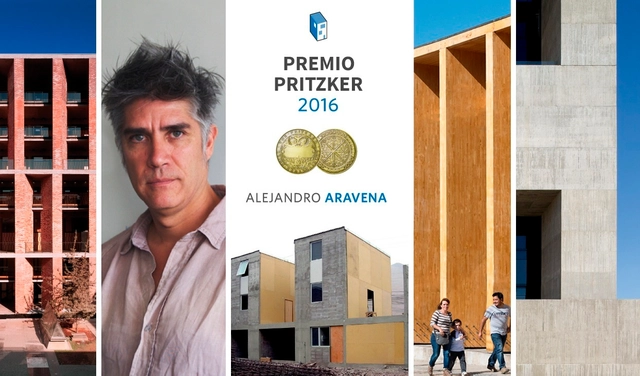
Alejandro Aravena Wins 2016 Pritzker Prize

Alejandro Aravena has been named as the winner of the 2016 Pritzker Prize. Highlighting his dedication to improve urban environments and to address the global housing crisis, the Pritzker Prize jury praised the way in which the Chilean architect has "risen to the demands of practicing architecture as an artful endeavor, as well as meeting today's social and economic challenges." Aravena is the 41st Pritzker Prize laureate and the first Chilean to receive the award.

At 48 years of age, Aravena has a large portfolio of private, public and educational projects in Chile, the USA, Mexico, China and Switzerland. But perhaps more notably, through his “Do Tank” firm ELEMENTAL he has managed to build 2,500 units of social housing, engaging in the public housing policies of governments where he works and taking an opportunistic approach to market forces to generate a powerful impact on lower-income communities.

"Alejandro Aravena epitomizes the revival of a more socially engaged architect, especially in his long-term commitment to tackling the global housing crisis and fighting for a better urban environment for all,” explained the Jury in their citation. “He has a deep understanding of both architecture and civil society, as is reflected in his writing, his activism and his designs. The role of the architect is now being challenged to serve greater social and humanitarian needs, and Alejandro Aravena has clearly, generously and fully responded to this challenge."

Alejandro Aravena Wins 2016 Pritzker Prize - More Images+ 18

Round-Up: 5 Striking Examples of Social Housing

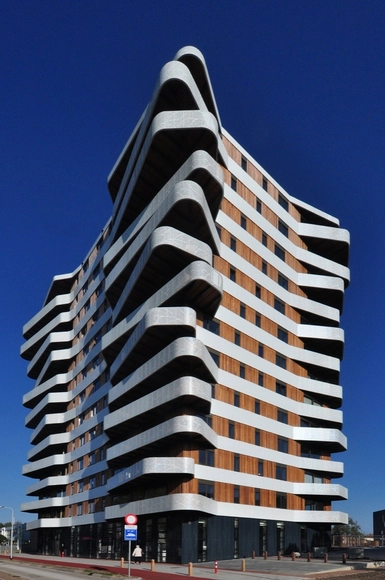
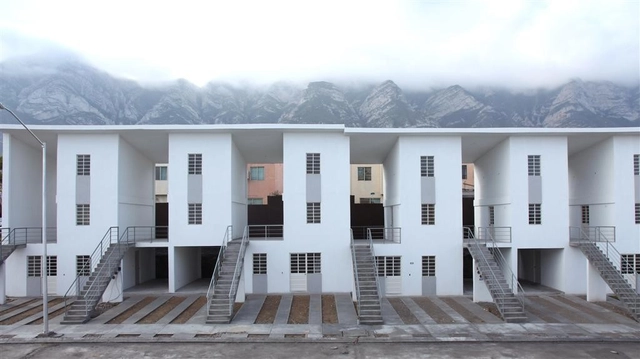
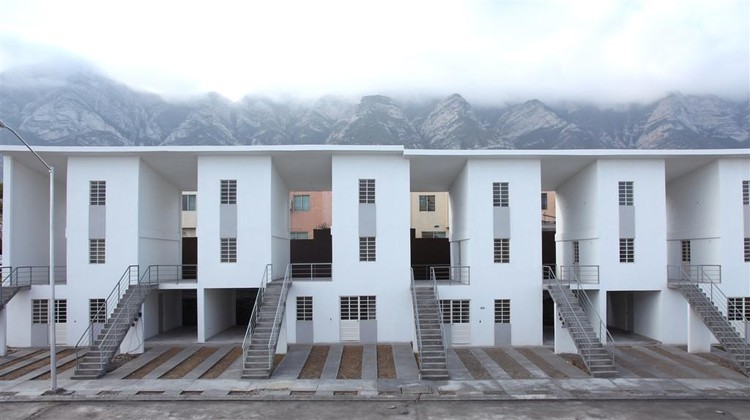
For many people, there is an unfortunate stigma attached to social housing. Fortunately, some countries have realized that one of the best ways to combat this stigma is through good design, leading to some striking and unusual social housing blocks in countries such as Spain, France, Slovenia and Belgium. This article on the blog Best MSW Programs has a list of the top 30 social housing blocks worldwide, but here on ArchDaily we've collected 5 of our favorites: Elemental's Monterrey Housing, the Tetris Apartments by OFIS Architekti, Savonnerie Heymans by MDW Architecture, 24H Architecture's Hatert Housing and KOZ Architectes' Tête en l’air. You can also see the top 30 list here.

Monterrey Housing / ELEMENTAL

Monterrey Housing / ELEMENTAL - More Images+ 39

Monterrey, Mexico