

-
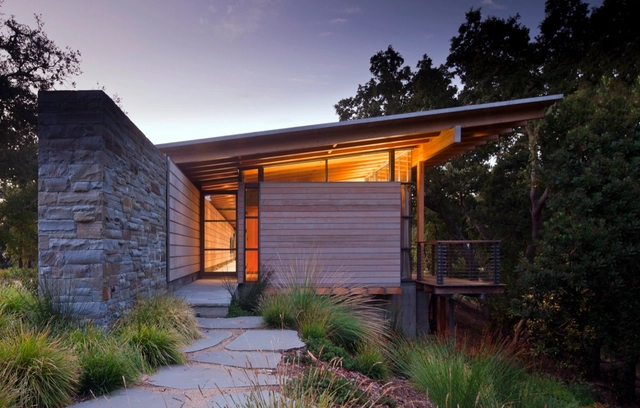
Architects: Bohlin Cywinski Jackson
- Area: 1500 ft²
- Year: 2009


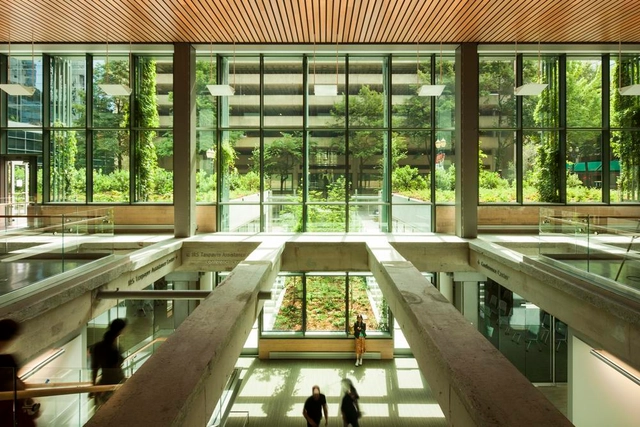
This article by Kira Gould was originally published by Metropolis Magazine as "The Case for COTE's Obsolescence."
Recently the American Institute of Architects Committee on the Environment published, for the first time, a comprehensive report about the winners from the debut year (1997) through 2015: “Lessons from the Leading Edge.” Its lead author, a current COTE advisory board member, Lance Hosey, set out to review two decades of Top Ten winners as a group to see how performance is changing over time, how the winners size up (scale, cost, type), and more.
The result is a compelling report. It reveals that these high-performing projects skew small. That performance gains and metrics, particularly real-time performance metrics, are improving each year. That the leading projects tend to be expensive. On average, they come in at $537 per square foot. “The cost data shows us that we need more compelling examples of lower-cost, higher performance projects,” Hosey says. Clearly, more exemplars at greater scale, type, and cost variation would be beneficial to both the profession and the market.

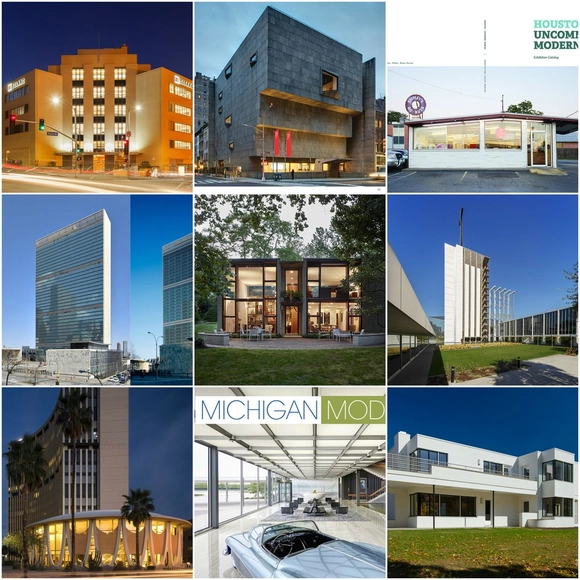
Docomomo US has announced the winners of its 2016 Modernism in America Awards, which honor projects around the country that highlight and advocate for the restoration of postwar architecture and landscapes.
The Modernism in America Awards is the only national program that celebrates "the people and projects working to preserve, restore and rehabilitate our modern heritage sensitively and productively. The program seeks to advance those preservation efforts; to increase appreciation for the period and to raise awareness of the on-going threats against modern architecture and design."
The 2016 Modernism in America Award winners are:
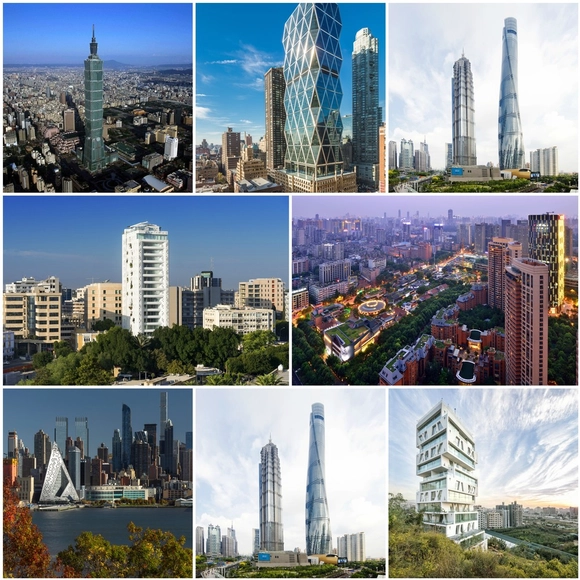
The Council on Tall Building and Urban Habitat have announced the winners of the 15th edition of the CTBUH Tall Building Awards. From over 100 submissions, the best buildings from four regions – the Americas, Asia & Australasia, Europe and Middle East & Africa – were selected, along with recipients of the Urban Habitat Award, the Innovation Award, the Performance Award and the 10 Year Award. The CTBUH will pick a global winner from the regional selections later this year.
The towers were chosen by a panel of architects from world-renowned firms and were judged on every aspect of performance, looking in particular for “those that have the greatest positive impact on the individuals who use these buildings and the cities they inhabit.”
Read on for the list of winners.


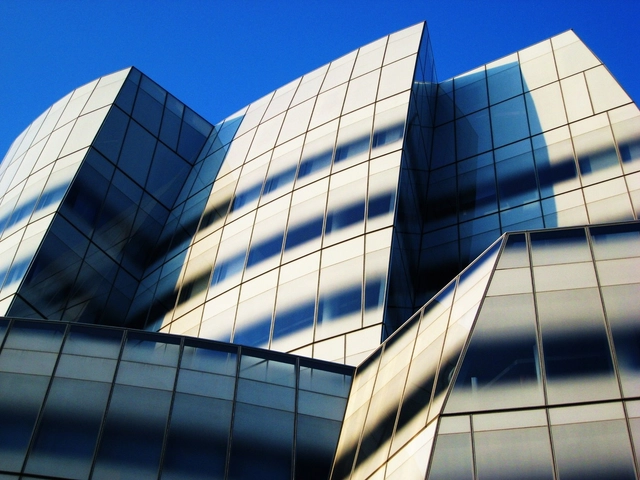
Discovered by archaeologists in civilizations as old as ancient Egypt and Mesopotamia, fritted glass is hardly a new technology. Yet thanks to its energy-saving abilities and the smooth, gradient aesthetic it produces, fritted glass has seen a rebirth in contemporary architecture.
Frit itself is a ceramic component that can be laid out into an assortment of patterns, most typically consisting of dots or lines. These patterns can then be silk-screened onto annealed glass using frit paint. Then, the glass is fired in a tempering furnace, which strengthens and improves the safety of the glass under thermal stress. The resulting product is glass of determined transparency that, when used in building facades, can reduce solar heat gain and even make buildings more visible and less deadly for birds.

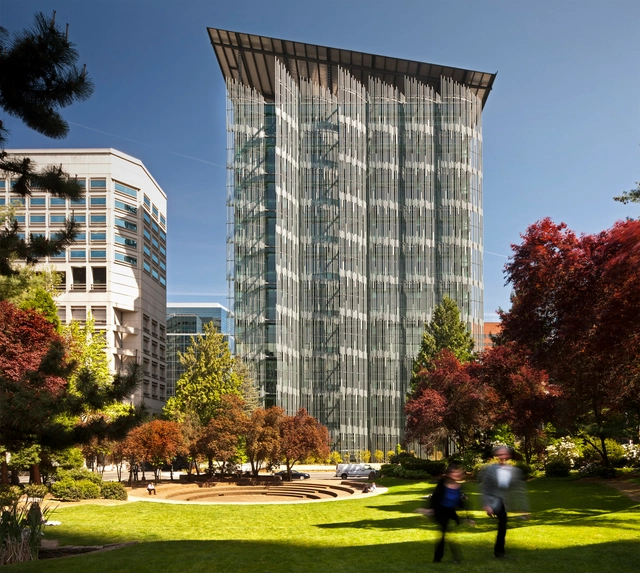
A set of reports by the AIA show an expected increase in spending on non-residential design for 2016 and 2017, as well as an emergence of more sustainable building technologies.
“Emerging technologies are becoming the dominant force in how buildings are being designed,” said AIA Chief Economist Kermit Baker, Hon. AIA, PhD. “Buildings in their own right are becoming far more energy efficient, and certain technologies are increasing both the efficiency of the people using the buildings and the project delivery methods in which buildings are being designed and constructed.”
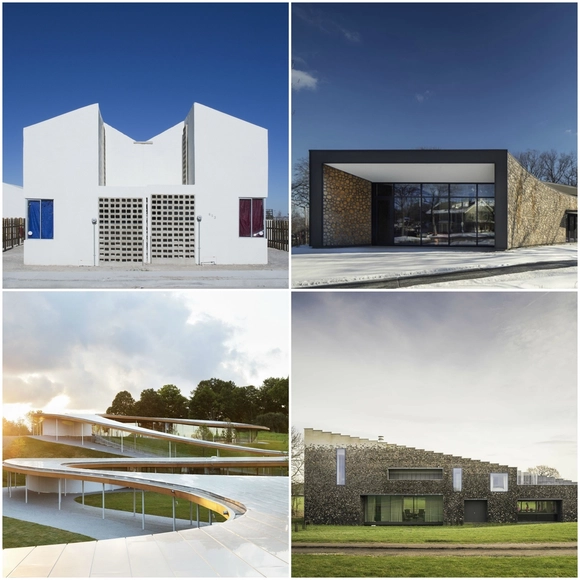
The Architectural Review (AR) has unveiled the candidates for its 2016 Woman Architect of the Year and the Moira Gemmill Prize for Emerging Architecture awards. Tatiana Bilbao, Jeanne Gang, Kazuyo Sejima and Charlotte Skene Catling are all being considered as the woman of the year for their impact and ability to inspire change within the profession.
Eleven women are being considered for the Moira Gemmill Prize for Emerging Architecture prize for their "use of innovative architecture to effect positive social change." Read on to see them all.

The Boston Society of Architects/AIA (BSA) has announced the winners of the 2015 BSA Design Awards. Awards were presented in eight categories for accomplishments in interior design, campus and urban panning, and unbuilt projects, among others.
The winners of the 2015 BSA Design Awards are:
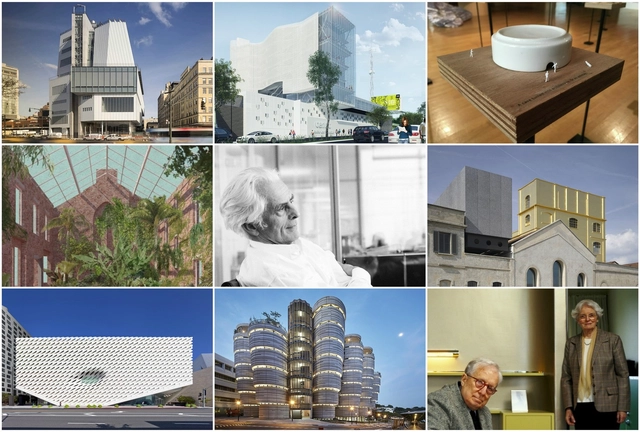
The past 12 months have given us plenty to talk about: 2015 saw the opening of several marquee new museums, and the field took an introspective turn with the “State of the Art of Architecture” at the Chicago Biennial. Now it’s December, and that means it’s time for many critics to look back at the triumphs and failures of the year past and make predictions for the year to come.
To add to our own list of the most inspiring leaders, projects and people from 2015, we found what some of our favorite critics had to say, including Oliver Wainwright of The Guardian, Mark Lamster and Alexandra Lange for Curbed, the Los Angeles Times’ Christopher Hawthorne, and Julie V Iovine for The Wall Street Journal. Continue reading for a selection of just some of the buildings and topics which the critics highlighted as having the greatest impact on the architecture world this year.

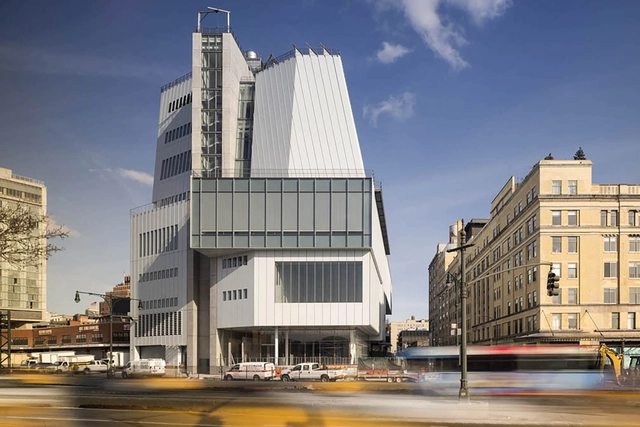
Throughout his career, Renzo Piano has designed dozens of museum buildings becoming the most prolific museum designer of our time. Yet, it has been some time since one of his designs has been as widely discussed and analyzed as his latest, the Whitney Museum in New York. In this interview, originally published on The Value of Architecture as "A House for Freedom: an Interview with Renzo Piano," David Plick speaks with Piano about the many inspirations of the Whitney Museum, from the previous Whitney Museum by Marcel Breuer to the neighboring High Line, the city on one side and the river on the other.
Renzo Piano is the great champion of public space. Whether the visitors and citizens of the city are aware of it or not, he improves their quality of life by sharing with them a living space designed specifically for the cultivation and dispersion of ideas and the enrichment of civic life. He’s the architect who cares about the individual’s experience of a building, who cares about how people interact with the space, and how the space then interacts with the world. At the Whitney Museum of American Art, much like the Centre Pompidou, or Beaubourg as he would say, he showed this by including a large area in front—a “piazza” he calls it—for people to meet, congregate, chat, and even loiter. He’s somehow simultaneously innovative and selfless. And because of this, he can masterfully fuse form and function, creating beauty for himself because he loves it and thinks it will save people, yet it all means nothing to him if he can’t share in this emotion with others.
Said to be the most long-awaited museum of the 21st century, the new Whitney Museum of American Art by Renzo Piano officially opened its doors in New York this May after a 30 year endeavor to expand its capacity. An unusual scenario, Charlie Rose sat down with Piano and the museum's director Adam Weinberg to discuss the "remarkable story" behind the expansion and how its design incorporates, what Piano believes to be, seven elements that represent the essence of architecture: social life, urbanity, invention, construction, technology, poetry and light.
We've provided a clip of the talk above. Watch the full 30-minute discussion, after the break.

When Renzo Piano’s addition to the Kimbell opened in late 2013, critical responses ranged from “both architects at the top of their games” (Witold Rybczynski) to “generous to a fault” (Mark Lamster) to “distant defacement” (Thomas de Monchaux). In this excerpt from a special issue of Cite: The Architecture + Design Review of Houston, Ronnie Self gives a deeply considered assessment of the two buildings after a full turn of the seasons. The special issue also includes a review by Christopher Hawthorne of Johnston Marklee's plans for the Menil Drawing Institute, a review by David Heymann of Steven Holl’s expansion of the Museum of Fine Arts, Houston, and an essay by Walter Hood and Carmen Taylor about Project Row Houses. Also featured are interviews of the directors of all four museums and their architects (Piano, Holl, Johnston Marklee, David Chipperfield, and Rice Building Workshop), making for a very comprehensive issue.
Piano’s main task was to respond appropriately to Kahn’s building which he achieved through alignments in plan and elevation and by dividing his project into two major bodies: a concrete walled, glass roofed pavilion facing Kahn and a separate, sod-roofed structure behind that should integrate a significant portion of the project with the landscape and thereby lessen its overall impact. Still, the loss of the open lawn that existed in front of the Kimbell where Piano’s building now stands is regrettable. Kahn’s Kimbell was conceived as a large house or a villa in a park, and unlike much of the abundant open and green space in the Fort Worth Cultural District, that park was actually used. Piano’s new outdoor space is more like a courtyard – more contained and more formal. It is more urban in its design, yet less public in its use.
Aside from lamenting the loss of the open lawn, how might we judge the addition?

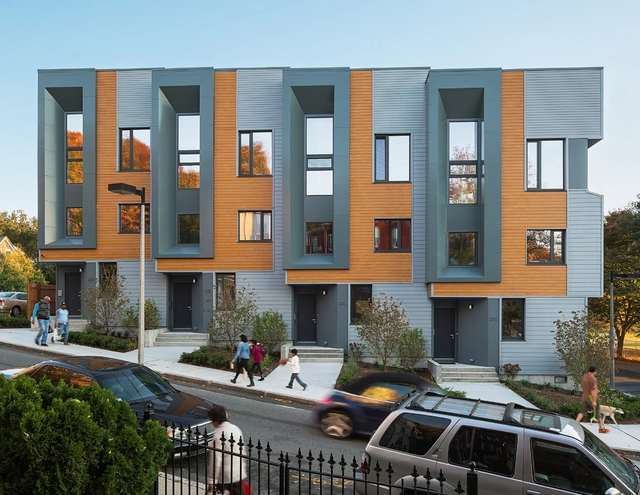
Ten projects have been named the top examples of sustainable and ecological design by the AIA and its Committee on the Environment (COTE) for the year 2015. Now in its 19th edition, the COTE Top Ten Awards program recognizes projects that adhere to the highest integration of natural systems and technology to produce spaces that positively impact their surroundings and minimize their environmental footprints.
All of the projects will be honored at the 2015 AIA National Convention and Design Exposition in Atlanta. See this year's top ten sustainable designs, after the break.




.jpg?1436268674&format=webp&width=230&height=230&crop=true)


