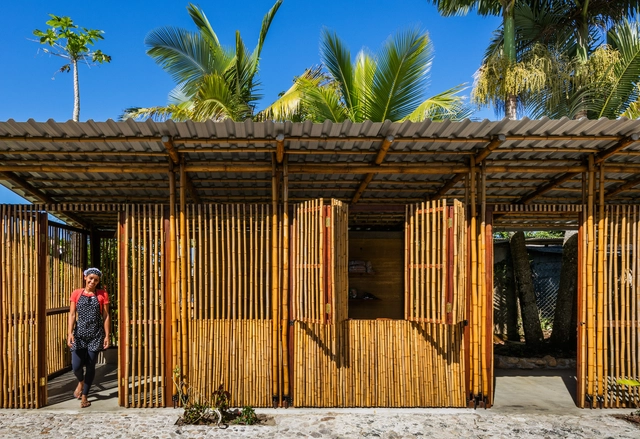
Accessibility is often approached as a field related to disability, whether physical or mental. When it comes to architectural design, it always comes up as a peripheral consideration of the project and not as something fundamental. However, there are other barriers.
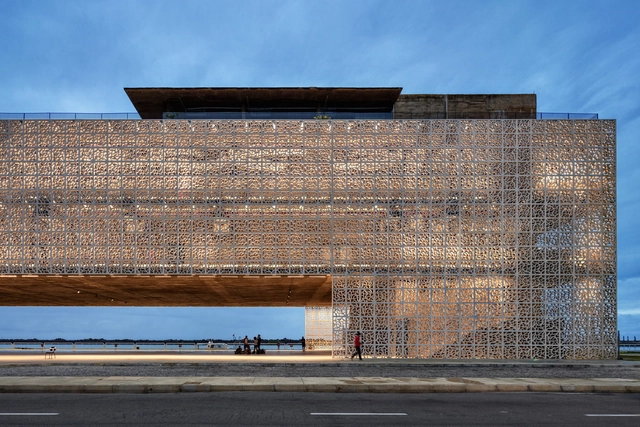
In this edition of Editor's Talk, editors from ArchDaily Brazil share their thoughts on what they understand as accessibility and whether it's possible to create a neutral architecture.
Manufacturers: Saint-Gobain, A&A A Elétrica e A Hidráulica, AM Lesec Comercial, Andrade Lopes construções, Aricanduva Esquadrias, +36Cobertura Plana, Comercial e manutenção de vidros, Construflama Lareiras e Churrasqueiras, Dl Sistemas, Duratex, EG Brasil, Edal Climatização, Edilson Ferreira dos Santos Osasco ME, G.O. – InsetCenter Controle de Vetores e Pragas, Gesso Fátima, Granitorre Fulget Industrial e Comercial, HI TECH, HRX Soluções inteligentes, Hi-Tech Piscinas, Hidrosistemas, Impermeabilização Primar, J.P. Ferreira construções e instalações Hidráulicas, LS Soluções, Lightworks, Lime Service Revestimentos e Tratamento de Pisos, Lopes Construção & reforma, MJ Engenharia Elétrica, Magic Mirros, Marcenaria e Design Pimentel, Masternox, Material Zanchet, Menezes Esquadrilha comercial, Metalferco ferragens e fechaduras, Micapel Mineraao Capao das pedras, Moichi Ono, Multitherm Aquecedores Eireli, Pass World comercial Eireli, Quick Limp, Sander Inox industria e comercio, Studio metais serralheria Eireli-EPP, Zeloart Esquadrias-36
European children spend approximately 200 days a year at primary school. Even though the academic year in most parts of the world is not as long as in Europe, the place where children and adolescents spend the most time, following their own homes, is usually in educational institutions. These can be places for learning, playing and socializing, and as sad as it may be, they can also be safer places for children living in environments of abandonment, hunger, and violence, providing them with opportunities and even meals. A United Kingdom-wide survey found that the differences in physical characteristics of classrooms accounted for 16% of the variations in learning progress over the course of a year. In other words, the better a classroom is designed, the better children perform academically. According to the study, the factors that most affect children are sunlight, indoor air quality, acoustic environment, temperature, the design of the classroom itself and the stimulation within it.
Arguably the leading name of a generation of internationally high-profile British architects, Norman Foster (born 1 June 1935)—or to give him his full title Norman Robert Foster, Baron Foster of Thames Bank of Reddish, OM, HonFREng—gained recognition as early as the 1970s as a key architect in the high-tech movement, which continues to have a profound impact on architecture as we know it today.
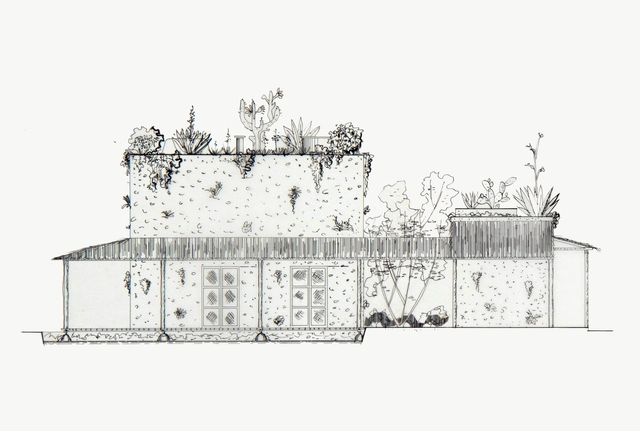
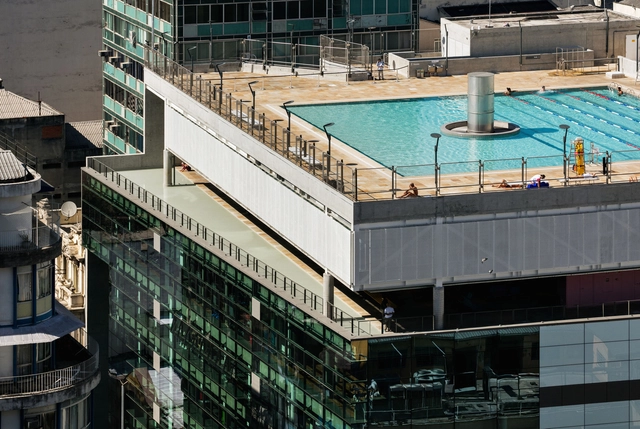
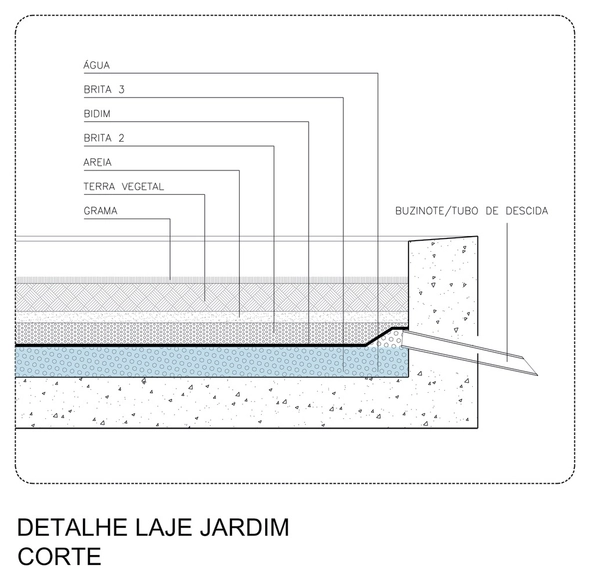
During the modern period, the buildings that used the traditional sloping roofs with tiles, draining the waters as quickly as possible, have begun to give way to the well-known 'waterproof flat roofs.' In spite of delivering a clean aesthetic to the project, allowing the use of the last slab as a space for living and contemplation, this solution can become a headache for its occupants if its execution and design are not careful. It is no accident that there have been infiltrations in famous modern buildings, such as the Vile Savoye or the Farnsworth House, designed by great masters of architecture. Currently, the civil construction industry has developed more sophisticated products and techniques that drastically reduce the chances of subsequent infiltration. However, we could say that waterproof flat slabs continue to be fragile points in buildings. The architects from Brasil Arquitetura have improved an inventive and very simple solution to avoid infiltrations in flat slabs, much used in the 70's by architects like Paulo Mendes da Rocha and Ruy Ohtake, filling them with vegetation.
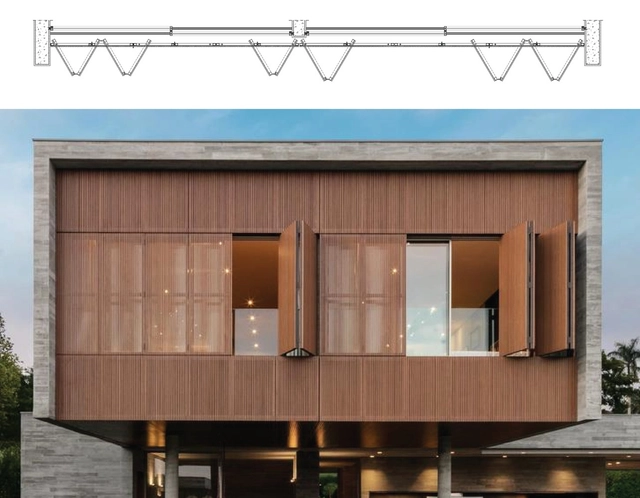
As ingenious solutions for environments that require additional space and ventilation, articulated or accordion doors and windows operate by folding their leafs one over the other and onto the sides of the opening. They moving via upper and lower rails which can be embedded into masonry and allow separation and integration rooms while adding aesthetic value to the project.
This system generates a similar effect to that of a sliding door or window, but it differs in that all its leafs remain in the same plane when they are closed, giving a clean appearance to the façade.
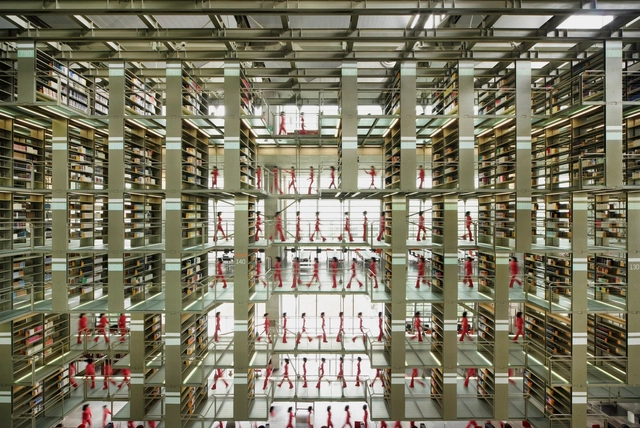
The purpose of architectural photography is to show a design in the best possible way, with the artform often characterized by perspective correction and atmospheric lighting. However, few architectural photographers have experimented with other artistic disciplines. Miguel de Guzmán, Paul Vu and Jules Couartou are among those who have challenged the limits of this form of photography, generating an interesting crossover between architecture photography, fashion and performances. In their images, the relationship between space and the user is shown through a scene designed to register an effect on the viewer. The results are images which are full of creativity.
Italian-born architect Lina Bo Bardi is one of the most important figures of Brazilian design. Her ability to blend architecture, politics and popular culture made her an icon throughout the country and world, while her relentlessness to break from traditionalisms made Brazil the ideal location for her work.
Bo Bardi's architecture incorporates both materiality and culture. In addition to the concrete and solidified elements, she designed pieces based on cultural factors and intense political discussions. She wished to break the barriers between intellectuals and everyday people.
Great school design is more than just a good piece of architecture. Particularly in vulnerable areas with poor public infrastructure, schools symbolize the role of the state and education as a transforming agent for social improvement. They can also become areas for community life, sports, courses, among other uses. Unfortunately, these projects do not always receive the attention they deserve.
Schools require diverse and complex programs and flows, therefore, developing an educational project is one of the greatest challenges for architects. Due to the economy, rationalization, and speed of work, Brazil's largest portion of school projects are designed from prefabricated concrete elements with rigid modulations and, in rare cases, steel. But what may seem to limit at first, can actually become an exercise in structural creativity.
In an attempt to elucidate the systems used to materialize these projects, we've selected a compilation of seven prefabricated schools in plan and section to create incredible spaces for learning.


_-_FOTOS_NELSON_KON_SESC_SP.jpg?1568227882&format=webp&width=640&height=580)
_-_FOTOS_NELSON_KON_SESC_SP.jpg?1568227015&format=webp&width=230&height=230&crop=true)
_-_FOTOS_NELSON_KON_SESC_SP.jpg?1568228193&format=webp&width=230&height=230&crop=true)
_-_FOTOS_NELSON_KON_SESC_SP.jpg?1568228058&format=webp&width=230&height=230&crop=true)
.jpg?1568227051&format=webp&width=230&height=230&crop=true)
_-_FOTOS_NELSON_KON_SESC_SP.jpg?1568227882)






.jpg?1560778703&format=webp&width=640&height=580)




.jpg?1553215628&format=webp&width=640&height=580)
.jpg?1553215767&format=webp&width=230&height=230&crop=true)
.jpg?1553216494&format=webp&width=230&height=230&crop=true)
.jpg?1553215825&format=webp&width=230&height=230&crop=true)
.jpg?1553216258&format=webp&width=230&height=230&crop=true)
.jpg?1553215628)