Maria Gonzalez

BROWSE ALL FROM THIS PHOTOGRAPHER HERE

A New Civic District for Concepción: Smiljan Radic's 'Boca Sur' Project

Subscriber Access | 

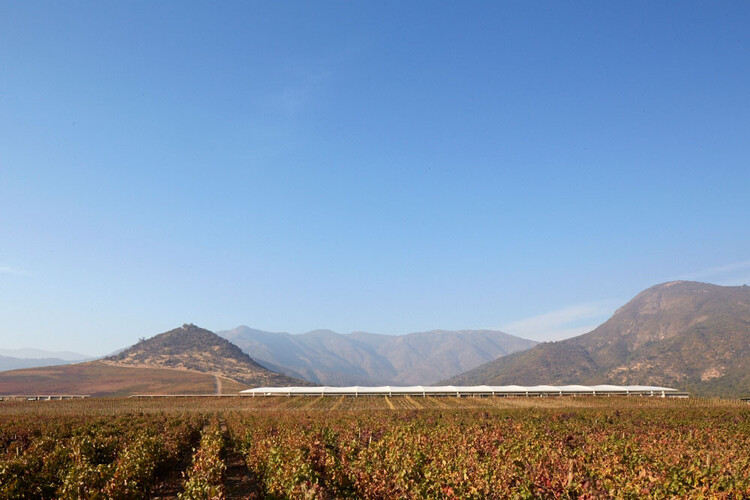
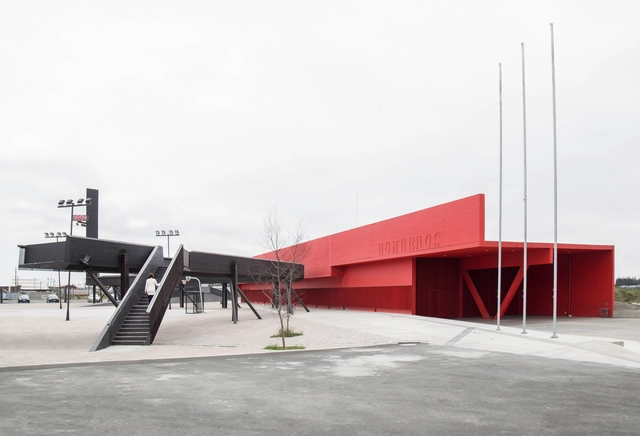
The Civic Center in Boca Sur, designed by Smiljan Radic, functions as a framework for public programs. It houses the Fourth Fire Station of San Pedro de la Paz, multipurpose rooms, a strip of small commercial shops, a library, a footbridge that serves as bleachers over the sports court, an alarm tower with a clock, sand pits, and trees, among other elements.

Framed within the *‘Quiero Mi Barrio’* (2008) community development program, the project sought to revitalize degraded and highly vulnerable areas, addressing the relationship between the immediate context and the activities occurring within it. To this end, the design process was informed by working sessions and an ongoing dialogue with the community.

A New Civic District for Concepción: Smiljan Radic's 'Boca Sur' Project - More Images+ 11

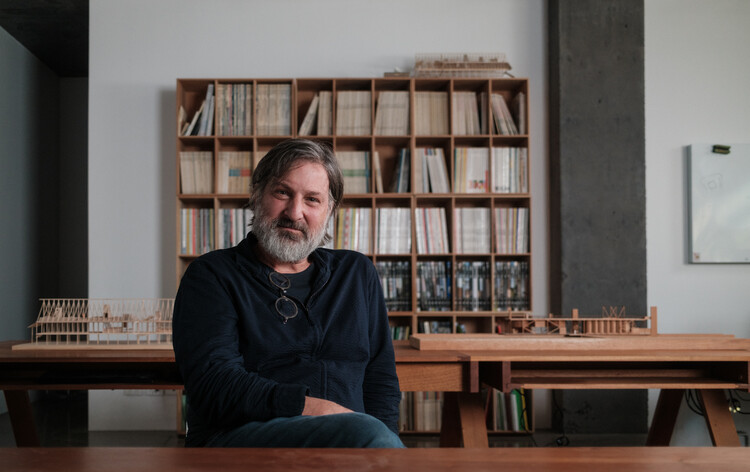
Eduardo Castillo: "I had the ambition to build alone, which is very complex"

Subscriber Access | 

The news spread quickly that Wednesday afternoon. Chilean architect Eduardo Castillo, a partner of Smiljan Radic, was in critical condition following a car accident earlier that day in Santiago. The local architectural community barely had time to react before his unexpected passing at the age of 45 was confirmed the following morning, Thursday, October 5, 2017.

The Votive Temple of Maipú, 200 Years After Its Cornerstone

Subscriber Access | 
The Votive Temple of Maipú, 200 Years After Its Cornerstone - 10 的图像 4
© Maria Gonzalez

This year marks the bicentennial of the Battle of Maipú, the decisive clash that secured Chile's independence. 1818 also marks the vow made by Chilean liberator Bernardo O'Higgins to erect a votive temple in honor of the Virgin of Carmen, Chile's patron saint, to whom local troops prayed for the victory that ultimately freed them from the Spanish Empire.

The narrative behind the theater designed by Smiljan Radic, Eduardo Castillo, and Gabriela Medrano for the Biobío Region

Ever since we announced the results of the competition for the “New Biobío Regional Theater,” an initiative led by the Regional Government and the Architecture Area of the Council of Culture and the Arts, we had been eagerly looking forward to seeing the winning proposal finally built.

This is how the 2018 Building of the Year Awards were experienced in Santiago, Chile

On Thursday, November 15, a new edition of the Obra del Año Awards took place—the competition that gathers votes from ArchDaily readers to determine the best architectural works built in Latin America over the past year.

Jaime Larraín and Osvaldo Larraín: The Facade as a Modern Urban Proposal in Chile

Subscriber Access | 
Jaime Larraín and Osvaldo Larraín: The Facade as a Modern Urban Proposal in Chile - Image 1 of 4
© Maria Gonzalez

The Chilean firm of Jaime Larraín and Osvaldo Larraín is notable—among many other things—for treating facades as a unified compositional element. The architects' work includes completed buildings in the cities of Viña del Mar and Santiago, which are distinguished by the unique plastic composition of their street fronts, as well as their contribution to the urban image of their respective settings.

Their projects explore the creation of rhythm, the use of color, and repetition as compositional principles, standing out for an urban design approach that—informed by these considerations—is most clearly expressed in their collective housing projects.  

AD Classics: Montecarlo II Building / Schapira Eskenazi Architects

Completed in 1962 by the architectural firm SEA (Schapira Eskenazi Arquitectos), the Montecarlo II building is part of a collective residential housing complex located on the block bounded by San Martín, Seis Norte, Siete Norte, and Cuatro Poniente streets in Viña del Mar.

At first glance, the project stands out both for the volumetric treatment of the buildings—arranged on the site to achieve a major urban-scale intervention—and for their distinctive facades.

The Delay of Meaning: On the Architecture of Smiljan Radić

Subscriber Access | 

Smiljan Radić's architecture often begins elsewhere: in a memory, a journey, a material, a stone, a half-seen structure, or a situation not yet organized as an architectural idea. In "Architecture: Distraction and Knowledge," his 2026 Pritzker Architecture Prize Laureate Lecture, distraction does not appear as a lack of focus, but as a way of receiving the world. It is through these peripheral encounters — travel, ruins, cities, stories, industries, and materials — that architectural knowledge slowly accumulates.

When Radić was announced as the 2026 Pritzker Architecture Prize laureate, the recognition did not simply confirm a body of work already known for its material strangeness. It also clarified an architectural position that has long resisted easy translation into theory, or style, or spectacle. Radić's work is often described through oppositions: heavy and light, primitive and industrial, fragile and monumental, shelter and object, ruin and apparition. Yet these terms only partially account for the force of his architecture. What makes the work difficult, and increasingly necessary, is its refusal to become fully legible as a claim of certainty.

The Delay of Meaning: On the Architecture of Smiljan Radić - More Images+ 24

Copenhagen Architecture City Guide: 44 Projects Defining the Capital of Human-Scale Design

Subscriber Access | 

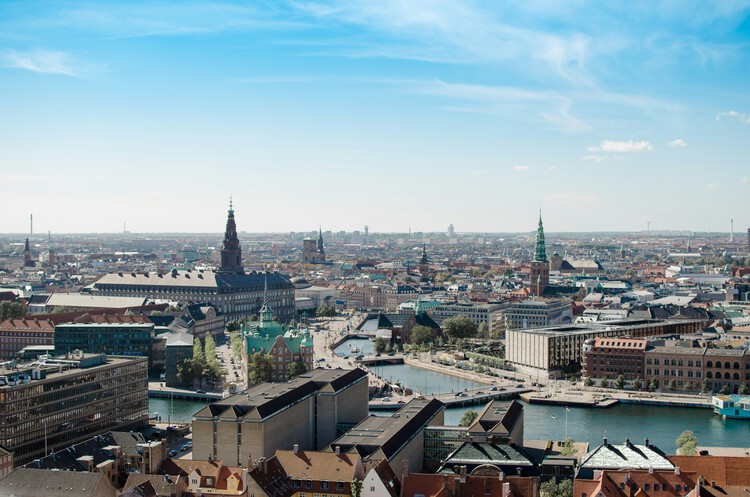
Copenhagen is long famous as the global capital of human-scale design and livability. Today, the city has widened its focus and is an active space where mid-century Scandinavian modernism meets the modern demands of climate adaptability, material circularity, radical conservation, and neighborhood density. During the first-ever Copenhagen Architecture Biennial, in 2025, the city transformed into a global platform for dialogue under the theme "Slow Down," exploring how architecture can respond to global pressures by rethinking the pace of change. And this year's 13th edition of the 3daysofdesign Festival will explore the theme of "Make This Moment Matter", encouraging the global design community to step away from digital noise and mass production to focus on the present.
Copenhagen Architecture City Guide: 44 Projects Defining the Capital of Human-Scale Design - More Images+ 43

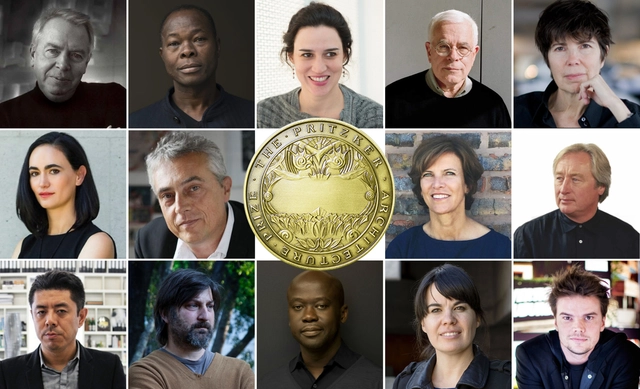
Smiljan Radić to Lead 2026 Pritzker Laureate Lecture and Panel on “Architecture: Distraction and Knowledge”

Audio available

On March 12, the Chilean architect of Croatian descent, Smiljan Radić Clarke, was awarded the 2026 Pritzker Architecture Prize. The jury highlighted his "unorthodox approach to design," which "may initially appear unusual, unexpected, even rebellious; yet, far from producing alienation or estrangement, his anti-canonical stance feels fresh and unprecedented. It conveys the unmistakable sensation of encountering something new." This recognition will be celebrated with the annual Pritzker Architecture Prize Laureate Lecture and Panel Discussion, to be held in Mexico City at the Universidad Nacional Autónoma de México (UNAM), at the Faculty of Architecture's Teatro Estefanía Chávez, on May 12, 2026.

Smiljan Radić to Lead 2026 Pritzker Laureate Lecture and Panel on “Architecture: Distraction and Knowledge” - More Images

No Solid Ground: Three Approaches to Building Below Sea Level in Rotterdam

Audio available

Architects carefully calibrate their relationship to the earth, adjusting foundations to soil, groundwater, climate, risk, and culture. Driven timber piles, rammed-earth platforms, and poured concrete slabs are each a response to a specific set of ground conditions, and each shapes the architecture that rises from it. The way a building meets the earth determines its durability and its limits because foundations are among the most consequential design choices an architect makes.

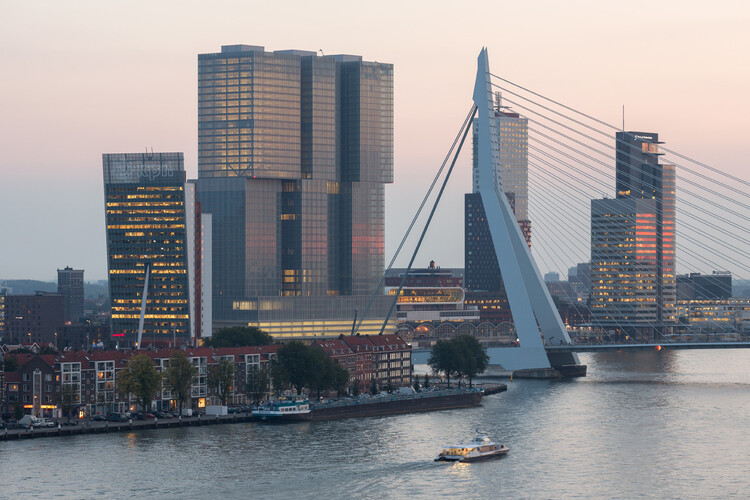
The city of Rotterdam sits approximately one meter below sea level, an organizing condition that shapes daily life in the Netherlands' second-largest city and is a growing preoccupation amid unstable coastal conditions. The city occupies the delta of the Rhine and Maas rivers, a landscape that was never naturally dry but has been kept functional through centuries of hydraulic intervention. The water boards in this region are among the oldest democratic institutions in the world, created in the thirteenth century to manage shared water drainage and still operating today as elected bodies with technical capacity. As sea levels rise and rainfall across Northern Europe grows less predictable and more extreme, Rotterdam faces a significantly increased risk of coastal storm surges and urban flooding driven by overwhelmed drainage infrastructure.
No Solid Ground: Three Approaches to Building Below Sea Level in Rotterdam - More Images+ 65

Hilversum Town Hall: Willem Dudok’s Monument to Civic Architecture

Subscriber Access | 

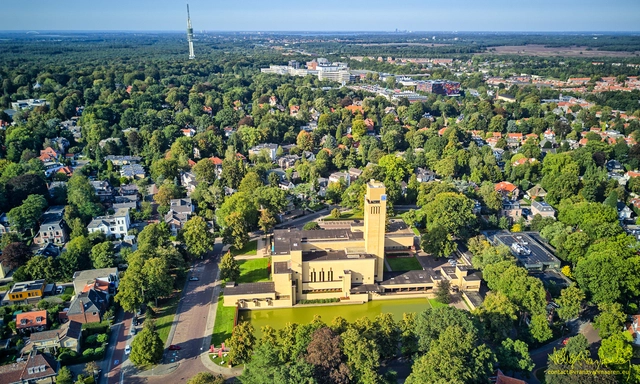
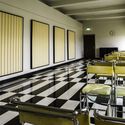
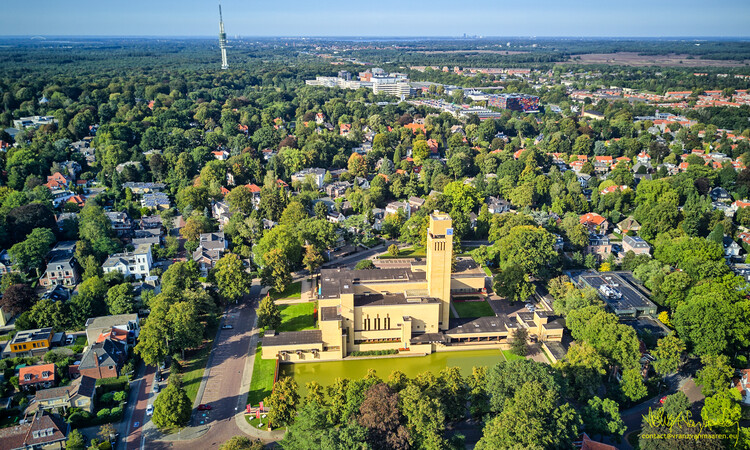
In the Dutch city of Hilversum, a municipal building completed in 1931 redefined the very idea of what a town hall could be. More than a house for local administration, the Hilversum Town Hall became the architectural expression of a community in transformation. With its tower rising above reflective ponds, its brick masses composed around courtyards, and its carefully detailed interiors, the building asserted that civic architecture could unite function with symbolism, efficiency with ceremony.

The architect behind this vision, Willem Marinus Dudok, was not only responsible for individual buildings but for the broader shaping of Hilversum itself. As a city architect and planner, he designed schools, housing districts, and parks, developing a language that fused Dutch craftsmanship with Modernist clarity. The town hall represented the culmination of this trajectory: a civic centerpiece where urban ambition, material refinement, and human scale converged in a single, coherent form.

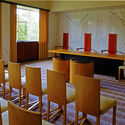
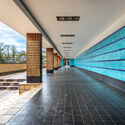
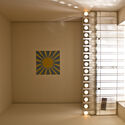
Hilversum Town Hall: Willem Dudok’s Monument to Civic Architecture - 1 的图像 4Hilversum Town Hall: Willem Dudok’s Monument to Civic Architecture - 2 的图像 4Hilversum Town Hall: Willem Dudok’s Monument to Civic Architecture - 3 的图像 4Hilversum Town Hall: Willem Dudok’s Monument to Civic Architecture - 4 的图像 4Hilversum Town Hall: Willem Dudok’s Monument to Civic Architecture - More Images+ 24

Major Lessons of Contemporary School Design: 37 Learning Spaces from Around the World

Subscriber Access | 

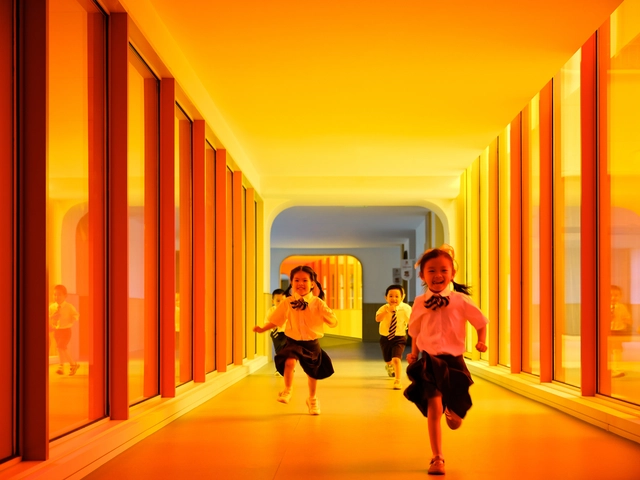
The role of a school is to prepare children for life. But with life-changing faster than ever, schools need to change just as quickly. Recent additions to school curriculums reflect the complexities of modern life, with environmental crises, societal injustices, and the dangers of social media now major parts of the syllabus.

Although it’s often said that long-term change begins at ground-level, change is never easy, wherever it starts. For example, a curriculum that responds to environmental issues is said to cause growing instances of eco-anxiety in children, one of a number of causes of another crisis, in children’s mental health.

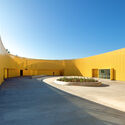
Major Lessons of Contemporary School Design: 37 Learning Spaces from Around the World - More Images+ 33

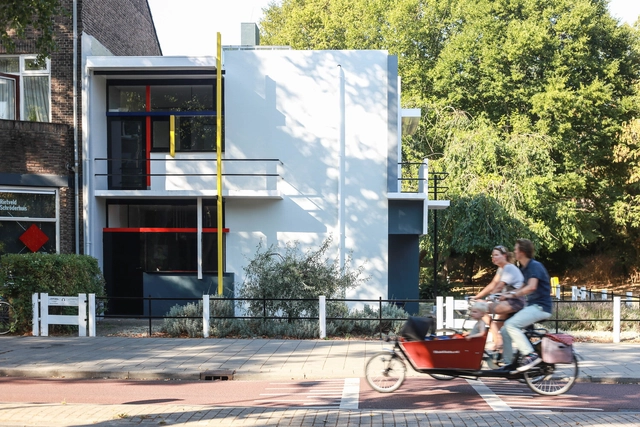
The Myth of Pure White Architecture: How Architects of Modernity Used Color

Given that the architects of modernity were in search of purity of form, it stands to reason that the image of this modern architecture is almost inevitably rendered in white in the collective imagination. Relieved of superfluous decorations, modern architecture became associated with the predominant use of white surfaces to highlight the volumetric composition. Combined with the concept of “material truth” first articulated by Victorian critic John Ruskin, white-colored architecture is often understood as straightforward, clear, and sincere.

The Myth of Pure White Architecture: How Architects of Modernity Used Color - More Images+ 9

ArchDaily’s Readers Select Who Should Win the 2022 Pritzker Prize

As part of our yearly tradition, we have asked our readers who should win the 2022 Pritzker Prize, the most important award in the field of architecture.

Amsterdam City Guide: 25 Places to See in the Capital of The Netherlands

Amsterdam is one of the most beautiful cities in Europe. Its origins lie in the 12th century when fishermen living along the banks of the River Amstel built a bridge across the waterway near the IJ, then a large saltwater inlet. Most of the city’s territory is below sea level and therefore it lies on land that has been reclaimed from the water.

Amsterdam is all about practical urban planning, amazing cycling infrastructure, tulip-lined canal bridges, and old merchant houses that tilt at impossible angles. I visited Amsterdam again last year and discovered some new places.

Amsterdam City Guide: 25 Places to See in the Capital of The Netherlands - More Images+ 44

World Photography Day: 25 Emerging Architectural Photographers from Around the Globe

Subscriber Access | 

Architectural photography has developed into its own art form, and it might be as important as the built work itself. We consume architecture not only physically and spatially in a building but also through photographs. A good image reportage work can give the viewer a feeling of the atmosphere, senses, and design intentions the project may spark, without actually being in the place. Photography is also a way of documenting the project's process, the use of materials, lighting, and architectural elements, and as a result, tell a complete story behind a building.

To celebrate World Photography Day, we've gathered a list of 25 architectural photographers from around the world who are worth knowing - and following on Instagram. These emerging photographers have been selected for their ability to capture architecture each in their own unique ways. Get to know them!

World Photography Day: 25 Emerging Architectural Photographers from Around the Globe - More Images+ 21

Architecture Classics: Unidad Vecinal Providencia / Carlos Barella Iriarte + Isaac Eskenazi Tchimino

Architecture Classics: Unidad Vecinal Providencia / Carlos Barella Iriarte + Isaac Eskenazi Tchimino - Image 9 of 5
© María González

The Unidad Vecinal Providencia (Providencia Neighborhood Unit) is one of the many residential complexes generated in Chile as a result of a housing and urban development public policy promoted through the CORVI (Housing Corporation) between 1953 and 1973.

Commissioned by the Caja de Empleados Particulares (Private Employees Fund) to be built on a site where previously the National Children's House was based, the Unidad Vecinal Providencia was designed as a complex capable of becoming an urban piece, promoting spatial integration and social cohesion in Santiago.

Architecture Classics: Unidad Vecinal Providencia / Carlos Barella Iriarte + Isaac Eskenazi Tchimino - More Images+ 8