Jack Hobhouse

BROWSE ALL FROM THIS PHOTOGRAPHER HERE

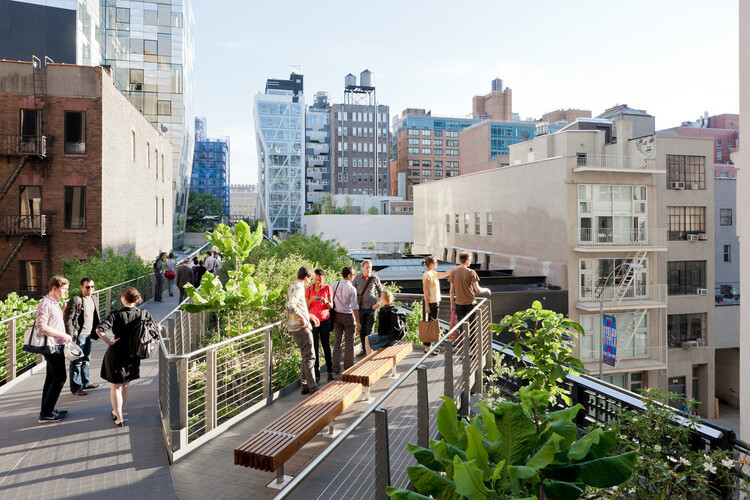
Health, Habitat, and Civic Infrastructure: Designing the City as a National Park

Subscriber Access | 

Cities around the world share a common goal: to become healthier and greener, supported by civic infrastructure that restores ecosystems and strengthens public life. The question is how to reach this. Global climate targets, local building codes, and municipal standards increasingly guide designers and planners toward better choices. Still, many cities struggle to translate these frameworks into everyday, street-level comfort and long-term ecological protection. What happens if the city is no longer treated as a traditional city, but as a national park?

National parks operate through systems of protection that treat land as a network of ecological relationships rather than a collection of isolated sites. They establish a shared baseline for what must be preserved, maintained, and made accessible over time. When this logic is applied to the urban environment, success can inspire pride and a sense of shared responsibility among designers, policymakers, and residents, fostering a collective commitment to health, habitat, and civic infrastructure.

Health, Habitat, and Civic Infrastructure: Designing the City as a National Park - More Images+ 13

Rewriting Modernism Through Materials

Subscriber Access | 

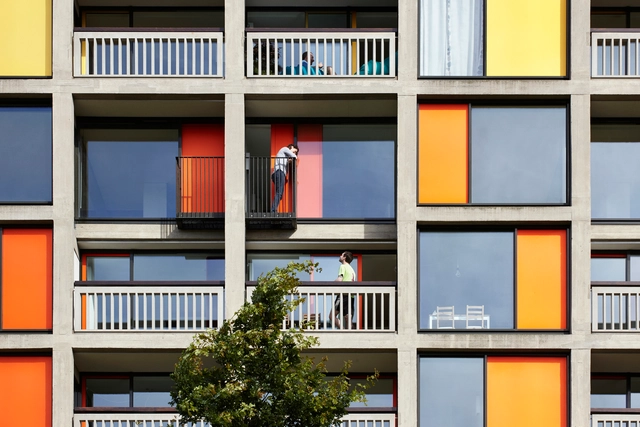
Park Hill, a large social housing complex in Sheffield, stands out as one of the most ambitious examples of modernist architecture in post-war Britain. Designed in 1961 by Jack Lynn and Ivor Smith, its innovative concept of "streets in the sky" aimed to combine high-density housing with the community spirit of traditional neighborhoods. By the late 20th century, the complex had fallen into severe neglect, marked by social problems and structural degradation that undermined both its functionality and reputation. Gradually, Park Hill became synonymous with the failure of modernism, carrying a heavy social stigma and marginalizing its residents.

Starting in the 2000s, significant efforts began to reverse this narrative through a two-phase revitalization process. The first phase, led by Urban Splash in collaboration with the architectural firms Hawkins\Brown and Studio Egret West, focused on preserving and enhancing the building's historical elements while introducing modern interventions to create a livable, functional, and attractive space. This stage demonstrated the potential of adaptive reuse in revitalizing communities and reclaiming architectural icons. The second phase of the renovation, carried out by the firm Mikhail Riches, sought to build on this initial work by introducing new elements that deepened the connection between the existing spaces and contemporary living. With an approach that combined historical sensitivity and architectural innovation, Mikhail Riches continued the process of transforming Park Hill into a landmark example of how modernist architecture can be adapted to meet current needs without losing its original identity.

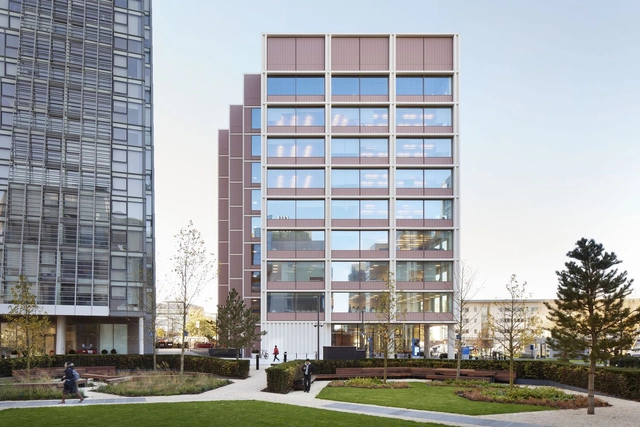
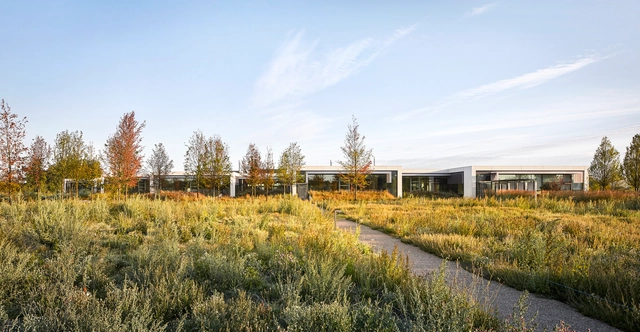
Brooklands Workplace Campus / Allies and Morrison

Brooklands Workplace Campus / Allies and Morrison - More Images+ 18

Cities Need Care, Not Perfection: Rethinking How We Build the Urban Future

Subscriber Access | 

What does optimism feel like in cities that can no longer rely on perfection as their ultimate ambition? Across the world, urban environments bear the weight of overlapping pressures: climate volatility, spatial inequality, political fragmentation, public distrust, and chronic infrastructural disinvestment. These realities render the idea of an ideal city increasingly detached from lived experience. Yet the hope for building better systems persists. While utopian visions may seem like an escape from the growing complexities of the modern world, the greater challenge for contemporary city-making is to confront those complexities rather than avoid them.

Cities Need Care, Not Perfection: Rethinking How We Build the Urban Future - More Images+ 16

The Oren Retirement Development / Stanton Williams

The Oren Retirement Development  / Stanton Williams - More Images+ 32

  • Architects: Stanton Williams
  • Area Area of this architecture project Area:  12900
  • Year Completion year of this architecture project Year:  2024
  • Manufacturers Brands with products used in this architecture project
    Manufacturers:  Cosentino, Hansgrohe, Allgood, Aspex, Bauder, +7

Internal Acoustics: Effective Noise Mitigation Techniques in Architecture

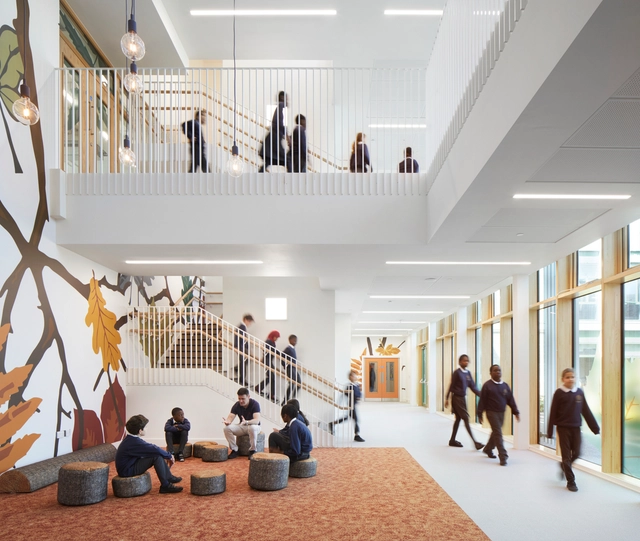
The internal environment is the focus of this second article about designing for noise to improve well-being. According to several recent studies, noise in cities has become an increasing hazard to health. Environmental noise, that is, noise from traffic, industrial activities, or amplified music, which reaches internal spaces, is not merely an annoyance. It has been linked to cardiovascular disease, diabetes, dementia, and mental health issues. As the world urbanizes, more people are exposed to excessive levels of noise. In medium- and high-density housing, in office buildings, and in schools, noise pollution can emanate from internal as well as external sources.

Internal Acoustics: Effective Noise Mitigation Techniques in Architecture - Image 1 of 4Internal Acoustics: Effective Noise Mitigation Techniques in Architecture - Image 2 of 4Internal Acoustics: Effective Noise Mitigation Techniques in Architecture - Image 3 of 4Internal Acoustics: Effective Noise Mitigation Techniques in Architecture - Image 4 of 4Internal Acoustics: Effective Noise Mitigation Techniques in Architecture - More Images+ 11

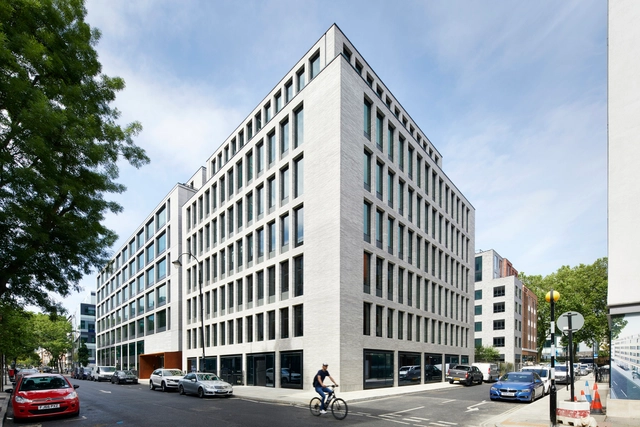
School of Public Health / Allies and Morrison

School of Public Health / Allies and Morrison - More Images+ 5

  • Area Area of this architecture project Area:  7940
  • Manufacturers Brands with products used in this architecture project
    Manufacturers:  Addingtons Formwork, BPC, Environmental Fabrications, FP McCann, Flood Precast, +4

80 Charlotte Street / Make Architects

80 Charlotte Street / Make Architects - More Images+ 51

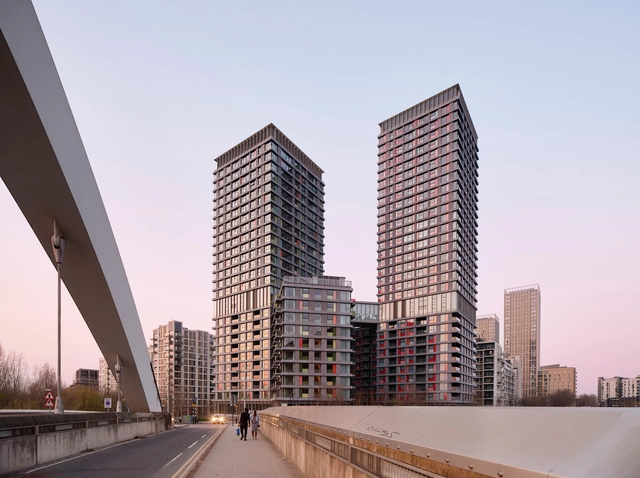
Portlands Place East Village / Hawkins\Brown

Portlands Place East Village  / Hawkins\Brown - More Images+ 22

68-86 Farringdon Road Building / Sheppard Robson

68-86 Farringdon Road Building / Sheppard Robson - More Images+ 16

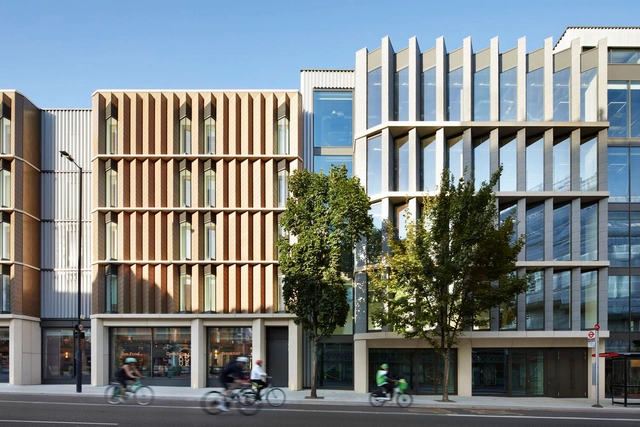
The Technology Partnership (TTP) / Sheppard Robson

The Technology Partnership (TTP) / Sheppard Robson - More Images+ 25

  • Architects: Sheppard Robson
  • Area Area of this architecture project Area:  10300
  • Year Completion year of this architecture project Year:  2023
  • Manufacturers Brands with products used in this architecture project
    Manufacturers:  Interface, Barrisol, Isomi, Kvadrat, Lindner, +4
  • Professionals: IDSR, Gleeds

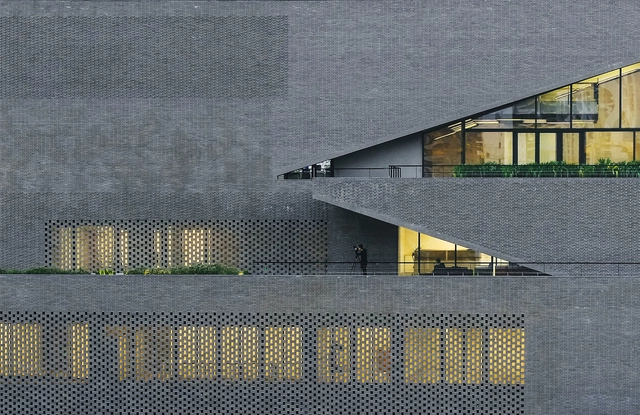
Beyond Red: Architecture With Gray and Black Bricks

Subscriber Access | 

Pink Floyd's song “Another brick in the wall” criticizes an alienating and demotivating educational system. People, or children, are portrayed as bricks due to their homogeneity, whether in the way of living or thinking in a society that is not very fond of opposition. Bricks work very well in this comparison, having changed very little throughout history and around the world in their rectangular shapes. But that's not true of their colors. Although we tend to think of red when we talk about bricks, there are infinite possibilities of shades, depending on the composition and manufacturing process of the pieces.

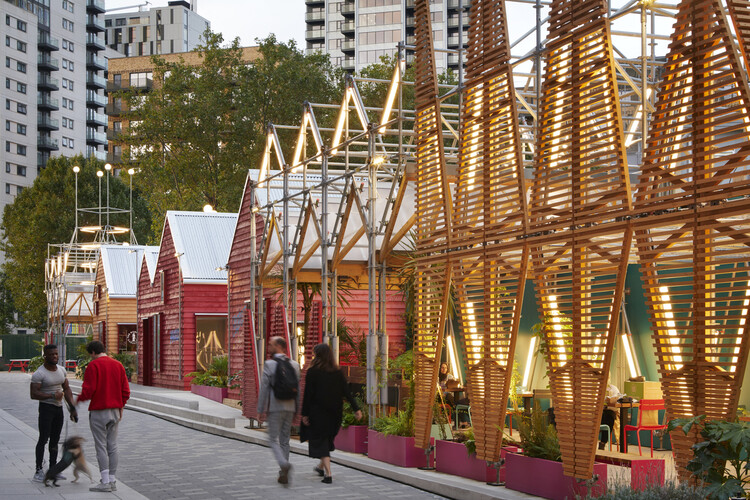
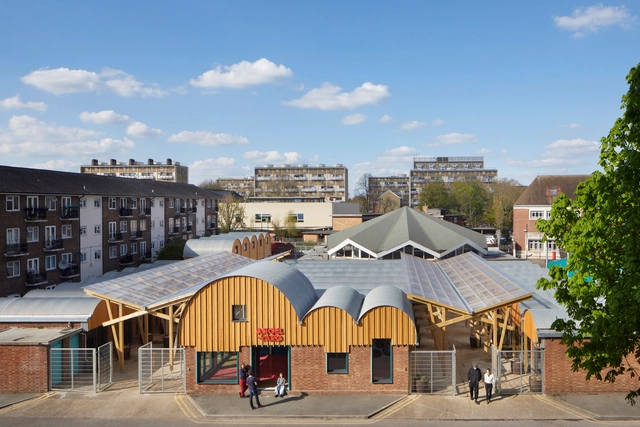
Angel Yard / Jan Kattein Architects

Angel Yard  / Jan Kattein Architects - More Images+ 18

Hoola London / CZWG Architects

Hoola London / CZWG Architects - More Images+ 4

24 Indoor Pools: Bringing the Tranquility of Water to Interior Spaces

Subscriber Access | 

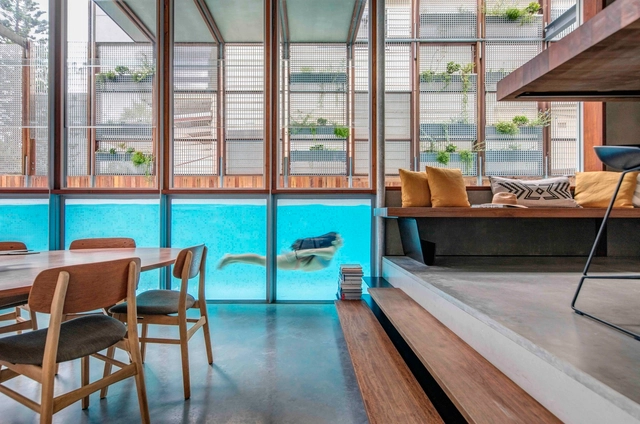
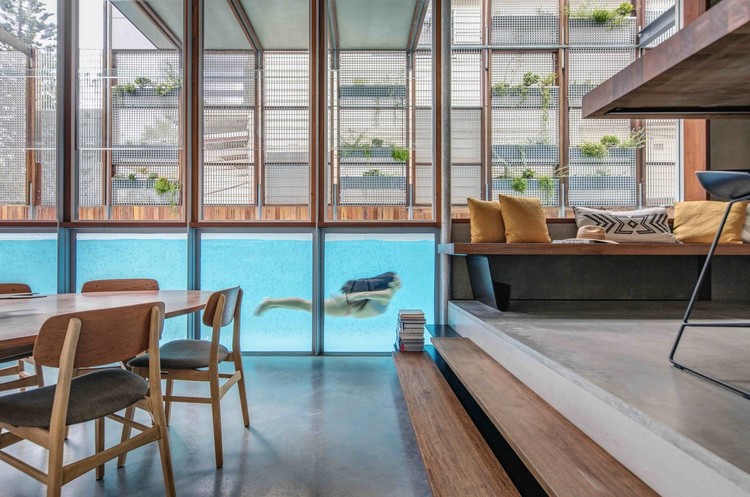
Within architecture, water evokes sentiments of calmness and wellbeing. The element has influenced design through its dynamic and fluid nature. With recent technological advances, architects have created some of the most strategic, innovative, and unexpected intersections of design and H2O.

Below, we have provided a roundup of indoor pools that highlight the application of water in different spaces, showing its relationship to materiality and use.

24 Indoor Pools: Bringing the Tranquility of Water to Interior Spaces - More Images+ 25

Taming Exterior Greenery: Landscape Design for Houses in Natural Environments

A healthy environment that is also visually appealing in our homes has become increasingly sought when it comes to designing houses and residential spaces, especially during the world’s current context. One of the most successful ways of achieving this is through a thoughtful design of the landscape that complements the built project. The art of landscaping is the arrangement of nature’s raw material elements, like vegetation and planting, combined with nonliving elements, such as exterior structures, paving, and decking, in order to create site-specific solutions that enhance the exterior spaces of a project.  

Taming Exterior Greenery: Landscape Design for Houses in Natural Environments - More Images+ 29

The JJ Mack Building / Lifschutz Davidson Sandilands

The JJ Mack Building / Lifschutz Davidson Sandilands - More Images+ 26

The Featherstone Building / Morris+Company

The Featherstone Building / Morris+Company  - More Images+ 27