The Architectural Review has announced the final winners in its 2016 Women in Architecture awards, awarding Mexican architect Gabriela Etchegaray with the Moira Gemmill Prize for Emerging Architecture, and Jeanne Gang with the Architect of the Year award. In honoring Gang and Etchegaray, the AR noted that both "have demonstrated excellence in design and a commitment to working both sustainably and democratically with local communities." The pair join other Women in Architecture Award winners Odile Decq and Julia Peyton-Jones, who last week received the 2016 Jane Drew Prize and Ada Louise Huxtable Prize, respectively. Read on for more about the awards.
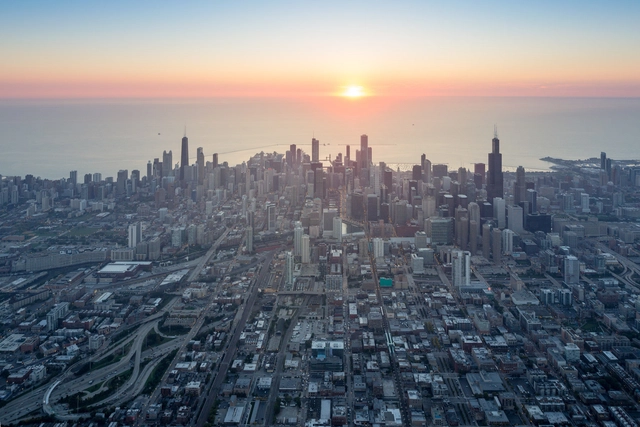
For a number of years now, Smart Cities and Big Data have been heralded as the future of urban design, taking advantage of our connected, technological world to make informed decisions on urban design and policy. But how can we make sure that we're collecting the best data? In this story, originally published on Autodesk's Redshift publication as "'Array' of Possibilities: Chicago’s New Wireless Sensor Networks to Create an Urban Internet of Things," Matt Alderton looks at a new initiative in Chicago to collect and publish data in a more comprehensive way than ever before.
If it hasn’t already, your daily routine will soon undergo a massive makeover.
For starters, when your alarm clock goes off, it will tell your coffeemaker to start brewing your morning joe. Then, when you’re on the way to work, your car will detect heavy traffic and send a text message to your boss, letting her know you’ll be late. When you arrive, you’ll print out the agenda for today’s staff meeting, at which point your printer will check how much ink it has left and automatically order its own replacement cartridges.
At lunch, you’ll think about dinner and use your smartphone to start the roast that’s waiting in your slow cooker at home. And when you come home a few hours later, your house will know you’re near, automatically turning on the lights, the heat, and the TV—channel changed to the evening news—prior to your arrival. It will be marvelous, and you’ll owe it all to the Internet of Things (IoT).
Unlike most American cities, which spent the 20th century radiating out into suburbia, Los Angeles befuddles outsiders because it doesn’t really have a definite center. The phrase “LA” is loosely used to refer to a collection of small yet distinct cities across the Los Angeles basin that grew together over time. Traditionally, a handful of these localities have been the cultural centers and tourist destinations (Hollywood, Santa Monica, Beverly Hills, Silverlake, etc). While these districts thrived, “downtown” sat largely neglected; its financial towers and retail spaces had severe occupancy issues for much of the 90’s and 2000’s. Ten years ago, downtown street life outside of working hours was virtually nonexistent.
That fate was largely the result of poor urban planning. The tragic destruction of the vibrant Bunker Hill residential neighborhood in the 1960’s created a series of vacant freeway-flanked “superblocks” intended for ugly, efficient modernist towers - many of which never reached fruition. To this day, the area is still plagued with empty lots. Developers and architects have considered downtown as a risky return on investment ever since.
DTLA wasn’t just the butt end of jokes (Family Guy: “There’s nothing to do downtown!”) it was treated with disdain. Even Frank Gehry said on record that he wished the Walt Disney Concert Hall had been constructed 12 miles away in Westwood (near UCLA). He went on to add that he felt the current attempted revitalization of downtown was: “both anachronistic and premature.” Ouch.
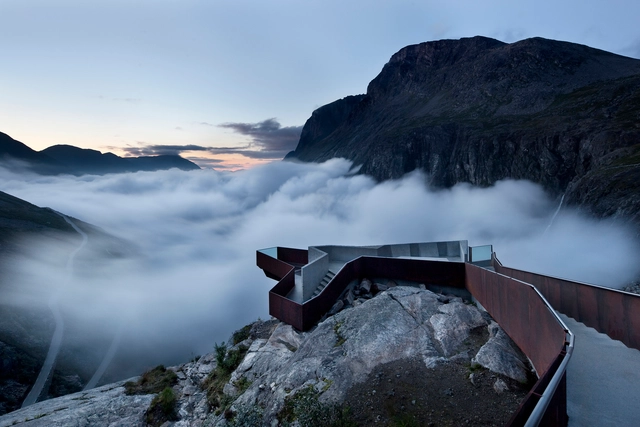
RRA's National Tourist Route in Trollstigen is among nine selected projects which will be displayed in-depth. Image via rra
The Swedish Centre for Architecture and Design (ArkDes) have revealed that In Therapy: Nordic Countries Face to Face—the exhibition for the Nordic Pavilion at the 2016 Venice Biennale, curated by David Basulto—will partly comprise "a contemporary survey of Nordic architecture." 300 projects, drawn from over 500 submissions to a recent open call, will be complemented by an in-depth study of nine projects completed post-2008 by practices including Tham & Videgård, Reiulf Ramstad Arkitekter, and Lahdelma & Mahlamäki.
"Just as Sverre Fehn’s pavilion is a crystallisation of Nordic architecture—embodying a precise and fluid articulation of structure, light, and nature—the nine we have chosen to focus in on as particularly representative of the contemporary scene have a similar gravitas and complexity – but with their own distinct identities" says Basulto, who has made the selection alongside James Taylor-Foster, Assistant Curator.
https://www.archdaily.com/782330/nine-projects-from-finland-norway-sweden-to-be-highlighted-in-in-therapy-the-nordic-contribution-to-the-2016-venice-biennaleAD Editorial Team
Last week, ArchDaily unveiled the 14 winners of this year’s Building of the Year award. Selected by ArchDaily readers from a pool of over 3,000 candidates, these 14 projects represent the best designs published by ArchDaily in the past year, as determined by an unbiased network of 55,000 voters who took part - each of them a judge in one of the world's most democratic architecture awards.
Representing a diverse field of architects, locations and project types, each design has a very different story about how it came into being, how its design responds to its context, how it fits into an architect's oeuvre, or what it says about the direction which architecture is traveling in. But despite the many different types of story represented, each of the stories behind the Building of the Year winners is a fascinating architectural tale. Here are those 14 stories.
In his TED Talk filmed at TEDGlobal London in September 2015, Ole Scheeren eschews what he describes as the “detrimental straightjacket” of the modernist mantra “form follows function” in favor a phrase he attributes to Bernard Tschumi, “form follows fiction.” While Tschumi was referencing how cultural artifacts, such as literature, impact architecture, Scheeren reinterprets the phrase, imagining the stories of building users in order to inform the design process. Scheeren recounts, for example, how the daily activities of CCTV employees, the lifestyles of residents of a Singapore housing block, or the traditional tools of Thai fishermen have informed his various designs for OMA and Büro Ole Scheeren.
Of course, this “fiction” that Scheeren describes, these stories, are not really fictions at all, but the real experiences of the people who live or work in his buildings. In that sense, the fiction that drives his forms is really just another type of function, albeit a more human approach to function. Nevertheless, for Scheeren the stories of these designs goes beyond just the users, also encompassing the stories of the hundreds of people it takes to make such buildings a reality, and even how architecture can become a character in the narratives of our own lives.
When reading about the work of Alejandro Aravena, it can sometimes seem like two distinct discussions: one about his widely praised social housing innovations, and another about his impressive (albeit more conventional in scope) buildings for universities and municipalities. In this post originally shared on his Facebook page Hashim Sarkis, the Dean of the MIT School of Architecture and Planning, connects the two apparently separate threads of Aravena's architecture, discovering the underlying beliefs that guide this year's Pritzker Prize winner.
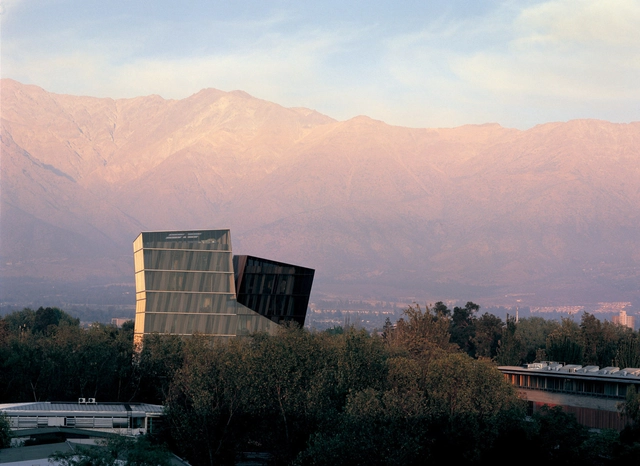
Much of the work of Alejandro Aravena, whether designed alone or with the group ELEMENTAL, embodies a eureka moment, a moment where after a careful interrogation of the program with the client, the architect comes up with a counterintuitive but simple response to the charge. (For the computer center at the Catholic University, the labs have to be both dark and well-lit. For the social housing in Iquique, instead of a full good house that you cannot afford, you get a half good house that you can). In turn, these simple equations are embodied in buildings that usually acquire similarly simple forms. The clients and occupants repeat the “aha” with Aravena’s same tone and realization. “If I cannot convincingly convey the design idea over the phone, then I know it is a bad idea,” he says.
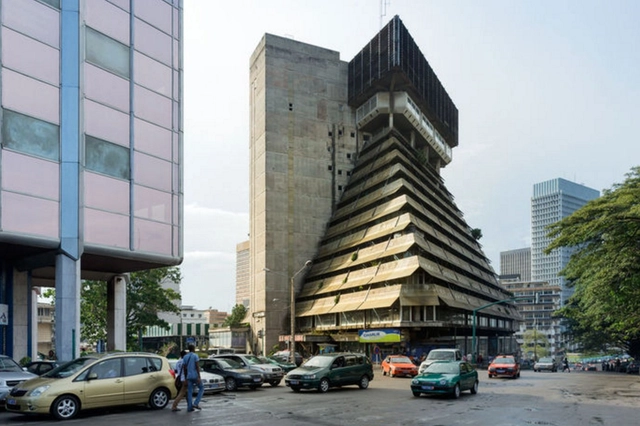
A new exhibition opening later this month at Chicago's Graham Foundation seeks to explore the complex history and legacy of modernist architecture in sub-Saharan Africa during the 1960s and 1970s. Architecture of Independence: African Modernismwill feature nearly eighty buildings in commissioned photographs by Iwan Baan, Alexia Webster, and Manuel Herz. Alongside archival material, the exhibition "imparts a new perspective on the intersection of architecture and nation-building in Ghana, Senegal, Côte d’Ivoire, Kenya, and Zambia and investigates some of the most compelling yet under-studied examples of 1960s and 1970s architecture worldwide."
Alejandro Aravena is the first Chilean architect to ever receive a Pritzker Prize. Praised for reviving the socially engaged architect, the 48-year-old architect and executive director of ELEMENTAL has proved architecture's ability to solve pressing global issues through his diverse portfolio. Read on to see 15 projects that exemplify Aravena's contribution to architecture so far.
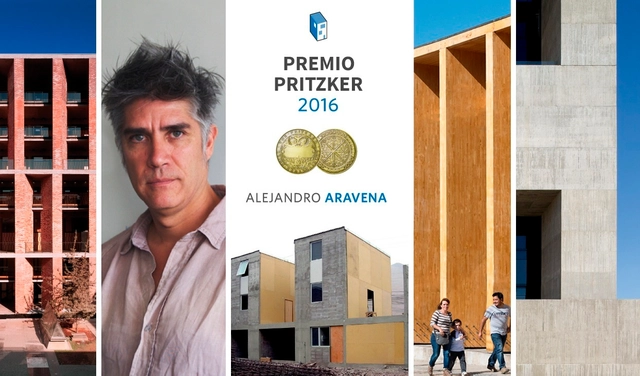
Alejandro Aravena has been named as the winner of the 2016 Pritzker Prize. Highlighting his dedication to improve urban environments and to address the global housing crisis, the Pritzker Prize jury praised the way in which the Chilean architect has "risen to the demands of practicing architecture as an artful endeavor, as well as meeting today's social and economic challenges." Aravena is the 41st Pritzker Prize laureate and the first Chilean to receive the award.
At 48 years of age, Aravena has a large portfolio of private, public and educational projects in Chile, the USA, Mexico, China and Switzerland. But perhaps more notably, through his “Do Tank” firm ELEMENTAL he has managed to build 2,500 units of social housing, engaging in the public housing policies of governments where he works and taking an opportunistic approach to market forces to generate a powerful impact on lower-income communities.
"Alejandro Aravena epitomizes the revival of a more socially engaged architect, especially in his long-term commitment to tackling the global housing crisis and fighting for a better urban environment for all,” explained the Jury in their citation. “He has a deep understanding of both architecture and civil society, as is reflected in his writing, his activism and his designs. The role of the architect is now being challenged to serve greater social and humanitarian needs, and Alejandro Aravena has clearly, generously and fully responded to this challenge."
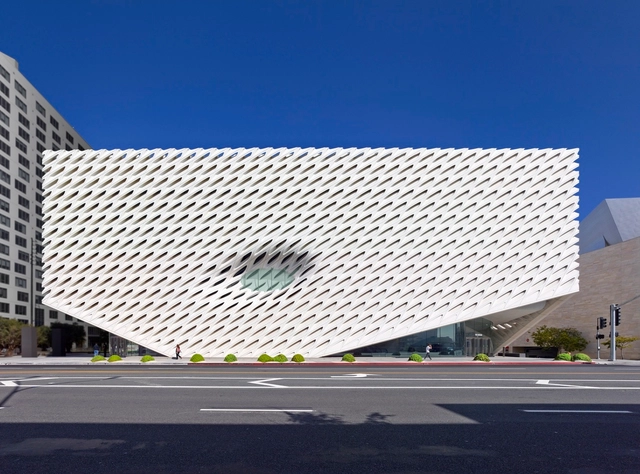
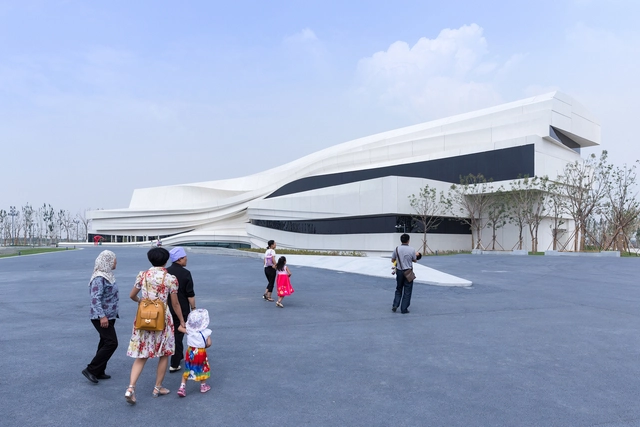
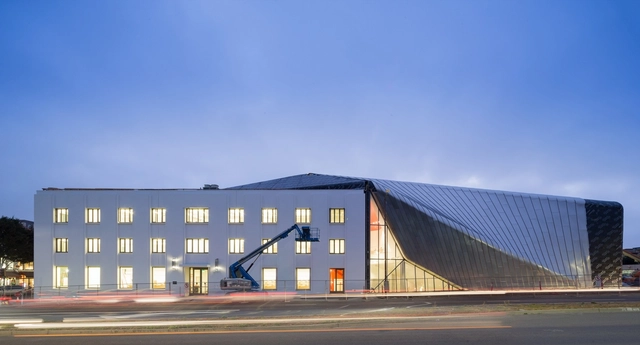
This contemporary art museum is not what it seems. It appears, at first, to be a fairly familiar manifestation of the contemporary architectural discourse, and indeed the striking fluidity of its lines and its impressive mastery of parametrically-enabled tectonics as well as GRC technology put it on a par with recent buildings by Zaha Hadid or MAD, but this first impression is somewhat deceptive: the building is, in fact, refreshingly unique and a radical point of departure from the dominant design ideology of our times, a significant rupture from the orthodoxy. And a very promising one.
If there's one word that sums up our most popular projects of 2015, it's "diversity." The list features architects ranging from old favorites such as SANAA, Diller Scofidio + Renfro and OMA down to newer names like Sculp[IT] and Tropical Space; it also includes everything from museums to multi-family housing and spa retreats to chapels - along with the usual smattering of private residences. Interestingly, this year's list also shows the symbiosis between great architecture and great photography, with no less than 4 projects also appearing in our most bookmarked images from this year's World Photo Day. But despite their diversity, there's one thing all of these 20 projects have in common: great architecture. So settle in, relax and read on - here's our 20 most popular projects of 2015.
https://www.archdaily.com/779474/the-20-most-popular-projects-of-2015AD Editorial Team
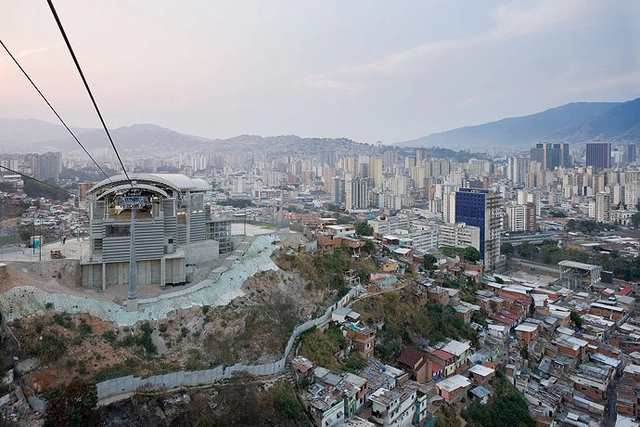
5,000 3D cameras to help preserve the architecture of a country torn by war; A team of Latin American architects that moved into Venezuela’s most dangerous neighborhoods in order to design and build with the community; A legendary architect who understood architecture’s relationship to the transformation of technology -- and whose projects have celebrated technology across a trajectory of multiple decades. These are the projects, initiatives and people who have proven to be leaders in 2015.
ArchDaily’s editorial team wanted to recognize these projects for their commitment to promoting practices in architecture that serve many, in all corners of the globe -- from Bolivia to London, from Chicago to Venice, from public spaces in favelas to projected drone-ports in Africa. These are the stories that have inspired us in 2015, and whose influence we hope to continue to see into 2016.
https://www.archdaily.com/778937/architectures-most-inspiring-leaders-projects-and-people-in-2015AD Editorial Team
In 2015, we've focused on expanding ArchDaily's editorial content in a number of different directions. We've opened new avenues to bring high-quality architectural content to our readers - whether that's through our many fantastic publishing partnerships with organizations such as The Architectural Reviewand Metropolis Magazine, by working more closely with our sister sites in Spanish, Portuguese and Chinese to bring articles with a global outlook such as our article celebrating "The Best Student Work Worldwide," or by reaching out to people who have expressed strong opinions on our stories, as was the case when we published Mark Hogan's article "What’s Wrong With Shipping Container Housing? Everything."
With all of these developments, it was a challenge to narrow down a full year's worth of articles to just 15 shining examples. Read on to find out which lucky 15 made the cut.
Earlier today in Shenzhen the 6th Bi-City Biennale of Urbanism/Architecture (UABB) opened its doors to public. Under the overall theme "Re-Living the City," curators Alfredo Brillembourg and Hubert Klumpner of Urban Think Tank headed up the "Radical Urbanism" exhibit in the main venue. Brillembourg and Klumpner invited the exhibition participants to show how we can learn from ad-hoc and "bottom-up" initiatives for alternative urban solutions. In the following essay - originally printed in the UABB 2015 catalogue - the curators call for us to "rethink how we can operate within the city, learn from its emerging intelligence and shap[e] its outcomes to radical and tactical ends."
The notion of a radical urbanism draws us unavoidably into the realm of the political. Imagining a more equitable and sustainable future involves an implicit critique of the spatial and societal conditions produced by prevailing urban logics.[1] As such, we are not only reminded of Le Corbusier’s famous ultimatum, “architecture or revolution,” but its generational echo in Buckminster Fuller’s more catastrophic pronouncement, “utopia or oblivion.”[2] Both were zero-sum scenarios born of overt social disjuncture, whether the deprivations and tensions of the interwar period, or the escalating conflicts and ecological anxiety of the late 1960s. While the wave of experimental "post utopian" practices that emerged in the early 1970s positioned themselves explicitly in opposition to perceived failures of the modern movement, these disparate groups shared a belief – however disenchanted – with their predecessors in the idea that radical difference was possible, as well as a conviction that a break was necessary.


_Hedrich_Blessing_015.jpg?1457105259&format=webp&width=640&height=580)

.jpg?1456423124&format=webp&width=640&height=580)




.jpg?1453730339&format=webp&width=230&height=230&crop=true)








.jpg?1450380794&format=webp&width=640&height=580)