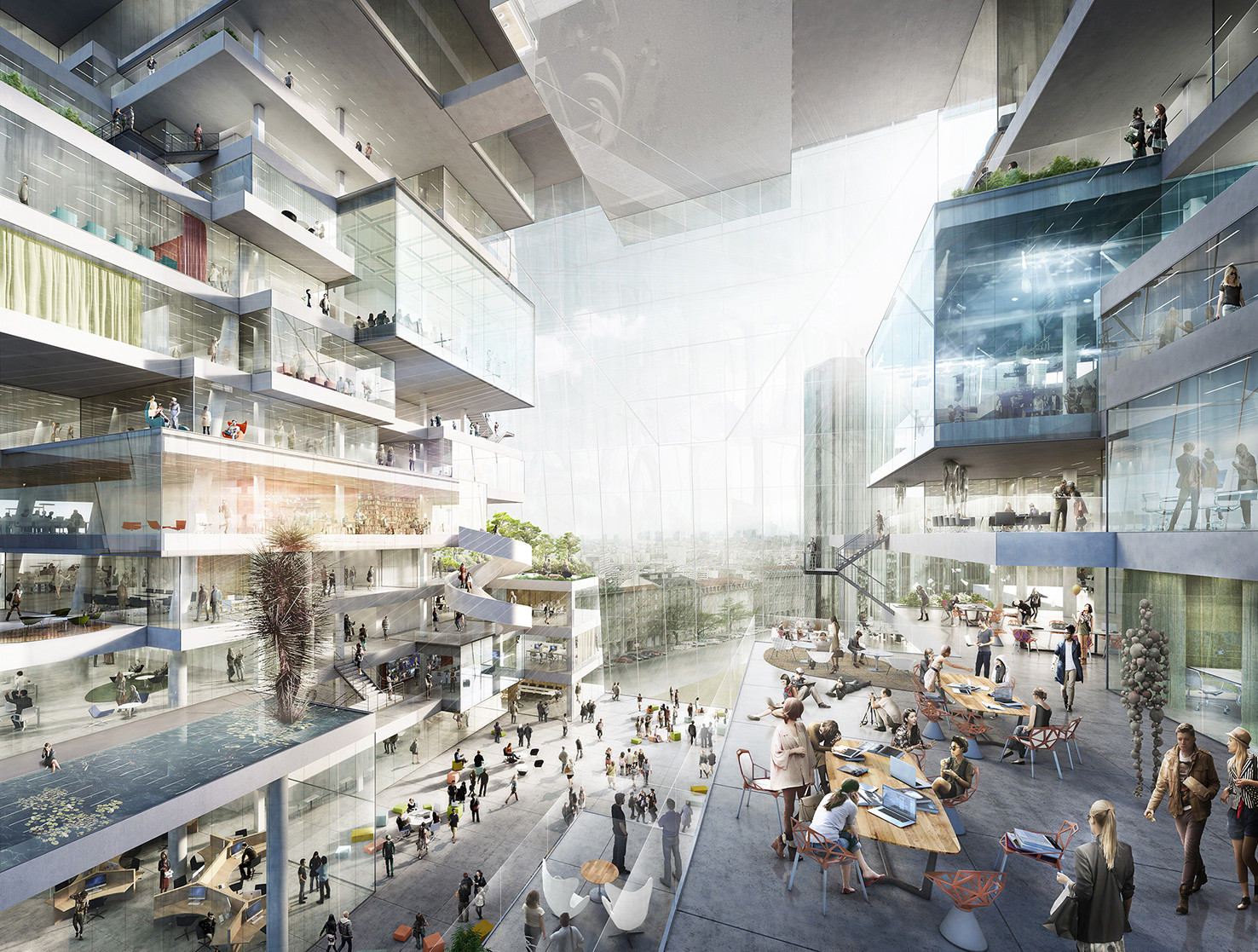
© BIG-Bjarke Ingels Group

BROWSE ALL FROM THIS PHOTOGRAPHER HERE

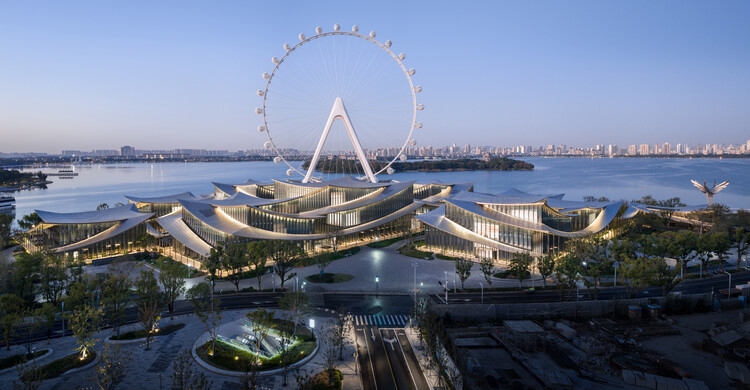
East Side River Park / BIG

East Side River Park / BIG - More Images+ 40

21 Rules for a Successful Life in Architecture

Subscriber Access | 

Originally published by Entrepreneur Architect, Associate Professor at Louisiana Tech Kevin J Singh gives his 21-point rundown of how to have a successful and happy life as an architect. The list gives some pointers that will certainly help young students and graduates, but may well be useful to some of the not-so-young practitioners who need to refocus on what's important.

The following is a compilation of my professional practice lecture on the last day of class. Instead of recapping the course or giving a final exam, I share with my students a presentation titled Advice as You Finish School and Start to Practice. I present a series of statements followed up with a brief explanation.

ArchDaily's Top 20 Most Read Articles of 2015

Subscriber Access | 

Over the past 12 months at ArchDaily, we've been working hard to bring our readers more articles that will interest, inspire and aid them, and our most read articles of the year reflect a few trends that have characterized the year. Firstly, they show the success of our attempts to bring our readers’ favorite articles from the past back into the limelight through social media and other means, with 7 of our top 20 articles from the year published earlier than 2015. Secondly - perhaps more obviously - it shows the continuing popularity of lists. And what do we do when 75 percent of our most popular articles of the year are lists and rankings? Why, we make a list of them of course. So put your countdown cap on and keep reading to see our top 20 most read articles of the year - including everything from the world's top 100 universities, to 19 notable former architects, to 22 websites you didn't know would be useful to you.

Starting Your Own Practice: The Challenges and Rewards, According to ArchDaily Readers

Subscriber Access | 

Architecture is in some ways a paradoxical profession. On one hand, it projects a popular image of the lone, creative genius, taking control over all aspects of a building project and forming them to their creative ideals. But in reality, most projects take a huge team of people, all working together to produce a building which usually represents the creative input of not only many different people, but many professions too.

One way to find a balance between these two extremes is to take more creative control over the decisions of the group - in other words, to start your own practice, guided by your creative input alone. But is that goal worth the difficulty it might take to get there? This was the question we had in mind when we asked our readers to let us know the pros and cons of starting your own firm last month. Interestingly, not a single commenter left any response about the joys of working for someone else, and the consensus was firmly that running your own practice is preferable - provided you can deal with the significant problems of doing so. Read on to find out what they had to say.

The Business of Design Success: How did BIG Get So... Big?

Subscriber Access | 

In recent years, the ever-increasing profile of Bjarke Ingels and his firm BIG have been hard to miss. For an office that is barely 10 years old, the number and scope of their projects is astonishing; to cope with demand, the firm has grown to employ almost 300 people. This growth, though, did not happen by accident. In this article, originally published on DesignIntelligence as "The Secret to BIG Success," Bob Fisher speaks to the firm's CEO and Partner Sheela Maini Søgaard in order to uncover the business plan behind the BIG phenomenon.

BIG may be the most appropriately named firm on the planet.

The Bjarke Ingels Group (BIG) seems to have an outsized impact in all it does. The Copenhagen-based design firm turns conventions and assumptions upside down and combines contrasting possibilities in outrageously bold, imaginative and playful ways. Projects like Via at West 57th Street in New York City and the Amager Bakke Waste-to-Energy Plant in Copenhagen are prime examples: the first a pyramid-shaped apartment building that defies the forest of rectangular towers around it, and the second a power plant that doubles as a smoke ring-blowing ski slope.

The world has taken note. Whether in praise or criticism, the architectural, cultural and business media tend to strike a heroic tone when describing the firm’s work: radical, ambitious, bold, confident. In short…BIG.

The Business of Design Success: How did BIG Get So... Big? - More Images+ 4

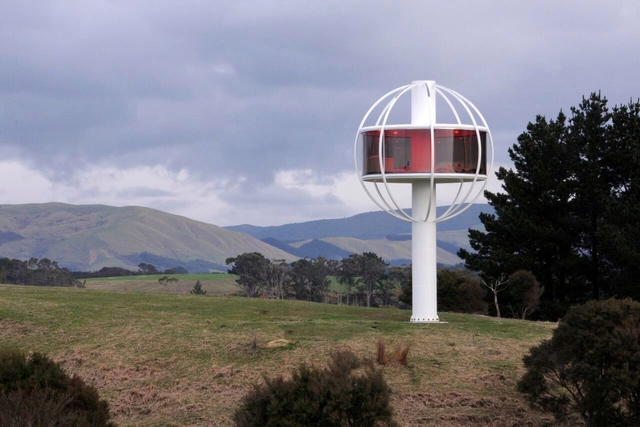
Live Out Your Adult Treehouse Fantasies With the Skysphere

After childhood, treehouses are usually stowed away in tandem with the fantasy and adventures associated with youthful imagination. As it turns out though, there can be a wildly elaborate, adult counterpart to this early life staple. The Skysphere, a project designed by Jono Williams, is the ultimate 21st century DIY treehouse project. Actually a small pod-like inhabitable platform attached to a steel column, it is more like the homegrown equivalent of Toronto’s CN Tower, Tokyo’s Skytree, or the unrealized Phoenix Observation Tower by Bjarke Ingels Group (BIG).

Live Out Your Adult Treehouse Fantasies With the Skysphere - More Images+ 13

The BIG Steam-Ring Kickstarter: Is There a Limit to What Should Be Crowdfunded?

Subscriber Access | 

Update: The Kickstarter campaign launched by BIG to fund the development of their steam ring generator reached its goal of $15,000 in less than a week after it was launched. As of today (24th August) the campaign total stands just short of $25,000, with 19 days still to go.

BIG has launched a Kickstarter campaign, aiming to fund the ongoing research and prototyping of the "steam ring generator" designed to crown the firm's Waste-to-Energy power plant in Copenhagen. The campaign was announced on Friday and picked up a lot of steam (pun intended) in the design press - but at ArchDaily we were hesitant to publish news of the campaign because, in short, it led us into a minefield of questions about the role of invention, public engagement, and money in architecture.

Of course, BIG are far from the first to attempt to crowdfund an architectural project. Previous projects however have generally focused on otherwise-unfundable proposals for the public good, barely-sane moonshots or complex investment structures which depending on your viewpoint may or may not even count as crowdfunding. BIG are perhaps the first example of an established architectural firm attempting to crowdfund the design of a project that is already half-built, causing some people - ArchDaily staff included - to ask: "Why wasn't this money included in the project's budget?"

Here's How BIG's Power Plant Ski Slope Will Blow Smoke Rings

When BIG's proposal for Amager Bakke, a waste-to-energy plant in Copenhagen, was unveiled in 2011, there was a lot for skeptics to pick apart. Is it really possible to run a publicly accessible ski slope on the roof of an industrial building? Would they really be able to make it blow giant smoke (or rather, steam) rings? The whole idea seemed rather too good to be true. The project's ground breaking in 2013 may have silenced some critics, but the video above should convince the rest of the design's feasibility.

New Harvard GSD Class Asks: Are Competitions Worth It?

Subscriber Access | 

For small firms, design competitions can often feel like a Catch22 - enter and lose precious time and resources (usually for nothing) or avoid them - at the risk of losing out on the "big break." Now a new class at Harvard's Graduate School of Design takes on just this quandary, as well as the many other practical, theoretical, and moral implications of architectural competitions for the profession. Learn more at this article at the Harvard Gazette.

When Should Architects Say No? Five Renowned Architects Say Where They Draw the Line

To design or not to design -- that is the question. Our profession is one fraught with moral ambiguities -- "from who you’re willing to take on as a client, to what kinds of structures you’re designing, to who will actually build it (and under what conditions)." In a fascinating article, Fast Company's Shaunacy Ferro talks with five big-name architects to find out: where do you draw the line? Fentress Architects, for example, takes a hard line, refusing to design jails or any structure that conflicts with their beliefs. Bjarke Ingels, on the other hand, welcomes the opportunity to design in oppressively-led countries, such as Kazakhstan, because of the architecture's potential for the people. See all five responses on Fast Company, and let us know where your moral compass lies in the comments below.

Where Do You Work? The Offices of ArchDaily Readers

Subscriber Access | 

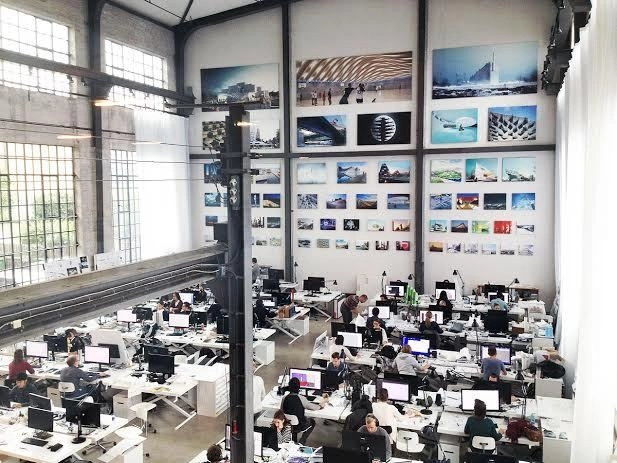
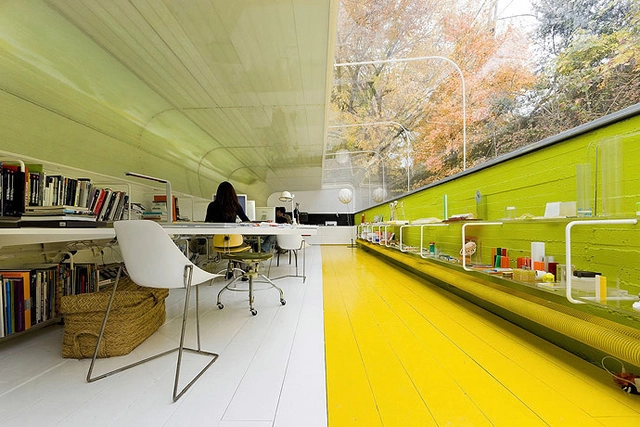
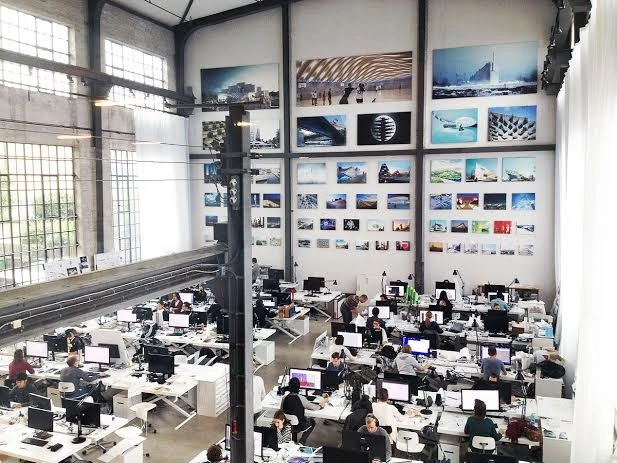
In 2009 we reached out to our readers across the globe and asked "What does your office look like?" From transparent tubes (like Selgas Cano's popular studio) to wide-open spaces (like BIG's offices in Copenhagen), we learned that the projects we publish every day are produced in all kinds of settings. But has anything changed over these few years?

BIG, OMA, Büro-OS To Compete for New Media Campus in Berlin

UPDATE: OMA has provided more information and images of their proposal, see them after the break.

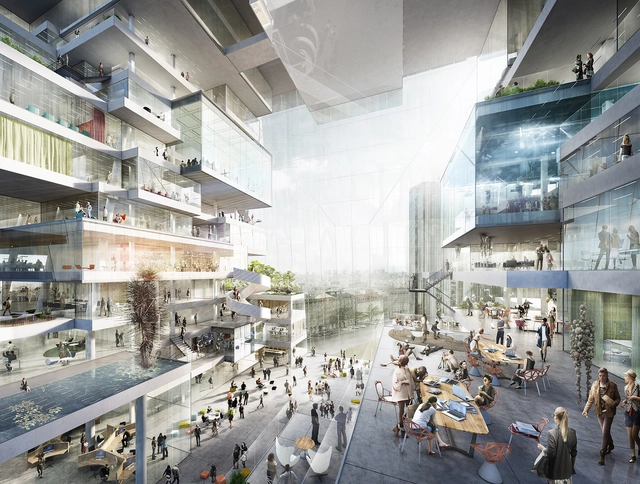
BIG, Büro Ole Scheeren, and OMA have been announced as the three finalists in the competition to design the new Media Campus for AXEL SPRINGER SE in Berlin, Germany, beating out Kuehn Malvezzi and SANAA. The final ranking will be released in January.

The new campus will be located on the historic site of the former Berlin Wall, what was once a no-man’s land. All three proposals address this contentious history as well as the demands of a 21st century workplace. President of the jury, Prof. Dr. Friedrich von Borries, proclaimed that: "All three projects show how fascinating architecture can be today. No matter which of the three proposals will be realised: The competition is already an enrichment of Berlin's building culture." See all three proposals, after the break...

BIG, OMA, Büro-OS To Compete for New Media Campus in Berlin - More Images+ 40

Round-Up: The Towers of BIG

Subscriber Access | 

Round-Up: The Towers of BIG - Image 1 of 4Round-Up: The Towers of BIG - Image 2 of 4Round-Up: The Towers of BIG - Image 3 of 4Round-Up: The Towers of BIG - Image 4 of 4Round-Up: The Towers of BIG - More Images

Are Renderings Bad for Architecture?

Subscriber Access | 

At the opening of his latest article for The Guardian, Olly Wainwright finds himself observing a slew of thesis projects produced by the best and brightest students of the UK. But Wainwright is most struck - not by the display of technical skill or imagination - but by the sheer lack of connection these projects had with actual, built, imperfect architecture: “Time and again, the projects seemed intent on fleeing the real world of people and places, scale and context; retreating instead into fantasy realms of convoluted forms with no seeming purpose.”

It’s a trap that many Architecture schools have fallen into, in the UK and around the world, but it’s not just a symptom of the misguided nature of architecture education. It’s also symptomatic of Architecture’s obsession with the image of architecture, an image completely detached from reality.

More after the break...

BIG’s Waste-to-Energy Plant Breaks Ground, Breaks Schemas

There are many things that set BIG’s latest project, Amager Bakke, apart. The plant, which broke ground yesterday, will be the cleanest waste-to-energy plant in the world. It will be the tallest and biggest building in Copenhagen. It will house Denmark’s first ski-slope (on the roof of the plant, no less). It will emit its CO2 emissions - not as a continuous stream of smoke, oh no - but in sudden, bursting smoke rings.

However, the Amager Bakke waste-to-energy Plant is far more than the sum of its rather remarkable features. As an urban “destination in itself” and a landmark in environmental design, it’s one of the most radical representations of architecture as a means of public engagement of our time. And, what’s more, it’s a signal that BIG has finally reached maturity, truly coming into its own as a firm.

Read more about BIG’s remarkable Amager Bakke waste-to-energy plant, after the break....