Across architecture and the building industry, women contribute to a wide range of fields, from design practice and construction to research and leadership. Their work reflects different approaches to some of the profession's most pressing questions, including environmental performance, adaptive reuse, and the creation of healthier and more responsive spaces. However, disparities remain visible in areas that influence professional recognition. For example, women continue to be significantly underrepresented in architecture in the United Kingdom. According to the Architects Registration Board, only about 31% of registered architects are women.
The ceiling is one of the largest continuous surfaces in a space, yet why is it rarely the first architectural element people notice? Often perceived as the plane that conceals structure and building services, it quietly recedes into the background while facades, materials, structural systems, and furniture define a building's architectural identity. Yet few architectural elements influence the experience of a space as consistently as this one. The ceiling shapes how sound travels, how light is reflected, how air moves through a room, and ultimately how architecture is experienced, bringing together technical performance and architectural expression through a single continuous surface.
Danish architectural theorist Steen Eiler Rasmussen observed in his book Experiencing Architecture that ceilings shape the character of a room through rhythm, proportion, light, and atmosphere. Rather than simply enclosing space, they help organize it, defining areas and guiding movement without the need for additional walls. As buildings became larger, more open, and more dependent on integrated building services, architecture began asking more of this overlooked surface. The ceiling gradually shifted from a concealed building component into an active architectural system in which acoustics, lighting, ventilation, thermal comfort, and technical infrastructure could converge on a single plane.
In 1743, a small cabin suspended by ropes was installed in a courtyard of the Palace of Versailles for the private use of King Louis XV. Manually operated by servants hidden from view, the so-called "flying chair" allowed movement between floors without stairs, and unknowingly introduced one of the central questions of modern architecture: how to move people vertically in a way that is efficient, safe, and integrated into the building.
The mechanization of this principle, with the introduction of a safety elevator in the early 1850s, paved the way for an unprecedented urban transformation. Without the elevator, the skyscrapers of Chicago and New York in the 1880s would have been unfeasible not because of structural limitations, but because of access. The elevator made it possible to build higher, and it also defined the logic of how these buildings would operate, where their cores would be placed, how their lobbies would be organized, and who could reach which spaces.
From projects and institutions that reinforce the relationship between art and architecture to initiatives seeking new approaches to persistent urban and ecological challenges, this week's developments reflect a broader effort to reconsider established frameworks and expand the role of design in contemporary society. Whether through adaptive reuse, policy innovation, artistic experimentation, or critical research, architects and cultural organizations are exploring how existing systems can be transformed to address emerging realities. These questions resonate across new architectural projects that translate environmental conditions and civic aspirations into built form. In Chicago, the completion of the Obama Presidential Center positions architecture as a vehicle for public memory, while in Albania, OODA's Lighthouse reinterprets local landscapes and traditions through a tower overlooking the Adriatic coast. Meanwhile, Heatherwick Studio's proposed AlUla Manara visitor centre responds to the conditions of Saudi Arabia's desert landscape, combining scientific research and tourism within a destination dedicated to observing the night sky.
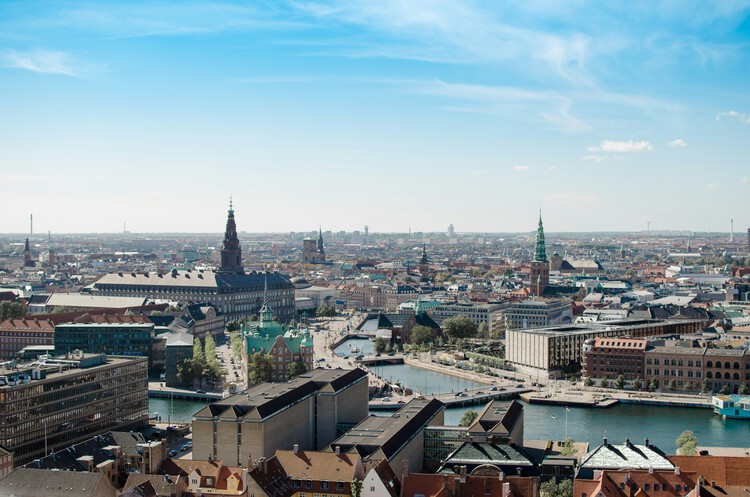
Copenhagen, Denmark. Image Courtesy of Lindsay Martin via Unsplash
Copenhagen is long famous as the global capital of human-scale design and livability. Today, the city has widened its focus and is an active space where mid-century Scandinavian modernism meets the modern demands of climate adaptability, material circularity, radical conservation, and neighborhood density. During the first-ever Copenhagen Architecture Biennial, in 2025, the city transformed into a global platform for dialogue under the theme "Slow Down," exploring how architecture can respond to global pressures by rethinking the pace of change. And this year's 13th edition of the 3daysofdesign Festival will explore the theme of "Make This Moment Matter", encouraging the global design community to step away from digital noise and mass production to focus on the present.
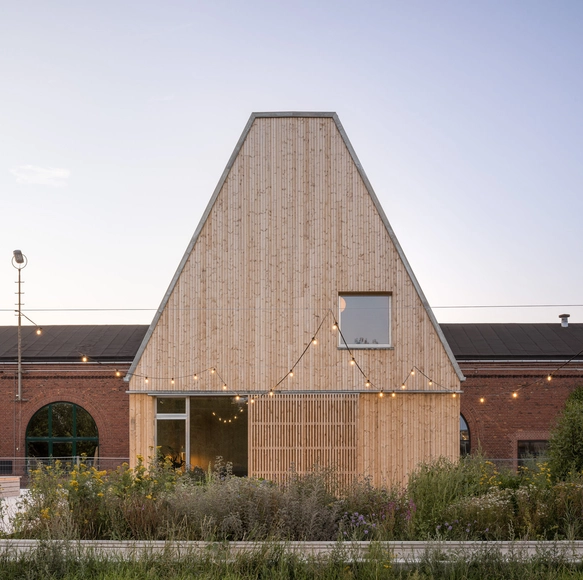
What happens when you choose reuse over demolition? In Østbirk, Denmark, a 30-year-old timber warehouse has been transformed into a 14,000-square-meter world-class innovation hub for nearly 500 VELUX employees. This article explores how the LKR Innovation House project challenges conventional building practices, preserves material legacy, and offers practical lessons for architects working with existing structures. A new book documents the process through essays, interviews, and photographs.
Leisure spaces are often where different generations cross paths. Without formal programs or assigned roles, they allow people to move, pause, and remain together, each engaging space in their own way. In a built environment increasingly shaped by specialization and separation, these shared spatial grounds have become less common, giving leisure-oriented architecture a renewed relevance.
Discussions around public space have repeatedly pointed to the value of openness and flexibility in supporting collective life. Reflecting on how people read, inhabit, and adapt space, Architect Herman Hertzberger speaks of architecture not as a set of instructions, but as a framework of possibilities—one that invites interpretation rather than prescribing behavior. As he puts it, "what we should make in architecture is something like competence, possibility – something that people can freely handle in their own way." Rather than attempting to create interaction, architecture shapes the conditions that make togetherness possible.
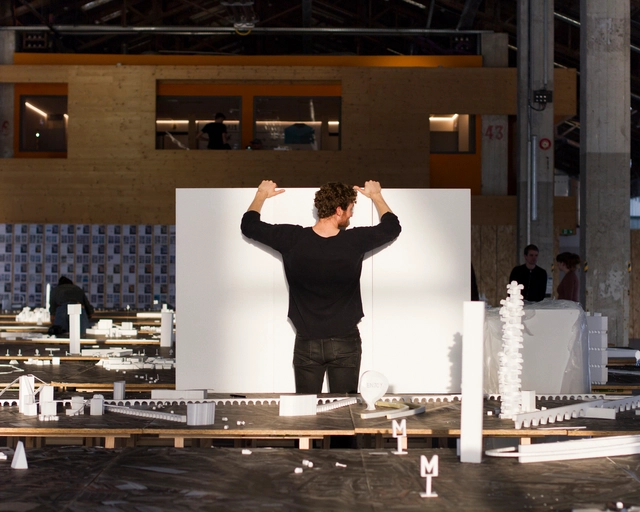
MVRDV and Delft University of Technology Release _Le Grand Puzzle_, an Urban Study of Marseille in the South of France. Image Courtesy of HÇläne Bossy, Manifesta
In architecture, most practices revolve around delivering projects to clients. Offices are shaped by deadlines, budgets, and clear briefs. While this structure produces buildings, it rarely leaves space for architects to question broader issues — about how we live, how cities are changing, or what the future demands of design. But alongside this production-focused system, a quieter movement has emerged: studios, collectives, and foundations that prioritize research, experimentation, and reflection. These are the architecture think tanks — spaces designed not to build immediately, but to think first.
The idea of a think tank is not new. Traditionally found in politics, economics, or science, think tanks bring together experts to study complex problems and propose solutions. In architecture, their rise reveals a tension at the heart of the discipline. If architecture is to remain socially and environmentally relevant, can it continue to rely only on client-driven practice? Or must it carve out space for slower, deeper inquiry?
Generative AI (Gemini / Google DeepMind). Concept: Eduardo Souza / ArchDaily
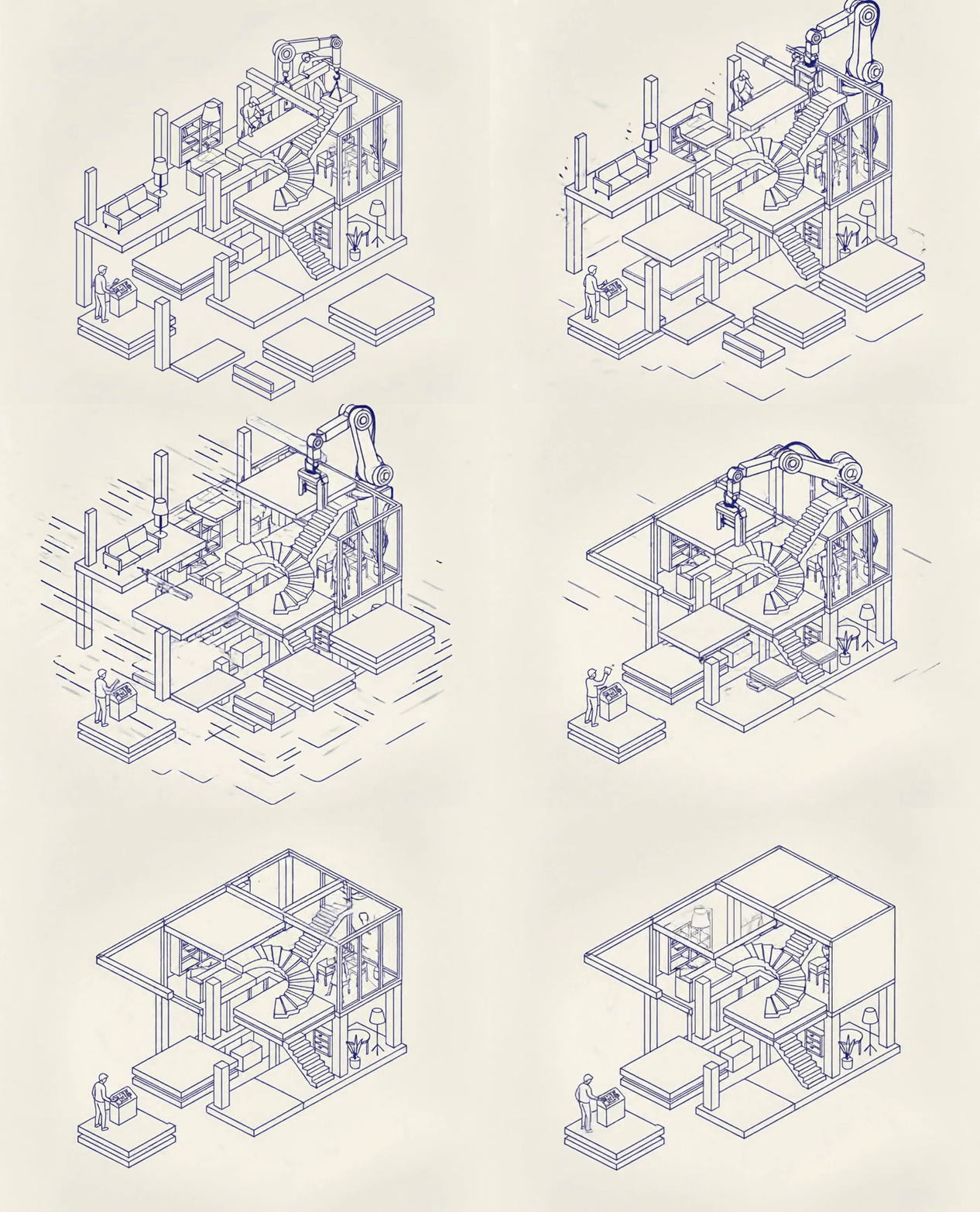
Once synonymous with monotony, “prefabricated” buildings often bring to mind the gray, repetitive housing blocks of the postwar era. But that image no longer fits today’s reality. Powered by digital design, robotics, and advanced materials, prefabrication has evolved into a language of innovation and precision. Far from uniform, it now enables flexible, efficient, and sustainable spaces that reflect the individuality of contemporary architecture.
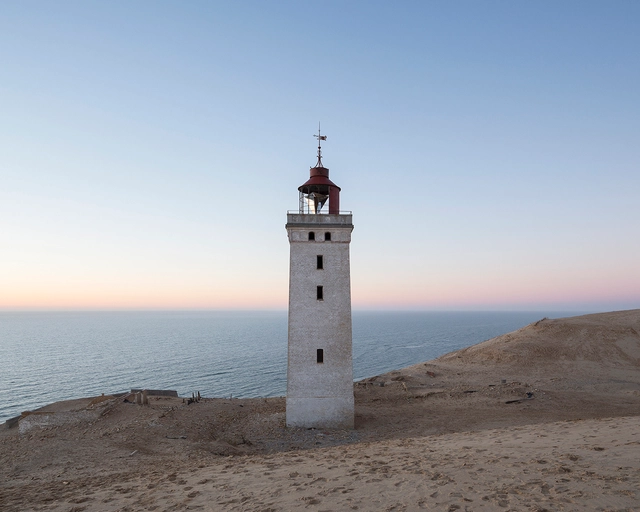
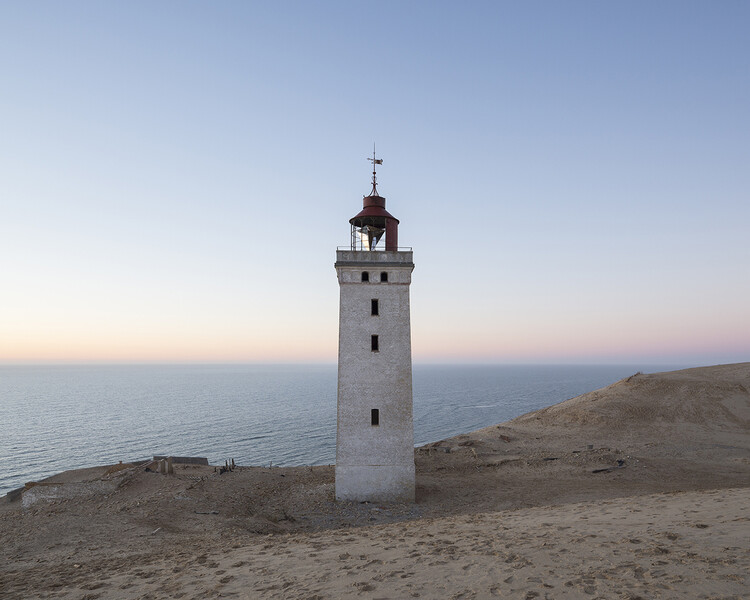
Lighthouses have stood along the margins of continents and islands for centuries as points of light in vast maritime territories. Rising in solitude from rocky cliffs, reefs, and headlands, these towers were tools for navigation and instruments of spatial clarity, shaping coastlines and marking the boundary between land and sea. Built to guide, warn, and locate, they constituted a global network of visibility long before the advent of digital mapping. Yet as maritime technologies evolved, many of these structures lost their original purpose. The typology, once essential, now stands at the edge of obsolescence. What remains is not merely an architectural relic, but a powerful spatial form — resilient, symbolic, and increasingly open to reinterpretation.