

-
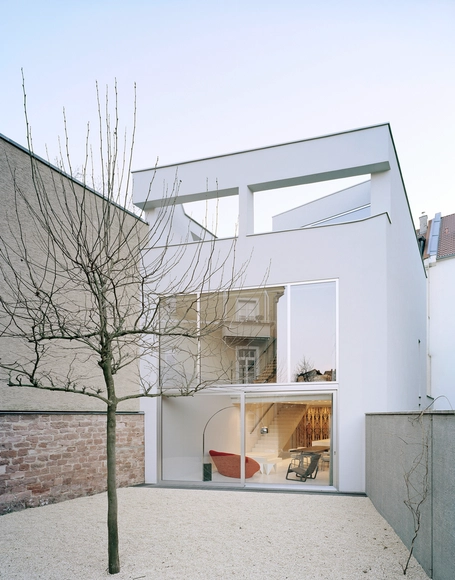
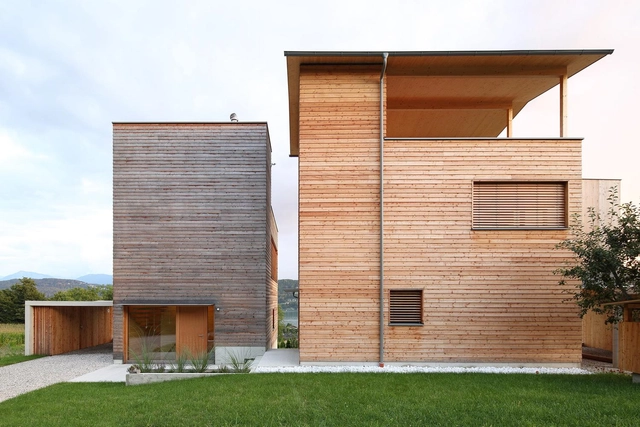
Architects: Ecker Architekten
- Area: 260 m²
- Year: 2014
-
Manufacturers: GIRA, FSB Franz Schneider Brakel, Hafele, Hawa



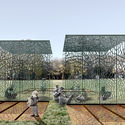
Cast & Place has been announced as the winner of the 2017 City of Dreams competition to create a pavilion for New York City’s Governors Island. Held by not-for-profit arts organization FIGMENT, the AIANY Emerging New York Architects Committee, and the Structural Engineers Association of New York, the competition called for a design to be the hub of FIGMENT’s free community arts festival during Summer 2017, based on questions of the future of New York, how design can confront environmental challenges, and how architecture can be built from recycled or borrowed material.
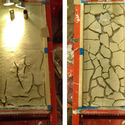
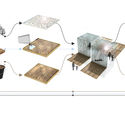
With these questions in mind, Cast & Place was conceptualized as a pavilion made entirely from waste. 300,000 recycled aluminum cans, cast into the cracks of dried clay, will form structural panels that assemble into shaded spaces for performance and play.

Following its official opening on October 5, 2016, the new MAAT building reopened to the public on March 22, 2017, with two major exhibitions that take up the whole building: Utopia/Dystopia – A Paradigm Shift, curated by Pedro Gadanho, João Laia and Susana Ventura – and Order and Progress by Mexican artist Héctor Zamora, curated by Inês Grosso.
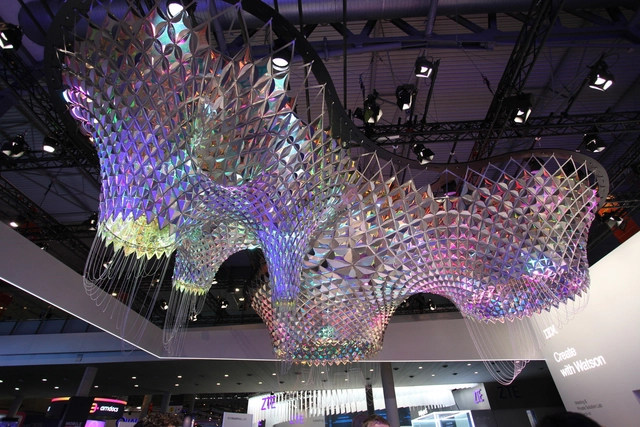
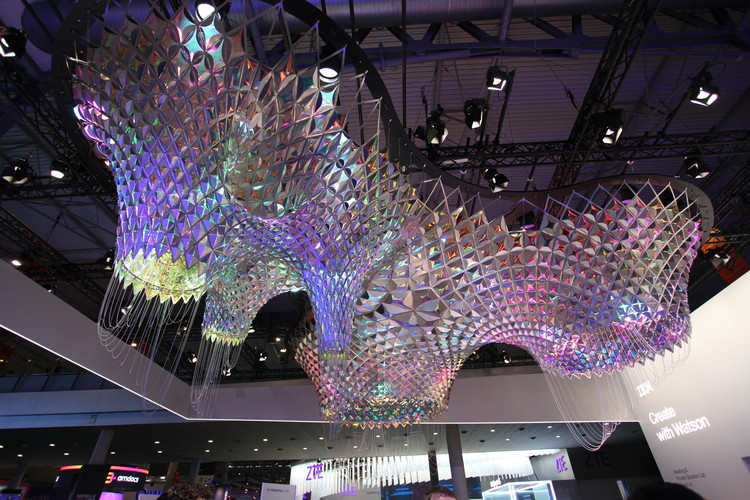
IBM and New-York-based design studio SOFTlab have teamed up to create the first thinking sculpture, inspired by Gaudí and developed with IBM’s Watson cognitive technology for the Mobile World Congress in Barcelona, Spain.
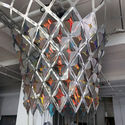
In order to help design the sculpture, Watson was taught about the history and style of Gaudí and the architecture of Barcelona through volumes of images, literary works, articles, and even music. From these references, Watson helped to uncover critical insights on patterns in Gaudí's work—like crabs, spiders, and color palettes—that the design team didn't initially associate with Gaudí. The resulting four-meter-tall sculpture features a structural surface made of over 1200 unique aluminum parts, and is unmistakably reminiscent of Gaudí’s work both in look and feel, yet entirely distinct.
The sculpture was on display from February 27 to March 2 at Mobile World Congress in Barcelona, where it interacted with visitors by changing shape in real-time, in response to sentiments from Twitter. To learn more about the sculpture, ArchDaily was given to opportunity to speak with IBM Watson Manager Jonas Nwuke.

In this third episode of GSAPP Conversations, Columbia GSAPP Associate Professor Mabel O. Wilson speaks with Sharon Sutton about the publication of her new book, When Ivory Towers Were Black, which tells the story of how an unparalleled cohort of ethnic minority students earned degrees from Columbia University’s School of Architecture (GSAPP) during a time of fierce struggles to open the ivory tower to ethnic minority students.



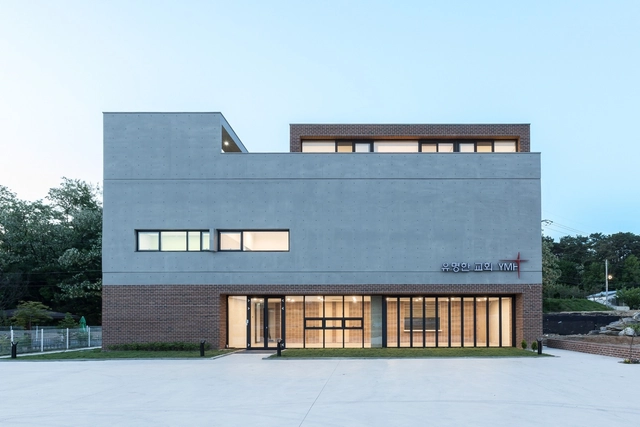

Studio Libeskind has won competitions for two new mixed-use projects in France, the firm announced at the MIPIM world property market conference this past week in Cannes. The first project comprises a retail, conference and transportation center for the city of Nice, while the second will see the firm complete a 150-meter-tall skyscraper in Toulouse.
“With these important projects in two of the main French cities, we unveil our new development strategy to create urban mixed-use buildings. Once completed, both will become new landmarks for Nice and Toulouse. With Studio Libeskind, we are up to great things!” says Philippe Journo, CEO of Compagnie de Phalsbourg, the developer behind both projects.
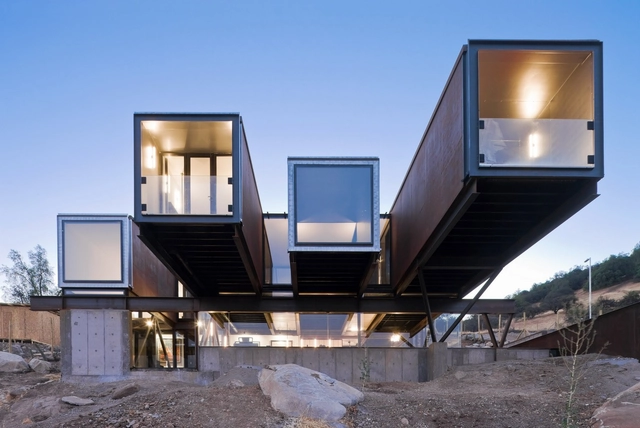
Architecture and music are two very different art forms – one is visual, tactile and logical; the other audial and emotional. So what happens when you bring these two artistic media together?
This is the idea explored by Chilean web series Insigne Sesiones, which aims to “[expose] he ideal mix between contemporary architecture and music, generating the first audiovisual project worldwide that officially joins these two disciplines.” For their first season, Insigne Sesiones invited six world-renowned musicians to perform their music in the intimate settings of some of the most celebrated works of Chilean architects across the country.
Check out the full first season below.



A 1,400-foot-tall mixed-use skyscraper by Zaha Hadid Architects may be the next supertall structure to hit midtown Manhattan. Located at 666 Fifth Avenue between 52nd and 53rd Street, the project is the brainchild of Kushner Properties, who currently co-own the existing 483-foot-tall building with Vornado Realty Trust.
Estimated to cost up to $12 billion, the company is currently negotiating a multi-billion dollar deal with Chinese holding company Anbang Insurance Group to finance the project. If plans to buy out the building go through, Kushner would be in the clear to begin construction on the ZHA-designed tower, which would rebrand the property as 660 Fifth Avenue and offer 464,000-square-feet of residential space, an 11-story hotel, and a 9-story retail podium.
This article was originally published by The Architect's Newspaper as "Phil Bernstein pens inaugural column on technology, value, and architects’ evolving role."
This is the inaugural column “Practice Values,” a new bi-monthly series by architect and technologist Phil Bernstein. The column will focus on the evolving role of the architect at the intersection of design and construction, including subjects such as alternative delivery systems and value generation. Bernstein was formerly vice president at Autodesk and now teaches at the Yale School of Architecture.
This semester, I’m teaching a course called “Exploring New Value Propositions for Practice” that’s based on the premise that the changing role of architects in the building industry requires us to think critically about our value as designers in that system. After studying the structure and dynamics of practice business models, the supply chain, and other examples of innovative design enterprises, they’ll be asked to create a business plan for a “next generation” architectural practice. I’m agnostic as to what this practice does per se, as long as it operates somewhere in the constellation of things that architects can do, but there is one constraint—your proposed firm can’t be paid fixed or hourly rate fees. It has to create value (and profit) through some other strategy.