
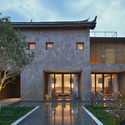


-
Interior Designers: Tsutsumi & Associates
- Area: 2482 m²
- Year: 2017
-
Manufacturers: LURAIN, PG



.jpg?1527690527&format=webp&width=640&height=580)

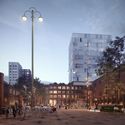
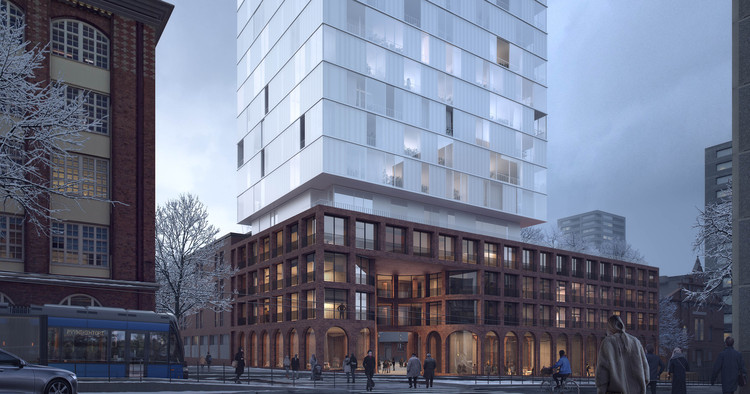
A team comprising Schauman & Nordgren Architects, MASU Planning, and Schauman Architects have been announced as winners of an invited competition for the design of a new exhibition, shopping, and housing scheme in an old customs area of Tampere, Finland. The “Tulli Halls” scheme is defined by a red brick materiality referencing the industrial heritage of the area, and a central tower forming a “beacon and focal point for Tampere.”
The scheme seeks to balance old and new, as well as public and private, with a form which has a “grounding in Tampere’s heritage as well as aspiring future” and public space to improve living conditions of residents and offer meeting places for the general public.
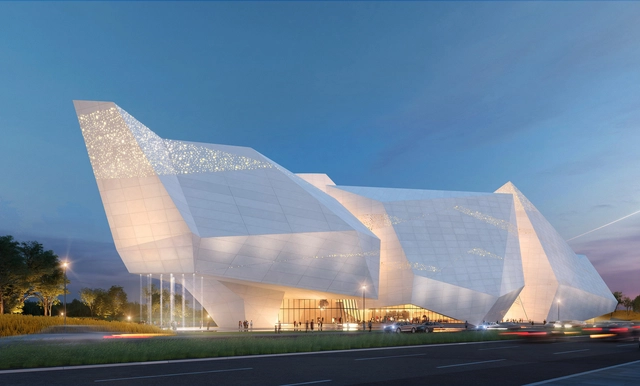
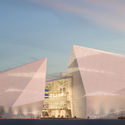
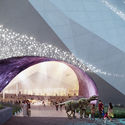
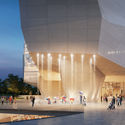
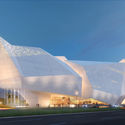
Pelli Clarke Pelli Architects has won an international contest for the Chengdu Natural History Museum in China, seeing off competition from firms such as Zaha Hadid Architects and FUKSAS. With a form inspired by the geological impact of shifting tectonic plates, and reflecting pools inspired by ancient irrigation systems, the scheme makes heavy reference to the surrounding natural landscape, while dominant features such as a tall central atrium form a visual connection with the built environment. Below, the architects offer their own description of the winning scheme.
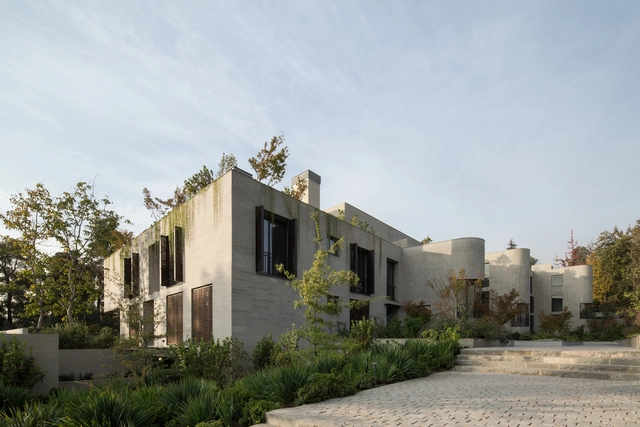
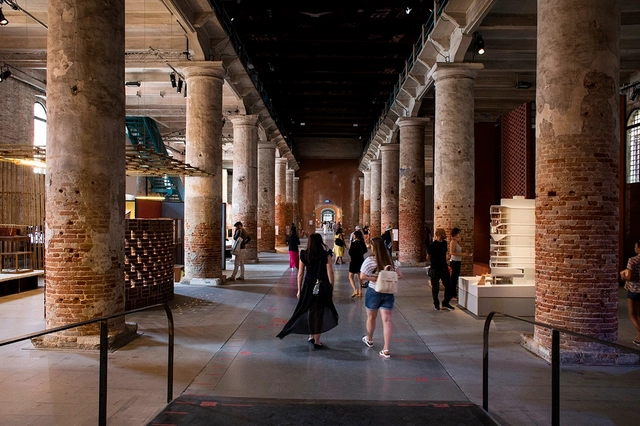
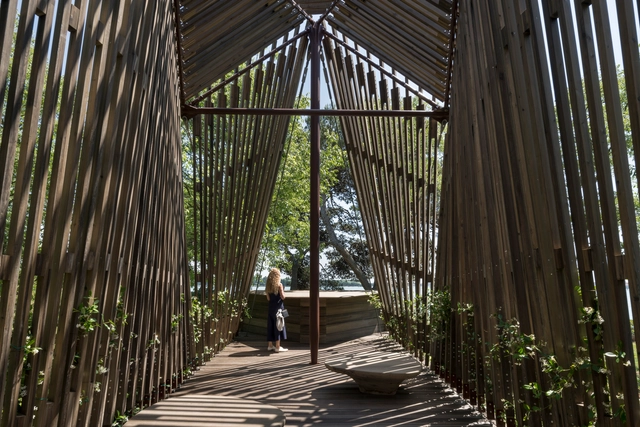
As always, this year’s edition of the Venice Architecture Biennale is brimming with exhibitions and installations—the result of thousands upon thousands of hours of research and work. When arriving at the Arsenale or Giardini, the overwhelming amount of "things to see" are neatly tucked into the national pavilions, or, in the case of the Arsenale, hidden on the sides of the sweeping corridor. In the likely event that you have limited time to enjoy all that FREESPACE has to offer, ArchDaily's editors have selected our favorite works displayed at the 16th International Architecture Exhibition.
Here, presented in no particular order, are some of our top suggestions from across the Biennale sites.
![La Yedra House / ismo [ arquitectura y diseño ] - Houses](https://images.adsttc.com/media/images/5b14/c535/f197/cc75/3f00/0331/medium_jpg/8565_14.jpg?1528087852)
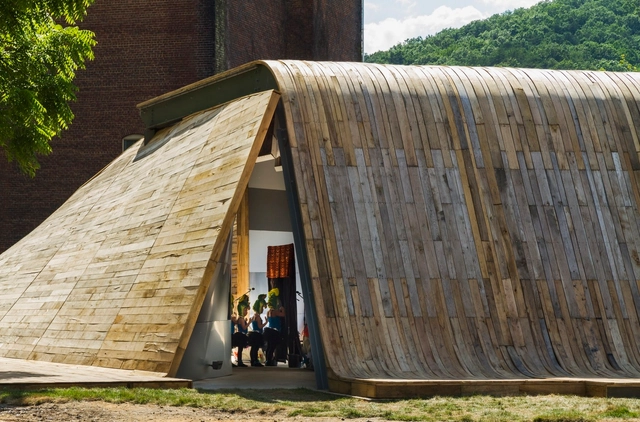
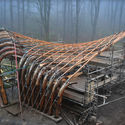
Even as technology advances—leaving many of the old ways of building obsolete—certain traditional crafts and building techniques continue to captivate our imaginations with their simple ingenuity and unimpeachable effectiveness. Although used for millennia, the process of temporarily turning rigid members of wood into pliable, twistable, bendable noodles of lumber remains a favorite woodworker’s trick, capable of producing whimsical transformations and otherworldly forms from the most natural of materials.

The winners of arch out loud’s competition Reside - in which entrants were to design a mixed residential development on one of the last remaining sections of undeveloped Mumbai coastline - have been announced. The architectural research initiative challenged entrants to design for “both the indigenous fishing community that has occupied the site for hundreds of years - as well as a new demographic drawn to the affluent neighborhood that now encompasses the site”.
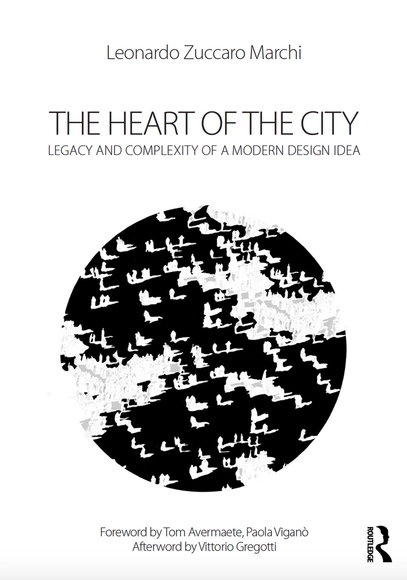
The book focuses on both the historical and theoretical reinterpretation of the Heart of the City Idea, which was introduced at CIAM 8 in 1951 and has played an impor¬tant role in architectural and urban debates ever since. It is a comparative history-theory, which traces the social-spatial role and character of transdisciplinary encounters and migrations on the concept of the Heart of the City.
The main aim is to illustrate the continuity and the complexity of this pivotal theme, highlighting a new perspective on the significance of public space in our contemporary urban condition as well.
In an age of rapid urbanisation and fast transformations of the public realm, the book is also of interest to compare to our current attempts at planning and thinking about the city. Indeed, the Heart of the City has many links and resonances with our contemporary debate about the centrality and the identity and with the right public space design. It is a theoretical discourse which has been often exposed as a specific post-war debate; on the contrary, its complex interpretations have many layers of sig¬nificance which have many reflections on the contemporary social, physical structure of the city.
Furthermore, within the dissolution of the contemporary urban elements, or their legibility, we need to go back and study the essentials that lie at the foundations of the urban structure. The Heart of the City is certainly one of them. It is a Constitu¬ent Element at the basement of the urban structure dealing with the balance between the private and the public spheres, between the social and physical structure of the city. The issue of the Heart of the City is the question of the symbolical and physical reform of the structure of the city through the creation of centres of social life.
After the first chapter that reveals the debate which occurred at CIAM 8, three actors are used in order to dissect the complexity of the Heart of the City theme, similarly to the sections of a complex project or territory. These sections reveal three different relationships: the First Urban Design Conference at Harvard in 1956 and Victor Gruen, and the Heart as Urban Design and Invention of the City; the CIAM Summer School in Venice in the 1950s and the Heart of the City as Continuity; Jaap Bakema and the Heart of the City as Total Relationship. The failures, successes and contradictions of the theories and projects of the three actors are important key stud¬ies for contemporary design of the City.
.jpg?1528077107 "© Kyungsub Shin")
.jpg?1528076526 "© Kyungsub Shin")
.jpg?1528076658 "© Kyungsub Shin")
.jpg?1528076485 "© Kyungsub Shin")
.jpg?1528076468)



.jpg?1527690289 "© Manolo R Solis")
.jpg?1527689056 "© Manolo R Solis")
.jpg?1527689795 "© Manolo R Solis")
.jpg?1527690038 "© Manolo R Solis")
.jpg?1527690527)




![La Yedra House / ismo [ arquitectura y diseño ] - Houses](https://images.adsttc.com/media/images/5b14/c567/f197/cc58/8d00/01a6/thumb_jpg/8565_22.jpg?1528087904 "© Fernando Alda")
![La Yedra House / ismo [ arquitectura y diseño ] - Houses](https://images.adsttc.com/media/images/5b14/c513/f197/cc75/3f00/032f/thumb_jpg/8565_01.jpg?1528087819 "© Fernando Alda")
![La Yedra House / ismo [ arquitectura y diseño ] - Houses](https://images.adsttc.com/media/images/5b14/c522/f197/cc75/3f00/0330/thumb_jpg/8565_08.jpg?1528087833 "© Fernando Alda")
![La Yedra House / ismo [ arquitectura y diseño ] - Houses](https://images.adsttc.com/media/images/5b14/c52b/f197/cc58/8d00/01a3/thumb_jpg/8565_09.jpg?1528087844 "© Fernando Alda")
![La Yedra House / ismo [ arquitectura y diseño ] - More Images](https://images.adsttc.com/media/images/5b14/c535/f197/cc75/3f00/0331/newsletter/8565_14.jpg?1528087852)







.jpg?1528303471)

.jpg?1528303887 "© Fernando Guerra | FG+SG")
.jpg?1528303791 "© Fernando Guerra | FG+SG")
.jpg?1528304319 "© Fernando Guerra | FG+SG")
.jpg?1528304962)


.jpg?1527838125 "Atrium. Image © Schran Image")