-
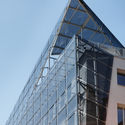
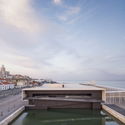
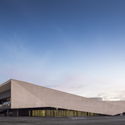
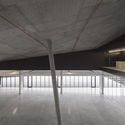
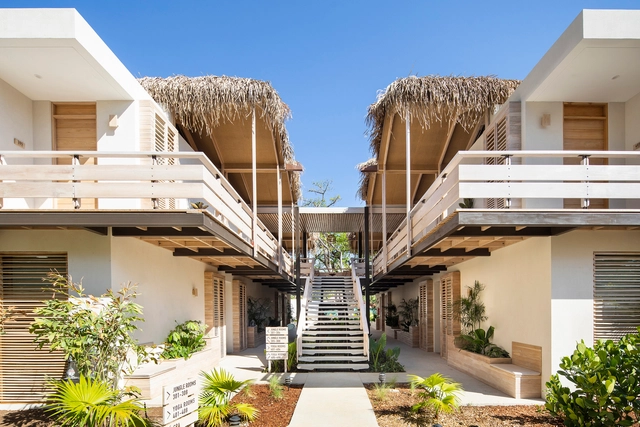
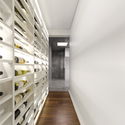
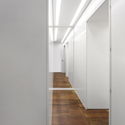
Architects: Timurdesigns LLP
- Area: 460 m²
- Year: 2017



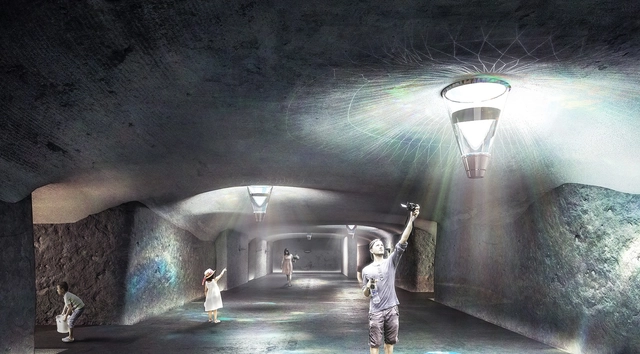
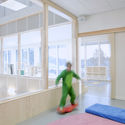
Held every two years, the International VELUX Award challenges students to generate projects that take advantage of daylight, with the aim of developing a deeper understanding of this energy source.
A jury of renowned architects chose 9 regional winners for its 2018 iteration, who will now compete for the winning title at the World Architecture Festival in November. The winners were chosen from projects presented by students from 250 different architecture schools in 58 countries.
In what has to be one of the most spectacular collisions of high fashion and architecture, fashion designer Guo Pei has tapped into the "immutable" qualities of Gothic buildings with a series of outfits inspired by vaults, spires, flying buttresses, and elaborate window tracery. According to Vogue, the Chinese designer described her work as "a dialogue between the human body and spatial dimension," while Pei's own Facebook post explained her Fall 2018 collection with just a short phrase: "Time flows unhurriedly, while architecture stands immutably."
Many of the designs in Pei's collection seem to have been conceived as architectural structures in themselves, projecting outwards from the body to create striking church-like forms. Converting the rigid stone structures of the Gothic style into fabrics designed to hang from the human body is clearly a challenging technical feat, and proves extremely satisfying for architecture-obsessed onlookers when achieved with the audacity brought to her work by Pei.


Archiprix International is proud to announce the start of its tenth edition. After successful editions in 2001 in Rotterdam, 2003 in Istanbul, 2005 in Glasgow, 2007 in Shanghai, 2009 in Montevideo, 2011 in Cambrigde (USA), 2013 in Moscow, 2015 in Madrid and 2017 in Ahmedabad, Archiprix International will again stage a unique presentation of the world's best graduation projects in architecture, urban design and landscape architecture. The Archiprix International 2019 will take place in Santiago Chile. We are honoured that the Pontificia Universidad Católica de Chile and Universidad de Chile, are our co-organisers for the 2019 edition.

Sir Norman Foster has received the American Prize for Design, an award presented the Chicago Athenaeum Museum of Architecture and Design and The European Centre for Architecture and Urban Studies. The award, which was established in 2016, is presented to an individual for their lifetime achievement in the fields of design.
.jpg?1530894708&format=webp&width=640&height=580)
Snarkitecture’s “Fun House” has opened at the National Building Museum in Washington DC, an interactive exhibition forming part of the museum’s Summer Block Party series of temporary structures created inside its historic Great Hall.
More than 1500 people visited Fun House at its July 4th opening day, which comes three years after Snarkitecture’s installation at the 2015 Summer Block Party, titled "The BEACH." Other noted collaborations for Summer Block Party include Studio Gang in 2017, James Corner Field Operations in 2016, and Bjarke Ingels Group in 2014.


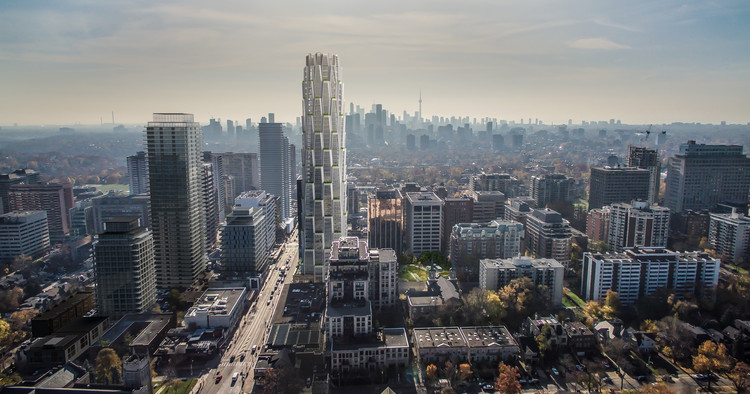
Studio Gang has released images of its first project in Canada, a mixed-use residential and retail tower at the southwest corner of Yonge and Delisle in Toronto. Intended as a “new model for sustainable urban growth,” One Delisle seeks to establish the Yonge and St. Clair district as a “vibrant, pedestrian-friendly neighborhood with thriving retail, welcoming open spaces, and world-class architecture.”
The scheme, which was designed in collaboration with WZMH Architects, is driven by a desire to integrate with the local urban context through adherence to existing grid patterns and retention of existing elements, and to provide extensive outdoor space at an important transit node in midtown Toronto.





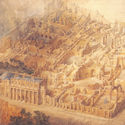
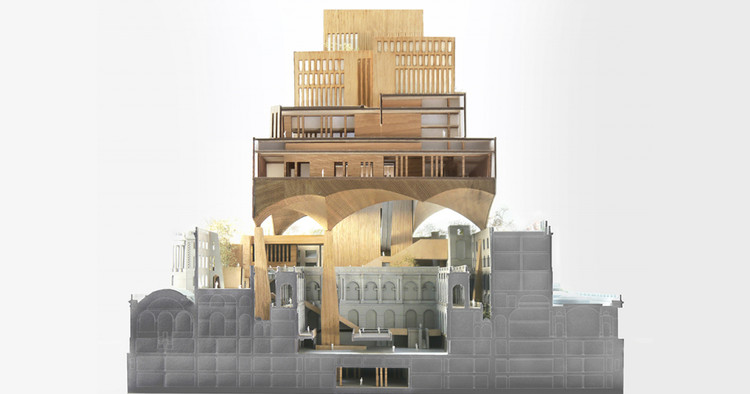
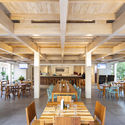
The four winners of the Young Talent Architecture Award (YTAA) 2018—a competition run by the European Commission, the Fundació Mies van der Rohe, the Architects’ Council of Europe, and the European Association for Architectural Education—have been announced. With “implicit social and cultural relevance,” each of the winning projects deals with the theme of heritage in a personal yet visionary manner, leading to a set of projects that “show good architectural citizenry.” In the second edition of the competition, 451 students from 118 schools participated, representing 32 countries from across Europe (with China and South Korea participating as Guest Countries).
Read on to see the four winners with descriptions of their projects provided by the Young Talent Architecture Award.

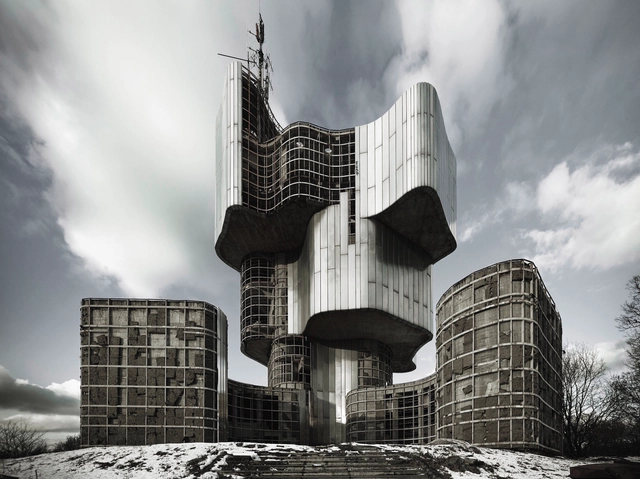
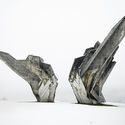
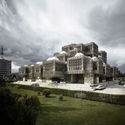
The Museum of Modern Art (MoMA) is set to open a new exhibition exploring the architecture of the former country of Yugoslavia. Toward a Concrete Utopia: Architecture in Yugoslavia, 1948–1980 will be the first exhibition in the United States to honor the peculiar architecture of the former socialist nation.
More than 400 drawings, models, photographs, and film reels culled from an array of municipal archives, family-held collections, and museums across the region will be presented to an international audience for the first time. Toward a Concrete Utopia will feature works by many of Yugoslavia's leading architects. It will explore "large-scale urbanization, technological experimentation and its application in everyday life, consumerism, monuments and memorialization, and the global reach of Yugoslav architecture."
Read on for more about the exhibition and Yugoslav brutalism.
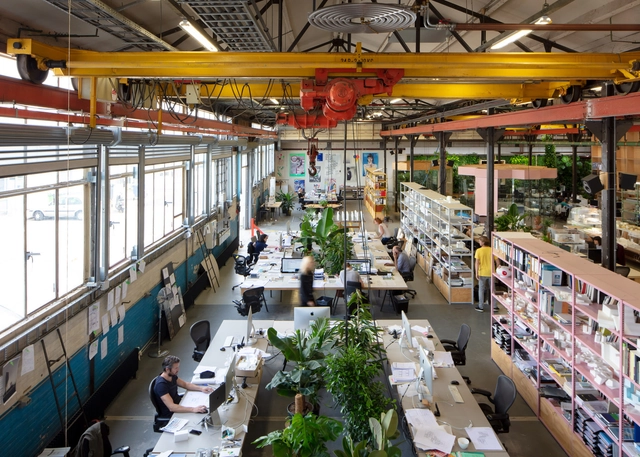
Having previously assembled sets of images featuring the offices of architecture firms in Dubai, London, Paris, Beijing, Shanghai, Seoul, the Nordic countries, and Barcelona, architectural photographer Marc Goodwin continues the series with an exploration of 17 large and small offices in the Netherlands. Occupying buildings formerly used as offices, banks and old factories, the interior and exterior images capture a glimpse of the lives of these designers and their daily architectural surroundings.






.jpg?1530894765 "© Noah Kalina")
.jpg?1530894696 "© Noah Kalina")
.jpg?1530894809 "© Noah Kalina")
.jpg?1530894821 "© Noah Kalina")
.jpg?1530894708)