

-
Architects: Sweco Architects
- Area: 7300 m²
- Year: 2016
-
Manufacturers: VMZINC




OMA New York has released initial details of its design for the Audrey Irmas Pavilion, a new addition to the Wilshire Boulevard Temple in Los Angeles, California. The OMA scheme, currently seeking planning approval, seeks to “forge new connections within the existing campus and create a new urban presence to engage Los Angeles.”
Having won a competition for the pavilion's design in 2015, the OMA scheme represents the firm’s first commission from a religious institution and their first cultural building in California. Designed in collaboration with Gruen Associates, the Audrey Irmas Pavilion will form the newest addition to the Wilshire Boulevard Temple, the oldest Jewish congregation in Los Angeles. The scheme will serve as a multi-purpose gathering space in what Rabbi Steve Leder regards as “the city’s most diverse neighborhood.”

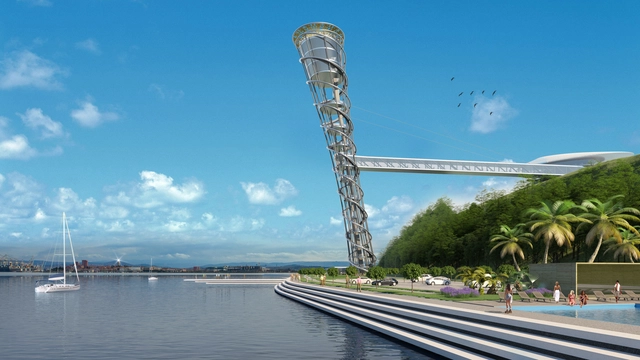
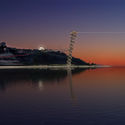
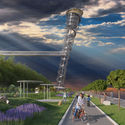
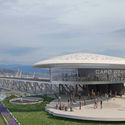
Massimiliano and Doriana Fuksas have released images of their competition-winning “Capo Grande Tower,” a tower and bridge situated on the Slovenian coastline linking Giusterna Beach to Monte San Marco. Designed in collaboration with Slovenian architect Sandi Pirš, the scheme consists of a 365-foot-high (111-meter-high) double-ellipse structure inclined slightly towards the sea, seeking to “immediately become a new symbolic element of the city.”

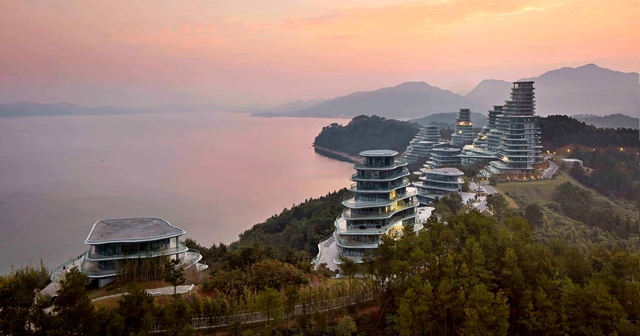
With the unconventional, undulating forms of his buildings—and the fact that his path to architectural success included a stint working for Zaha Hadid—Ma Yansong is often miscategorized as an architect of the latter generation of Deconstructivists, interested only in futuristic forms that push the boundaries of technology for the sake of innovation as an end in itself. But in fact Ma’s designs, especially those in his home country of China, are deeply rooted in nature and tradition, as he explains in the latest interview from Vladimir Belogolovsky’s “City of Ideas” series.

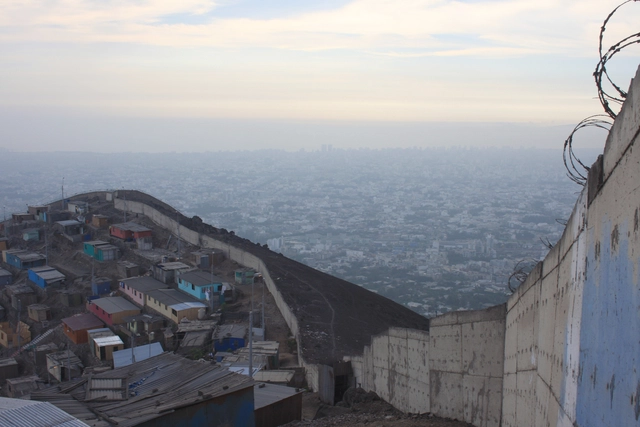
Warning: this article proposes a narrative according to the route taken from one side to the other of the wall, from the predictable to the most unpredictable. To better situate ourselves, the narrative will be told through my personal experience.
"Do you know the wall that divides the rich from the poor?," asked three Greek travelers who, after visiting the "pretty" side of Lima, suspected that something was hiding behind appearances. But, "how is it that from, even though you're from the other side of the world, you knew about the wall?" Well, news travels. And "why is this wall something that has to be seen in our city?" if it's not a cause for pride. I knew exactly what they were talking about. I spelled it out: the wall of shame. Certainly, I wasn't familiar with it in situ either, since I hadn't left my urban bubble, like many of those who live in these parts, so with the same curiosity, as a tourist of my own city, we made our way.
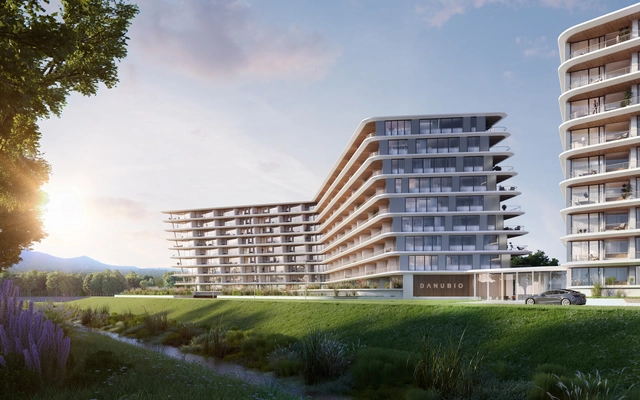
Imagine having input in the design process for your custom apartment built alongside the second largest river in Europe. T2.a Architects has unveiled their design for DANUBIO, a new residential development in Budapest, which aims to do just that.
The driving concept behind the development of DANUBIO is to give the freedom of design back to the residents, inviting them to give input into the configuration of units within the building. Using Grasshopper, a Rhinoceros plug in, a script was developed to allow creative flexibility in the design of each resident’s future home. This algorithm is altered every time a new resident enters the community by allowing them to define the typology, orientation, and location of their future home during the design process.






.jpg?1522258035)
.jpg?1522257707 "© Namsun Lee")
.jpg?1522257974 "© Namsun Lee")
.jpg?1522257677 "© Namsun Lee")
.jpg?1522257892 "© Namsun Lee")
.jpg?1522258035)