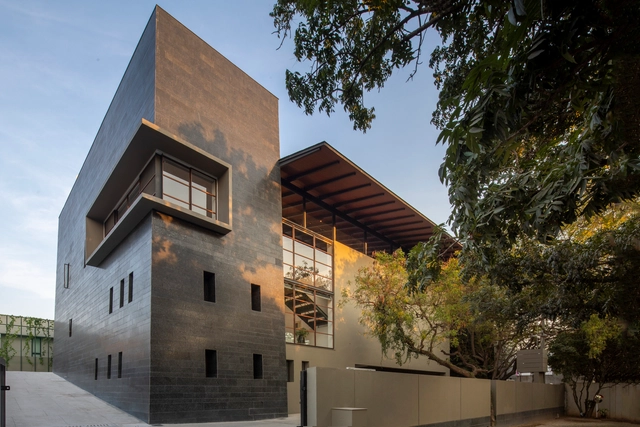
INSPIRELI AWARDS is the world’s largest global student contest in Architecture, Urban Design and Landscape, and Interior Design, which in 2019 involved 136 countries. INSPIRELI AWARDS are enabling new talent to tell their stories and raise awareness on their own world view before they get their chance to start building. It brings together up-and-coming students of architecture, as well as established professionals, and provides a forum for them to connect to the general public.
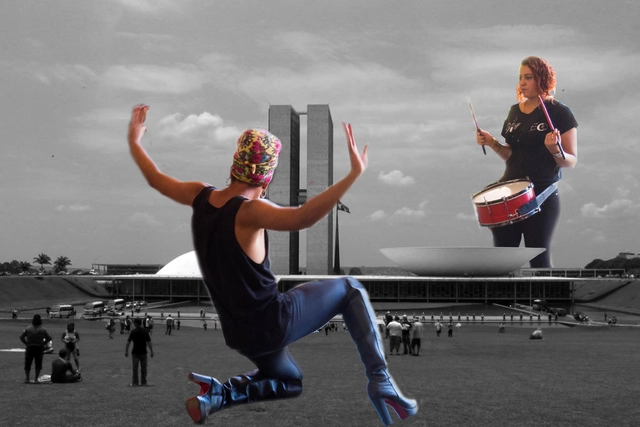
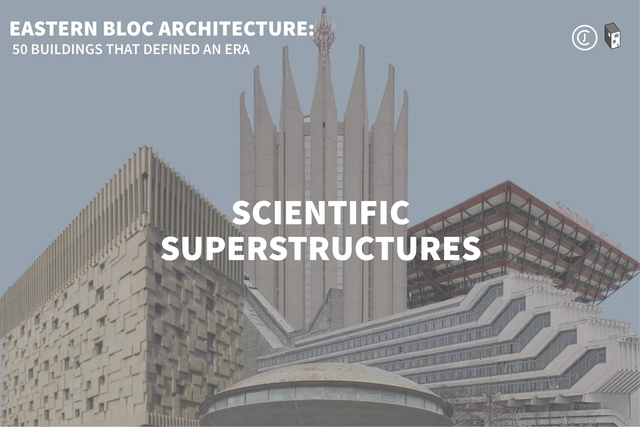
Collage made with photos of Matias Romero and Raquel Aviani/Secom UnB. (licensed under the Creative Commons Attribution-Share Alike 2.0 Generic license and Creative Commons Attribution 2.0 Generic license) via Wikimedia Commons
What would all the built environments be without its users? This question may make it easier to understand that not only do architecture and urbanism sustain themselves as physical spaces, but they also gain meaning mainly through the human and non-human movements and bonds, that - together with the architectural or spontaneous traces that make up the urban landscape - provoke the sensations that each individual feels in a unique way.
This article is part of "Eastern Bloc Architecture: 50 Buildings that Defined an Era", a collaborative series by The Calvert Journal and ArchDaily highlighting iconic architecture that had shaped the Eastern world. Every week both publications will be releasing a listing rounding up five Eastern Bloc projects of certain typology. Read on for your weekly dose: Scientific Superstructures.
Vertical Eco-Village: Urban Lung of Beirut . Image Courtesy of Anastasia Elrouss Architects
Anastasia Elrouss Architects has imagined the MM Residential Tower, a vertical eco-village in the fast-developing suburbs of Beirut, Lebanon. Labeled Urban Lung, the project, sitting on a 900-square-meter rectangular site, generates 14 stacked floor plates around a central and open planted core. The ground floor and basement level, rented by Warchee NGO, will encompass farming and carpentry workshops for women.
The National Association of City Transportation Officials (NACTO) has released guidelines to provide cities with strategies “to redesign and adapt their streets for new uses both during the COVID-19 crisis and in the recovery”. Streets for Pandemic Response and Recovery highlights the most updated street design approaches cities are using, around the world.
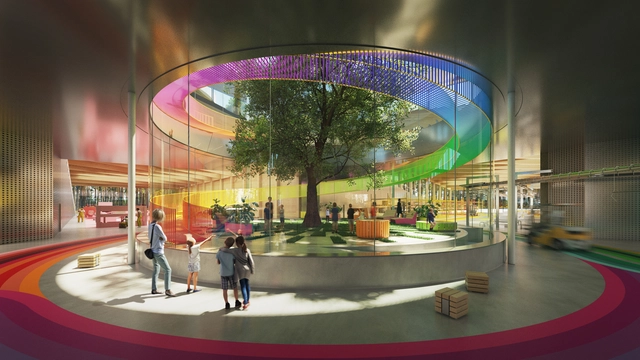
Bjarke Ingels Group and Norwegian manufacturer Vestre have unveiled The Plus, a new project set to become the world’s most sustainable furniture factory. Sited in Magnor, Norway, the factory was envisioned as a village for a community dedicated to the clean, carbon neutral fabrication of urban and social furniture. The Plus aims to be a global destination for sustainable architecture and high-efficiency production.
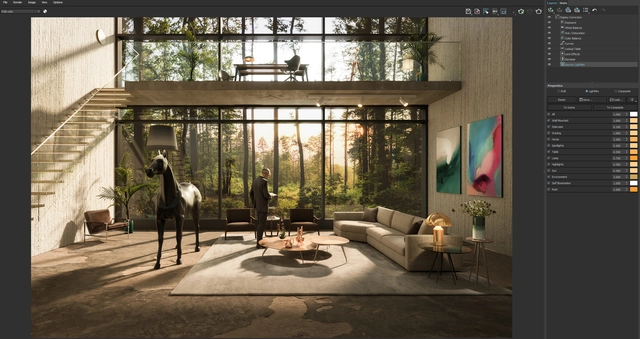
Using the new Light Mix in V-Ray 5, artists and designers can visualize ideas even faster and more effectively. Now, from just one single render, you have the power to create as many images as you can imagine, at a speed that simply wasn’t possible with earlier versions.
There’s always an ongoing debate on whether some designs are stolen or “modified” to become original. Most people assume that if we post pictures of our designs online, we would be giving away our work and other designers and architects will eventually steal them. But should we really hide our designs from the public? Are plans and sections so sacred and innovative to the extent that architects are applying copyrights to them?
Kevin Hui and Andrew Maynard of Youtube’s Archimarathon chat about copying designs, how students and architects can learn from existing designs, and whether plagiarism exists in the field of architecture.
We have all heard the term BIM within the fields of architecture and construction. But have you ever wondered why its use has grown so much in recent years? The BIM (Building Information Modeling) methodology has simplified the work of the different actors in the world of architecture and construction; it not only facilitates the design process but also simplifies the general analysis of the building, minimizing errors.
Thanks to the BIM methodology, it is possible to work collaboratively and maximize efficiency in the management and administration of projects of any size. Architects and engineers work with parametric plans and models, called 3D smart objects.
https://www.archdaily.com/940315/learn-revit-bim-with-this-free-online-introductory-courseGoPillar Academy