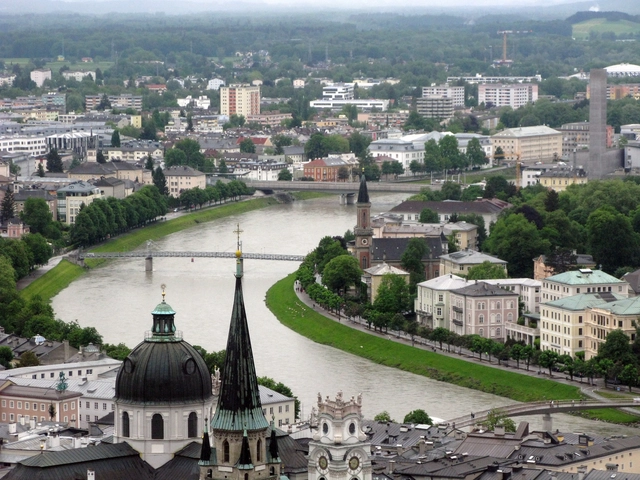
Salzburg seen from the Festung Hohensalzburg (Hohensalzburg Fortress). Image via Flickr User Janusz Sliwinski
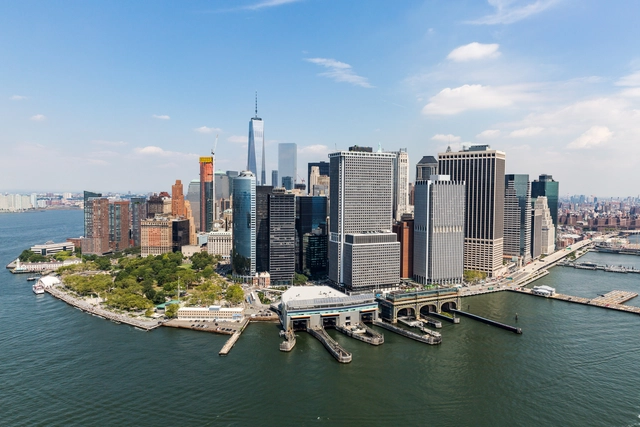
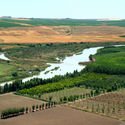
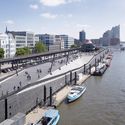
Rivers have long been considered as Earth’s arteries, serving as the essence of urban communities as human settlements developed their shelters and crop beds around them. Centuries later, riverside architecture remained vital as these areas expanded beyond residential typologies, and harnessed dynamic mixed-use developments and public functions. As valuable as they may seem though, these landscapes come with the risk of unexpected floods, increased water levels, or complete droughts, which has forced architects to design built environments that are able to respond to these abrupt changes. So how were these settlements built in the past, and how has today’s urban densification and technological advancements influence the way they are built?
It has been said that we are living through a trans-apocalyptic era. Not pre-or post-apocalyptic, but something in between: a series of interconnected crises that demand action, at a time when it’s too late to prevent the world from changing, but not late enough that all hope has been lost for a (changed, yet positive) world. Architecture is deeply involved in this process, as the transformation of the built environment and the construction industry are key to the way we live.
For ArchDaily, this means our mission rings truer than ever. After a record-breaking 2021, with over 22 million monthly visits across the ArchDaily network, we continue to ask ourselves and our readers: how can we continue to provide inspiration and tools to a new and evolving generation of architects, designers, and - increasingly - architecture enthusiasts, home-owners and anyone who is interested in how we live, where we live and how to move forward? One of the most important ways that we have of doing this is through the Building of the Year Awards.
ArchDaily exists thanks to our readers - you - and so it makes sense that you are also the ones that continue to pick the best of the year in architecture, this time for the 13th consecutive year of the Building of the Year Awards. It is your turn to recognize and reward the outstanding projects that are making a difference, as part of an unbiased, distributed network of jurors and peers that has elevated the most relevant projects over the past decade. Over the next two weeks, your collective intelligence will filter over 4,500 projects down to just 15 stand-outs for the best in each category on ArchDaily.
The 2022 Building of the Year Awards is brought to you thanks to Dornbracht, renowned for leading designs for architecture, which can be found internationally in bathrooms and kitchens.
Early last week, the European Commission and the Fundació Mies van der Rohe announced the 40 shortlisted projects of the EU Mies Award, a prize that commends excellence in architecture, highlighting its contribution to sustainable development. In this context, and two years after the European Parliament voted to support the Green Deal, we review the steps taken by the EU in 2021 towards achieving its sustainability goals and shaping a resilient built environment.
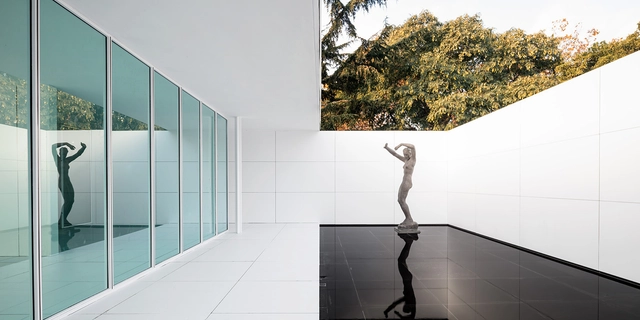
In 1929, Ludwig Mies van der Rohe and Lilly Reich design the German National Pavilion for the 1929 Barcelona International Exhibition. The official reception for the exhibition was held there, presided over by King Alfonso XIII and the German authorities. From then on, the story is well known to everyone. A symbolic work of the Modern Movement, the Pavilion has been extensively studied and interpreted, and has inspired the work of several generations of architects.





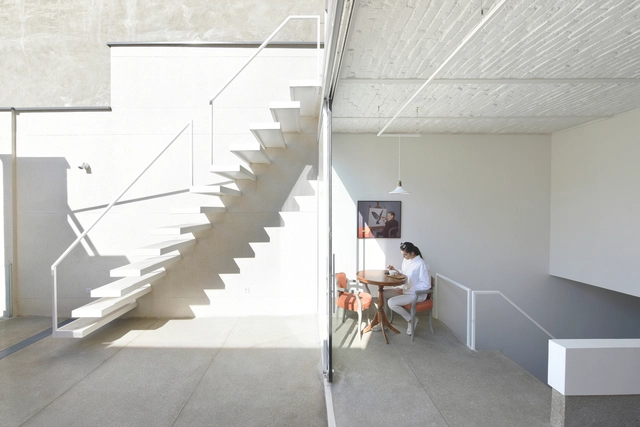
.jpg?1578927693 "© Deed Studio")

.jpg?1578927179 "© Deed Studio")
.jpg?1578926538 "© Deed Studio")