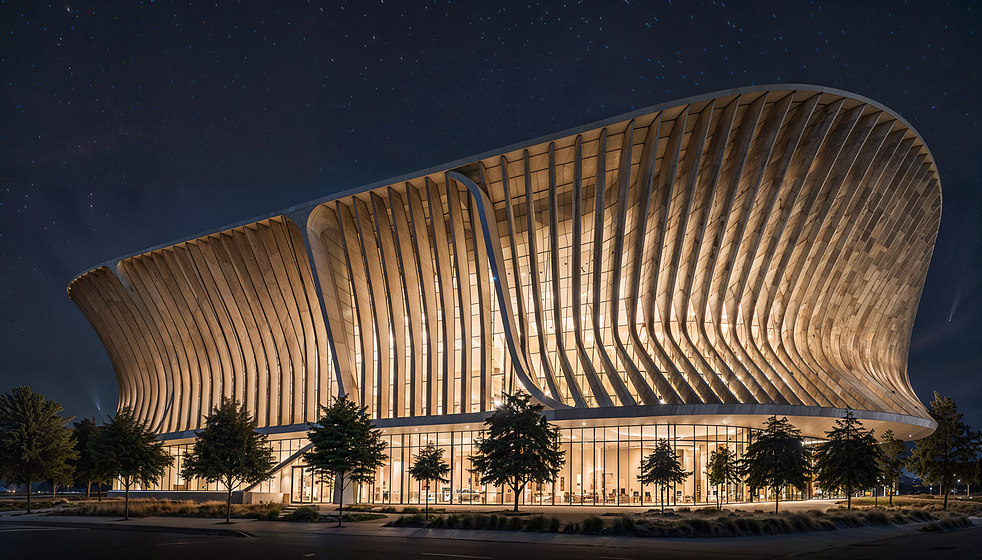
This guide outlines how to implement structured templates effectively, maintain design quality, and support firm-wide governance.


This guide outlines how to implement structured templates effectively, maintain design quality, and support firm-wide governance.
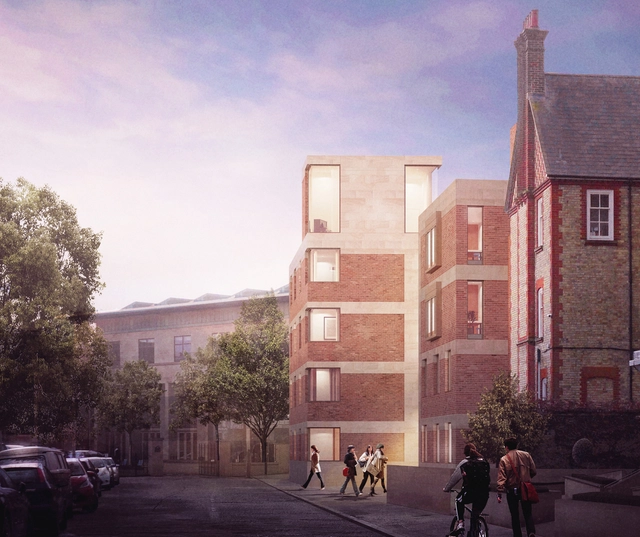
Oxford University has released five shortlisted proposals to overhaul and extend its St Hilda's College. Part of the invited competition Redefining St Hilda's, the concepts are designed to expand student and Fellow accommodation, while providing new social and teaching spaces, Middle Common Room, Porters' Lodge and entrance for the college.
“We are keenly aware of the legacy we give to future generations as well as the opportunity to enhance Oxford itself. This initiative is all about reimagining this beautiful site and creating an academic environment which is pleasing and satisfying to use, and which enables the College to flourish over the next hundred years,” says St Hilda’s College Principal, Professor Sir Gordon Duff.
Read on for a glance at the five shortlisted proposals...
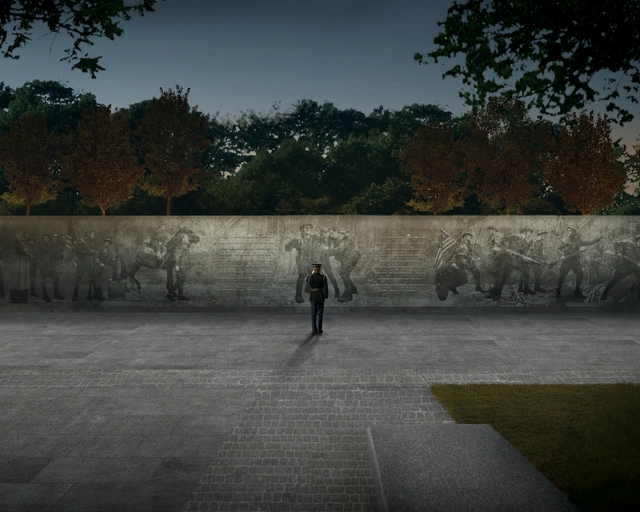
After announcing five finalists in August of 2015, the World War I Centennial Commission has announced the winner of its National World War I Memorial competition: The Weight of Sacrifice by 25-year-old architect Joe Weishaar and sculptor Sabin Howard. The design focuses on the sacrificial cost of war through relief sculpture, quotations of soldiers, and a freestanding sculpture. Visitors are guided through the memorial’s changing elevations by quotation walls that describe the war from the point of view of generals, politicians, and soldiers.
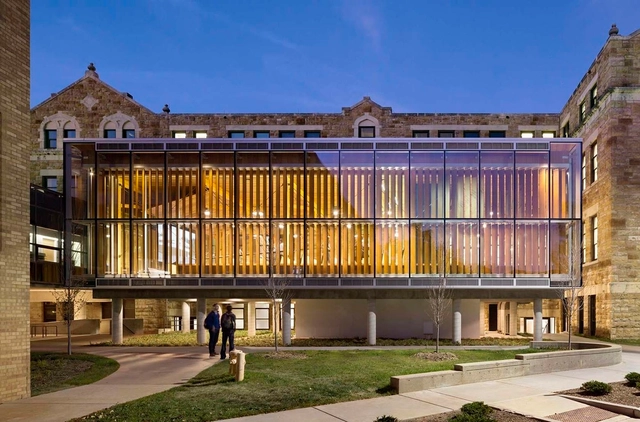
There is a dichotomy to the business of educating architects. While the real world profession is a collaborative field, one in which projects of even the largest and most publicly-acclaimed offices are team-led initiatives, the study of architecture is often insular, myopic, and devoid of such partnerships. Certainly there is a benefit to this style of teaching - it builds confidence for one thing - but it is troubling to think that in a socially-oriented and practically-minded field like architecture, there can be such major disconnects between the process of designing and the act of building. As many critics of current architectural education have pointed out, incorporating design-build projects into school curriculums is a pragmatic solution oriented towards correcting such imbalances.
The fact that more schools don't have programs for students to both design and build their projects is especially perplexing when most universities, particularly those located in the United States, are in such a prolonged period of institutional and budgetary expansion. With many schools now governed like corporate entities, it’s surprising that architecture programs and students are not treated like in-house resources. Why aren’t architecture students treated like assets, the same way that student doctors and nurses are brought into university led medical facilities or scientists into campus research labs?
In his TED Talk filmed at TEDGlobal London in September 2015, Ole Scheeren eschews what he describes as the “detrimental straightjacket” of the modernist mantra “form follows function” in favor a phrase he attributes to Bernard Tschumi, “form follows fiction.” While Tschumi was referencing how cultural artifacts, such as literature, impact architecture, Scheeren reinterprets the phrase, imagining the stories of building users in order to inform the design process. Scheeren recounts, for example, how the daily activities of CCTV employees, the lifestyles of residents of a Singapore housing block, or the traditional tools of Thai fishermen have informed his various designs for OMA and Büro Ole Scheeren.
Of course, this “fiction” that Scheeren describes, these stories, are not really fictions at all, but the real experiences of the people who live or work in his buildings. In that sense, the fiction that drives his forms is really just another type of function, albeit a more human approach to function. Nevertheless, for Scheeren the stories of these designs goes beyond just the users, also encompassing the stories of the hundreds of people it takes to make such buildings a reality, and even how architecture can become a character in the narratives of our own lives.

Following an international open call for 'Intervention Strategies' which connect and correspond to the 2016 Oslo Architecture Triennale’s theme—After Belonging—five proposals have been selected to be developed as part of its core program, to be displayed and discussed throughout the course of the event. The jury have been "pleased and impressed by the wide range of proposals, their creativity, seriousness and sometimes also the humor with which [the submissions] approach issues of real gravity, and by the care and hard work that was evident in almost all of them."
When it comes to scrutinizing architectural materials for their energy efficiency, one offender stands out above the rest: glass. Windows and curtain walls act as one of a building’s main outlets for heating and cooling losses, and as society advances into its more environmentally-conscious future, new, passive solutions will need to be developed to mitigate buildings’ energy footprints. In recent years, various smart glass technologies have been designed to automatically regulate light and heat based on environmental conditions. Yet their high price tags have prevented them from achieving widespread application. Now, a team of MIT researchers may have discovered an alternative to smart glass that could come at an affordable price.
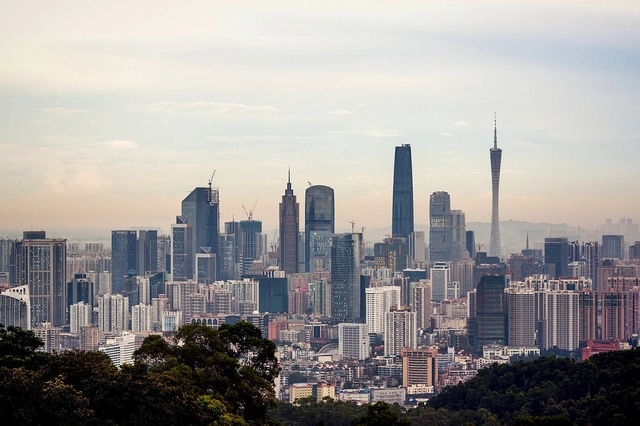
Guangzhou, China's third largest city, is planning to rebuild four bridges in its region - the Renmin, Jiangwan, Haiyin, and Liede Bridges. Three teams have been shortlisted for each bridge, all of which are Chinese practices with the exception of Zaha Hadid Architects, Knight Architects and NEXT Architects. As BDOnline reports, the finalists are expected to propose a range of options, from small upgrades to complete rebuilds. A winner for each will be selected in February, after the Chinese new year.
The shortlisted practices for each bridge include...
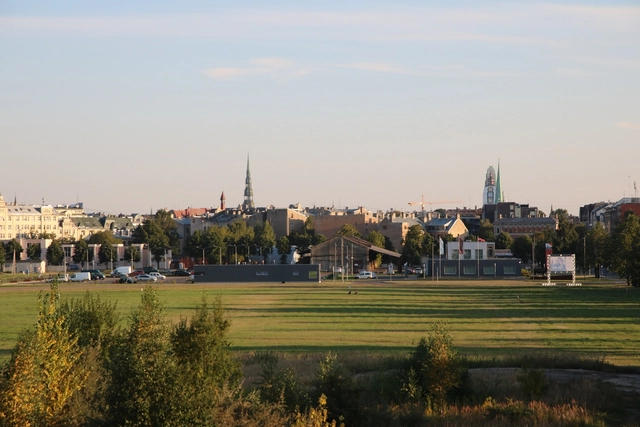
Adjaye, Henning Larsen, and wHY are among seven practices shortlisted in an invited design competition to design the Latvian Museum of Contemporary Art (LMoCA). The new museum, planned for the center of Riga, Latvia, hopes to become "the most visited art museum in the Baltic States, as well as a cultural arts center of interregional significance." It's collection will feature regional art and visual culture from the 1960s.
The seven shortlisted teams are...
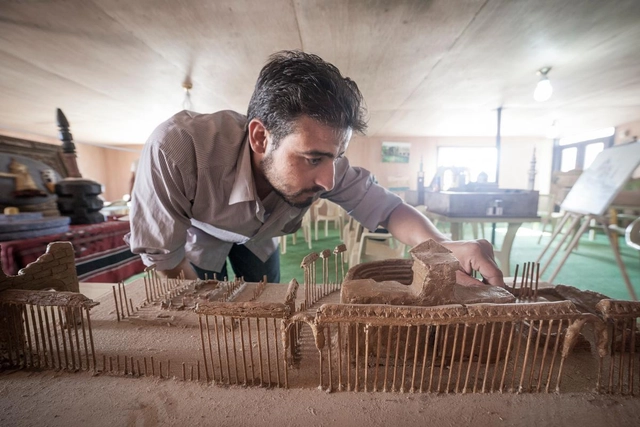
Throughout Syria’s four-year war, many of the country’s ancient monuments and artifacts have been demolished by ISIS and Syrian bombs targeted at Islamic militants. In August, ISIS destroyed Palmyra, one of the most important cultural centers in the world.
Yet a group of Syrian refugee artists in Jordan, with the support of the United Nations and Internal Relief and Development, have been salvaging some memories of their country’s destroyed artifacts. Since November 2014, these artists have been constructing miniature models of Syria’s ancient architecture through a project called Syria History and Civilization, according to a reporty by Buzzfeed News.
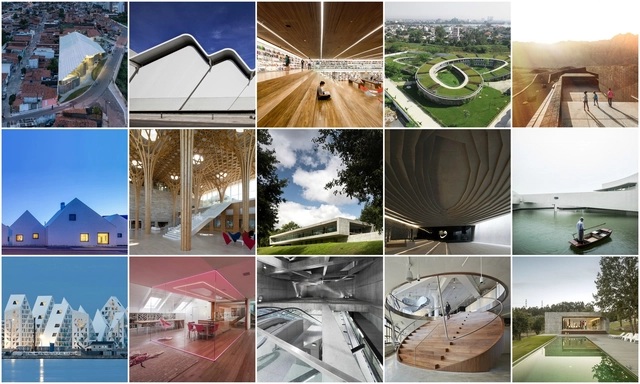
Yesterday, we launched our 2016 Building of the Year awards, inviting you to vote for your favorite buildings that we published in 2015. Now in its 7th year, this global, user-driven awards process has allowed us to break down the traditional barriers in the architectural community, making awards a democratic and representative endeavor. But while taking the collective votes of thousands of architects is an excellent way to find the projects worthy of an award, it's not always the best way to understand why certain projects are deserving of praise; qualitative feedback can be just as important as the quantitative data.
So, as we embark on the Building of the Year journey once again, we wanted to supplement the award with more qualitative input. We'd like you to tell us which is the best project you've seen published on ArchDaily, and why? Whether your favorite building on ArchDaily is a sensitive response to its context, an intelligent use of materials or an intriguing and unexpected form, we want to hear about it! Let us know in the comments below, and the best responses will be featured in a future article.
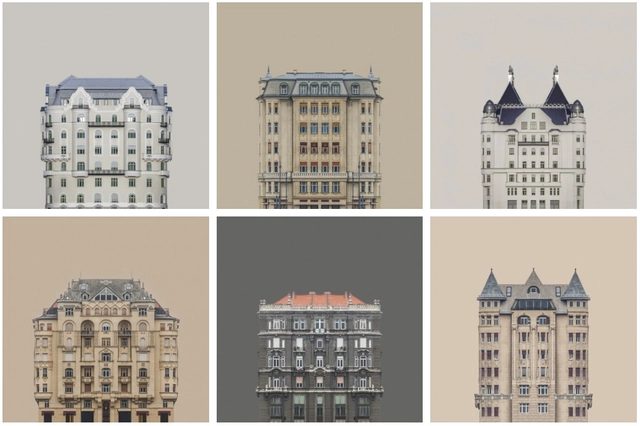
Budapest-born printmaker and photographer Zsolt Hlinka has created Urban Symmetry, a Wes Anderson reminiscent photo series depicting perfectly-symmetrical buildings on the banks of the Danube River. Using partial photos of the buildings, Hlinka creates fictitious compositions through reflections, resulting in new personalities and character in the portraits.
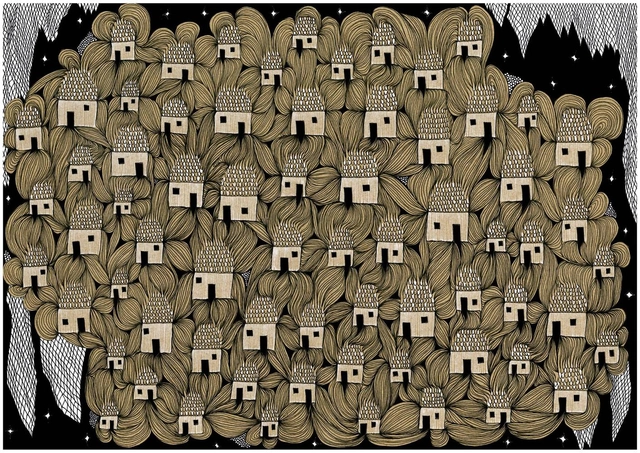
Lima-based architect Karina Puente has a personal project: to illustrate each and every "invisible" city from Italo Calvino's 1972 novel. The book, which imagines imaginary conversations between the (real-life) Venetian explorer Marco Polo and the aged Mongol ruler Kublai Khan has been instrumental in framing approaches to urban discourse and the form of the city. According to Puente, who has shared six drawings with ArchDaily, "each illustration has a conceptual process, some of which take more time than others." Usually "I research, think, and ideate over each city for three weeks before making sketches." The final drawings and cut-outs take around a week to produce.
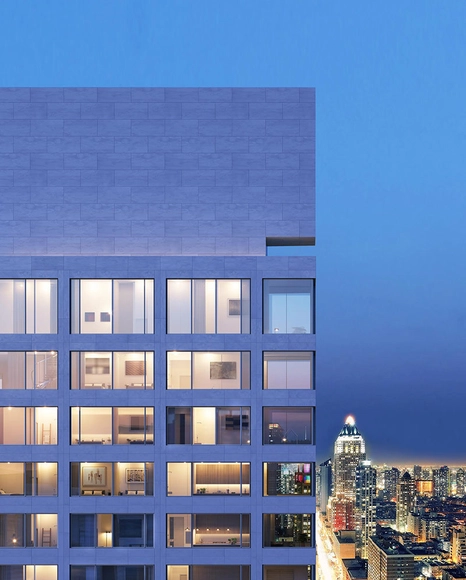
An image of Álvaro Siza's first US building has been released. The luxury New York tower, planned for the corner of West 56th Street and Eleventh Avenue in Midtown, will rise up to 120 meters (just over 400 feet) and offer 80 units, a private roof garden, sun deck, spa and fitness center, and more.
Siza is working with real estate development firms Sumaida + Khurana and LENY on the project. Sumaida + Khurana is the same developer who is collaborating with Tadao Ando on a luxury condominium at 152 Elizabeth Street.
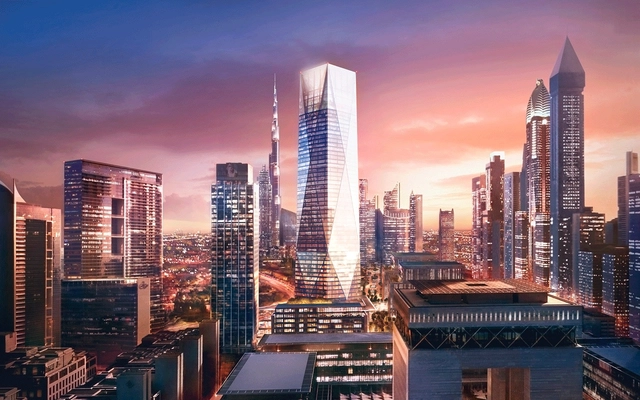
Construction is underway on a new office and retail tower in the Dubai International Financial Center district (DIFC). Designed by Foster + Partners, the 1.5-million-square-foot "ICD Brookfield Place" has officially broke ground and is expected to be completed by late 2018.
"The beginning of construction at ICD Brookfield Place marks the next phase of one of Dubai's most prestigious developments at the DIFC. We were honored to be chosen by ICD Brookfield to design a project that we believe will become a new social focus for Dubai, combining world class office space with a major civic plaza," says Foster.

“I’d like you to join me in hell” declared Catherine Slessor, the first female editor of The Architectural Review in her opening speech for the design debate series Turncoats in late November. What followed was a blistering, hilarious and poetic assault on the world of vanity publishing confided to an audience of 200 critics, architects and designers in SelgasCano’s Second Home. Normally a review such as this one might be accompanied with a film of the event itself, but in this case that is impossible due to Turncoats’ blanket ban on digital recording equipment (including phones) - one of numerous theatrical twists which have made this unassuming project one of the hottest tickets in town.
Turncoats is the creation of former AR Deputy Editor and current Deputy Director of the Architecture Foundation Phineas Harper, Studio Weave and Interrobang founder Maria Smith, and esteemed educator Professor Robert Mull, backed by the Cass architecture and art school. The series is like a hedonistic mash-up of an old school debating society and a ritualistic drinking game. Vodka shots, comedy warm up acts, sexy venues and mischievous polemical propositions make every Turncoats event a surreal and thought-provoking evening. The masterstroke is that not every invited panellist is speaking their mind – some are purely playing devil’s advocate. This reality-bending twist naturally invites a theatricality which blurs the line between argument and arguer, enabling a frankness of architectural debate rarely seen in our nervously polite industry.

2015 was an excellent year for ArchDaily. As we've continued to grow, we've delivered more information and tools to more people all around the world, leveling access to architectural knowledge and encouraging an exchange of ideas from professionals of diverse backgrounds, opening architectural up to everyone rather than just the privileged few.
Now for the 7th consecutive year, we are tasking our readers with the responsibility of recognizing and rewarding the projects that are making an impact in the profession with ArchDaily's 2016 Building of the Year Awards. By voting, you are part of an unbiased, distributed network of jurors and peers that has elevated the most relevant projects over the past six years. Over the next two weeks, your collective intelligence will filter over 3,000 projects down to just 14 stand-outs - the best in each category on ArchDaily.
This is your chance to reward the architecture you love by nominating your favorite for the 2016 Building of the Year Awards!
Full rules after the break.
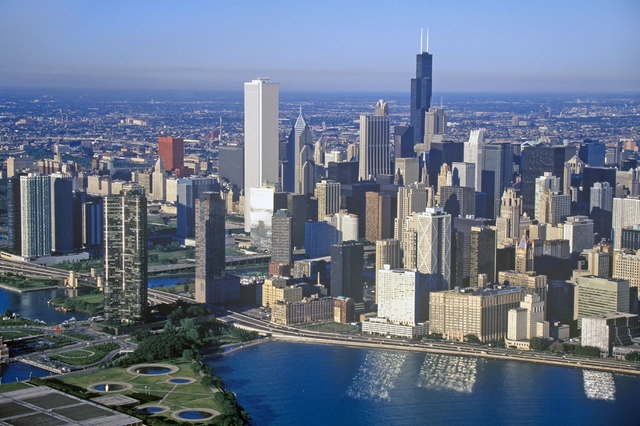
Chicago is one of the most architecturally rich cities in the world with the history of modernism embedded in its skyline. From the Willis Tower to the Aqua Tower, the skyscrapers of Chicago have led the development of tall buildings, the city becoming a breeding ground for innovations in structure and design. The Windy City has solidified itself among other metropolitan giants like New York and London as having one of the most recognizable skylines in the world.
This new infographic by Chicago Line Cruises offers a look at some of the most visible figures in Chicago’s skyline, with embedded information on each of the buildings. View the infographic after the break.
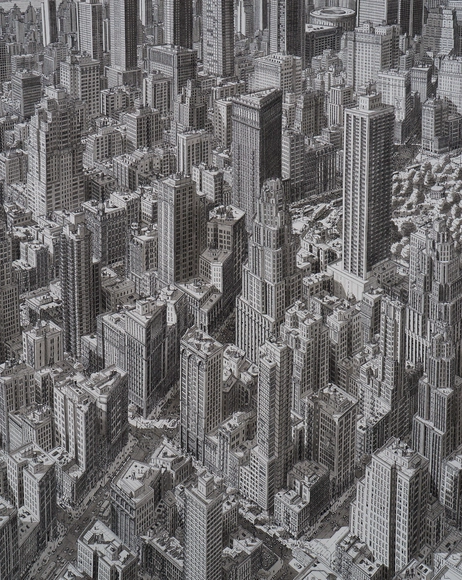
Over the past few years, Netherlands-based artist Stefan Bleekrode has been creating cityscape drawings from memory of cities across the globe. Basing his work on impressions from trips throughout Europe and North America, Bleekrode utilizes pen and ink with watercolor shading to bring urban landscapes to life.
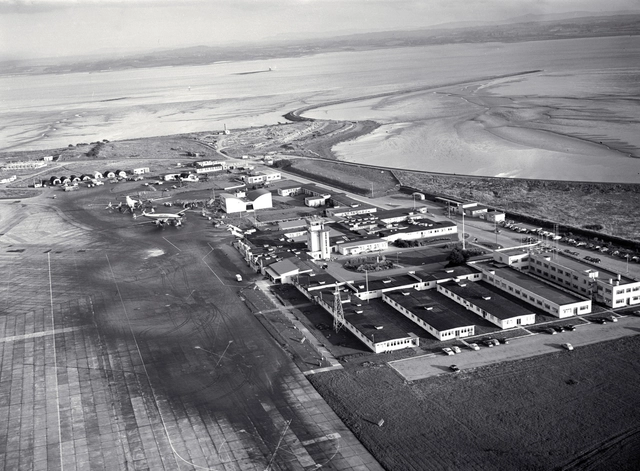
At the dawn of the age of transatlantic commercial aviation, Shannon, a small town on the west coast of Ireland, was thrust into the spotlight. By 1959 it had been developed as the world’s first Free Trade Zone and New Town, providing a new—and persistent—business model for US multinationals seeking cheaper ways to operate in Europe. On the other side of the world, China was beginning to develop its urbanisation policy and was interested in how Shannon had successfully decentralised its administration from Dublin. After many visits in the early 1980s by Chinese leaders to study this model, under the direction of Deng Xiaoping, the Shannon planning system was used as a template in the formation of Shenzhen and has since been rolled across China.
New Horizon_architecture from Ireland is the flagship exhibition programme for Irish architecture and the built environment as part of Irish Design 2015. Shan-Zhen was first presented at the Bi-City Biennale of Urbanism\Architecture in 2015.
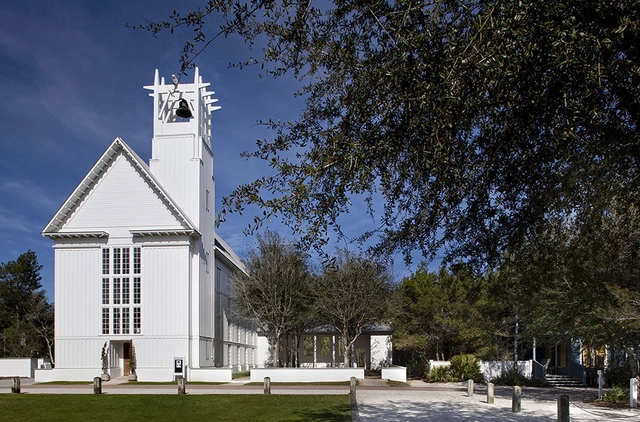
Florida architect and founder of Merrill, Pastor & Colgan Architects, Scott Merrill has been named the 14th recipient of the Richard H. Driehaus Prize at the University of Notre Dame. Lauded for his "extensive knowledge of vernacular and classical traditions in architecture," Merrill is best known for his Seaside Chapel in Florida.
“Scott Merrill has demonstrated how the principles of classicism can be used as a foundation for designing buildings that respond to and express regional character while employing the richness of precedents found throughout the ages, including our own,” said Michael Lykoudis, Driehaus Prize jury chair and Francis and Kathleen Rooney Dean of Notre Dame’s School of Architecture. “His applications of architectural forms from various times and places to modern settings are used to reinforce the values of community, beauty and sustainability without sacrificing economy.”

For the first time in history, a John Hejduk structure has been permanently installed in a public space. The American architect's Jan Palach Memorial has officially opened last week at Jan Palach Square (formerly Red Army Square) on the Alšovo Riverbank in Prague after 25 years in the making.
"The work, entitled House of the Suicide and House of the Mother of the Suicide, which was originally built in Atlanta in 1990, then Prague in 1991, honors the Czech dissident Jan Palach, whose self-immolation in protest of the Soviet invasion of 1968 served as a galvanizing force against the communist government in Czechoslovakia. A plaque at the base of the monument displays the poem The Funeral of Jan Palach, by former School of Architecture Professor David Shapiro," says The Cooper Union.
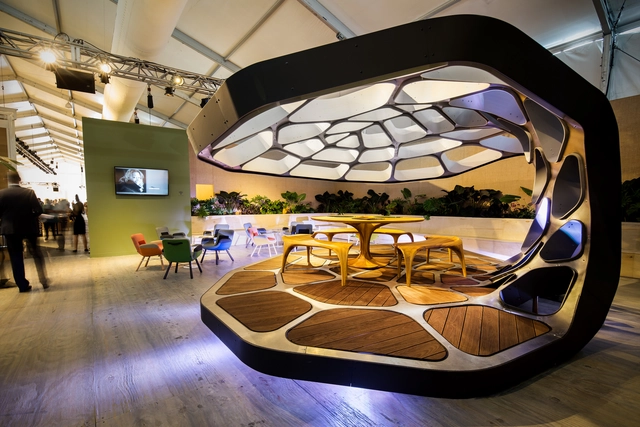
Following the recent trend of luxury pre-fabricated structures like Muji’s recent three huts, Robbie Antonio’s “Revolution Pre-Crafted” is a collection of pre-fabricated pavilions by 30 top designers and architects, including Zaha Hadid, Sou Fujimoto, Daniel Libeskind and Gluckman Tang. Some have already been built, being exhibited at Design Miami, while others are planned for the future.
With recent advancements in building technology, Revolution Pre-Crafted hopes to democratize the design of pre-fab structures, offering a line of products that incorporate the distinct spatial and social brands of the designers. See a selection of the Revolution Precraft line after the break.

When reading about the work of Alejandro Aravena, it can sometimes seem like two distinct discussions: one about his widely praised social housing innovations, and another about his impressive (albeit more conventional in scope) buildings for universities and municipalities. In this post originally shared on his Facebook page Hashim Sarkis, the Dean of the MIT School of Architecture and Planning, connects the two apparently separate threads of Aravena's architecture, discovering the underlying beliefs that guide this year's Pritzker Prize winner.
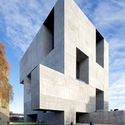
Much of the work of Alejandro Aravena, whether designed alone or with the group ELEMENTAL, embodies a eureka moment, a moment where after a careful interrogation of the program with the client, the architect comes up with a counterintuitive but simple response to the charge. (For the computer center at the Catholic University, the labs have to be both dark and well-lit. For the social housing in Iquique, instead of a full good house that you cannot afford, you get a half good house that you can). In turn, these simple equations are embodied in buildings that usually acquire similarly simple forms. The clients and occupants repeat the “aha” with Aravena’s same tone and realization. “If I cannot convincingly convey the design idea over the phone, then I know it is a bad idea,” he says.
But you can browse the last one: 417




.jpg?1453730339 "Quinta Monroy housing. Image Courtesy of ELEMENTAL")
