Kimberly Dowdell, 2019-2020 NOMA National President, recently issued a statement on behalf of the National Organization of Minority Architects on the nature of NOMA's advocacy and mission. Her words follow protests seeking justice for the killing of Minneapolis resident George Floyd in the United States.
We spoke with Beat Guhl, CEO of Sky-Frame, during the Swiss Bau fair – one of the largest events in the materials industry. Sky-Frame produces frameless sliding window systems; vital components to achieve an effective and efficient transparency in architectural projects. The company is constantly pushing for technical innovation and works closely with architects to help achieve fluid spatial concepts.
My decision to study architecture was a naive one, made after having taken several vocational tests I found on Google. When I found out it was one of the toughest courses in Brazilian public universities, I thought about giving up. But I was already hooked by the history of architecture and its social role.
However, nothing is perfect. Architecture and Urban Planning is one of the most elite courses in the most renowned Brazilian universities, something that is reflected outside of the classroom as well. The architects went on to serve the rich, casting aside the needs of the cities and the poor.
In densely-populated cities, where construction projects tend to require party walls,the close proximity of other buildings complicate even further the process of creating spaces that incorporate elements like natural light and cross-ventilation. But this of course is not the only challenge: the ever-changing and multiplying nature of cities has given rise to atypical lots--properties that have been created by subdividing large swathes of urban land. In general, the reduced dimensions force developers to look for ways to maximize the limited space available to them.
Harvard Graduate School of Design (Harvard GSD) has announced Daniel Fernández Pascual as the winner of the 2020 Wheelwright Prize. Now in its eighth cycle, the Wheelwright Prize supports innovative design research, crossing both cultural and architectural boundaries, with a $100,000 grant intended to support two years of study. The 2020 Wheelwright Prize drew over 170 applicants from over 45 countries.
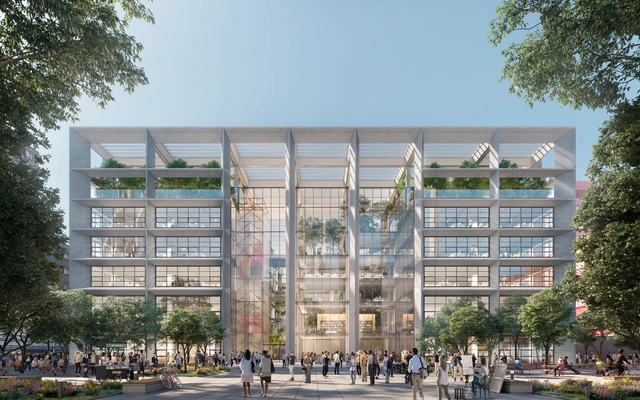
In Belval Luxembourg, ICÔNE, the Foster + Partners-designed office development has broken ground. Tackling the future of workspace, the design generates flexible layouts and addresses the current tendencies for safe working environments.
Due to the COVID-19 crisis, the world is in isolation and everyone is confined in their own house. In an attempt to analyze and understand how people are dealing with forced isolation in their current living conditions, KAAN Architecten has released an online survey that questions the space we are currently living in and how it influences our mood.
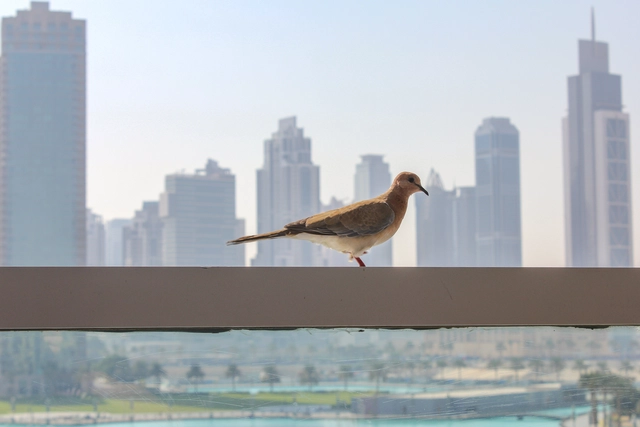
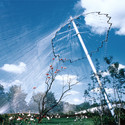
Every year around this date, festivals, educational events, exhibitions, and excursions are organized to celebrate and raise awareness about the conservation of migratory birds. These species have seen their habitats transformed during the last few decades in part because of human action: designers and real estate agents have built and nurtured an urban imaginary dominated by glass structures as a symbol of power and progress. Before proceeding with the conquest of the sky, it is worth considering some materials that are more friendly to the species with which we cohabitate.
For students graduating this year with the global economy on pause, “commencement” might feel more like entering limbo. But while today’s crisis is unique, it’s not the first recession within memory. Many architects and designers at SOM have faced periods of uncertainty and often learned valuable lessons along the way. In turn, the team decided to share their stories.
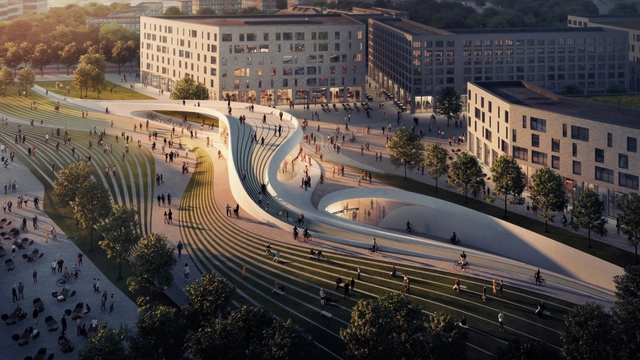
In an era of great marketing efforts, in which architectural ideas increasingly seem to focus on hyper-realistic representation in an attempt to convince clients (or the jury in the case of architectural competitions) that the upcoming construction will achieve just as much quality as the visual fantasy, renderings become highly important in a project's presentation.
Because of this, every year there are new updates, as well as the launching of new software specialized in renderings, tools capable of achieving such impressive results that may lead to images being mistaken for photographs, thus blending the unreal with the notion of ultra-reality.
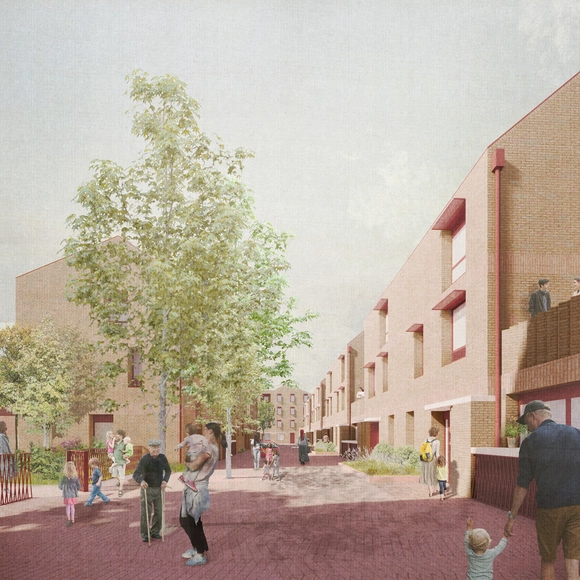
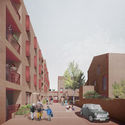
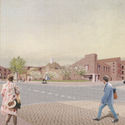
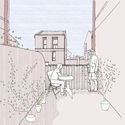
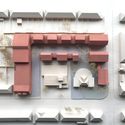
Morris + Company’s affordable rental housing development has just been given planning permission by a virtual committee. Located in Barking and Dagenham, the modern 56 high-quality affordable rental homes are designed for “residents ranging from single occupants to couples and families”.
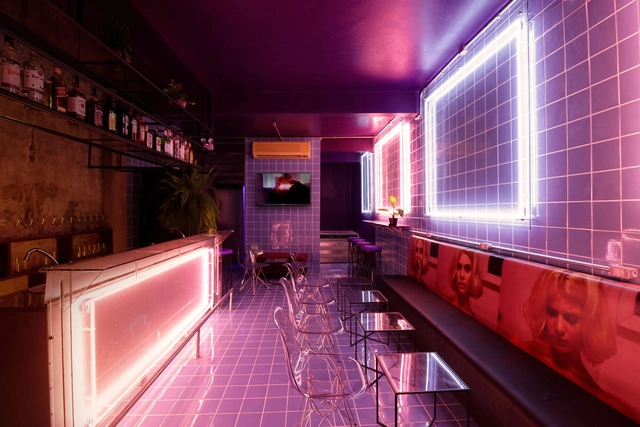
Neon lights are a bold, cosmopolitan statement that can easily revitalize or accentuate an architectural space or structure. With eye-catching brilliance, a plethora of color options, and ties to a retro aesthetic, these lighting pieces can make a space feel simultaneously modern and nostalgic. Yet few understand the scientific workings or material properties of neon, and many architects neglect its use due to its narrow association with commercial signage. Below, we explore how neon works, its architectural history, and how architects can continue to use it today.
https://www.archdaily.com/940713/how-neon-lighting-shapes-architectureLilly Cao
Christo Vladimirov Javacheff, best known as Christo, has passed away at 84 years old of natural causes, in his house, in New York City. The Bulgarian artist, best known for wrapping The Pont Neuf in Paris and the Reichstag in Berlin, has created along the years, with his late wife Jeanne-Claude, large-scale architectural interventions in urban and rural environments.
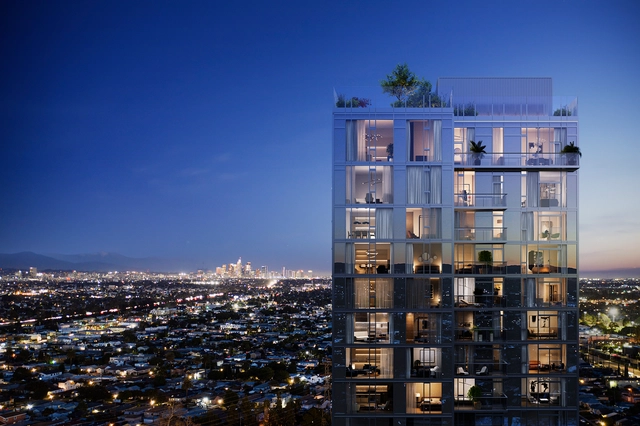
Pre-leasing for the 31-story high rise residential tower ARQ is set to begin in West Los Angeles. Designed as part of the Cumulus District development, the project is sited between Culver City and West Adams. In creating ARQ, architecture firm Solomon Cordwell Buenz and interior design firm Rodrigo Vargas Design created units with panoramic views of Los Angeles spanning from the Pacific Ocean to Downtown.
As one of the leading architects of Japan's increasingly highly-regarded architecture culture, 2013 Pritzker LaureateToyo Ito (born June 1, 1941) has defined his career by combining elements of minimalism with an embrace of technology, in a way that merges both traditional and contemporary elements of Japanese culture.
The launch of the 2020 educational offer of YACademy –YAC’s program to open its network of the most prestigious studios in the world for the most deserving young designers– is the right moment also to narrate some of the experiences the students had before starting their collaborations with the main characters of the contemporary architectural world.
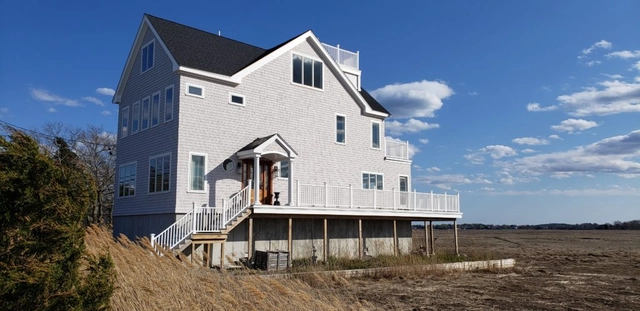
Like most of you, I have spent the last two months quarantined. I’m a bit embarrassed to say it, but just as nobility fled the cities during the plagues of the Middle Ages, we’ve been lucky enough to escape densely populated Boston, a hotpot for the pandemic, and spend our days along the shore in Marshfield, a small town about 45 minutes south, where we have a weekend house. I must constantly remind myself that it could be far worse.
The Midnight Charette is an explicit podcast about design, architecture, and the everyday. Hosted by architectural designers David Lee and Marina Bourderonnet, it features a variety of creative professionals in unscripted conversations that allow for thoughtful takes and personal discussions. A wide array of subjects are covered with honesty and humor: some episodes provide useful tips for designers, while others are project reviews, interviews, or explorations of everyday life and design. The Midnight Charette is also available on iTunes, Spotify, and YouTube.
This week hosts David and Marina are joined by Marc Neveu—Chair of Architecture, The Design School, Arizona State University and Executive Editor of the Journal of Architectural Education; Renée Cheng—Dean of the College of Built Environments, University of Washington; and Kiel Moe—Gerald Sheff Chair in Architecture, School of Architecture, McGill University to discuss how COVID-19 has impacted teachers and students, the future of education (changing studio, reviews, and lectures), and more. Enjoy!
https://www.archdaily.com/940505/covid-19-and-the-future-of-architectural-educationThe Second Studio Podcast
Mabel O. Wilson, Bryony Roberts, and the Marching Cobras of New York, Marching On, 2017–18. Commissioned by Storefront for Art and Architecture, exhibition at Storefront for Art and Architecture, supported by the National Endowment for the Arts, the Graham Foundation, and the LMCC. Photo: Jenica Heintzelman.
“The center of architecture is shifting and cannot hold,” writes guest editor Bryony Roberts in Log 48: Expanding Modes of Practice. This moment of change, in which issues of inequity and intersectionality are coming to the fore, represents “an invitation to think differently, a chance to reask the questions that haunted the 20th century.” To that end, Roberts conducted a series of interviews with experimental architects exploring new forms of practice, including this conversation with Mabel O. Wilson.
Mabel O. Wilson is a scholar and designer who has become a leading voice in discussions on space, politics, and memory in black America. She is the Nancy and George Rupp Professor of Architecture at Columbia University, as well as a professor in African American and African Diasporic Studies and the associate director of the Institute for Research in African American Studies. Her books include Begin with the Past: Building the National Museum of African American History and Culture and Negro Building: Black Americans in the World of Fairs and Museums. Her interdisciplinary practice Studio & is part of the architectural team that designed the Memorial to Enslaved African American Laborers at the University of Virginia. She is also a founding member of Who Builds Your Architecture? (WBYA), a collective that advocates for fair labor practices on building sites worldwide. We talked at an outdoor cafe near Columbia on one of the last warm days in fall 2019.
https://www.archdaily.com/940496/radical-repair-log-48-in-conversation-with-mabel-o-wilsonBryony Roberts
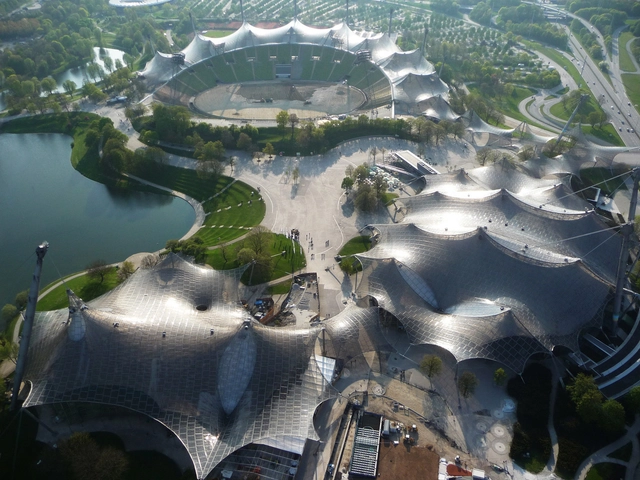
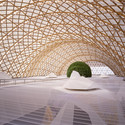
German architect and structural engineer Frei Otto (31 May 1925 – 9 March 2015) was well known for his pioneering innovations in lightweight and tensile structures. Shortly before his death in 2015 he was awarded the Pritzker Prize and prior to that he was awarded the RIBA Royal Gold Medal in 2006. Much of his research in lightweight structures is as relevant today as when he first proposed them over 60 years ago, and his work continues to inform architects and engineers to this day.
Through the past few months, the importance of community interaction and mental well-being has been felt by all. Yet, the need for a support system and constant reassurance has been a recurrent issue for much longer for forcibly displaced populations. Adding to the current health fears these communities, estimated at nearly 70.8 million ( 25.9 refugees only) around the world, struggle with traumas, mental health issues and have much difficulty in adapting to temporary or permanent foreign settings.
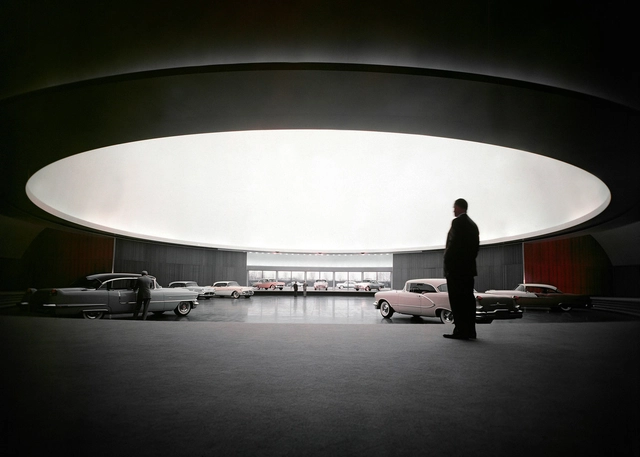
The General Motors Technical Center fascinates with architecture filled with an abundance of light. Interior offices and showrooms evoke the impression of a calm overcast sky for a human environment and beauty. The campus designed by Eero Saarinen represents an influential icon of midcentury design. Susan Skarsgard's book "Where Today Meets Tomorrow" opens intriguing perspectives to the origin of the American landmark.
Architects have long explored the concept of integrating interior and exterior, smoothing out the physical and visual boundaries in an attempt to bring the landscape into the architecture. However, when visiting the site to develop the project, two distinct scenarios may appear: an urban terrain, lacking a view, or natural elements; or a green area with trees and bushes, for example. In the latter case, many projects rely on the on-site location of each tree to accommodate the architectural design, respecting them, and creating new views, through patios and connecting them with the new landscape design. However, based on studies of the species and their size, it is increasingly common for these trees to be incorporated into the interior space, either partially or completely enclosed.
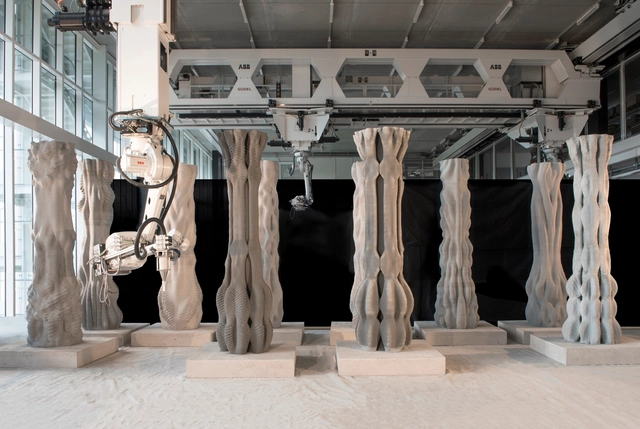
A couple of years ago, digital fabrication was making headlines regularly, promising to drastically change the architecture practice. The revolution in architecture might not have arrived yet, but research projects, experiments and the dedication of several architects and universities already opened a new realm of possibilities for architectural expression. Therefore, it seems appropriate to give an overview of the impact the technology had so far within the architecture practice. This article covers the different types of processes within the field and the projects that experiment with them, with the scope of reframing the architectural potential of digital fabrication.












.jpg?1591019033 "Camper NYC Store / CAMPER + Jonathan Olivares. Image Courtesy of Alexander Haas")











.jpg?1590710505&format=webp&width=640&height=580)




_Ahmed_Hossam_Saafan.jpg?1589841779&format=webp&width=640&height=580)
_Thomas_Noceto.jpg?1589908222 "© Thomas Noceto")
_Rizvi_Hassan.jpg?1589841727 "Integrated Community Center. Image © Rizvi Hassan")

_Katie_Edwards.jpg?1589908688 "Naidi Community Hall. Image © Katie Edwards")
_Ahmed_Hossam_Saafan.jpg?1589841779)