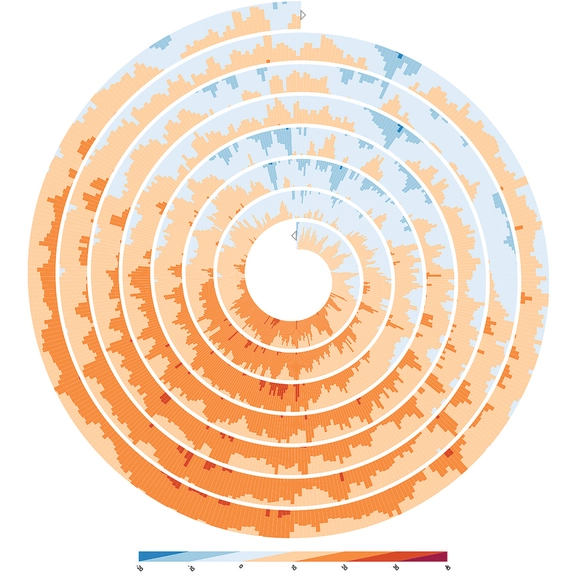
Manuel Lima is a designer, researcher and author well known for his work on visualizing and mapping complex networks. A Fellow of the Royal Society of Arts, he was named one of the "50 Most Creative and Influential Minds" by Creativity magazine, and is both the founder of VisualComplexity.com and a Senior UX Manager at Google.
We talked with Lima to find out his thoughts on the connection between data visualization and architecture. The following conversation explores his inspirations and process, as well as his views on how data visualization can help improve the quality of our cities.
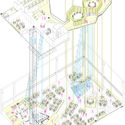
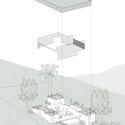
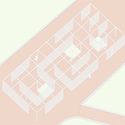
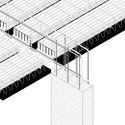
An axonometric perspective, also called parallel projection or axonometry, is an orthographic projection on an oblique plane as a means of representing three-dimensional objects. It is a very efficient way to illustrate a project since it can represent not only conceptual schemes but also construction details in a very didactic style. It allows us to change the position of the viewer when rotating the axes and thus generating several visual combinations of the design, that can help answer any questions the contractor or client may have.
Created by Argentinian photographer and visual artist Federico Winer, Ultradistancia, the fine art project based on high-resolution satellite images, has released its latest series “Monsters of Mine”. Showcasing pictures of large mines from all over the world, "Monsters of Mine" reveals a fascinating carved out topography.
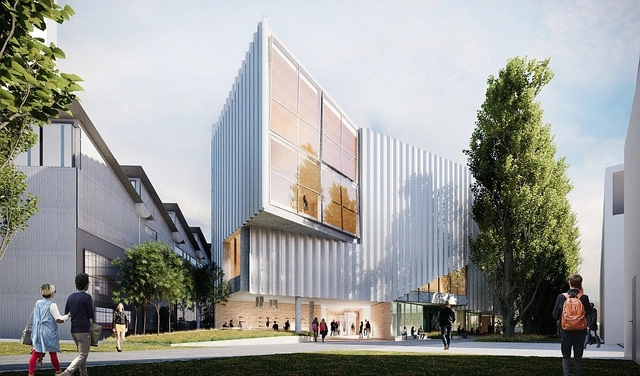
River’s Edge Building. Image Courtesy of University of Tasmania
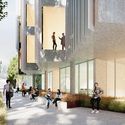
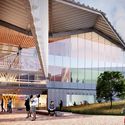
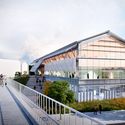
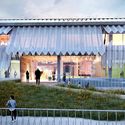
John Wardle Architects has designed a pair of two new building for the University of Tasmania. Created as part of the extensive redevelopment of the Inveresk campus in Launceston, the buildings are strategically located within and between existing campus facilities to amplify the shared opportunities of the precinct. The cornerstone buildings will house a significant portion of the University of Tasmania’s teaching and research activity in Inveresk.
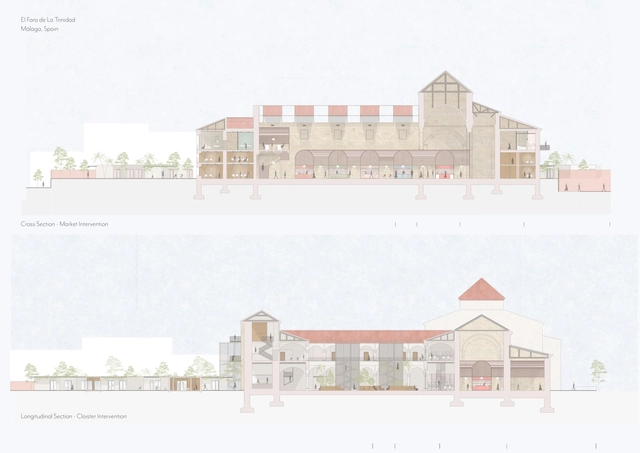
El Faro de la Trinidad - Project by Mirian Otto Hernández Palacios. Image Courtesy of IE University
The relationship between space and well-being has always been a key consideration at IE University’s School of Architecture & Design. As this concept becomes increasingly widespread, the boundaries of what’s possible are being pushed. By providing students with a global vision of architecture and design, they are able to create multipurpose spaces that boost well-being and remain flexible as needs evolve.
As far as written records report, “prehistory” dates back between 35,000 BCE and 3000 BCE in the Middle East (2000 BCE in Western Europe). Ancient builders had a profound understanding of human responses to environmental conditions and physical needs. Initially, families and tribes lived together in skin-covered huts and bone structures. Thousands of years later, human settlements evolved into fortified mud-brick walls surrounding rectangular volumes with pierced openings for ventilation and sunlight.
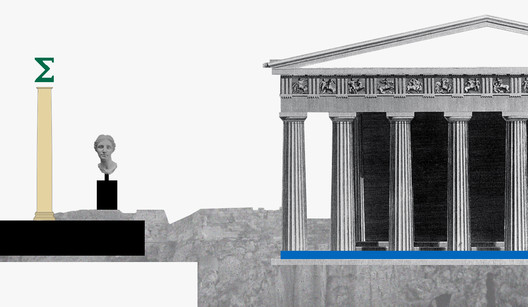
During the upcoming months, we will be publishing short articles on the history of architecture and how it evolved to set the fundamentals of architecture we know today. This week, we are going back to one of the most prominent and influential periods known to architecture: Greece; Aegean, Archaic, classical, and Hellenistic periods.
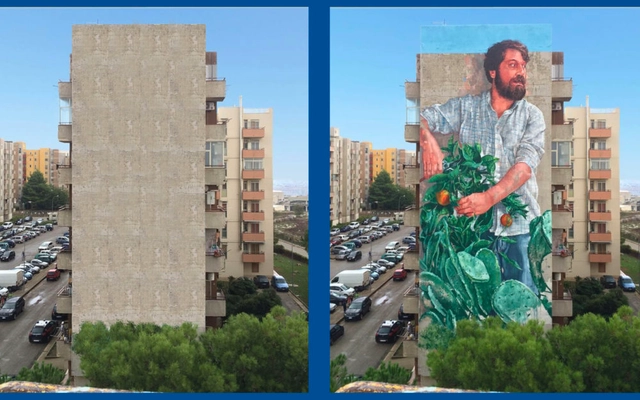
Since 2015, Ragusa, Sicily has hosted FestiWall, an international art festival devoted to enhancing the public realm and improving citizen engagement with the modern section of an old city. The image above shows two views of a residential tower before and after FestiWall. Which one grabs your eye?
We’ll guess you’re drawn to the one with the art at right. Running the image through biometric software predicts you’ll immediately focus on the man in the mural.
https://www.archdaily.com/942916/empathy-in-design-measuring-how-faces-make-placesAnn Sussman & Janice M. Ward
Strelka hosts online public presentations of The Terraforming 2020 program to showcase the results of five months of research, investigation and creative exploration.
The two events will premiere projects by 9 multidisciplinary teams and 4 research fellows. The work presented will cover a range of topics of space and sci-fi, artificial food and landscapes, geo- and macro-engineering, and range from speculative design proposals, to cinema, to legal frameworks, to practical propositions for intervention.
The presentations will be accompanied by keynotes from the faculty of The Terraforming – Benjamin Bratton, Lisa Messeri, Jussi Parikka, Helen Hester and Kim Stanley Robinson.
https://www.archdaily.com/942719/the-terraforming-watch-strelka-2020-research-project-presentationsStrelka Institute
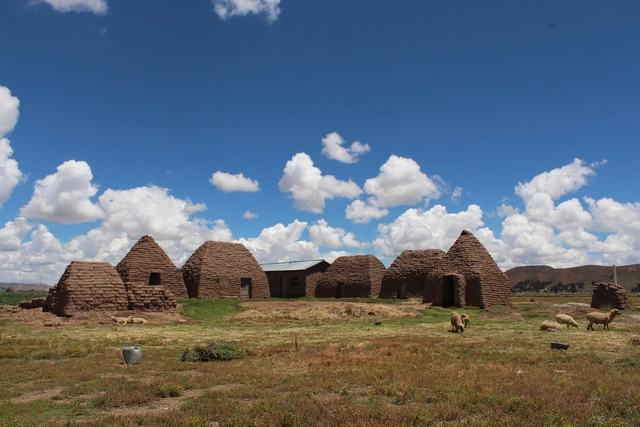
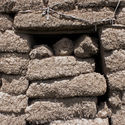
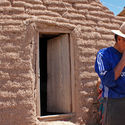
As a part of the XV Taller Social Latinoamericano architectural conference that took place in Puno, Peru, we visited the Iruito Tupi zone in Huancané province alongside Francisco Mariscal, Director of the Puno Cultural Center. For the conference, Mariscal gave a presentation on the history of putucos, pre-Columbian houses made with a mixture of earth and grass.
History has the habit of repeating itself; using the same script, just with different names, figures, and places. Some 10,000 years ago, the Altiplano and the Titicaca lake basin, wedged between modern day Peru and Bolivia, became home to hunters and gatherers who subsisted on the herds of llamas and vicuñas as well as the bounty of birds and fish.
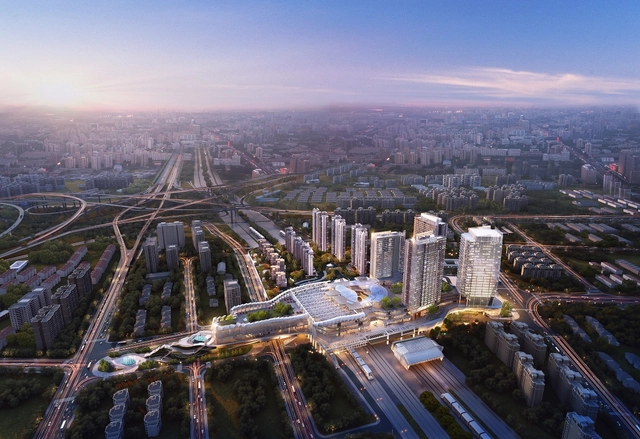
Ronald Lu & Partners has announced the completion of phase one of Tianhui TODTOWN: China’s first transit-oriented development, after 13 years of collective effort. The project promoting sustainability, mass transit, and community in Shanghai, takes the concept of public transit-oriented development (TOD) important in the development of China’s urban areas to the next level.
The Russian Federation Pavilion announced that its exhibition Open! will "move to an entirely online presence". Coping with the recent outbreak of COVID-19 that led to the postponement of the Venice Biennale 2020, the pavilion will transform into a digital platform, to ensure the continuation of the projects.
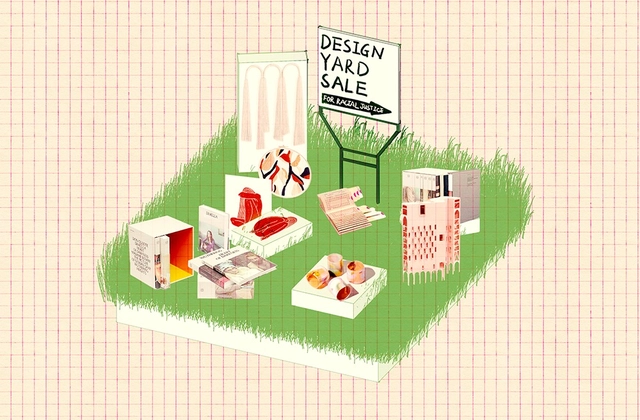
Students and alumni from the Harvard Graduate School of Design are launching an online Design Yard Sale to raise funds in support of the movement against systemic anti-Black racism. The team will sell and auction creative works donated by the design community, and all net proceeds will go towards the Bail Project and Colloqate Design. Among Design Yard Sale’s offerings will be works donated by renowned designers, artists, and scholars such as Toshiko Mori, Oana Stanescu, Rachel Israela, Jeanne Gang, Billie Tsien, Snarkitecture, Jerome Byron and VERV LONDON.
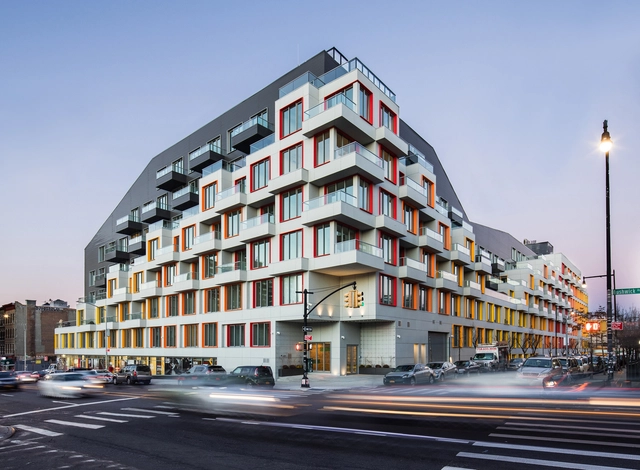
There’s a new kid on the block making noise in Brooklyn’s thriving Bushwick neighborhood. At 7-stories tall, 500 units, and occupying 489,000 square feet of real estate, The Rheingold is one of the most expansive multi-family developments in Brooklyn to date.
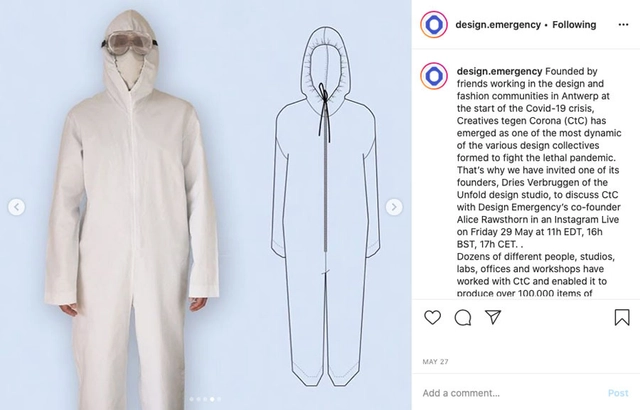
As a part of the design.emergency initiative with Paola Antonelli, Alice Rawsthorn recently spoke to Antwerp-based designer Dries Verbruggen about collaborative efforts being made in the fashion-focused city to create over 100 thousand gowns, coveralls, masks, and other PPE. Courtesy design.emergency
The design.emergency initiative has unpacked everything from collaborative PPE production to object hacking and the power of symbolic imagery.
In the era of the pandemic, the design world’s museums, galleries, manufacturers, organizations, and independent talents have all gone virtual. An endless list of COVID-19-induced cancellations has driven most to find clever ways in which to present their work and engage their audiences. Many have opted for viewing room and interactive exhibition formats, while social media and video communication services have also played a vital role.
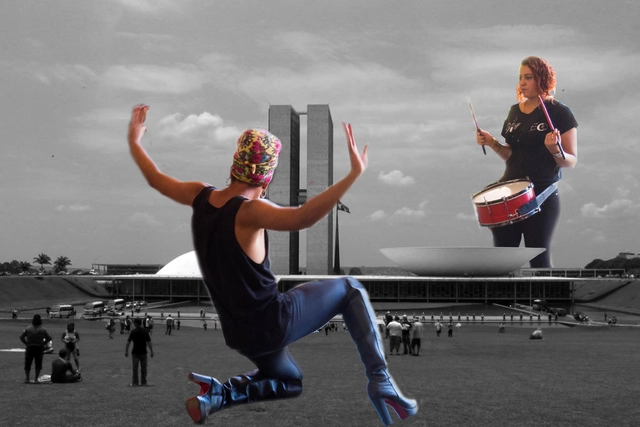
Collage made with photos of Matias Romero and Raquel Aviani/Secom UnB. (licensed under the Creative Commons Attribution-Share Alike 2.0 Generic license and Creative Commons Attribution 2.0 Generic license) via Wikimedia Commons
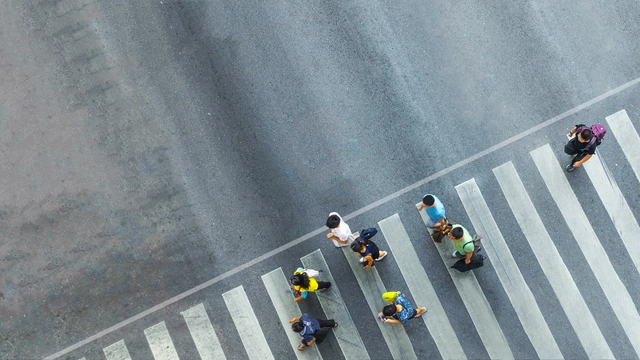
What would all the built environments be without its users? This question may make it easier to understand that not only do architecture and urbanism sustain themselves as physical spaces, but they also gain meaning mainly through the human and non-human movements and bonds, that - together with the architectural or spontaneous traces that make up the urban landscape - provoke the sensations that each individual feels in a unique way.
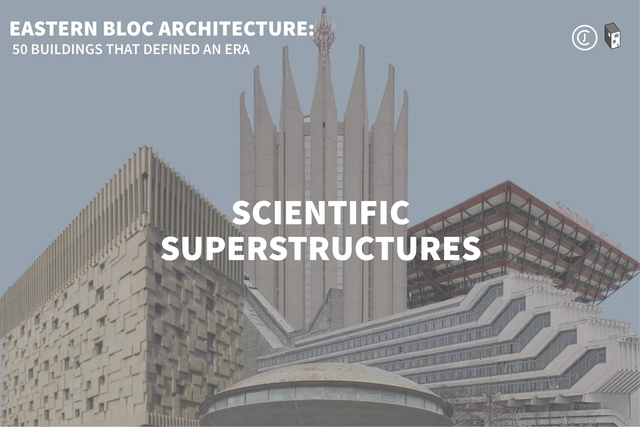
This article is part of "Eastern Bloc Architecture: 50 Buildings that Defined an Era", a collaborative series by The Calvert Journal and ArchDaily highlighting iconic architecture that had shaped the Eastern world. Every week both publications will be releasing a listing rounding up five Eastern Bloc projects of certain typology. Read on for your weekly dose: Scientific Superstructures.
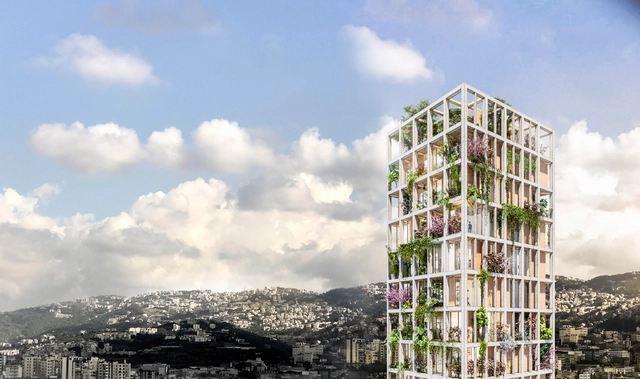
Vertical Eco-Village: Urban Lung of Beirut . Image Courtesy of Anastasia Elrouss Architects
Anastasia Elrouss Architects has imagined the MM Residential Tower, a vertical eco-village in the fast-developing suburbs of Beirut, Lebanon. Labeled Urban Lung, the project, sitting on a 900-square-meter rectangular site, generates 14 stacked floor plates around a central and open planted core. The ground floor and basement level, rented by Warchee NGO, will encompass farming and carpentry workshops for women.
The National Association of City Transportation Officials (NACTO) has released guidelines to provide cities with strategies “to redesign and adapt their streets for new uses both during the COVID-19 crisis and in the recovery”. Streets for Pandemic Response and Recovery highlights the most updated street design approaches cities are using, around the world.
Bjarke Ingels Group and Norwegian manufacturer Vestre have unveiled The Plus, a new project set to become the world’s most sustainable furniture factory. Sited in Magnor, Norway, the factory was envisioned as a village for a community dedicated to the clean, carbon neutral fabrication of urban and social furniture. The Plus aims to be a global destination for sustainable architecture and high-efficiency production.
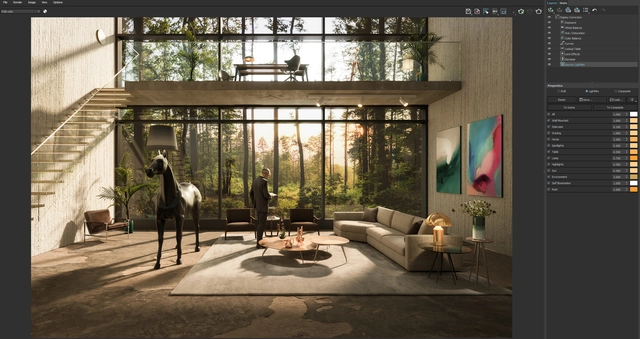
Using the new Light Mix in V-Ray 5, artists and designers can visualize ideas even faster and more effectively. Now, from just one single render, you have the power to create as many images as you can imagine, at a speed that simply wasn’t possible with earlier versions.
There’s always an ongoing debate on whether some designs are stolen or “modified” to become original. Most people assume that if we post pictures of our designs online, we would be giving away our work and other designers and architects will eventually steal them. But should we really hide our designs from the public? Are plans and sections so sacred and innovative to the extent that architects are applying copyrights to them?
Kevin Hui and Andrew Maynard of Youtube’s Archimarathon chat about copying designs, how students and architects can learn from existing designs, and whether plagiarism exists in the field of architecture.
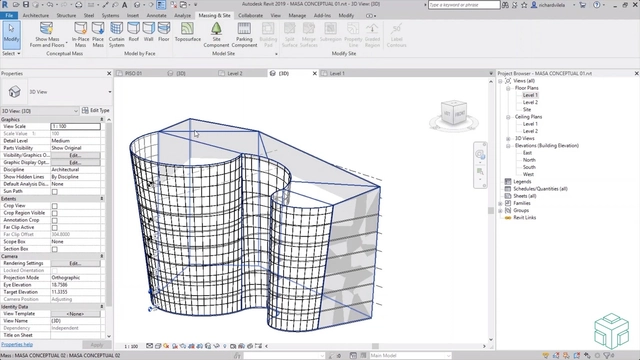
We have all heard the term BIM within the fields of architecture and construction. But have you ever wondered why its use has grown so much in recent years? The BIM (Building Information Modeling) methodology has simplified the work of the different actors in the world of architecture and construction; it not only facilitates the design process but also simplifies the general analysis of the building, minimizing errors.
Thanks to the BIM methodology, it is possible to work collaboratively and maximize efficiency in the management and administration of projects of any size. Architects and engineers work with parametric plans and models, called 3D smart objects.
https://www.archdaily.com/940315/learn-revit-bim-with-this-free-online-introductory-courseGoPillar Academy
There's a lot of discussion surrounding Casa Orozco as to who the real creator is —Luis Barragán or José Clemente Orozco. And even though we know that one of them was responsible for the architecture, the answer still remains unclear. Orozco returned to Mexico in 1934, by invitation from the Mexico City government, after a seven year stint in New York. Once he arrived, he was commissioned to paint a mural inside the Palacio de Bellas Artes. Afterwards, he received commissions from the Jalisco Government to paint a series of murals for three public buildings in Guadalajara.
White Arkitekter has won a competition to design a new beach park and sea bath in Bergen, Norway. The waterfront proposal entitled “True Blue” generates “a new meeting place where residents will be challenged to experience the water’s qualities throughout the year”. Inspired by water, the most tangible element in Bergen, the winning project creates a sustainable park, upon the competition’s brief.




.jpg?1590746708&format=webp&width=640&height=580)
.jpg?1590654629 "ALUMBRERA (Catamarca, Argentina). Image © Ultradistancia")
.jpg?1590656051 "BODDINGTON (Western Australia, Australia). Image © Ultradistancia")
.jpg?1590745217 "SOSSEGO (Pará, Brazil). Image © Ultradistancia")
.jpg?1590658783 "HULL RUST MAHONING (Minnesota, USA). Image © Ultradistancia")
.jpg?1590746708)


















.jpg?1586369679&format=webp&width=640&height=580)
.jpg?1586369691 "© Lorena Darquea")
.jpg?1586369882 "© Lorena Darquea")
.jpg?1586369853 "© Lorena Darquea")
.jpg?1586369679)