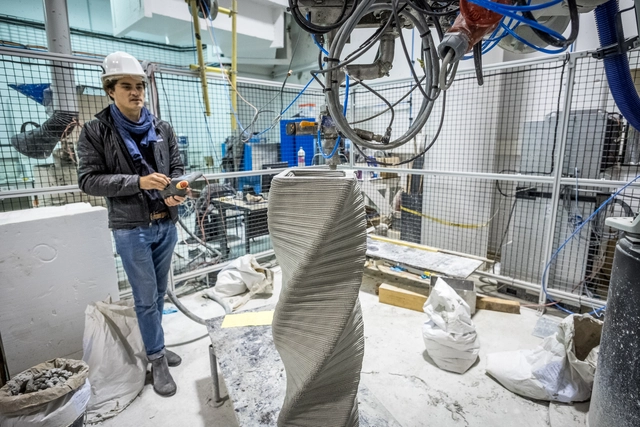
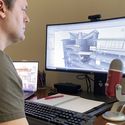
Paul Carneau, Design by Data alumni working with the 3d printing facilities at Ecole des Ponts ParisTech - Photo by Stefano Borghi
The Advanced Master[1] “Design by Data” in Computation Design & Robotics for Architecture and Construction was launched in 2016 and is one of the latest programs in innovative professional education at l'École des Ponts ParisTech. The program was designed to meet the increasing need of the professional sectors of architecture and engineering for combining architectural awareness and skills in creative engineering. Design by Data trains professionals to master advanced design tools (coding, generative design, machine learning) as well as digital manufacturing and design processes (robotics, 3D printing, and mechatronics) applied to architectural and construction projects.
Fauzia Khanani is no stranger to challenging the status quo. Working on a range of projects around the globe, from New York and Zurich to Budapest and Geneva, she continues to rethink the process of design across the built environment. Her firm, Studio For, is pioneering new prototypes for the future of work in a post pandemic era. At the same time, she's working on a number of pro-bono conceptual community-driven projects.
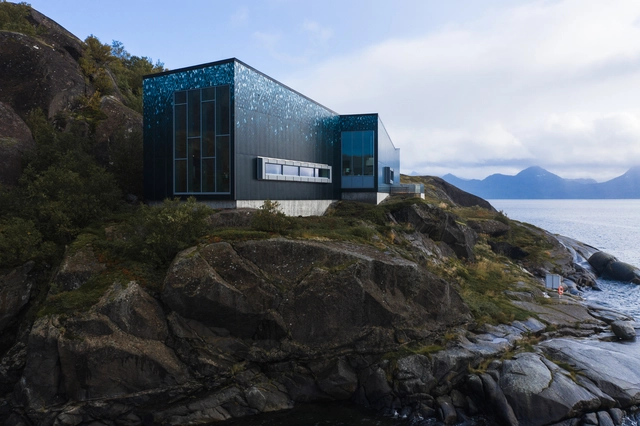
The building rises from a rock face jutting up from the ocean at Skutvik in Nordland, Norway. Steni Vision façade panels give the Arctic Salmon Center a unique and notable appearance. “It has been unbelievably exciting to work with such a special building in such a special place. This is a quite extraordinary building, that has been greeted with astonishment by my colleagues,” comments architect Peter W. Söderman at Norconsult AS. “We chose Vision panels from Steni due to the printing possibilities – we could project an exciting and quite subtle print onto a large surface." The client wanted to have an expressive building that reflected their purpose as an experience center for the fishing industry.
Around the world, a new generation of architects are challenging “business-as-usual” and bringing change to populations who had formerly no access to their professional services. This article is the first in a series to introduce this new practice that brings transactional client relations into more profound, trust-based collaborations. We call it Do-It-Together architecture.
https://www.archdaily.com/957060/why-the-new-do-it-together-architecture-has-radical-potentialArchitecture in Development
Home automation has long been associated with high costs, a burdening assembly time, and a cumbersome process that impelled us to discard the idea of automating projects. However, these days are long gone.
With lower costs and easier assembly, today, developing a new project without home automation seems somewhat absurd. Below, with the help of AVE Chile, we've compiled a series of tips to help you incorporate domotics into your next project.
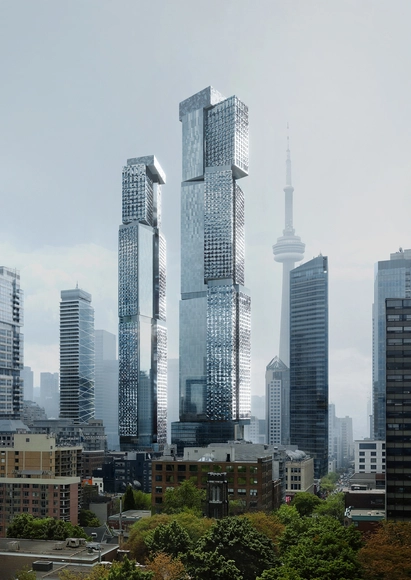
New images highlight a refined design of Frank Gehry's latest landmark, a two-tower project in the skyline of the city of Toronto. Unveiled by Great Gulf, Westdale Properties, and Dream Unlimited, the intervention is part of the King Street West Project, an ensemble of mixed-use buildings.
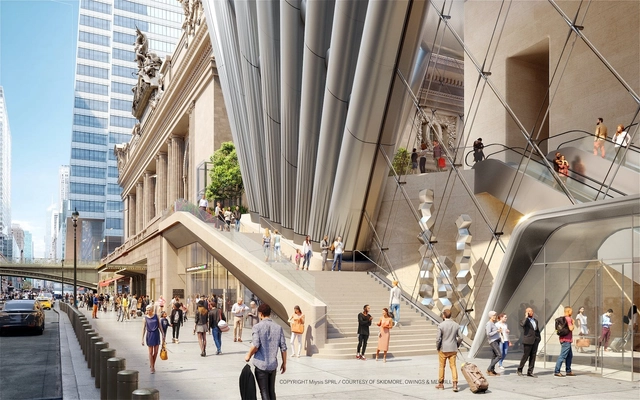
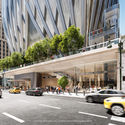
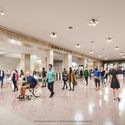
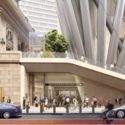
Skidmore Owings & Merrill (SOM) has shared new renderings of a tower to replace the Grand Hyatt Hotel next to Grand Central Terminal in Midtown Manhattan. With over 2.2 million square feet of space, the project is being developed by RXR Realty and TF Cornerstone with SOM, Beyer Blinder Belle and Field Operations. The mixed-use project would rise over 80 stories to 1,646 feet tall, making it the second-tallest building in New York City.
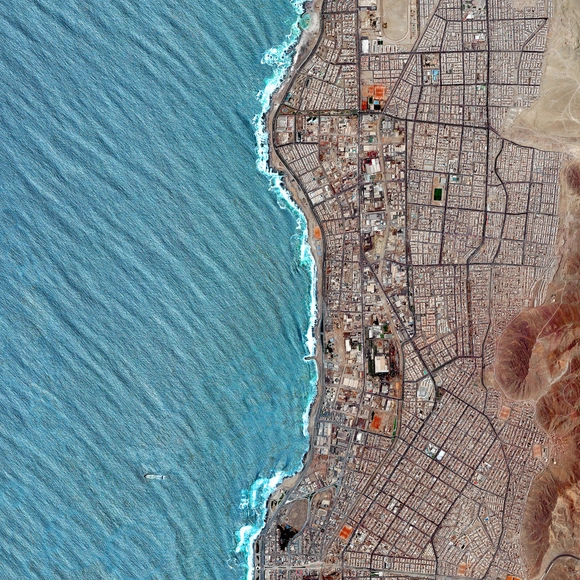
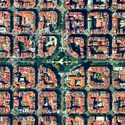
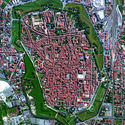
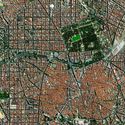
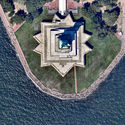
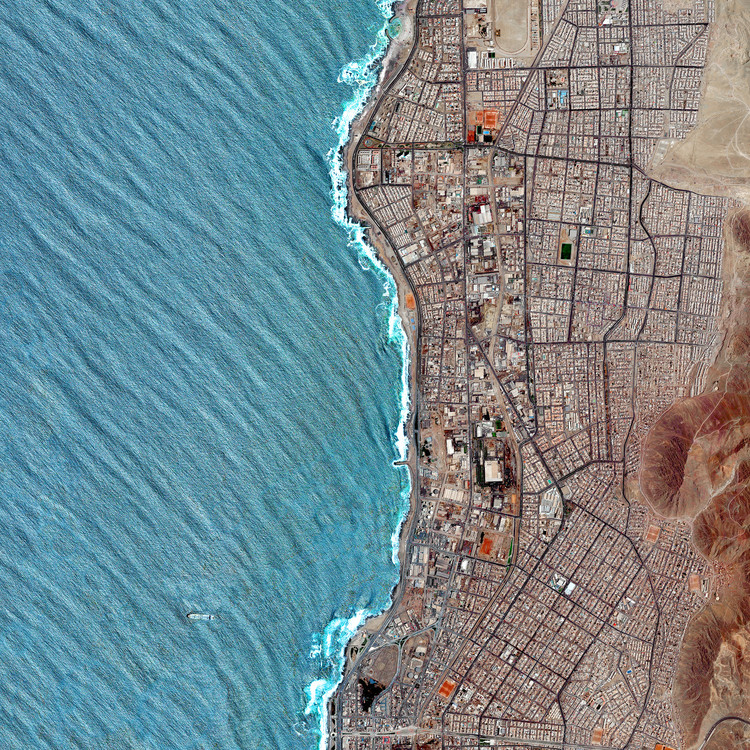
Antofagasta, Chile. Created by @overview. Source imagery: @maxartechnologies
“There seems to be a public image of any given city which is the overlap of many individual images," American urban planner Kevin Lynch once said. "Or perhaps there is a series of public images, each held by some significant number of citizens,” he added.
Following this remark, in his book "The Image of the City" (1960), Lynch begins an analysis around the elements that constitute what he considers to be the image of the city. While introducing, describing, and illustrating these elements as physical, perceptible objects, Lynch considers that other non-physical factors such as history, function, or even the name of the city also play a significant role in the construction of this imageability.
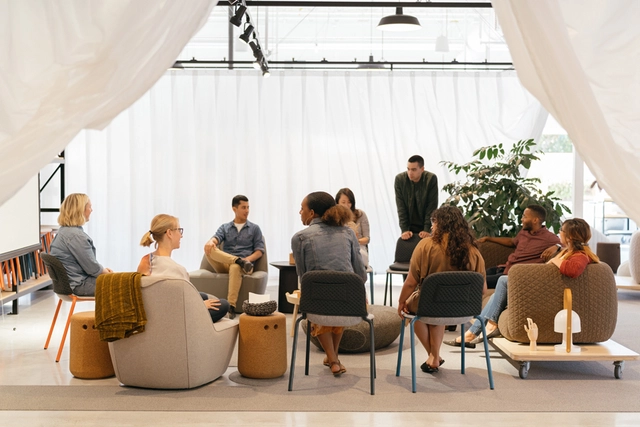
“Change drives innovation. We must continually evolve into what a successful workplace looks like,” said Nicole Senior, director of workplace experience, Tinder. Change, innovation and human connection were topics of prominence in a December 17 Think Tank, hosted by Rapt Studio, and titled “Looking Back, Looking Forward: Workforce Lessons for 2021.”
Do you feel vulnerable as you walk through public spaces? If you are a woman, the odds of answering yes to this question are certainly greater since men are less likely to choose a longer route only to avoid a dark section of the street, or to ponder on what clothes to wear so that they do not feel exposed in public. In this sense, it seems almost obvious that cities designed by men should be perceived as threatening environments, rather than a place where women feel welcome. So, to imagine egalitarian cities, should we persist in a reflection of a gender-oriented approach?
https://www.archdaily.com/956585/how-can-gender-impact-the-future-of-urban-lifeCamilla Ghisleni e Victor Delaqua
This year's Biennial of Latin American Architecture (BAL 2021) has chosen the top emerging works of architecture in Latin America, which will be presented during the second installment of the event in September 2021 in Pamplona, Spain.
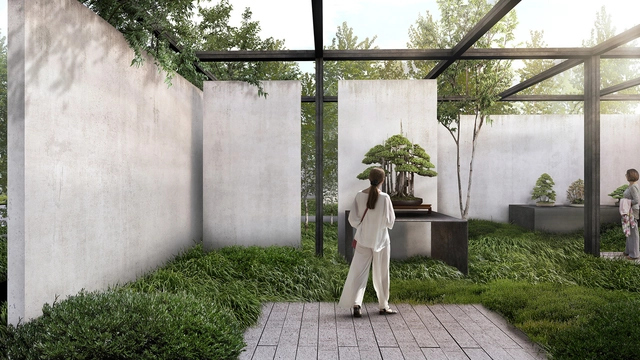
National Bonsai and Penjing Museum at the National Arboretum. Image Courtesy of Trahan Architects by Design Distill
For the third episode of Design and the City, a podcast by reSITE on how to make cities more livable and lovable, by raising questions and proposing solutions for the city of the future, the team interviewed Madame Architect's Julia Gamolina. In this episode, the architect, founder, and editor-in-chief talks about the efforts of building a platform of community and collaboration, putting the spotlight on the diverse stories and perspectives of women that deserve a seat at the table.
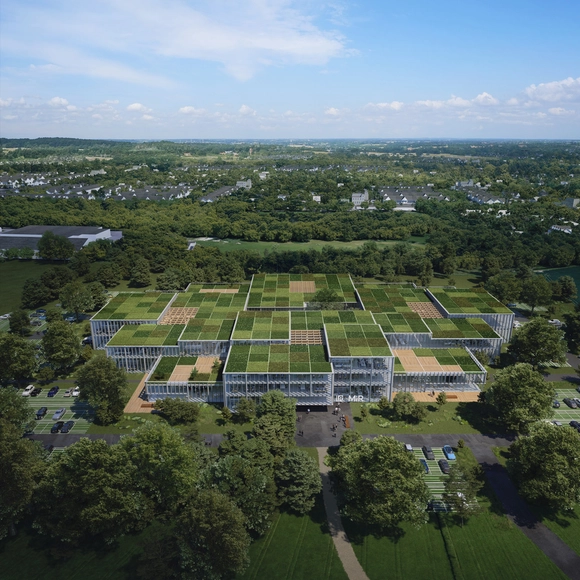
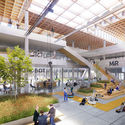
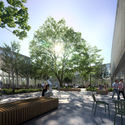
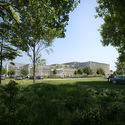
Denmark-based 3XN Architects has unveiled their design for a new Robot Developers Hub in Odense, Denmark. Designed as the new home of Universal Robots (UR) and Mobile Industrial Robots (MiR), the 20,000 square-meter hub will offer specialised environments for robot research and development.
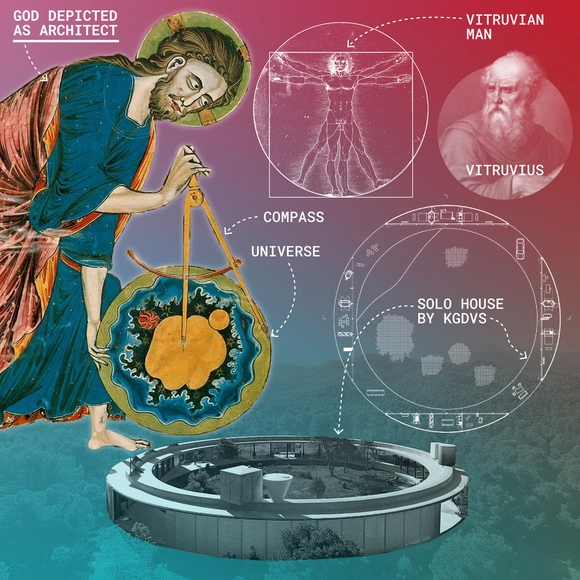
Geometry is a language and a portal that allows objects to pass between the physical world and the world of drawing, abstraction, and language. How does stepping through this portal leave an imprint on the buildings we design and build? Architects and theorists like Vitruvius, Alberti, and Le Corbusier all believed that geometry was an important key to architecture’s understanding and design. Is that as true today as it was then? The tools of the architect have changed, has their relationship to geometry changed as well? In this video, we explore why and how geometry is so important to architecture as well as some different approaches to the use and expression of its most indelible principles.
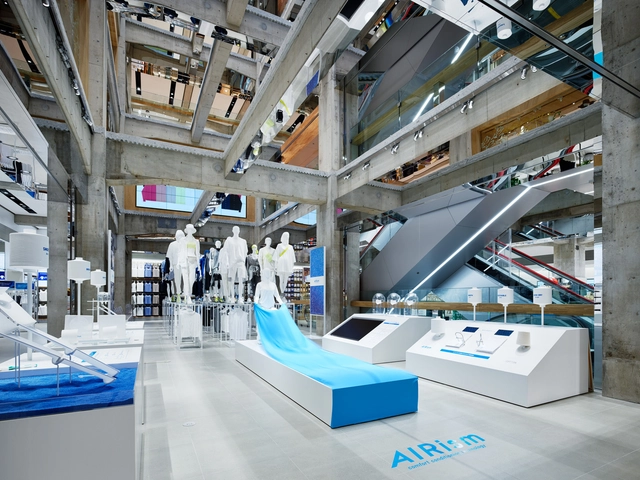
You might be surprised by this, but the days of shopping in stores are long from over-, in fact, they’re experiencing a renaissance, and are creating a whole new type of design and experience to bring consumers back through the doors. The rise of e-commerce and the pause caused by the COVID-19 pandemic have served as a perfect catalyst for creating a whole new type of experience through unique design features, technological advancements, and customization that will revitalize physical stores in the future.
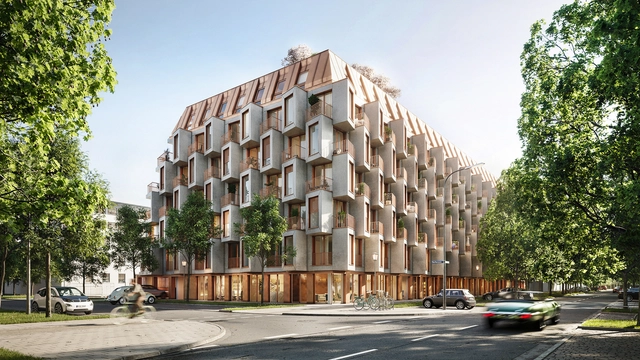
UNStudio and Bauwerk have created a new ‘analog smart’ urban living concept for the Van B residences in Munich, Germany. The completely new form of housing reimagines the future of city living, catering to changing demographics and multiple family constellations. Through adaptable partitions and a system of plugin furniture, the project allows an easy change of configuration. “Quality meters over square meters”.
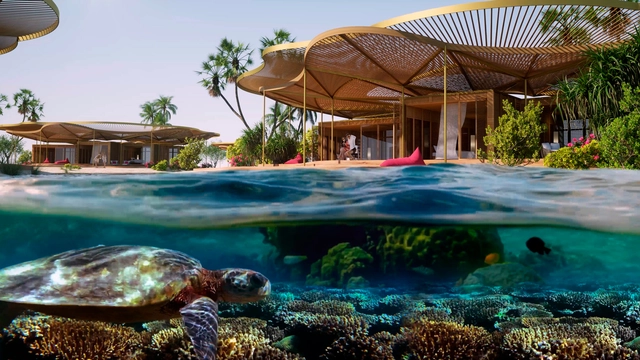
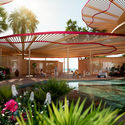
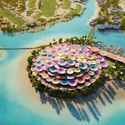
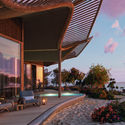
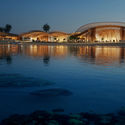
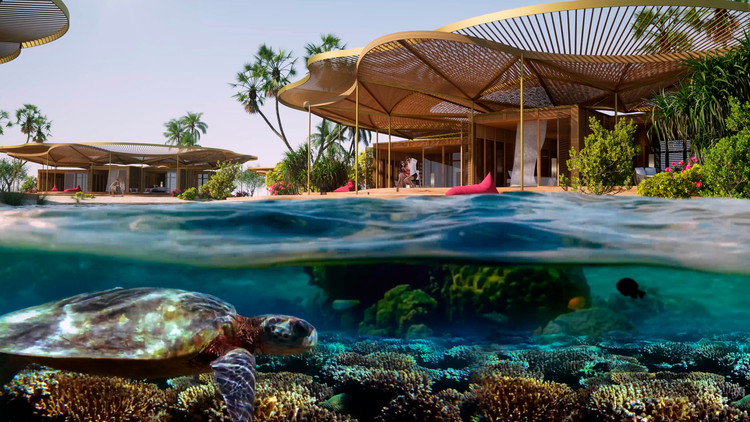
Foster + Partners have shared their new design for the Coral Bloom resort project on Shurayrah island in the Red Sea. Launched by his Prince Mohammed bin Salman, Chairman of The Red Sea Development Company (TRSDC), the design aims to become one of the world's world’s most ambitious regenerative tourism projects. Made to blend in with the natural environment, the development creates a new vision for Shurayrah.
When we talk about BIM methodology, we refer to a new and very technologically advanced form of work. Yet if we pay attention to the language of BIM conversations, we might notice that we always speak in future tense: "in 10 years' time everyone will…" or "this is the methodology of tomorrow." Is this methodology not currently mandatory? And if not, when it will be? To begin grappling with the first of these queries, below we summarize how BIM is currently dealt with around the world.
From the hills behind the City Hall in my adopted hometown of Ventura, California, it’s less than 1,000 yards southward to the Pacific Ocean. This constrained piece of topography creates a small urban gem of a downtown: streetscapes, restaurants, stores, offices, residences, parking garages, and a beachfront promenade, all within eight or so square blocks, creating a lively streetlife that connects a historic downtown to the beach.
Ascent’s three-dimensional slats rise and fall, and curve and straighten, with an artistic randomness rarely seen outside nature. Like a snake hypnotising its prey, these seamless and sinuous lines offer a mesmerising encounter. Image Courtesy of Green Furniture Concept
Placemaking practitioners Green Furniture Concept enrich hectic public spaces with harmony and wellbeing. Their latest modular, sustainable seating system, Ascent, combines nature and geometry – resulting in truly enhanced sitting.
Technology provides new opportunities for architecture and design. The pandemic has shown how flexible workflows are grounded in building connection across workstations and collaborative platforms, as well as newer ideas like implementing VR over Teams. For Dan Stine, Director of Design Technology at Lake|Flato Architects, theses changes are part of a larger drive to reimagine how technology can shape practice.
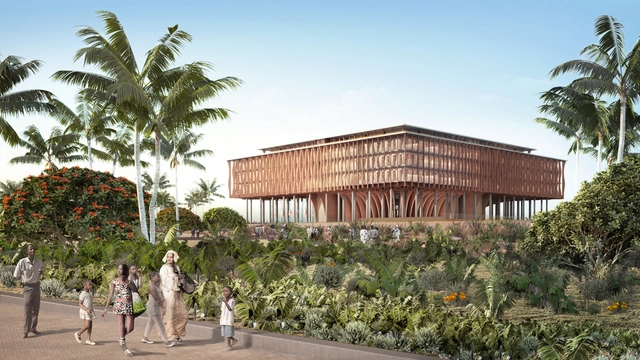
Kéré Architecture has unveiled first images of its proposal for the Benin National Assembly. Located in Porto-Novo, in the Republic of Benin, the Parliament House has been commissioned by the Ministry of Living Environment and Sustainable Development, and has been in the design phase from 2018 till 2020. Portraying the values of democracy and the cultural identity of the citizens, the project is set for construction in March 2021.
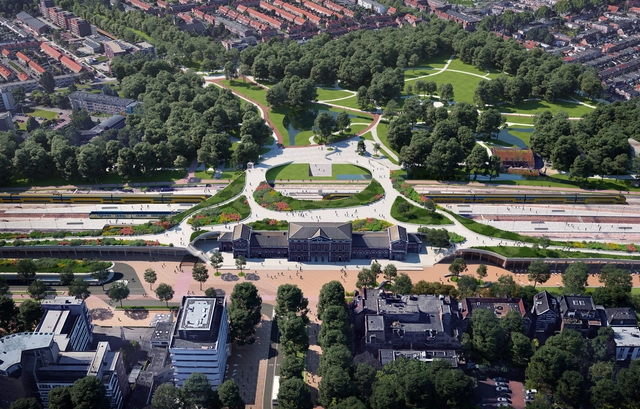
Dutch design practice Mecanoo has created a proposal to reimagine a railway zone in Dordrecht, Holland's oldest city. As the first place in the country to receive city rights in 1220, Dordrecht has an extensive history at the heart of the Dutch Delta. The vision for Spoorzone Dordrecht outlines a future vision for the city in 2040. It explores the urban possibilities of accessibility, climate adaptation, socio-economic developments and housing.
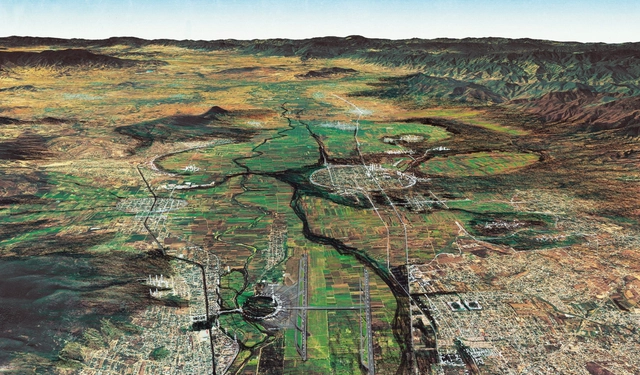
When looking at the population of the world's metropolises, in this case Mexico City, the reality is that the majority of the people living there have migrated from other regions of the country and, sometimes, from other countries as well. Of course, thanks to the Covid-19 pandemic, companies and schools have gone virtual, and, with their work and studies no longer tied to urban centers, people have left in masse for the coast and other less populated areas in search of space and lower living costs.
















.jpg?1612920265&format=webp&width=640&height=580)





.jpg?1611548432 "Santa Fe, Mexico City. Image © Johny Miller")
_22.43.53_(1).jpg?1611548822 "Mexico City During the COVID-19 Pandemic. Image © Santiago Arau")
