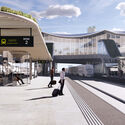
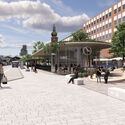
From smartphones to space rockets and self-driving cars, the power of technology in this modern digital era is enormous (and practically limitless). It has impacted every aspect of our lives and will continue to open up endless possibilities that today we cannot even begin to fathom. When applied in a socially and environmentally responsible way, technology has the power to enhance productivity, communication and sustainability, enabling global communities to function efficiently, addressing people’s everyday needs and improving their quality of life. Simply put, good technology serves humanity. And just as the healthcare or manufacturing industries have taken advantage of this, the architecture, design and construction world cannot fall behind.
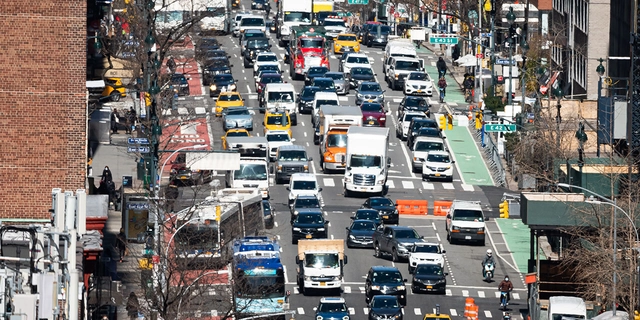
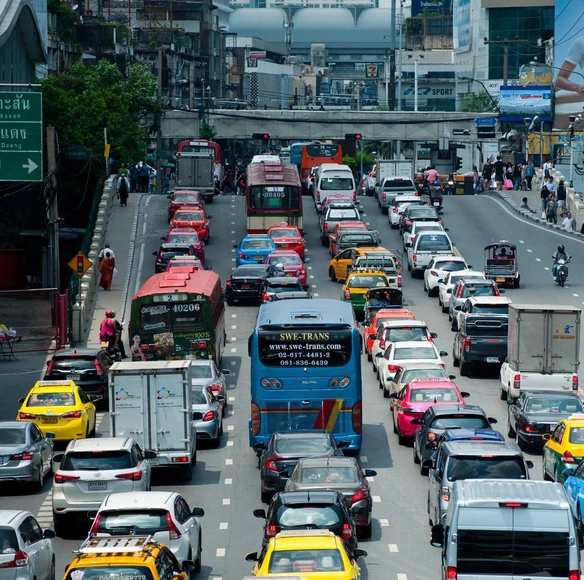
In 2007, New York City Mayor Michael Bloomberg proposed congestion pricing for Manhattan. The state legislature rejected the plan. Fifteen years later, we’re still debating the idea, fiddling while the planet burns.
The newest problem is that a new environmental study and traffic model from the MTA, The Central Business District Tolling Program Environmental Assessment, says that what’s good for 1.63 million residents of Manhattan and the planet, in general, will increase the pollution in the already unhealthy air in the Bronx. Yes, that’s a problem. Turning the perfect into the enemy of the good is also a problem. We need a plan that benefits all.
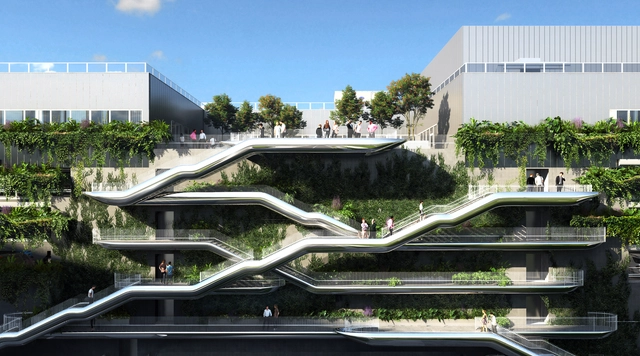
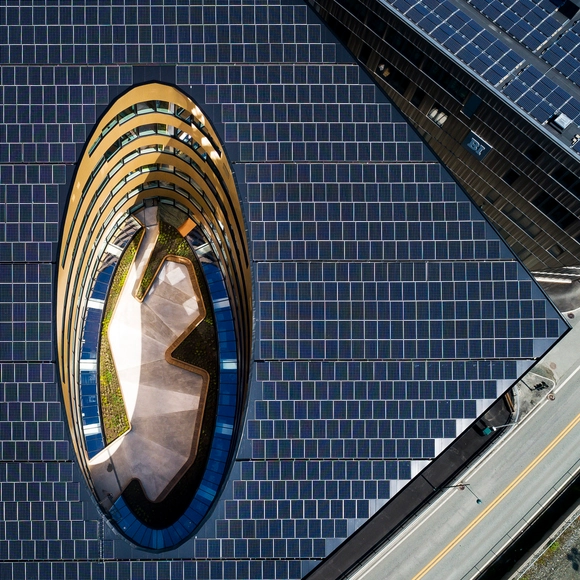
MAD Architects led by Ma Yansong, unveiled renderings of the MoLo, short for Mobility and Logistic hub, a new gateway situated along the western boundary of the Milano Innovation District (MIND). In collaboration with Architect Andrea Nonni, Open Project, and Progeca, the 28.5 meters high complex brings together several facilities across 68,700sqm of surfaces. Designed as an integration of nature and architecture, the MoLo “performs as a welcoming entrance and education space for issues related to mobility in which visitors can drop off their cars to explore the district on foot and see innovative transportation technology in person”.
“Let me tell you what I think of the bicycle. It has done more to emancipate women than anything else in the world. It gives women a sense of freedom and self-confidence. I appreciate every time I see a woman cycling... an image of freedom”. Susan Anthony, one of the most important American suffragette leaders, said this at the beginning of the 20th century, praising the libertarian power represented by women and their bicycles at the time.
Lisbon city counsil almost unanimously approved the proposal of free public transport for young people up to 18 years old, higher education students up to 23 years old and people over 65 years old.
This free pass, which should encourage the use of public transport, is valid for residents of the city. The decision was announced by the mayor Carlos Moedas.
Various cities have been experimenting with wavering fees for public transport in an effort to promote sustainable mobility, alleviate traffic congestion and decrease social inequality. This past February, Salt Lake City has paused fare collection for a month to reduce carbon emissions in the region. At the end of March, the Italian city of Genoa extended free access to some of its public transport networks, following a successful experiment which began at the end of 2021 and in an ambitious plan to become the first Italian city with free transportation. Meanwhile, the small duchy of Luxembourg became the world’s first country with free public transit in 2020.
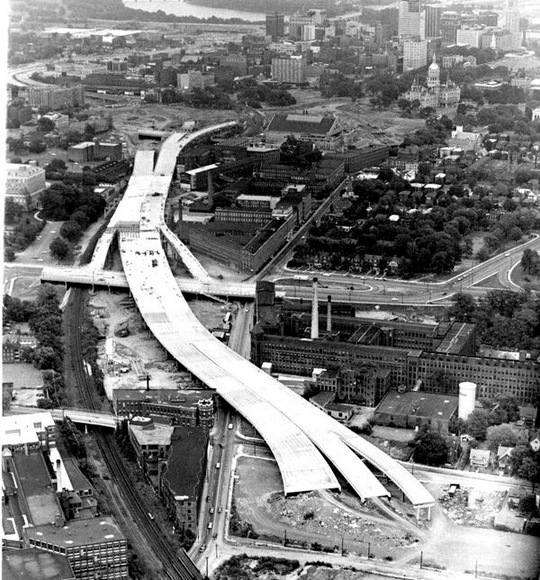
Can a piece of infrastructure literally kill a city? This is the question that writer Jim Krueger poses in his recent podcast, The Road That Killed a City. The place in question is Krueger’s current hometown—Hartford, Connecticut—which he grew up next to in the leafy suburb of West Hartford. Kruerger has lived in both towns, and that helps to balance the amazing story he uncovers about how Connecticut’s capital was impaled by a roadway (actually, two: east/west I-84 and north/south I-91 converge in Hartford in a sort of arterial highway ground zero). I spoke with Krueger about what prompted the podcast, some of what he uncovered about the history of this ill-fated urban “improvement,” and the legacy of a highway that continues to thwart Hartford’s rebirth—an inheritance shared by many cities across North America.
https://www.archdaily.com/981425/did-a-highway-kill-the-city-of-hartfordMichael J. Crosbie
In 1854, the American writer Henry David Thoreau wrote the classic work “Walden”, recounting his experience of life in the woods and extolling the advantages of simple and self-sufficient life. Right at the beginning of the book, the author comments that, if someone wants to travel 48 km to visit the countryside, it would be faster to walk than to opt for a locomotive.
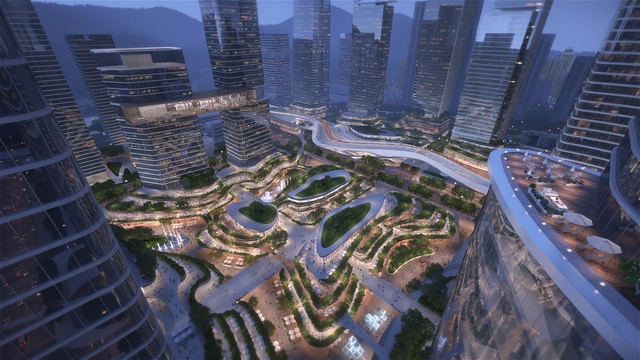
Aedas has won an international competition to design Shenzhen's new Qingshuihe Comprehensive Transportation Hub in a joint venture with China Railway Siyuan Survey and Design Group Co., LTD and Shenzhen Urban Transport Planning Center Co., LTD. The master plan draws inspiration from the natural environment of the area, integrating nature and water elements into the high-density city to build a unique new emblem for Qingshuihe. The underground compact hub releases large above-ground spaces which will feature urban terraces, offices, five-star hotels, first-rate apartments, science and technology exhibition halls, and other facilities.
Early last week, the European Commission and the Fundació Mies van der Rohe announced the 40 shortlisted projects of the EU Mies Award, a prize that commends excellence in architecture, highlighting its contribution to sustainable development. In this context, and two years after the European Parliament voted to support the Green Deal, we review the steps taken by the EU in 2021 towards achieving its sustainability goals and shaping a resilient built environment.
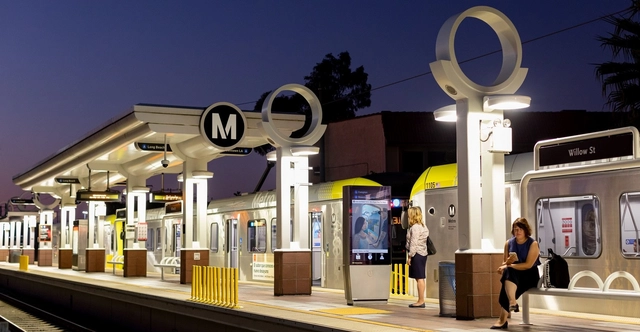
Following California's Covid-19 health regulations in early 2020, Metro, the Los Angeles public transit agency stopped collecting fares on its busses as a safety precaution measure. However, the company's decision turned into the United States' biggest free-transit experiment, as ridership never dipped below 50 percent, even with the stay-at-home orders enforced by the government. Following 22 months of the decision and around 281 million fare-free transits, the company has decided to restart collecting fares, but is planning on using the information gathered throughout these two years to implement future improvements and introduce other free or reduced-fare programs in the city.
The city of Budapest, though Budapest Development Agency (BFK), launched an international design competition this autumn for the comprehensive renewal of the Budapest Nyugati Railway Station and its surroundings. The initiative seeks to expand the train station's capacity in order to reach Budapest's railway transport goals of doubling the number of trains on the suburban and metropolitan network. After an initial phase that attracted 36 participants, 12 practices were shortlisted for the second round of the competition, among which are Benthem Crouwel Architects, Grimshaw Architects, Zaha Hadid Architects, Foster + Partners, Kengo Kuma & Associates and Sweco.
New York Governor Kathy Hochul announced last week that the current and former sites of Terminals 1, 2, and 3 on the south side of John F. Kennedy International Airport in Queens will be redeveloped to make way for a $9.5 billion international terminal that will be built out in phases beginning next year. With the first of its 23 gates anticipated to go live in 2026, the 2.4-million-square-foot newTerminal One will rank as the largest at JFK and, per a news release from the Governor’s Office, “aspires to be among the top-rated airport terminals in the world.”
The rise of electric scooter fleets in cities around the globe happened almost overnight. By making transportation fun, they quickly took over a new market share and provided not only an easy way to travel but one that also prides itself in being sustainable. First becoming popular on the West Coast of the United States, scooters migrated eastward, eventually sweeping across Europe as well. Easy to maneuver and a convenient solution to get from place to place, we have to ask- can cities handle the accelerating rise of scooters and other forms of micromobility?
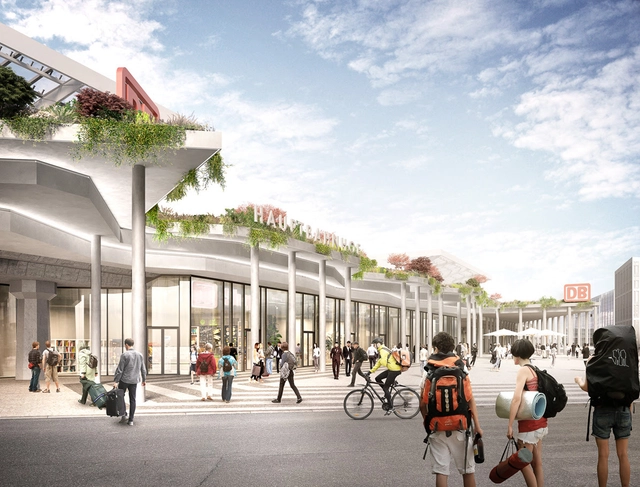
J. Mayer H. has won a competition to design the new façade of Cologne Main Station on Breslauer Platz in Germany. The design proposal frames the sides of the rail station with an all-around façade that offers an innovative use of space by making the best of the site's circulation and natural resources. The intervention will feature rooftop landscaping with local flowers and greenery, rainwater collection, protection from rain, wind, and sunlight, and a visual emphasis on the station's points of access.
"Deck parks are increasingly in vogue in the Southwest’s downtown cores but aren’t a good fit for El Paso," writes Sito Negron. Recently a lot of cities around the world have been rethinking urban spaces dedicated to transportation, introducing public areas over highways while expanding the vehicular realm. In this week's reprint from the Architect's Newspaper, the author explores the limits of this trend and questions its implementation in some cases.
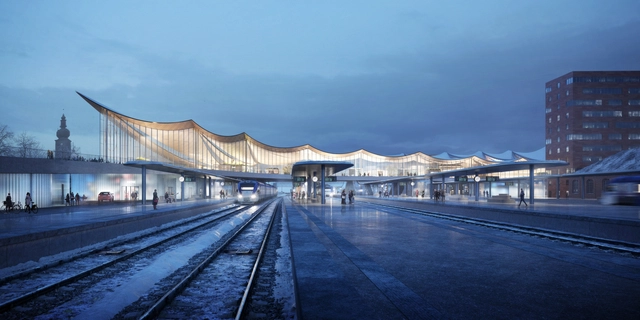
Bjarke Ingels Group has unveiled the final design for Västerås Travel Center, a transport infrastructure hub bringing together multiple travel modes within one cohesive architectural object. The project's defining feature is a light, undulating roofscape unfolding across the various complex elements of the program that make up the urban node, creating a new landmark for one of Sweden's largest cities.



















.jpg?1630568377 "Courtesy of Bloomimages")
.jpg?1630568367 "Courtesy of Bloomimages")